
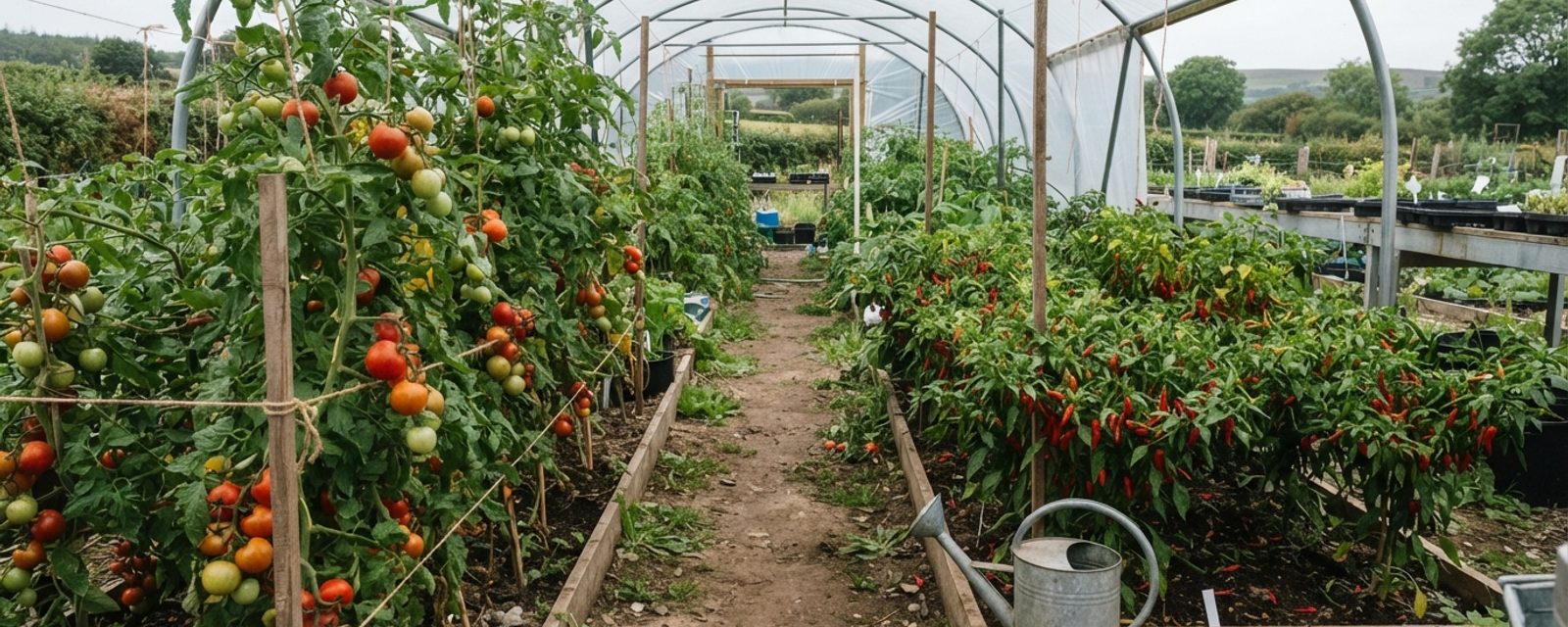
Most advice about what you can and can't grow in Scotland is really advice about time. A tomato plant doesn't fail here because Scottish gardeners are worse at growing tomatoes, it fails, or limps along with a handful of green fruit in October, because it runs out of warm weeks before it can finish what it started. A polytunnel or greenhouse buys back some of that time. Whether it's worth the money, space and effort depends on how short your season already is and what you actually want to grow.
Scotland's growing climate is cool and damp overall, with a shorter run of warm days than most of the rest of the UK gets, and that baseline shapes everything below, from which crops actually need cover to the fungal risk of keeping a structure closed up. A structure does not make a plant grow faster in any magical sense. What it does is move the goalposts: it lets you start sowing and transplanting before the ground and air outside are safe, and keeps tender plants alive and cropping after the first outdoor frost would otherwise have ended their season. Even completely unheated, using nothing but solar gain and the barrier of the structure itself, this stretches the usable growing season at both ends. The RHS puts it plainly: even the smallest, unheated structure will allow gardeners to extend the season and produce good crops of a wide range of vegetables, with a productive greenhouse in use for most of the year — tender crops through summer, late salad crops raised into autumn.
That's the mechanism behind every claim below. Whether the stretch is worth the money, the space and the ongoing effort depends on your crops, your plot and how short your season already is, covered region by region and crop by crop next. If you've already decided yes and just want to know which structure to buy, see our sibling article on polytunnel vs greenhouse.
How short is "short," region by region
The honest starting point is how much outdoor growing season you actually have where you garden, because that number is what a structure is stretching. The table below gives the safe planting-out date and first autumn frost date for representative weather stations across Scotland's growing regions, based on 30 years of Met Office records (1991-2020); our regional frost dates reference covers every station in full, including upland/lowland splits not repeated here.
| Region (reference station) | Safe planting out | First autumn frost | Approx. outdoor season |
|---|---|---|---|
| Highlands lowland (Inverness, Moray Firth) | Mid-May | Late October | ~24 weeks |
| Islands (Stornoway, maritime) | Mid-May | Early November | ~25 weeks (wind-limited, not frost-limited) |
| Central Belt lowland (Edinburgh) | Mid-May | Late October | ~24 weeks |
| Southwest lowland (Dumfries) | Mid-May | Late October | ~24 weeks |
| Borders lowland (Charterhall) | Mid-to-late May | Late October | ~22-23 weeks |
| Northeast lowland (Dyce/Aberdeen) | Late May | Late October | ~22 weeks |
| Central Belt upland (Eskdalemuir analogue, 242m) | Early June | Late September | ~16 weeks |
| Northeast upland (Braemar, 339m) | Mid-June | Mid-to-late September | ~14 weeks |
The spread is the story: a roughly 10-week gap between the mildest lowland station (Inverness, on the Moray Firth) and the harshest upland one (Braemar), which lines up with the Met Office's own regional summary for eastern Scotland describing a frost-free season "often as little as 3 months" on higher ground. That's the difference between a season long enough to grow tomatoes to a decent outdoor crop most years, and a season where you're racing the clock on almost everything.
The islands deserve a specific note here: Stornoway actually posts the longest and mildest frost record in this table, thanks to its maritime exposure. The reason an unheated structure is still commonly used in the islands isn't frost, it's wind, which is the real limiting factor for outdoor cropping there and is covered in its own right in our guide to securing a greenhouse or polytunnel against wind. Don't read "islands have a long frost-free season" as "islands don't need protection," they need it, just for a different reason than a Deeside garden does.
What an unheated structure actually buys you
Here's where it's important not to overpromise. Exactly how many extra weeks an unheated structure adds at each end of the season depends on the structure, its siting and aspect, and how much active frost protection you're adding on top, so no single week-count applies everywhere. What does hold generally, and is genuine: sowing and transplanting can happen before it's safe outside, and cropping can continue for a meaningful stretch after outdoor plants would already have been finished by frost.
The honest way to describe the gain is "several weeks at each end," not a precise figure. What that means in practice: for an Edinburgh or Dumfries gardener already working with a 24-week outdoor season, a few extra weeks at each end is a genuine but proportionally modest gain, you're stretching a season that was already workable. For a Braemar or upland Central Belt gardener working with 14-16 weeks, the same few extra weeks at each end is a much bigger proportional gain, you might be turning a 3-month growing window into something closer to 4 or 5 months, the difference between "can't reliably finish a tomato crop" and "can."
This is the clearest Scottish-specific case for a structure: the shorter your outdoor season already is, the more a fixed amount of season-extension is worth to you. It's not that lowland gardeners get nothing from a polytunnel, it's that upland and northeast-upland gardeners get proportionally more.
Which crops actually need the cover
This is the part generic UK gardening advice tends to gloss over, and it matters more here than that advice usually assumes, because a shorter growing season leaves far less slack for a marginal crop to catch up: a structure is not equally valuable for every crop. Some vegetables are genuinely marginal outdoors here and a structure is close to a precondition for a decent harvest. Others grow perfectly well outdoors in Scotland's climate and a structure adds comparatively little.
Crops that genuinely need cover in Scotland
Chillies. Chilli plants grow and crop best in a greenhouse, polytunnel, conservatory or cold frame, needing a minimum night temperature in the 12-15°C range to crop well, per RHS guidance. Fruiting is reduced when they're grown outdoors in a Scottish summer, the nights simply don't stay warm enough, often enough, for long enough.
Tomatoes. GrowScotland's own crop data is direct on this: a polytunnel or greenhouse is strongly recommended across Scotland, outdoor cropping is generally marginal and unreliable at altitude, and plants shouldn't go outside until night temperatures are reliably above 16°C, a bar much of Scotland struggles to clear consistently even in midsummer. That's a warmth threshold, not strictly a latitude one: as the table above shows, a mild coastal station like Inverness can clear 16°C nights about as reliably as Edinburgh, while an upland site much further south can lag behind both, so "marginal outdoors" tracks altitude and coastal exposure more than it tracks how far north the garden actually is. The RHS's own outdoor tomato guidance adds a second, Scotland-relevant reason to grow tomatoes under cover: outdoor plants need a warm, sunny, sheltered site and are markedly more prone to blight than greenhouse-grown plants, which rarely see it under cover, blight thrives in the same cool, damp, humid conditions this article already describes as Scotland's baseline climate, so the risk that pushes tomatoes under cover elsewhere in the UK is, if anything, a more persistent one here.
Peppers. Sweet peppers carry the same steer as chillies, usually grown under cover in the UK, in a greenhouse, polytunnel, conservatory or cold frame, wanting daytime temperatures in the 24-29°C range to crop well, a bar an ordinary Scottish summer day rarely clears outdoors for long, the same gap that pushes chillies under cover.
Aubergines, melons and soft fruit such as strawberries and grapes sit in the same broad category, tender or damp-sensitive crops that need sustained warmth or shelter from wet weather to crop and ripen well, and general horticultural practice treats them as similarly marginal or unreliable outdoors in a cool, damp climate. No Scotland-specific RHS figure as precise as the tomato and chilli guidance above exists for these, so treat this as the general, honestly hedged version of the claim rather than a hard number.
Crops that don't need the cover
Kale, leeks, broad beans, most brassicasThe cabbage family: cabbage, kale, broccoli, cauliflower, Brussels sprouts, kohlrabi, swede, turnip and more, sharing the same pests, diseases and rotation rules. Full definition →, and root vegetables are bred and adapted for exactly the cool, damp climate Scotland provides. They grow well outdoors here without protection, and a polytunnel or greenhouse adds relatively little to their yield or reliability, you might get them started a little earlier under cover, but the outdoor crop was never marginal to begin with. If your garden is mostly these, the classic Scottish allotment plot of brassicas, beans, and roots, a structure is solving a problem you don't have.
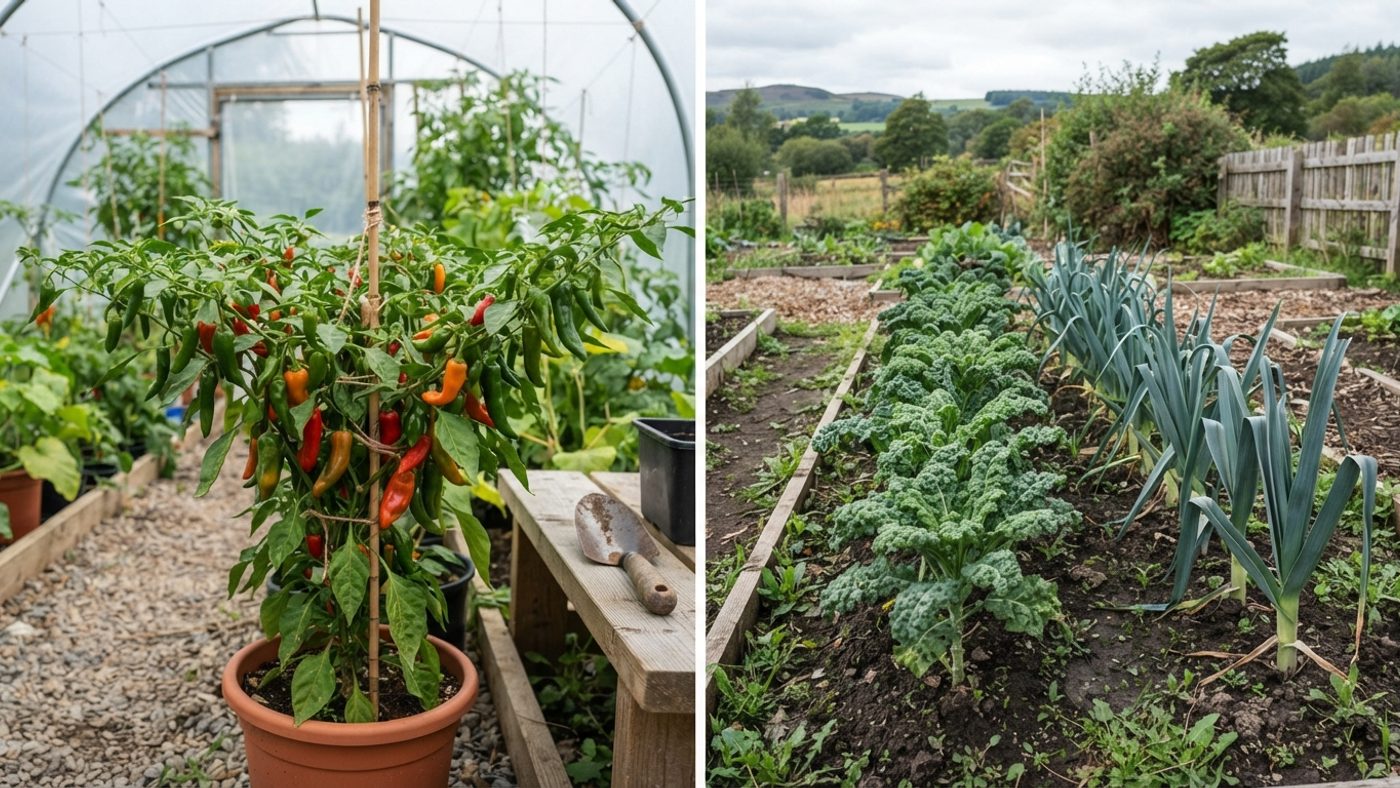
This is the honest core of the value case: a polytunnel or greenhouse's worth tracks almost entirely with how many heat-loving, marginal crops you actually want to grow. A garden built around tomatoes, chillies and peppers gets a transformative benefit. A garden built around kale, leeks and broad beans gets a marginal one.
Running costs you should factor in, not just the crop gain
A structure's season-extension benefit isn't free to hold onto, and two running costs are worth knowing before you commit, both more pointed in a cool, damp climate than a dry one.
Ventilation and grey mould. An unheated structure closed up in a damp Scottish summer traps humid air fast, and stagnant humid air around leaves and stems is exactly what botrytis (grey mould) needs to take hold, tomatoes, peppers and soft fruit grown under cover are all vulnerable to it if ventilation is inadequate. This isn't a reason to avoid a structure, but it does mean opening vents and doors on mild, still days is routine maintenance in Scotland, not an optional extra, and it's worth factoring the extra checking-in time into the "is this worth it for me" decision alongside the crop and space questions above.
Wind, beyond the islands. The islands' wind exposure is covered above because it's the most extreme case in Scotland, but wind anchoring and cover tensioning matters on plenty of exposed mainland sites too, an open Central Belt plot, an upland garden, or an exposed stretch of the Southwest coast can all see damaging gusts. Our guide to securing a greenhouse or polytunnel against wind covers anchoring and storm-proofing for any site, not just the coast and islands, and is worth reading before you buy if your plot is at all exposed.
Winter and overwinterKeeping a plant alive and intact through the cold months, whether left outdoors, moved under cover, or stored dormant. Full definition → use. Everything above focuses on the summer heat-lovers, but a structure's season-extension case doesn't stop at autumn. An unheated structure can keep hardy salad leaves, winter lettuce and other cool-tolerant crops cropping well into, or right through, winter in milder parts of Scotland, and it's genuinely useful for overwintering tender potted plants that would otherwise need to come indoors. Worth knowing before you rely on this: at Scottish latitudes, weak, low-angle winter light limits growth as much as cold does, so a structure sited in shade or facing away from the sun gives up much of this benefit regardless of how well it holds heat. If extending the far end of the calendar, not just the summer crop range, is your main interest, that's a real part of the case for a structure worth weighing alongside the tomatoes-and-chillies argument above.
Slugs, pests, and heating. Scotland's damp climate is famously slug country, and a structure's warm, sheltered, humid conditions can suit some pests (whitefly, red spider mite) as well as it suits your crops, worth budgeting some pest-watching time alongside the ventilation checks above, not something either structure solves on its own. Heating is a further optional cost on top of everything else here: this article's figures all assume an unheated structure running on solar gain alone, and adding electric or paraffin heating, or insulation such as bubble wrap, brings a genuine running cost most gardeners don't need to extend the season by weeks but that some choose for an earlier, more reliable start, a decision worth its own research once you've settled the more basic "is a structure worth it at all" question this article answers.
The plot-size and commitment threshold
| Upfront cost (6x8ft equivalent) | Low-to-mid hundreds of pounds; a greenhouse typically several hundred more — see the polytunnel vs greenhouse comparison for the full cost picture |
| Season gain (unheated, either structure) | "Several weeks" at each end, per RHS guidance — no precise week-count is reliably sourced |
| Best case | Short-season plot (upland/northeast) growing tomatoes, chillies or peppers |
| Weak case | Long-season lowland plot growing mostly kale, leeks, beans and roots |
As a rough starting point, a modest 6x8ft polytunnel commonly runs to the low-to-mid hundreds of pounds, a similarly sized glass greenhouse several hundred pounds more; our polytunnel vs greenhouse comparison covers the full cost picture, including cover and glazing replacement over time, in depth. But cost is only half of "worth it." The other half is whether your situation can actually capture the payoff. A few honest signals that a structure is not worth it for you:
- Very little space. A polytunnel or greenhouse needs a dedicated footprint with good light, even a modest 6x8ft structure is a meaningful chunk of a small urban garden or patio. If fitting one means giving up most of your growing space to house the thing that's supposed to extend it, the trade is often not worth making.
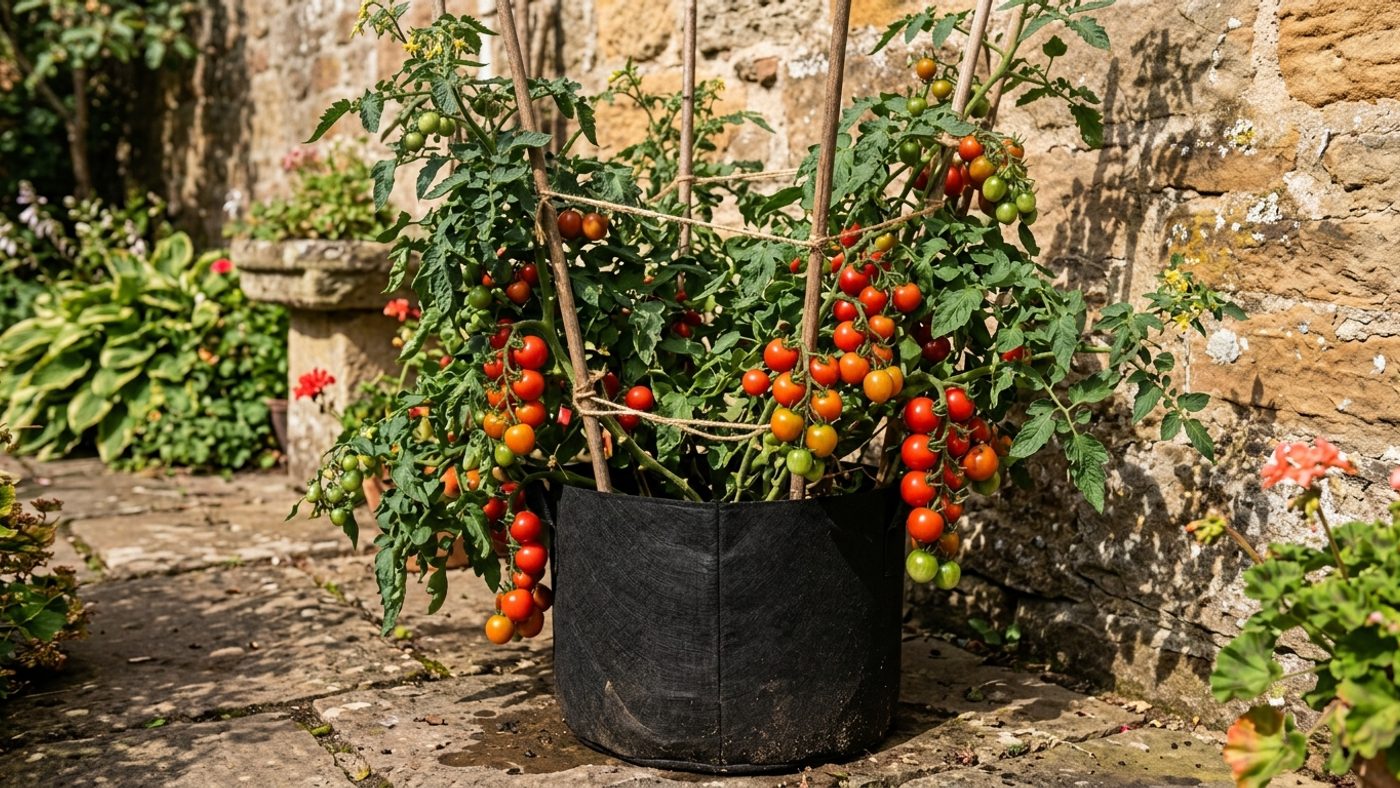
- A handful of plants. If your ambitions are a few pots of herbs and a couple of tomato plants, the structure's fixed cost and space demand is disproportionate to what you're growing. A couple of large pots on a sheltered, south-facing patio, or a growbag against a warm wall, can carry two or three tomato plants without any structure at all, imperfectly, but adequately.
- You're likely to move soon. Polytunnels can be dismantled and moved with real effort; greenhouses, especially glass ones on a base, effectively can't. If you're renting or expect to relocate within a couple of years, the payback period on the investment may simply not arrive before you leave.
- You mostly grow hardy crops. As above, if kale, leeks, beans and roots make up most of your plot, the crop-specific case for a structure is weak regardless of how much space or time you have.
Two practical checks worth doing before you commit space and budget: a larger structure may need to be checked against your local council's permitted development rules before you build, and an upland or inland site with heavy winter snow needs a plan for clearing roof snow off whichever structure you choose, since either can be damaged by a heavy, wet load left to build up.
None of these rule a structure out on their own, but if two or three apply to you, that's a genuine signal to look at the alternatives below rather than assume a structure is automatically the right move, the crop and climate case made above is real, but it isn't the same for every garden.
Alternatives that capture much of the benefit for less
If a full structure isn't the right call for your space, budget or crop mix, you're not choosing between "polytunnel" and "nothing." There's a real ladder of lower-cost, lower-commitment options, each of which captures some of the same season-extension mechanism, earlier starts, later finishes, at a fraction of the space and cost.
Cold frames. A low box with a glazed, hinged lid, sitting directly on soil, gravel or a patio with no foundation and no planning permission needed. The RHS recommends them as essential kit for raising seedlings and hardening offGradually getting young plants raised indoors used to outdoor conditions over 7–14 days before planting out, so cold, wind and direct sun don't shock or damage them. Full definition → tender plants (gradually acclimatising them to outdoor conditions) before they go into open ground, and they extend a small bed's usable season by weeks at either end without anything like the footprint of a greenhouse. For a small garden growing a modest number of plants, a cold frame can realistically deliver most of the practical benefit a full structure would.
ClochesA small, portable clear cover placed over an individual plant or short row to trap warmth and keep off wind, rain and pests. Full definition → and tunnel-cloches. Individual clear covers over single plants, or a row-length mini-tunnel over a bed, the cheapest and most portable form of protection available. Good for getting an early sowing of a hardy or semi-hardy crop into the ground weeks before it would otherwise be safe, or protecting a late crop from the first frosts.
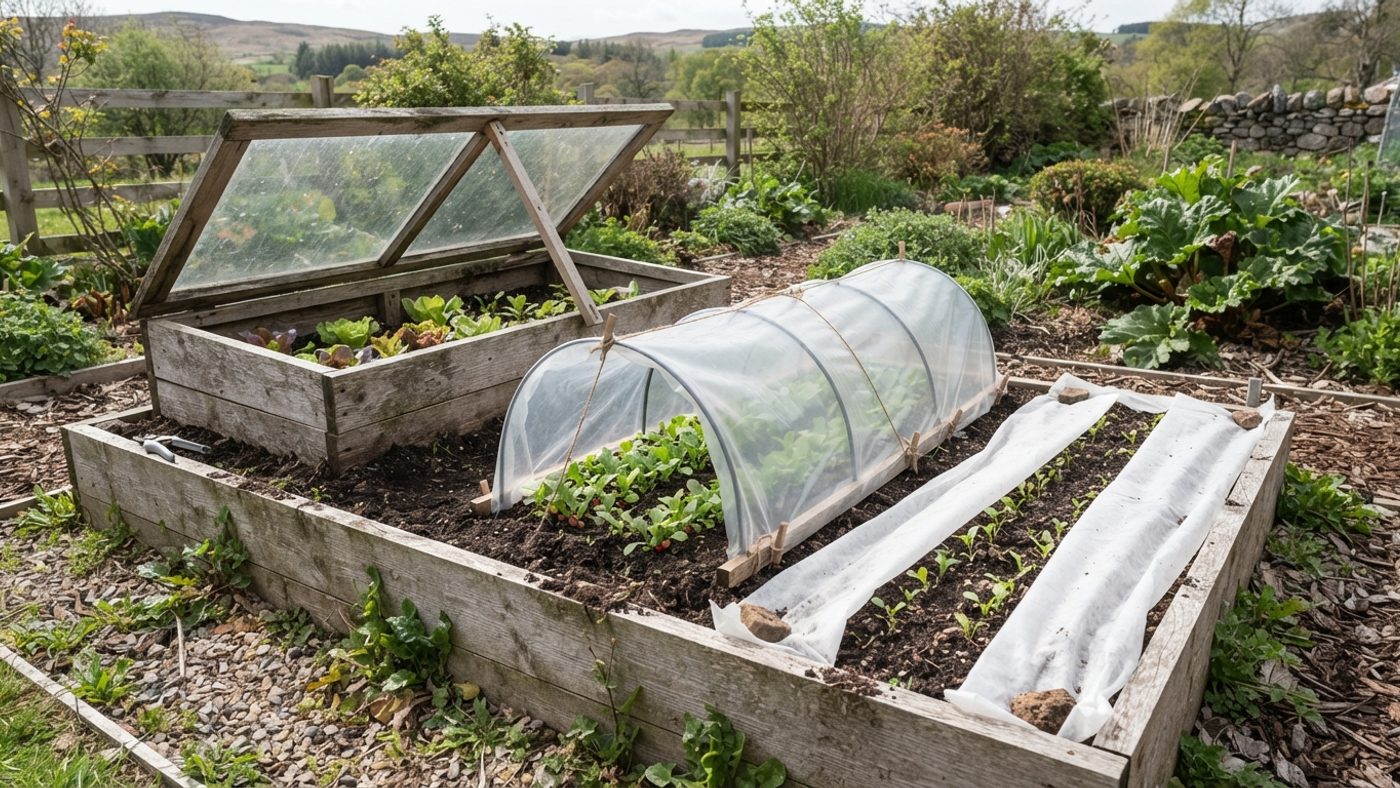
Horticultural fleeceA lightweight, breathable fabric laid or draped over plants to trap a little warmth and keep off frost, wind and some flying pests. Full definition →. Lightweight, breathable fabric laid directly over plants or supported on hoops, genuinely useful season-extension kit in its own right. Fleece comes in different weights suited to different jobs and times of year, see our full guide on garden fleece grades and timing for which grade to use when.
A sunny windowsill or porch. For starting seed indoors, tomatoes, chillies, peppers included, a bright windowsill, porch or unheated spare room can substitute for a greenhouse's early-season propagation role entirely, provided you then gradually harden the seedlings off before they go outside or into a cold frame, rather than moving them straight from a warm room into the open. Our guide to hardening off seedlings covers exactly that transition.
None of these should be read as consolation prizes for people who can't afford a "real" structure. For a small garden, or a garden growing mostly hardy crops, a cold frame plus fleece plus a windowsill start genuinely can capture most of the realistic season-extension benefit, the marginal further gain from a full polytunnel or greenhouse, for that specific garden, may be small.
The honest verdict
Weigh the factors above against each other rather than any one alone: a Braemar garden growing mostly kale still may not need a structure, and an Edinburgh garden set on chillies and tomatoes might, even with a comparatively generous 24-week season. It's the combination of a marginal crop list and a tight or exposed site, not either fact by itself, that makes a structure worth it.
If, on balance, that points toward no for you right now, a cold frame, some cloches, a run of fleece and a bright windowsill for starts will do a genuinely useful amount of the same job, for a fraction of the outlay, and nothing stops you upgrading later. If it points toward yes, the next decision, polytunnel or greenhouse, is a separate question with its own trade-offs, covered fully in our polytunnel vs greenhouse comparison.
Common questions
Do I need a heated structure to get the season-extension benefit?
No. Even the smallest unheated structure extends the season and supports good crops of a wide range of vegetables, using solar gain and the barrier of the structure alone, per RHS guidance. Heating adds further benefit, earlier starts, protection on the coldest nights, but it's not a precondition for a structure to be worthwhile.
Is a polytunnel or greenhouse worth it if I only grow kale, leeks and beans?
Marginally, at best. These crops are already well adapted to grow outdoors in Scotland's cool, damp climate without protection. A structure will let you start them a little earlier, but the yield and reliability gain is small compared with what it does for tomatoes, chillies or peppers. A cold frame will likely capture most of the realistic benefit for a garden built mainly around hardy crops.
How much extra season does an unheated structure actually add?
There isn't a single precise, reliably sourced figure for this, it depends on the structure, siting and how it's managed. The only widely cited description is "several weeks" of earlier sowing and later harvest at each end of the season, not a precise week count; treat any more specific number you see elsewhere with caution unless it's sourced.
Why do the islands need protection if Stornoway has the mildest frost record in Scotland?
Because wind, not frost, is the limiting factor for outdoor growing in the islands. Stornoway's frost-free season is actually the longest in this data, but sustained wind exposure damages and stunts plants in ways a frost-focused structure decision doesn't capture, a separate consideration from the season-length case made here.
I'm renting and might move in a year or two — is a structure still worth it?
Probably not for a fixed greenhouse, which is difficult to relocate. A polytunnel is more portable but still a meaningful teardown-and-rebuild job. Cold frames, cloches and fleece are fully portable and let you capture much of the same benefit without tying the investment to a specific garden.
Sources
8 sources, recorded with what each was used for
- RHS: Greenhouses — Choosing the Right One: The core "even unheated structures extend the season" mechanism claim and siting/orientation advice
- RHS: Greenhouse growing and planting out tender crops: The earlier-sowing/later-harvest framing
- RHS: Coldframes and Mini-Greenhouses: Cold frame description, uses, and no-foundation/no-planning-permission point
- RHS: How to grow chilli peppers: Chillies cropping best under cover and minimum night-temperature figures
- RHS: How to grow sweet peppers: Peppers' under-cover growing norm and target temperature range
- RHS: How to grow tomatoes: Outdoor tomato siting requirements, outdoor blight susceptibility, and the 16°C transplant threshold
- Met Office: Eastern Scotland climate report (PDF): The "often as little as 3 months" frost-free season figure for higher ground in eastern Scotland
- Met Office: location-specific long-term averages (1991-2020): The underlying station normals behind the regional growing-season table