
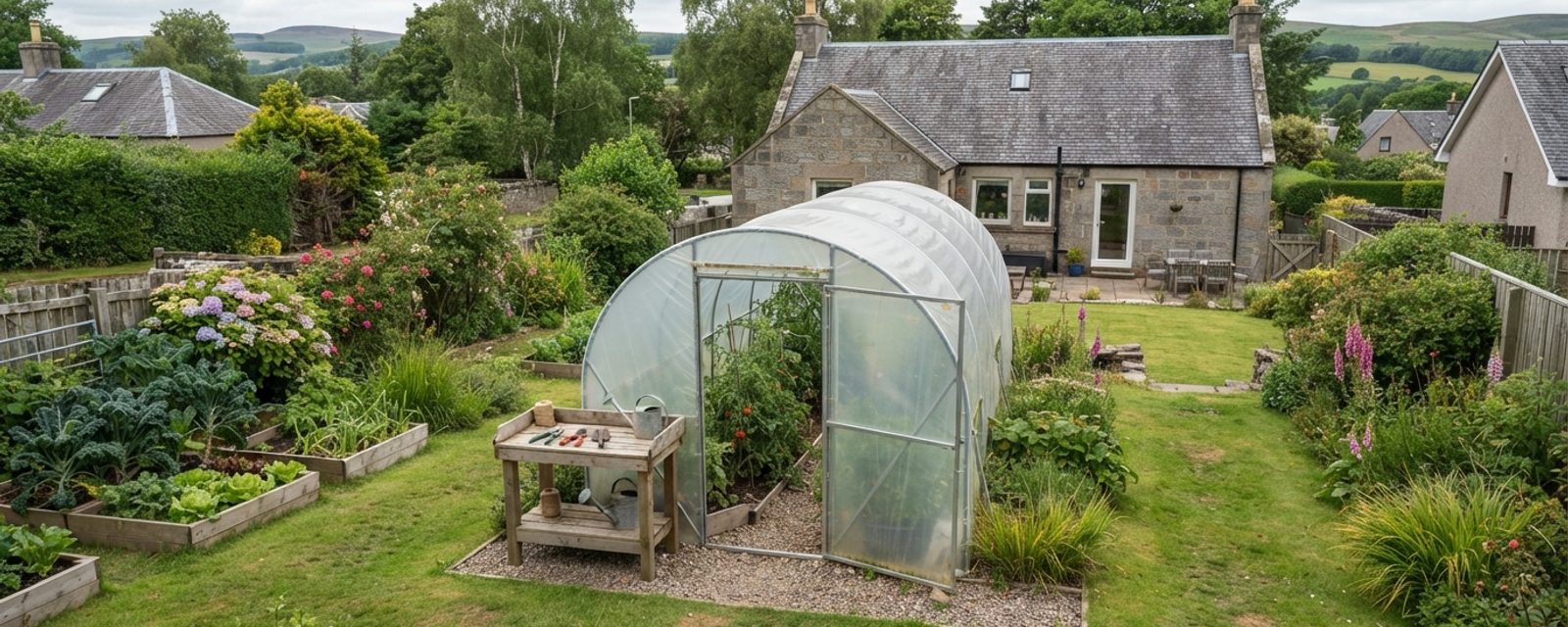
Scotland runs its own planning system, under its own Act, with its own permitted development rules, separate from England and Wales. Most of what comes up when you search "polytunnel planning permission" is written for the English regime, and the rules genuinely differ. This sets out what the Scottish rules actually say, where they go quiet on polytunnels specifically, and what to do about that gap.
Permitted development in Scotland: the legal concept
"Permitted development" is not an exemption from planning law, it's a category of development that Scottish Ministers have pre-authorised, so no planning application is needed for it. The power to create these rights sits in the Town and Country Planning (Scotland) Act 1997, and it's exercised through a secondary piece of legislation: the Town and Country Planning (General Permitted Development) (Scotland) Order 1992 (frequently amended since, most recently in 2024), usually referred to as the Scottish permitted development order.
England and Wales run permitted development under a different pair of instruments entirely: the Town and Country Planning Act 1990 and the Town and Country Planning (General Permitted Development) (England) Order 2015. Planning has been devolved since 1999, and Scotland kept its own 1997 Act and 1992 Order rather than adopting Westminster's. Some development is common and low-impact enough that requiring a formal application for every instance would be a poor use of everyone's time, that underlying idea is the same in both jurisdictions, but the actual clauses, class numbers, and thresholds are not interchangeable. A "Class Q" or "Schedule 2 Part 1" answer from an English source has no direct authority in Scotland.
The Scottish Order organises permitted development into numbered Classes, grouped into Parts. The Class relevant to garden structures sits in Part 1 (development within the curtilage of a dwellinghouse, "curtilage" just means the land that goes with the house, your garden and any ground within its boundary).
What the rules actually allow: sheds, garages and greenhouses
The citizen-facing summary of this is on mygov.scot's Build a shed, garage or greenhouse at your house page, which restates the conditions attached to Class 3A of the 1992 Order ("the provision within the curtilage of a dwellinghouse of a building for any purpose incidental to the enjoyment of that dwellinghouse..."). The thresholds are:
| Condition | Threshold |
|---|---|
| Position | Must be at the back (rear) of the house |
| Ground coverage | The building, combined with any other structures, must not cover 50% or more of the rear curtilage (garden) |
| Use | Cannot be used as a separate home to live in |
| Maximum height | 4 metres at the highest point |
| Height within 1m of a boundary | 2.5 metres |
| Eaves height | 3 metres |
| Footprint in a listed building's grounds | 4 square metres |
| Footprint in a conservation area | 8 square metres |
If a structure meets every one of those conditions, it's permitted development, no planning application needed. Miss one, and you're outside permitted development and need to apply.
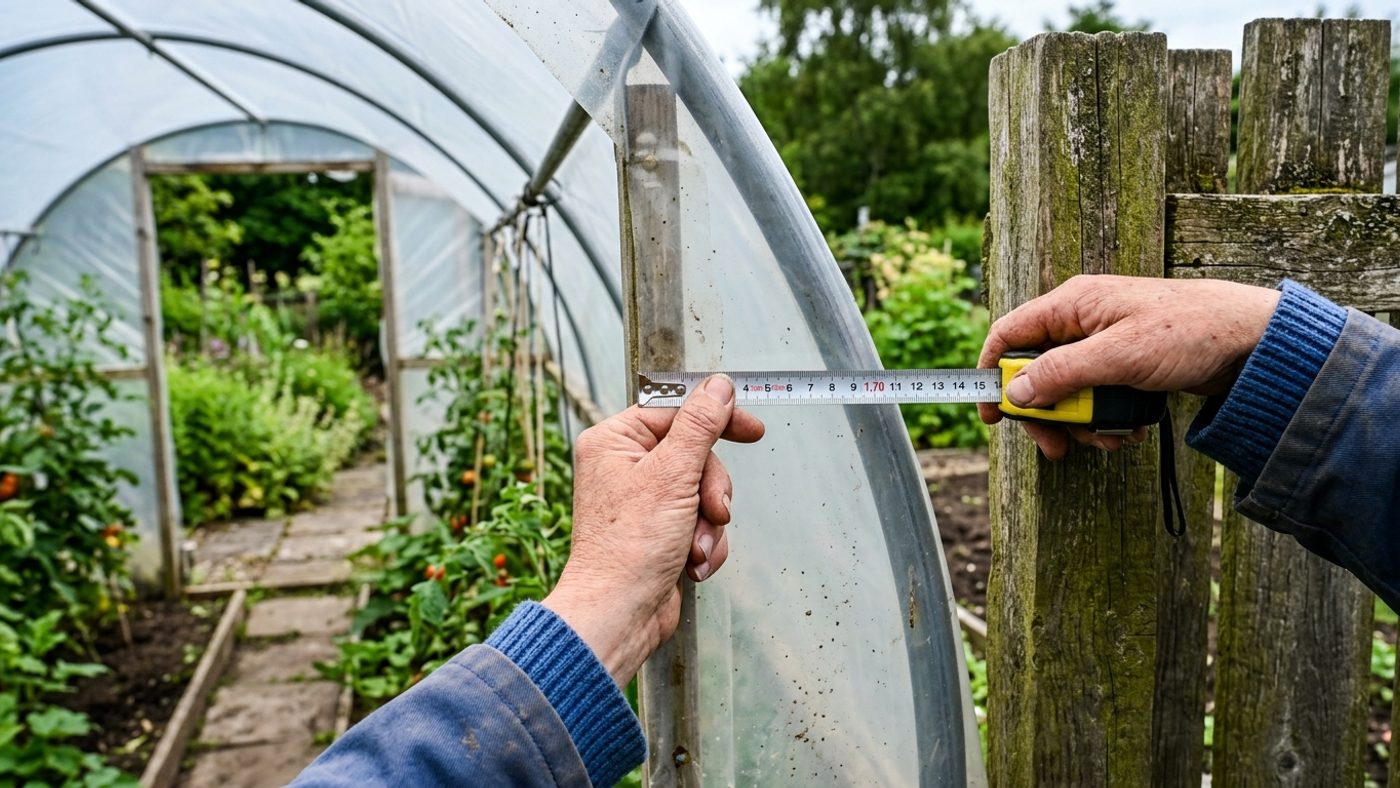
This is the extent of the general garden-structure rule, and it's genuinely useful background. But notice what it doesn't do yet: it doesn't tell you whether a polytunnel counts as one of these "buildings" in the first place.
Where polytunnels sit: the real ambiguity
Here is the honest answer, not a comfortable one: mygov.scot's guidance does not name polytunnels anywhere on its shed/garage/ greenhouse page, and neither does the Class 3A text in the 1992 Order. The Order's language is a "building for any purpose incidental to the enjoyment of the dwellinghouse", greenhouses are conventionally treated as falling within that description, but a polytunnel (a hooped frame under polythene sheeting, generally lighter and more removable than a greenhouse) is a different physical thing, and no Scottish primary or secondary legislation, and no mygov.scot page, states in terms that a polytunnel is treated the same way.
That's not an isolated drafting oversight, it's a live policy problem the Scottish Government has acknowledged directly. In its 2020 consultation on changes to permitted development rights, the government considered creating a dedicated permitted development class specifically for polytunnels and decided against it, saying that doing so "risks subjecting small-scale and/or temporary structures to additional regulation than at present; and/or permitting very large-scale polytunnel developments whose impacts ought to be considered through a planning application." In other words: polytunnels vary so much in scale, from a small hobby tunnel to a large commercial structure, that one blanket rule couldn't fairly cover all of them. Instead of a new PD class, the government proposed three narrower fixes: clarifying the planning-application fee that applies when a polytunnel does need permission, preparing new guidance on which existing PD classes (specifically flagging Class 18, agricultural buildings) a polytunnel might already qualify under, and guidance for planning officers on weighing the economic and food-growing benefits of polytunnels when an application does come in. The government's own reasoning is set out directly in its Permitted development rights: phase 1 priority development types consultation, page 5.
Practically, this leaves a garden polytunnel in a grey zone rather than a clearly-answered one. It is not named as included in Class 3A's "buildings," and it is not named as excluded from it either. Nothing in mygov.scot's page or the 1992 Order tells you which way a particular council will read that gap for your specific tunnel, and there is no Scotland-wide ruling that settles it one way or the other. The only honest guidance is: don't assume either way, ask your council (more on how, below).
When a polytunnel is more likely to need full planning permission
A few situations push a polytunnel decisively out of "probably fine, but check" territory and into "you likely need to apply":
Size. A large domestic tunnel that breaches the height, coverage, or boundary-distance limits in the table above is outside permitted development on the same basis a shed or greenhouse of that size would be, even before you get to the question of whether polytunnels count as Class 3A buildings at all.
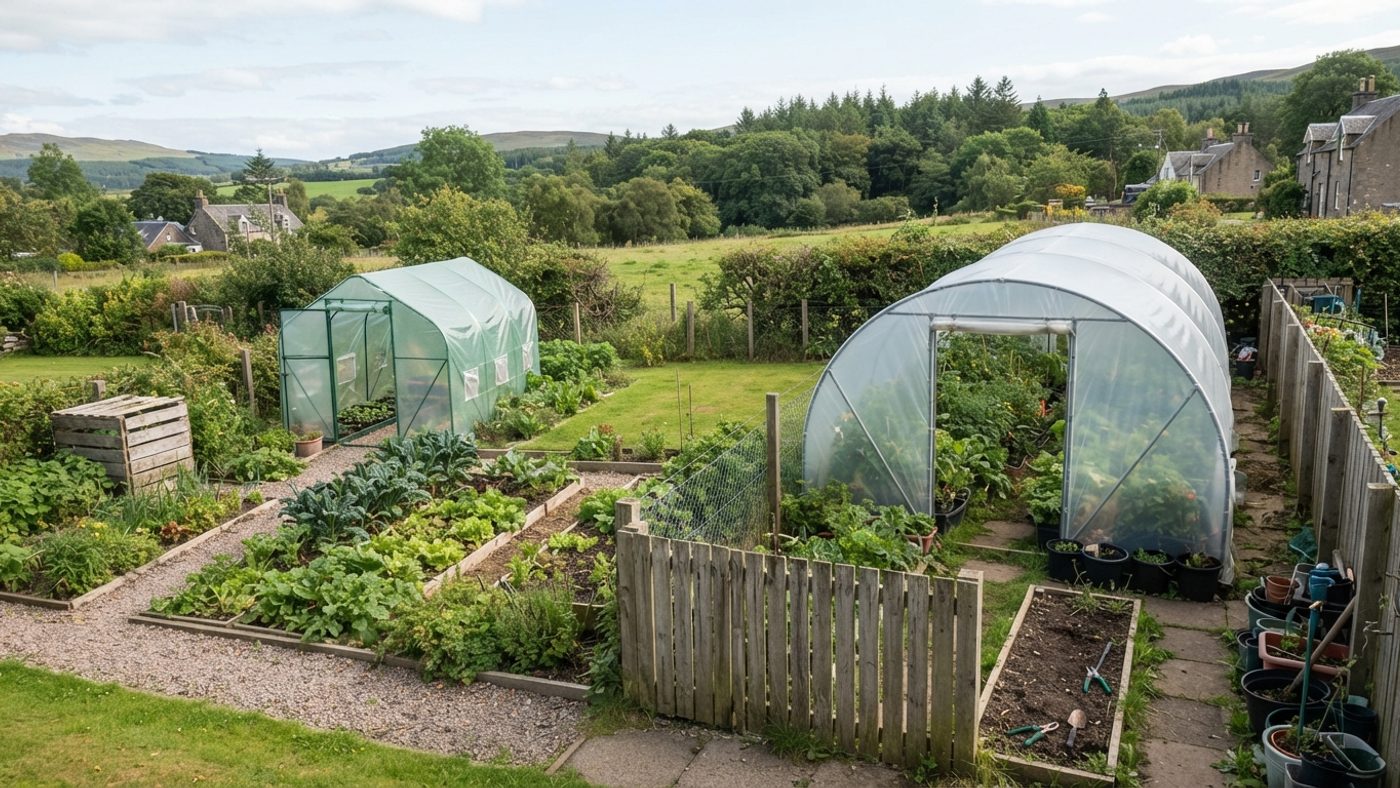
Commercial or croft/agricultural use. This is a materially different legal question from a back-garden structure, not just a bigger version of it. Agricultural land benefits from its own permitted development class, Class 18 of the 1992 Order, which allows building and engineering operations "requisite for the purposes of agriculture" on agricultural units, subject to its own set of conditions:
| Class 18 condition | Threshold |
|---|---|
| Minimum agricultural unit size | 0.4 hectares (with some exceptions for island and Highland authorities) |
| Ground-area cap on new structures | 465m² in "designated areas" (National Scenic Areas, National Parks and similar higher-protection land) |
| Ground-area cap elsewhere | 1,000m² |
| Prior approval | Council sign-off on siting, design and external appearance required before work starts, even though no full application is needed |
"Prior approval" is a lighter-touch step than a full planning application, you notify the council of your proposal and they can approve it, refuse it, or impose conditions on details like siting and appearance, but you don't go through the whole application process a non-permitted development would need. Whether a polytunnel on a croft or agricultural holding falls under Class 18 at all depends on whether it's genuinely required for agricultural use of that land and stays within those thresholds. If you're planning a polytunnel for a croft, smallholding, or any agricultural unit rather than a domestic garden, treat it as a separate question from the shed/greenhouse rules entirely and get council or agricultural-planning advice before you order the structure.
Retrospective problems. Putting a polytunnel up first and asking questions later is a common route to an enforcement notice if it turns out permission was needed. Scottish planning authorities can require retrospective applications or removal, and a structure that's already built weakens your negotiating position rather than strengthening it.
Listed buildings and conservation areas
If your property is a listed building, or a structure would sit within its grounds (curtilage), there's a second and separate consent regime layeredPropagating a new plant by pinning a low, flexible stem into the soil while still attached to the parent, so it roots before being cut free. Full definition → on top of permitted development, and Scotland runs its own version of this too, under the Planning (Listed Buildings and Conservation Areas) (Scotland) Act 1997, not the equivalent English Act. Section 6 of that Act restricts works for the demolition of a listed building or for its alteration or extension in any manner which would affect its character as a building of special architectural or historic interest without authorisation (listed building consent), and section 7 sets out how that consent is obtained. Historic Environment Scotland administers listing and provides guidance on what falls within a listed building's protection, check with them or your council before building anything within a listed building's curtilage.
Separately, if you're in a conservation area, the general garden-structure thresholds already tighten regardless of listing status, the mygov.scot/Class 3A figures above cap footprint at 8 square metres in a conservation area, against the ordinary 50%-of-curtilage rule elsewhere. Both regimes can apply to the same property at once: being in a conservation area doesn't require listed building consent by itself, but if the property is also individually listed, both sets of restrictions stack.
Polytunnels aren't named specifically in either the listed building consent regime or the conservation area rules, the same gap as the general permitted development rules above. The safe assumption is that a polytunnel proposed in either setting should go to the council before you build, not after.
Article 4 directions and National Parks: two more ways the general rule can be overridden
Everything in the "sheds, garages and greenhouses" table above is the default position. Two further mechanisms in Scottish planning law can remove it locally.
Article 4 directions. The 1992 Order itself gives a planning authority the power to withdraw specified permitted development rights across a defined area, a conservation area, a National Scenic Area, a croft township, or any other area it considers needs tighter control, by making what's called an Article 4 direction. Where one is in force, the normal shed/greenhouse thresholds above don't apply, and a structure that would ordinarily be permitted development needs a planning application instead. Article 4 directions are set locally, so the only way to know if one covers your property is to ask your council or check its planning register, there's no national list to search.
National Park planning authorities. The Cairngorms National Park Authority and Loch Lomond and The Trossachs National Park Authority are themselves the planning authority for land inside their boundaries, not the local council. If your garden or croft sits within either park, go to the park authority for permitted development and planning queries, not the surrounding council, they can and do apply their own local guidance on top of the national rules covered above.
A condition on your own house's planning permission. This is a narrower but more common trap than an Article 4 direction: a fair number of newer houses, particularly on estate developments, were granted planning permission with a specific condition removing some or all permitted development rights for that individual plot, rather than the wider area. If that applies to your house, the general shed/greenhouse thresholds above don't apply to you at all, regardless of what your neighbours on an older street can build without asking. Check the planning conditions attached to your own house's original planning permission (available on your council's planning register, searchable by address) before assuming the standard rules apply.
Planning permission and building warrants are two separate questions
Not needing planning permission for a polytunnel doesn't automatically mean no other approval is required. A building warrant, under the Building (Scotland) Act 2003, is a separate regime run by the council's building standards team, not its planning team, and it deals with construction safety and standards rather than land use. A basic hooped-frame tunnel on bare ground with no services almost never needs one. What tends to trigger a building-standards question is anything that turns the tunnel into more of a permanent, serviced structure: a mains electrical supply run in for lighting or heating, plumbed-in water or drainage, or a solid poured-concrete base rather than ground anchors. If your plans include any of those, check with your council's building standards service before you build, rather than assuming "no planning permission needed" also means "nothing else to check."
Council or allotment land
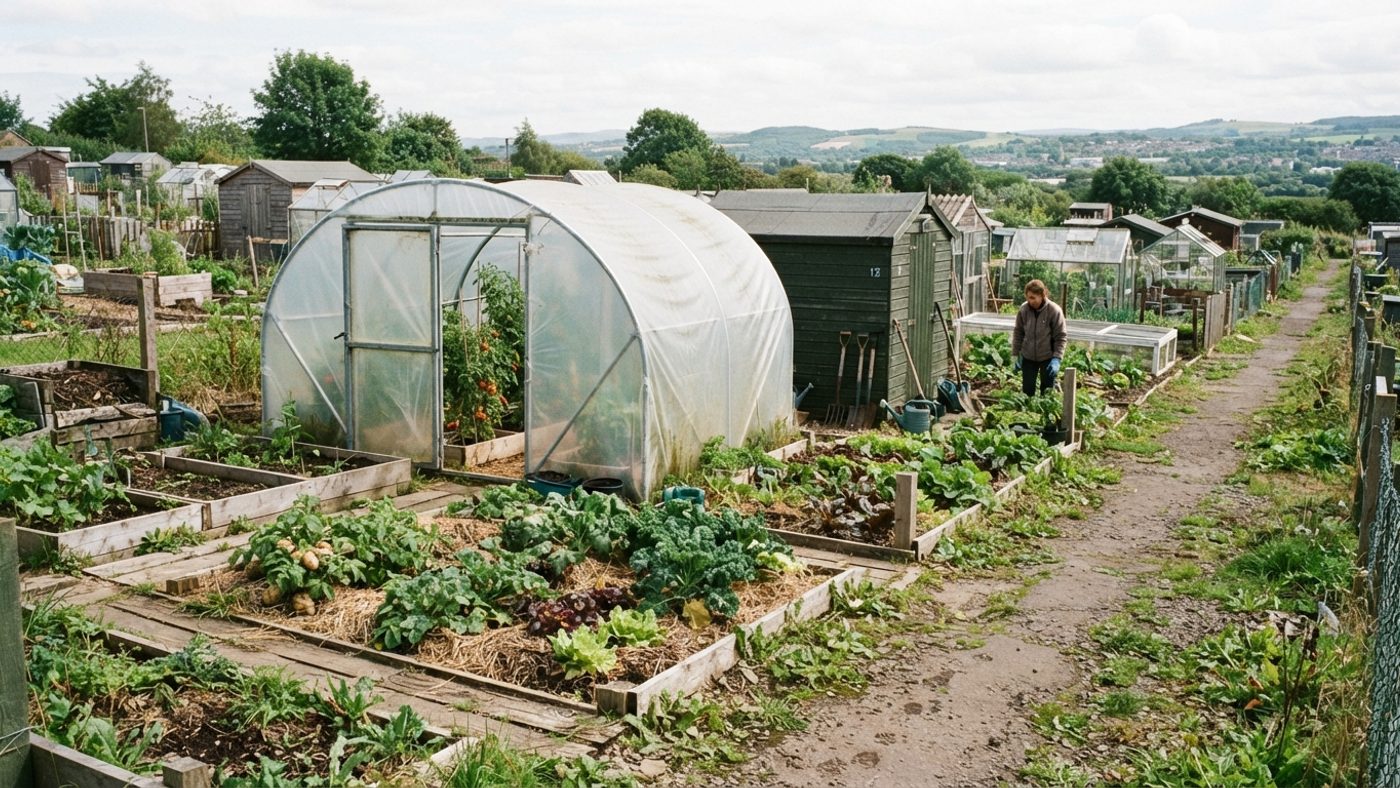
If your polytunnel would sit on council-owned allotment land rather than a private garden, permitted development rights attached to "dwellinghouse curtilage" don't apply in the same way, because an allotment plot isn't the curtilage of your house. Whether you need consent will depend on the terms of your allotment tenancy agreement with the council as much as on planning law, many allotment agreements have their own rules on structures, independent of the planning system. Check your tenancy agreement and ask your allotment officer or the council's planning desk directly, this is a genuine gap in the published guidance and not something mygov.scot or the 1992 Order addresses.
What to actually do if you're not sure
- Contact your local planning authority before you buy or build, not after. Every Scottish council has a planning department that handles enquiries about permitted development.
- Ask for it in writing. A verbal "that should be fine" from a phone call has no evidential weight if a neighbour complains or an enforcement question comes up later. Most councils offer a certificate of lawfulness of proposed use or development, a formal, fee-paying application that gets you a legally binding written answer on whether your specific structure needs permission. Fees and processing timescales are set by each individual council rather than nationally, so check your own council's planning fees and service-standard pages for the current figure and expected turnaround before you rely on having an answer by a particular date, for anything beyond a small hobby tunnel, or anything on agricultural land, it's worth the fee regardless of the exact amount.
- Use pre-application advice for anything larger or commercial. Most planning authorities offer a paid pre-application advice service where a planning officer will look at your specific proposal, size, siting, land use, before you commit to buying materials or breaking ground. As with the certificate above, cost and response time vary by council; ask when you contact them.
- Give them the real numbers. Height, footprint, distance to boundaries, and (if relevant) the size of the wider agricultural unit. Vague descriptions get vague answers.
If you're still deciding whether a polytunnel or a greenhouse is the right structure for your garden in the first place, that's a separate cost-and-durability question from the planning question covered here, see our companion piece, polytunnel vs greenhouse, for the buy/build comparison.
Common questions
Does the shed/greenhouse permitted development rule automatically cover my polytunnel?
Not automatically, and not clearly excluded either. Polytunnels aren't named in mygov.scot's guidance or in Class 3A of the 1992 Order, which is the provision that rule is based on, and there's no Scotland-wide ruling that settles which way that gap is read. Ask your council rather than assuming either way.
I'm on a croft — does the domestic garden rule apply to me?
No. A polytunnel on agricultural land is assessed under different rules (Class 18 of the 1992 Order, covering agricultural buildings on agricultural units), not the dwellinghouse-curtilage rule that governs garden sheds and greenhouses. Size caps, unit-size thresholds, and prior-approval requirements are different. Get council or agricultural-planning advice specific to croft/agricultural use before proceeding.
What happens if I put a polytunnel up without checking and it turns out I needed permission?
Scottish planning authorities can require a retrospective planning application or, in some cases, require the structure's removal via an enforcement notice. It's a materially worse position than asking first, both practically and in terms of any costs involved.
Does being in a conservation area change the rules for a polytunnel?
It changes the rules for garden structures generally, the permitted footprint drops sharply (to 8 square metres under the Class 3A conditions), and if the property is also a listed building, listed building consent may separately apply under the Planning (Listed Buildings and Conservation Areas) (Scotland) Act 1997. Neither regime names polytunnels specifically, so check with your council or Historic Environment Scotland before building in either setting.
Can I get a polytunnel exemption confirmed in writing?
Yes, ask your local council's planning department about a certificate of lawfulness of proposed use or development. It's a formal application with a fee, but it gives you a legally binding answer rather than an informal opinion, which matters if the question is ever challenged later.
Sources
9 sources, recorded with what each was used for
- mygov.scot: Build a shed, garage or greenhouse at your house: Citizen-facing summary of the domestic permitted development thresholds (height, coverage, boundary, conservation area/listed building footprint limits); confirmed polytunnels are not named on this page
- Town and Country Planning (Scotland) Act 1997: Primary Scottish planning legislation; source of the power under which permitted development orders are made
- Town and Country Planning (General Permitted Development) (Scotland) Order 1992, Schedule 1, Part 1: Class 3A, the provision covering outbuildings incidental to a dwellinghouse (sheds, garages, greenhouses) and its conditions
- Town and Country Planning (General Permitted Development) (Scotland) Order 1992, Schedule 1, Class 18: The separate agricultural buildings permitted development class, used for the croft/agricultural-holding section
- Permitted development rights — phase 1 priority development types: consultation, page 5, gov.scot: The Scottish Government's own 2020 consultation document explaining why a bespoke permitted development class for polytunnels was considered and rejected
- Planning (Listed Buildings and Conservation Areas) (Scotland) Act 1997: The separate Scottish listed building consent regime
- Historic Environment Scotland: Scotland's listing and heritage consents body, referenced for the listed building consent section
- Town and Country Planning (General Permitted Development) (Scotland) Order 1992: The Order's main body, used for the Article 4 direction power that lets a planning authority withdraw permitted development rights locally
- Building (Scotland) Act 2003: The separate building warrant regime, used to distinguish planning permission from building standards approval