
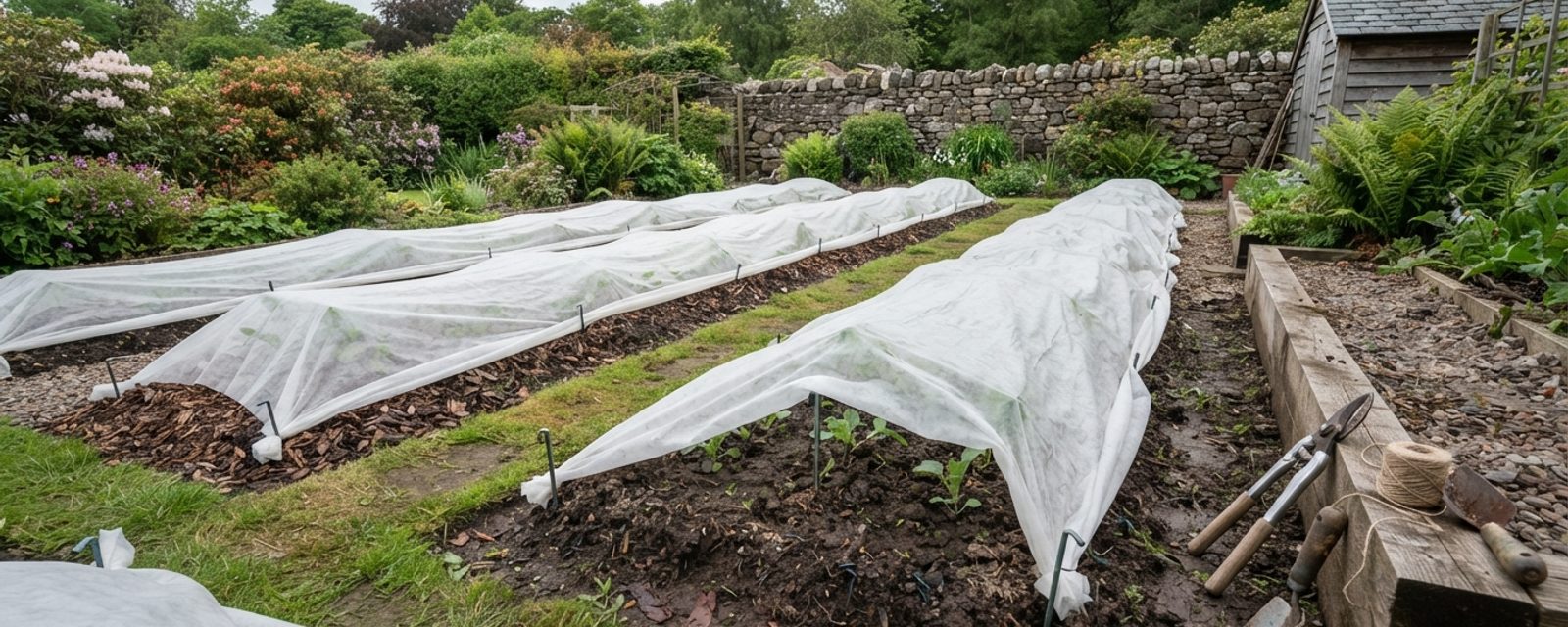
Horticultural fleeceA lightweight, breathable fabric laid or draped over plants to trap a little warmth and keep off frost, wind and some flying pests. Full definition → is a lightweight, spun-bonded polyester or polypropylene fabric, and the reason it works has nothing to do with blocking cold the way a coat blocks wind. Draped over a plant, fleece traps a thin layer of air between the fabric and the leaf surface. That trapped air is warmed during the day by solar radiation passing through the permeable fabric, and because the fleece slows the air's escape, the plant sits inside a small pocket of air a few degrees warmer than the open garden overnight. Fleece also cuts radiative heat loss: on a still, clear night, exactly the conditions that produce the sharpest frosts, bare leaves lose heat straight up into the sky, and a physical layer above them interrupts that loss. The fabric's permeability is the other half of the mechanism: because air and moisture pass through it, fleece doesn't trap the humidity that would otherwise encourage rot and fungal problems, which is why it can stay in place for extended periods in a way a sealed plastic sheet cannot.
That mechanism sets the ceiling on what fleece can do. It buys a few degrees, not a climate change. Crop covers work by trapping warmth from the sun and raising the temperature by a few degrees, typically 2C, compared to uncovered plants, and heavier fleece gives roughly that same 2C of protection: enough to stop damage from a light spring frost, not enough on its own to save tender crops from a hard freeze.
Fleece grades: what the gsm number actually buys you
Fleece is sold by weight, expressed in grams per square metre (gsm). The number tells you how densely the fibres are packed, which trades off directly against how much light reaches the plant underneath and how many degrees of protection the fabric provides. No single institutional body publishes a definitive gsm-to-degrees table, RHS covers technique, not manufacturing specification, so the figures below combine RHS's protection-level guidance with a UK garden-fleece supplier's own current product specification.
| Grade (gsm) | Typical protection | Best use |
|---|---|---|
| ~17gsm (light) | Roughly to just below freezing, the lightest useful buffer | Seedlings, hardening offGradually getting young plants raised indoors used to outdoor conditions over 7–14 days before planting out, so cold, wind and direct sun don't shock or damage them. Full definition →, pest exclusion, spring clocheA small, portable clear cover placed over an individual plant or short row to trap warmth and keep off wind, rain and pests. Full definition → cover where light penetration matters most |
| ~30-35gsm (medium/standard) | Around 2C, with one current UK supplier's own 30gsm product rated to roughly -2C to -3C | General frost protection for beds, borders and young tender plants through an average Scottish spring or autumn night |
| ~50-60gsm (heavy/extra-warm) | Marketed for harder frosts and exposed sites, but no supplier we could verify publishes a precise degrees figure at this weight | Exposed or allotment sites, container wraps, and short hard-frost snaps rather than routine overnight cover |
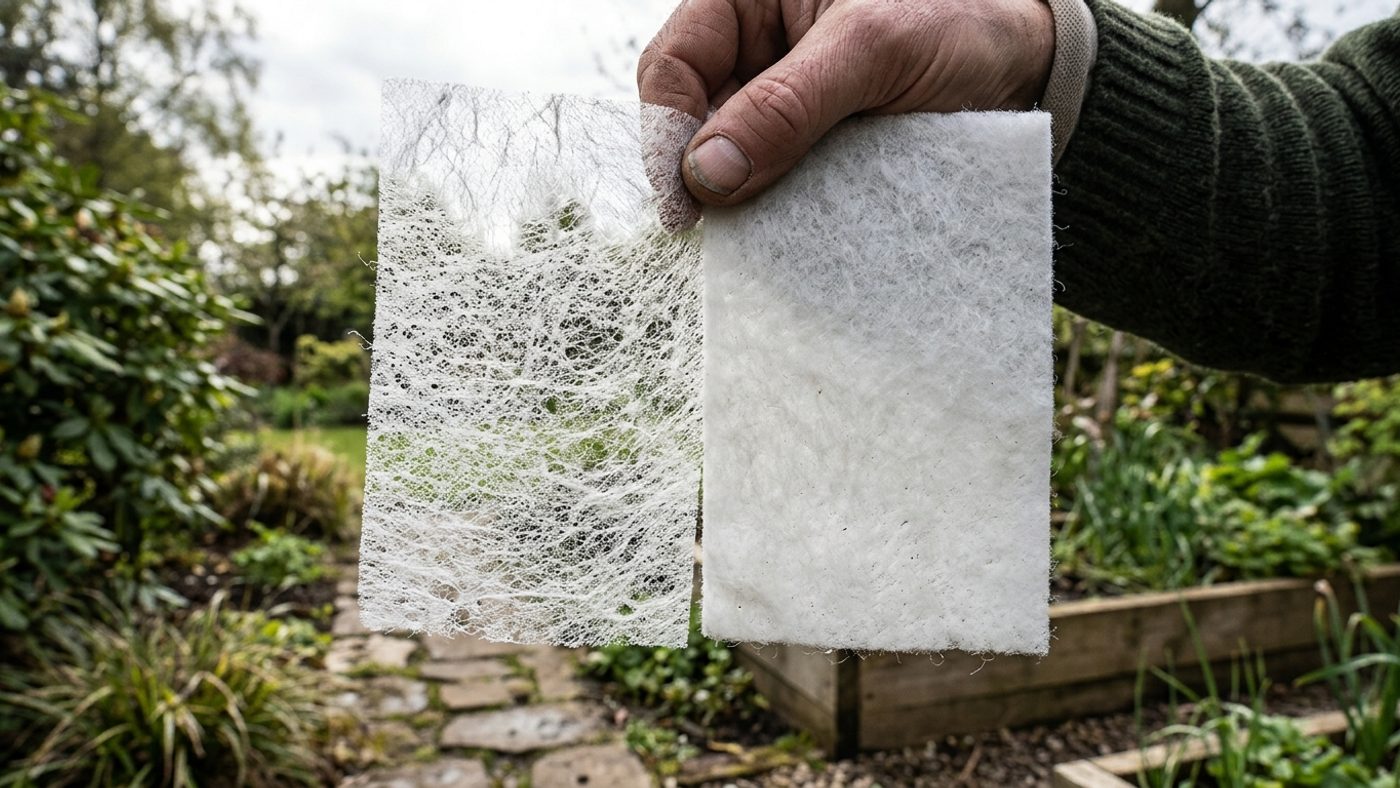
A few things worth knowing that don't fit neatly into the table. The trade-off is real and goes both ways: 17gsm lets through the most light, so it's the right choice whenever you want the fleece to stay on for weeks rather than overnight, over germinatingA seed sprouting: breaking dormancy and putting out its first root and shoot, given the right warmth and moisture. Full definition → seed or hardening-off trays, but it offers the least thermal buffer. Heavier fleece protects better but shades more, so leaving 35gsm-plus fleece on indefinitely will hold plants back rather than help them. Doubling up a layer of lighter fleece is a legitimate way to add a couple more degrees of protection for one sharp night without buying a heavier grade you'll rarely need. And treat the exact degree figures as indicative rather than guaranteed: they come from a supplier's own product testing, not an independent standard, and real-world protection depends on wind, how snugly the fleece is pegged, and whether it's touching the foliage.
Fixing fleece down properly
Fleece is light enough that it rarely needs a hoop frame to hold its shape and can be laid directly over the crop. But that lightness is also its weak point: a fleece sheet with unsecured edges is a sail, and a windy night will do more damage by whipping and tearing the fabric, or by letting cold air in at the edges, than an unprotected plant would have suffered from frost alone. Bury or peg every edge, earth staples, bricks, timber battens or a spade's-width of soil along each side all work, and leave enough slack that the fabric can flex in gusts without ripping at the pegs.
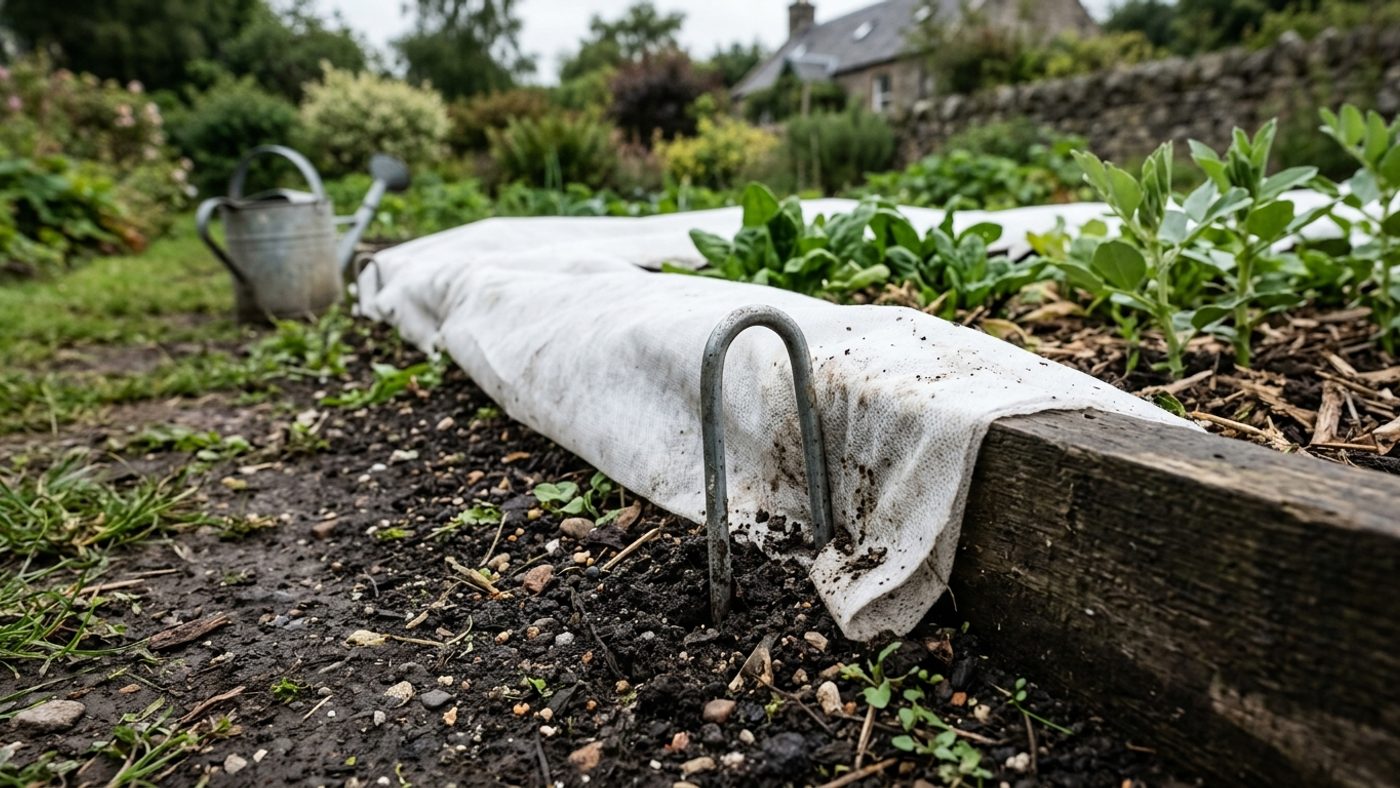
Where fleece will rest directly on delicate growth (blossom, soft new shoots), use canes or a low hoop to keep the fabric just clear of contact points, since a leaf pressed against wet fleece on a frosty night can still take cold damage exactly where it touches.
This is the one point on this page where wind matters more than the frost figures below: the islands and other exposed coastal sites face fewer, milder frosts than inland Scotland but far more sustained wind, so a securely pegged sheet matters more there than precise timing does. See securing a greenhouse or polytunnel in wind for the same wind-exposure picture applied to a larger structure.
How long fleece can stay on
There's no fixed day-count that suits every situation, because it depends on what the fleece is protecting against and which grade you're using. As a rough guide:
- Overnight-only cover (removed by day) is right whenever the fleece is heavy enough to noticeably cut light, anything from about 30gsm up, or whenever you're protecting flowering fruit trees, where pollinators need daytime access to the blossom.
- Days to a couple of weeks suits a genuine cold snap over young vegetables or newly planted-out crops, where the priority is getting plants through a spell rather than long-term cover.
- Weeks to the whole season is realistic only with the lightest grade (around 17gsm), and only where light loss and airflow aren't a concern, pest exclusion over brassicasThe cabbage family: cabbage, kale, broccoli, cauliflower, Brussels sprouts, kohlrabi, swede, turnip and more, sharing the same pests, diseases and rotation rules. Full definition →, for example. Fleece, unlike polythene, can be left on all summer for exactly this reason: it's permeable enough not to cook or drown what's underneath.
The trade-offs to watch for extended cover are pollinator access on anything that needs to flower and set fruit, and a build-up of pests or weeds in the sheltered, undisturbed microclimateThe local growing conditions in one specific spot that differ, sometimes substantially, from the wider area's average climate. Full definition → under the fabric if it's never lifted to check.
Reuse and realistic lifespan
Fleece is reusable, but how long it actually lasts depends heavily on grade and how it's stored. Polypropylene fleece isn't especially durable, especially the 17g fleece, which may only last a year, while a heavier 30gsm product from a UK supplier has held up for gardeners across two seasons and into a third, provided it's UV-stabilised and handled carefully. In practice: lift and shake off debris before folding, let it dry fully before storage (damp fleece stored folded will mildew), and store it away from direct sun and rodents, which will chew it for nesting material. Small tears can be taped or stitched, but once a sheet is more holes than fabric, it's cheaper to replace than to keep patching, particularly at the lighter grades RHS flags as short-lived.
Fleece vs frost cloth vs bubble wrap
Fleece isn't the only cover worth considering, and the right choice depends on what you're protecting and for how long.
| Material | Cost | Light transmission | Reusability | Effort |
|---|---|---|---|---|
| Horticultural fleece | Low | High at light grades, lower as gsm rises | Moderate, a season or two, less for the lightest grade | Very low; drapes and pegs directly |
| Frost cloth (heavier woven/knitted fabric) | Moderate | Lower than light fleece, comparable to heavy fleece | Good, generally more durable than light fleece | Low; similar draping, often stiffer to handle |
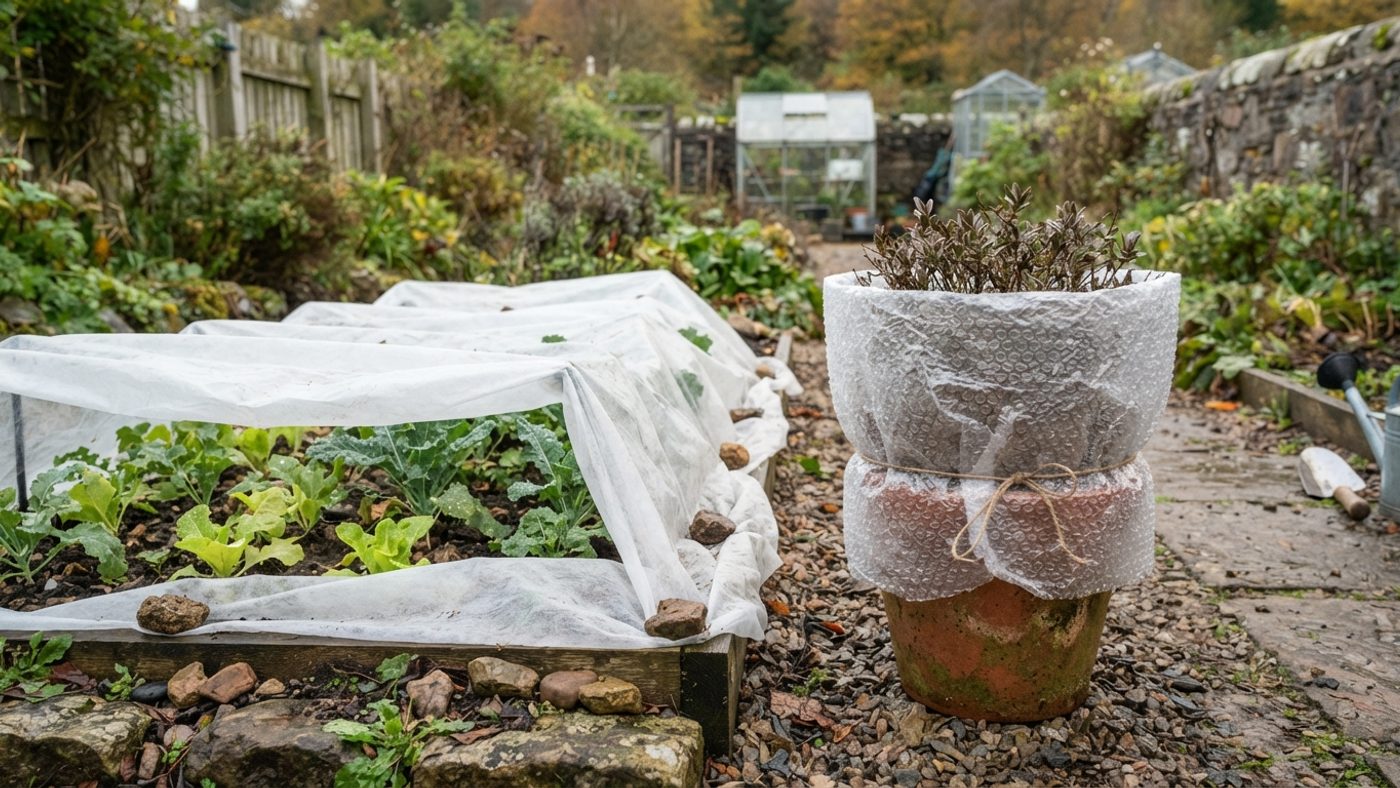
| Bubble wrap | Low (often reused packaging) | Low; the air pockets scatter and block a meaningful share of light | Good if kept clean and dry, but degrades in UV over a season or two outdoors | Higher; needs taping, wrapping round pots, or fixing to structures rather than simple draping |
Bubble wrap earns its place for one specific job this page doesn't otherwise cover well: lagging pots and containers, where its bulk and rigidity insulate root balls far better than a thin fabric drape, and where its poor light transmission doesn't matter because it's wrapped around the outside of a pot rather than over live foliage. For open beds and anything that needs light to keep growing underneath, which is most frost-protection use in a Scottish garden, fleece remains the simpler, cheaper, lower-effort choice, and frost cloth is worth the extra cost mainly where you want fleece-like ease of use but more durability season over season.
Scotland's fleece season is longer than the generic guide assumes, but not everywhere equally
Most UK-wide fleece guidance assumes a season running roughly October to April or May. For a lot of Scotland, that's close enough: this site's own regional frost-date reference, derived from Met Office 1991-2020 station averages, puts lowland and coastal Scotland's frost-relevant fleece season at around 25-27 weeks, in line with the generic figure.
| Location | First autumn frost | Last spring frost | Roughly how long fleece may be needed |
|---|---|---|---|
| Central Belt (lowland, e.g. Edinburgh) | Late October | Mid-to-late April | ~26 weeks |
| Aberdeen / Dyce (lowland) | Late October | Early May | ~27 weeks |
| Islands (Stornoway, maritime) | Early November | Late April | ~25 weeks |
| Southern Uplands (Eskdalemuir, ~242m) | Late September | Mid-to-late May | ~34 weeks |
The real finding in that data is that season length tracks altitude and distance inland far more than it tracks region on a map. Upland and inland ground, the Southern Uplands and Central Belt hill fringes represented by Eskdalemuir, and the Cairngorms and Highland glens, runs a fleece-relevant season of roughly 34-36 weeks, about two months longer at both ends than the lowland figure. Braemar itself records air frost in every month of the year except July. Meanwhile the islands, despite the reputation Scotland has for cold, actually post the mildest and shortest frost season of any Scottish location in this dataset, at around 25 weeks, because they're maritime, not because they're sheltered. Wind rather than frost is what an island or exposed coastal gardener needs to plan around instead; a Central Belt or Aberdeenshire gardener working from the lowland figures is closer to the generic UK guide's assumptions than either extreme.
Practically, that means a Highland glen, Southern Uplands or Cairngorm-fringe garden should expect to be reaching for fleece from late September and may still need it into late May or early June, while a coastal or Central Belt garden's fleece season sits much closer to the standard October-to-April/May window most fleece guidance is written around. For the broader "when and why" of frost protection, not just the fleece itself, see our guide to protecting garden plants from frost.
Common questions
Does fleece stop a hard frost, or only a light one?
On its own, no: the RHS figure of roughly 2C of protection from heavier fleece is enough to take the edge off a light frost but won't reliably save tender plants from a hard freeze. For a genuinely hard frost, combine fleece with other cover (cloches, a sheltered position, or doubling the fleece layer) rather than relying on fleece alone.
Can I leave fleece on all the time, or does it need to come off during the day?
It depends on the grade and what's underneath. Light fleece over pest-exclusion crops can stay on continuously for a whole season, since it's permeable enough not to trap damaging heat or moisture. Heavier fleece used for frost protection, and any fleece covering flowering fruit trees, is better removed by day so pollinators can reach the blossom and so plants aren't shaded needlessly once the frost risk for that night has passed.
How many times can I reuse garden fleece?
Realistically once to a handful of times for the lightest (around 17gsm) grade, which may only last a single season, and more reliably across two to three seasons for a well-made 30gsm-plus product that's dried and stored properly between uses. Storage habits, drying fully, folding out of direct sun, keeping it away from anywhere rodents nest, matter as much as the grade itself.
Is bubble wrap actually a legitimate alternative to fleece?
For pots and containers, yes: its bulk insulates a root ballThe mass of roots and the soil or compost clinging to them, as it comes out of a pot or out of the ground when a plant is lifted. Full definition → better than thin fabric, and its low light transmission doesn't matter because it's wrapped around the outside of the pot rather than draped over live growth. For open beds or anything that needs light to keep growing, fleece or frost cloth is the better choice.
Do I need heavier fleece if I garden in an upland or inland part of Scotland?
Not necessarily heavier, but you'll likely need it for longer at both ends of the year. This site's regional frost data suggests upland and inland Scottish gardens face a fleece-relevant season roughly two months longer than lowland or coastal Scotland, starting in late September rather than late October, and running into late May or early June rather than April. Grade choice still depends on how hard the individual frost is expected to be, not just on altitude.
Sources
3 sources, recorded with what each was used for
- RHS: Fleece and crop covers: The mechanism of how fleece works, the ~2C protection figure for heavier fleece, hoop-free application, how long fleece can stay on (including the "left on all summer" pest-exclusion point), and durability/lifespan of polypropylene fleece
- Harrod Horticultural: Garden Fleece 30gsm product page (manufacturer/supplier technical documentation): A current UK supplier's own technical specification for 30gsm fleece: material composition, the -2C to -3C protection figure, and real-world durability across multiple seasons
- Met Office: Location-specific long-term averages (1991-2020 station normals): The underlying data behind this site's regional frost-date figures (Central Belt, Aberdeen, islands, Southern Uplands/Eskdalemuir season-length comparison)