
Apple & Pear Scab is a common disease that affects apples and pears in Scotland. Here is what it looks like, the conditions it needs, and the controls that actually work.
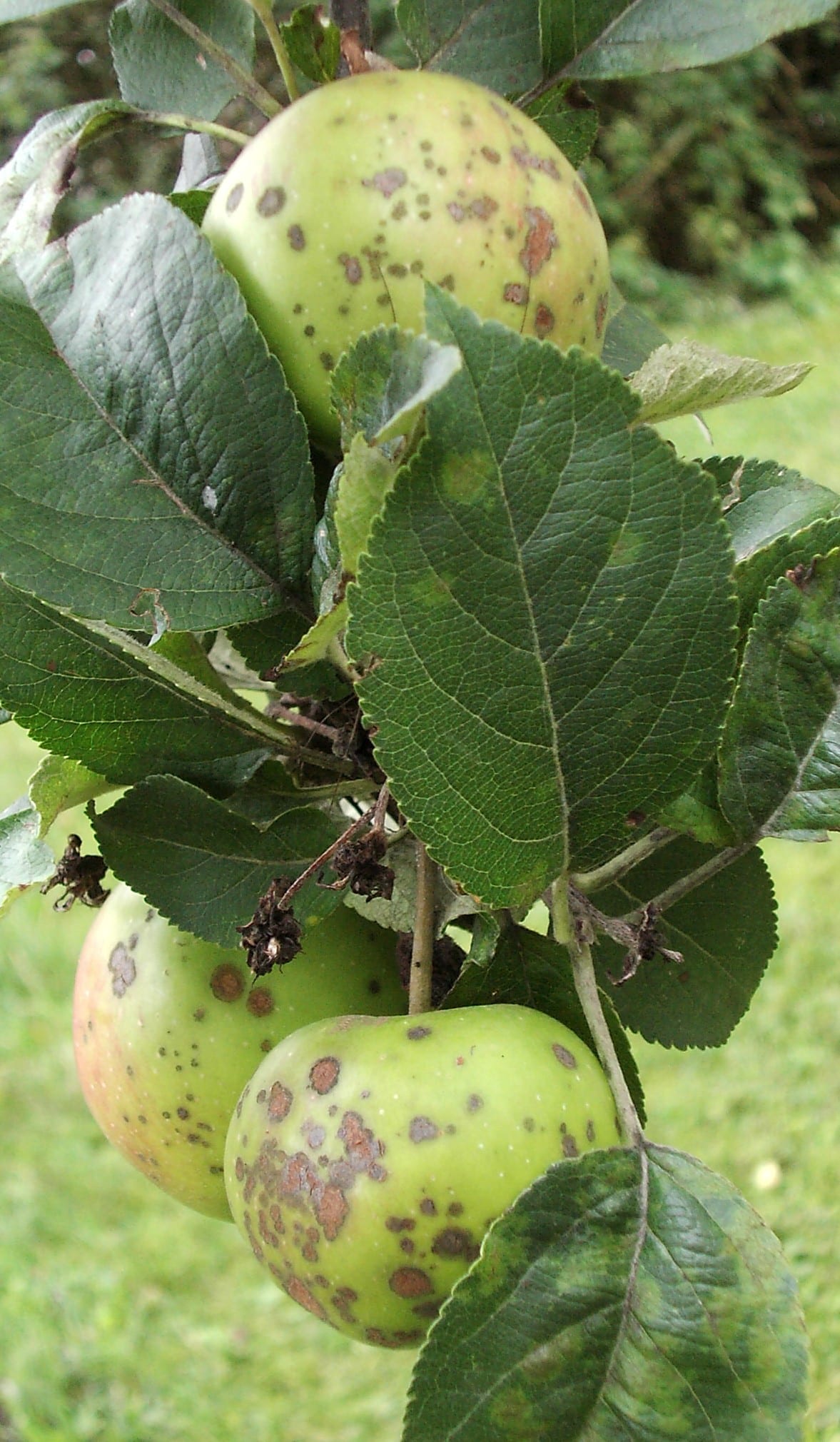
What does it look like?
On leaves: olive-green spots or blotches, velvety at first, then darkening; affected leaves often fall early. On fruit: brown or black scabby blotches, which can restrict the skin as the fruit grows, leading to distortion and cracking. On twigs: blistering and cracking, which matters beyond the twig itself, since it opens a way in for the apple canker fungus too.
What causes it
Spores spread by wind and by rain splashing off infected leaves, so a wet spring and summer both start and carry the infection through the season.
Is this disease active now?
Mid-spring through to leaf fall in autumn: a long window, since fresh spores keep being produced and spread for as long as the tree is in leaf.
Symptoms
A light attack is mostly cosmetic: it blemishes the skin, but eating quality is barely affected. Cracked fruit is the real problem, since it’s then prone to rots and won’t store well through the winter.
Life cycle
The fungus overwinters on fallen leaves, and on infected twigs if these aren’t pruned out. Airborne spores released from those fallen leaves in spring cause the first infections on new foliage. As those develop, they release a second type of spore, spread by wind and by rain splash, which carries the infection through the rest of the growing season.
Why this matters in Scotland
Spread depends on wind and rain-splash carrying spores through the season, and Scotland runs wetter than the UK average across spring and summer both. A tree here gets more of the exact weather this disease needs to keep spreading, not less.
Controls: what actually works
All the methods below are backed by real evidence, not just repeated folklore.
Prune out blistered twigs and dispose of fallen leaves and infected fruit
Cuts down how much fungus is left to start next year’s infections.
This has limited value on its own unless your trees are isolated: spores travel long distances on the wind, so a neighbour’s infected tree can still reach yours.
Choose a resistant cultivar where you’re planting new
Dozens of resistant options exist. Among the apples: ‘Discovery’, ‘Lord Derby’, ‘Winston’ and ‘Topaz’. Among the pears: ‘Beurre Hardy’, ‘Hessle’, ‘Jargonelle’ and ‘Josephine de Malines’.
Frequently asked questions
What should I do first if I find apple & pear scab in my garden?
Start with prune out blistered twigs and dispose of fallen leaves and infected fruit. After that, choose a resistant cultivar where you’re planting new.
Is there a spray that works?
No. There are no amateur chemical treatments available for apple & pear scab. The controls that work are cultural: the measures listed above.
When are apple & pear scab most active in Scotland?
Check the seasonal activity section above. Scottish timings can run a few weeks behind the UK-generic figures.
Sources
1 source, recorded with what each was used for
- RHS1: identification, symptoms, mechanism/biology, active timing, pruning and hygiene controls, resistant cultivars, fungicide stance