
Capsid Bugs is a common pest that affects gooseberries, redcurrants and sage in Scotland. Here is what it looks like, how to spot the damage, and which controls have been tested.
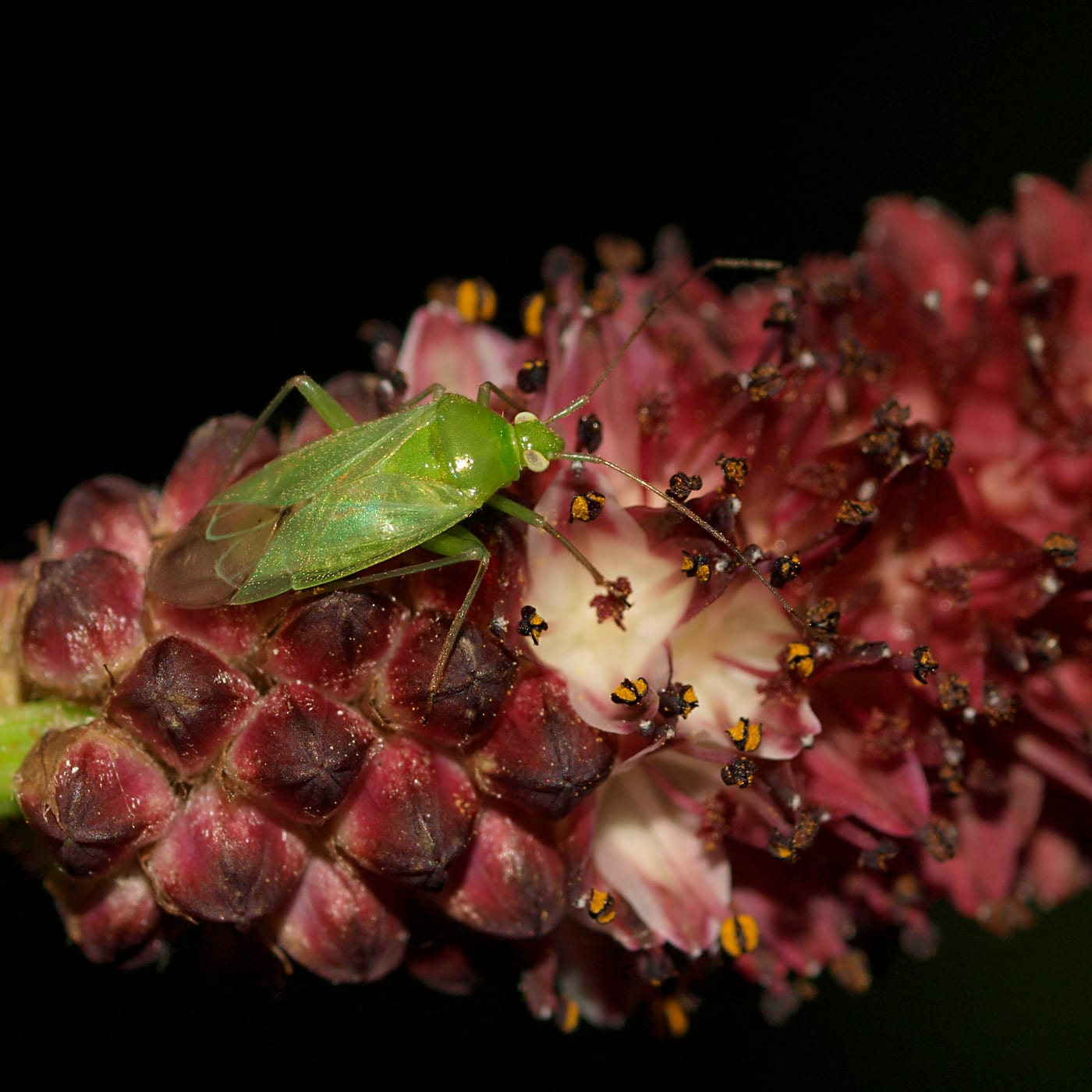
What does it look like?
Adults are green or brown, up to 6mm long, with wings that fold flat and show a clear diamond-shaped pale patch near the rear. Nymphs are wingless and pale green. A second UK species, the tarnished plant bug, causes near-identical damage and is covered by the same controls below.
Capsid bugs drop to the ground or fly off the moment a plant is disturbed, so catching sight of the insect itself is genuinely difficult. The damage left behind, not the bug, is what most gardeners actually go on.
What causes it
Capsid bugs aren't confined to one host plant: nymphs and adults move freely between garden plants and any unwanted wild or overgrown vegetation nearby. A population sheltering in nettles, bramble or other rough growth at the edge of a garden can feed on nearby crops without ever needing to establish permanently on them, which is why removing that alternative cover nearby is one of the controls that actually helps.
Is this pest active now?
Damage signs mainly appear from May to early September, with peak activity through May to August. Common green capsid's two generations mean fresh damage can appear twice in a season, once from the overwinteredKeeping a plant alive and intact through the cold months, whether left outdoors, moved under cover, or stored dormant. Full definition → generation's offspring in early summer and again from the second generation later on.
Symptoms
Small, brown-edged holes appear on leaves near the shoot tips, which can look misshapen overall. Flower buds can fail to open, or open unevenly, and on gooseberries and redcurrants this shows up as aborted buds rather than just damaged foliage.
Life cycle
Common green capsid overwinters as eggs laid into the bark of trees and shrubs. Eggs hatch in spring, nymphs feed and mature into adults by around midsummer, and that generation lays the eggs for a second generation before winter, both feeding on shoot tips and flower buds across a wide range of woody and herbaceous garden plants rather than sticking to one host.
Why this matters in Scotland
It's the buds and shoot tips this pest actually costs a grower, not just the cosmetic leaf damage a purely ornamental host would shrug off.
On gooseberries and redcurrants, aborted flower buds mean lost fruit, not just torn leaves. Sage loses new growth from the same feeding. Gooseberries, redcurrants and sage are common choices for a Scottish fruit or herb bed, which is what earns the moderate rating rather than a low one.
Controls: what actually works
Not every method here works equally well: some are backed by real evidence, others are simply traditional and untested.
Natural predators: encourage birds and ground beetles
Both are named as predators that help keep numbers down. Clearing dead vegetation from around plants in late winter also removes overwintering shelter for tarnished plant bug specifically, and exposes anything sheltering there to those same predators.
Remove unwanted plants acting as alternative hosts nearby
Fewer alternative hosts nearby means fewer places for a population to build up before moving onto the plants that actually matter to you.
Hand-catch adults when you find them
Worth trying if you actually spot one, but the insects drop to the ground or fly off the moment they're disturbed, so this depends on being quick and a bit lucky rather than being a reliable control on its own.
Tolerate damage on established plants
A newly planted gooseberry or redcurrant bush is the one case worth watching more closely than the general advice suggests: it has far less leaf and bud area to spare than a mature bush, so the same amount of damage costs it proportionally more.
Frequently asked questions
What should I do first if I find capsid bugs in my garden?
Start with natural predators. After that, remove unwanted plants acting as alternative hosts nearby. Work through the rest in order of how well-evidenced they are if the first two aren’t enough on their own.
Will capsid bugs kill my plants?
They rarely kill established plants. The damage is usually cosmetic on outer leaves, and natural predators often bring numbers under control without you doing anything.
When are capsid bugs most active in Scotland?
Check the seasonal activity section above. Scottish timings can run a few weeks behind the UK-generic figures.
Should I just leave capsid bugs alone?
In most gardens, yes. capsid bugs are food for birds, wasps and predatory insects, and a healthy garden carries some without trouble. Tolerance is also RHS's official position now, for that same reason.
Sources
2 sources, recorded with what each was used for
- RHS1: adult and nymph identification, symptoms and flower-bud failure, the three UK species and their different life cycles, common green capsid's two-generation life cycle and wide host range, tolerance framing and the too-late-to-act caution, encouraging predators, removing alternative hosts, clearing dead vegetation, absence of a pesticide recommendation
- Gardener's World12: corroborating identification independently, the toxin/tearing mechanism explaining how holes form, hand-catching disturbed adults