
By late October, most Scottish gardens have already had their first frost, the Central Belt, Northeast, Highlands, Southwest and Borders lowland areas typically see it before the month is out, uplands weeks earlier still. Beetroot left in the ground past that point is living on borrowed time. The gap between "still looks fine out there" and "frozen solid in the bed" can be a single cold night, which is why the roots you're planning to eat in January need to come indoors well before the roots you're eating this week.
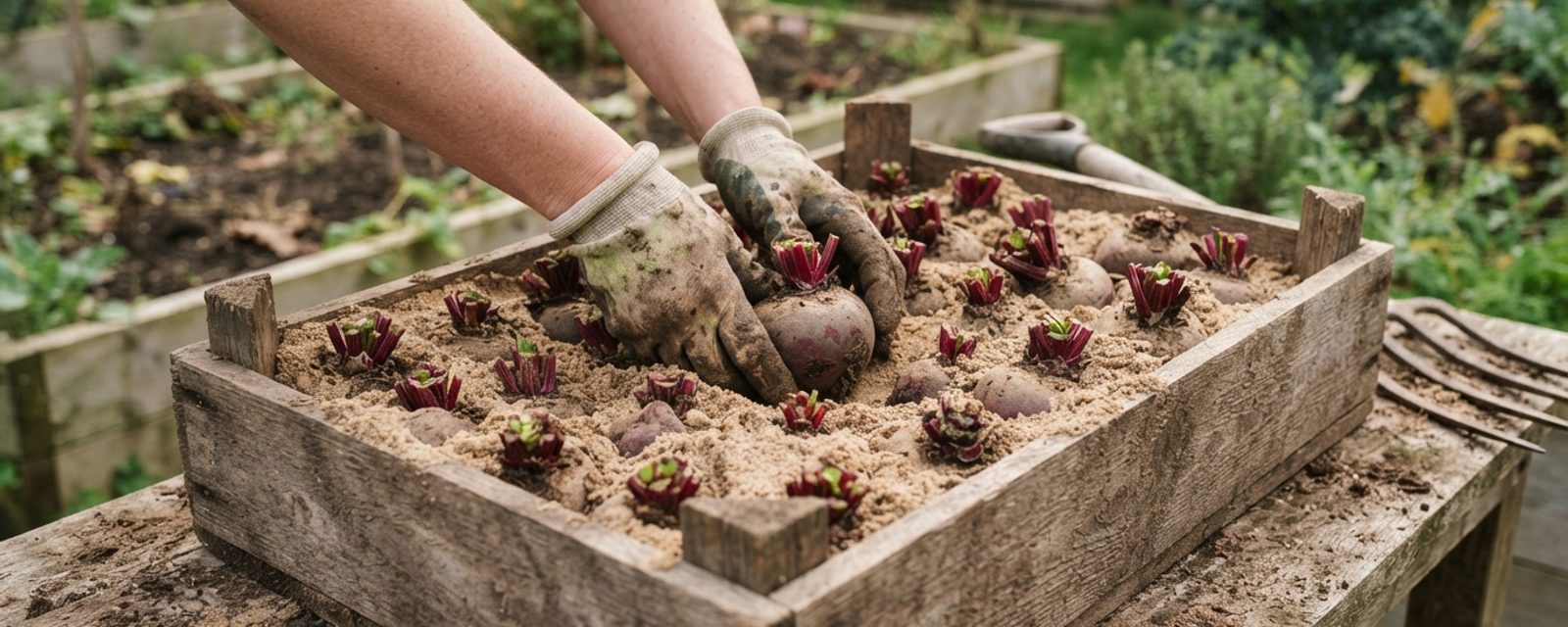
Lift beetroot before hard frost, twist off the leaves (don't cut into the root), and pack the roots in a box of dry sand, compost or coir, stored somewhere cool and frost-free like a shed or garage. Handled this way, they keep for at least a couple of months, and likely longer if you can get the shed genuinely cold rather than just above freezing.
When to lift for storage
Sow a batch from June onwards specifically for winter storage: that timing brings the roots to maturity in autumn, right when you want a batch ready to lift and put away rather than eat fresh. Let those roots grow on past golf-ball size; bigger roots store noticeably better than small ones, so there's no benefit to pulling them early the way you would for eating.
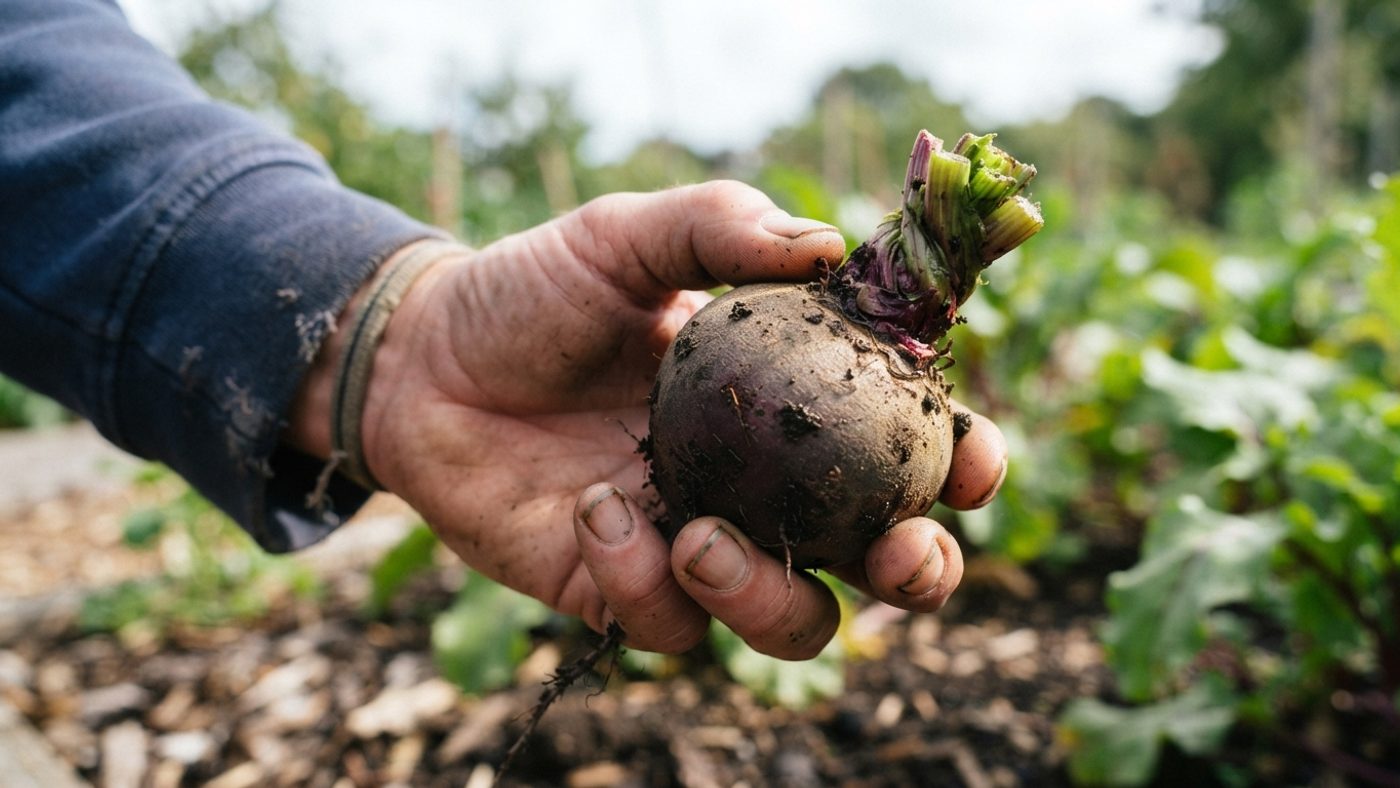
Lift with a fork rather than pulling by the leaves, since torn or bruised skin is where storage rot gets started, and check each root over as you go: anything showing slug damage, a split, or a soft patch should go in the kitchen now rather than the storage box, since a damaged root is the one that fails first in store. Brush off soil rather than washing it, wet roots going into storage is one of the more reliable ways to lose them early. Twist or cut the leaves off about 2.5cm from the base, leaving a short stub rather than cutting into the crownThe base of a perennial plant where roots and shoots meet, often sold and planted as a ready-made dormant plant rather than grown from seed. Full definition → itself.
No widely-grown beetroot variety is specifically bred or recommended for longer keeping, the varieties worth choosing for a Scottish garden earn their place on bolt-resistance and root shape, not storage life. Full detail on sowing timing and harvest sizing is in the beetroot growing guide.
The storage method, step by step
- Lift and trim. Fork the roots out, brush off loose soil, twist the leaves off 2.5cm from the base.
- Choose a container. A wooden box, crate, or similar container with some depth works better than a single layer on a shelf.
- Pack in a dry medium. Layer the roots in dry sand, potting compost, or coir, making sure the roots aren't touching each other where possible, this limits how far rot can spread if one root does start to go.
- Store cool and dark. Put the box in a garage or shed, out of light and away from any heat source. If mice get into your shed over winter, a lidded box gives them less of a way in than an open crate.
- Leave them be. Beetroot doesn't need attention through storage beyond the occasional check, it's a set-and-forget method by design.
For a larger batch than a box or two can hold, layer the roots in moist sand instead. For a normal home harvest, dry sand, compost or coir is the simpler default; moist sand is worth switching to only if you're storing enough to need several boxes.
Temperature, duration, and the gap between RHS and Garden Organic
RHS and Garden Organic give slightly different figures for beetroot's storage conditions:
| Source | Packing medium | Temperature target | Expected duration |
|---|---|---|---|
| RHS | Dry sand, compost or coir | Frost-free (no figure given) | At least a couple of months |
| Garden Organic | Damp sand, leaf mould, sieved soil, sawdust or coir | 0–4°C | Not stated |
RHS's "at least a couple of months" is the only concrete duration either source gives, so treat that as the safe planning figure rather than a hard ceiling. Garden Organic's colder 0-4°C target is the tighter of the two temperature ranges; getting your shed closer to it than to a bare "just above freezing" is the practical way to beat that couple-of-months minimum, even without a source putting a number on how much further it stretches. A cheap min/max thermometer left in the shed over a week tells you which end of that range you're actually working with, rather than guessing.
Will a Scottish shed actually stay cold enough?
No source has measured temperatures inside an unheated Scottish shed directly, so here's the reasoning rather than a lifted figure: outdoor air across Scotland regularly drops well below freezing through winter, lowland stations average 40-plus air-frost days a year, uplands considerably more, and an unheated shed, while milder than open air, isn't insulated against a sustained cold snap. That can put it below freezing rather than in the 0-4°C band Garden Organic recommends, or even below the frost-free minimum RHS asks for. During the coldest stretches, move the box against an insulated interior wall, off a concrete floor, and away from the door, small changes that keep it further from whatever the outside temperature is doing. See the frost dates page for when the first hard frost typically arrives in your area.
Checking on stored roots
Beetroot in storage isn't entirely fit-and-forget, it's worth a periodic look. Roots packed together in the same box will spread rot from one to its neighbours if a soft one is left in place, so check every few weeks and pull out anything that's gone soft, slimy, or visibly mouldy as soon as you spot it. One rotting root caught early costs you one root; left in the box, it can cost you several. If roots start going rubbery or shrivelled instead of rotting, the sand has dried out too much around them, a light spray of water into the box brings the moisture back up without needing to repack it.
Clamping and leaving roots in the ground
Clamping, a soil-and-straw mound built over a pyramid of roots, with a straw vent through the middle, is a real root-vegetable storage method, but it isn't the standard answer for beetroot at garden scale, and a wetter Scottish site makes it a harder sell still: a clamp relies on the base staying reasonably dry, and heavy autumn rain on badly-drained ground risks waterlogging the whole pile before winter even sets in properly. Boxed sand or compost avoids that problem entirely and suits most home harvests better. For potatoes specifically, full clamp construction and sack/tray storage are covered in the potato storage article.
Where the ground genuinely doesn't freeze over winter, leaving late beetroot in the soil and lifting it as needed is a legitimate alternative to boxing it at all. Covering the bed with a 30cm layer of straw, cardboard, or bracken, held down with netting or fleeceA lightweight, breathable fabric laid or draped over plants to trap a little warmth and keep off frost, wind and some flying pests. Full definition →, can extend that in-ground storage until March. If you don't already know whether your own plot's soil freezes hard in a normal winter, don't gamble the crop on it, lift and store indoors instead.
Common questions
Can I store beetroot without sand or compost?
Not well. The packing medium isn’t just filler, it keeps the roots from touching each other, cushions them, and buffers moisture loss. Dry sand, potting compost, or coir are the named options; without one, roots dry out and shrivel faster and any rot spreads more easily between them.
Do I need to wash the beetroot before storing it?
No, brush off loose soil but skip washing. Wet skin going into storage encourages rot rather than preventing it.
Can I leave beetroot in the ground over a Scottish winter?
Only where the soil genuinely doesn’t freeze, and even then it’s safer with a protective mulchA layer of material spread over the soil around plants to suppress weeds, retain moisture, and improve soil structure as it breaks down. Full definition → layer on top. If you don’t already know how your own plot behaves in a hard winter, lifting and storing indoors is the safer default.
What if my garage or shed isn’t reliably cold?
A mild porch or an unheated room indoors works too, as long as it stays dark and doesn’t get warm from nearby heating, warmth is what shortens storage life, not the label on the room. A cheap min/max thermometer left in the space for a week tells you whether it’s actually cool enough before you commit a whole harvest to it.
Should I use a clamp for a small home harvest?
No, a soil-and-straw clamp is built for bulk quantities of root vegetables, and its exposed base makes it a poor fit for a wet Scottish site. A box of dry sand or compost kept indoors does the job for a typical home harvest with far less effort.
Sources
3 sources, recorded with what each was used for
- RHS: Beetroot — grow your own: Harvest timing, leaf-trimming method, dry sand/compost/coir packing, garage/shed storage, "couple of months" duration, in-ground option for mild areas
- RHS: Root vegetables — storing: Moist sand/peat-substitute box method, frost-free/dark storage location, straw/cardboard/bracken mulch for in-ground protection, clamp construction
- Garden Organic: Harvesting and storing vegetables: Beetroot named within the root-crop group, no-wash handling, damp packing material options, 0–4°C temperature range