
By late summer, a Scottish herb bed doing its job produces far more rosemary, thyme, sage and oregano than any kitchen can use fresh, right around the point the softer growth is about to turn woody, get cut back, or sit out a wet winter doing very little. That surplus raises a real question, not just a housekeeping one: does drying actually preserve what made the herb worth growing, or does it just leave you with a jar of something that used to taste like something?
The honest answer is that it depends which herb is in your hand. This article covers the herbs where drying genuinely works well, the woody, Mediterranean-type group: rosemary, thyme, sage, oregano, bay, lavender, and winter and summer savory. Soft, leafy herbs like basil, chervil and parsley are a different case entirely, chervil's anise flavour comes from a volatile oil that's largely lost in drying, which is why freezing works better than drying for that group. This one is about the herbs that actually hold up on a drying rack.
When to harvest for drying
Across RHS's own growing guides for these herbs, the same pattern repeats: soft new growth from late spring into summer carries the best flavour, and for the herbs that flower, harvesting before flowering keeps quality highest. Oregano is the clearest case of this, RHS states directly that its flavour "is best before the flowers open." Summer savory follows the same logic: it's "slightly fresher and sweeter" before flowering, though a second flush after cutting back extends harvest into autumn. RHS's "late spring" is written for a UK-wide readership, and a Scottish garden's soft growth commonly arrives later than that, so treat these windows as a guide to the growth stage to look for on the actual plant in front of you, not a fixed calendar date.
Rosemary, thyme, sage and bay are evergreen and technically pickable year-round, but the same late spring/summer growth is still where the best flavour is concentrated. Winter savory is the one herb here built for exactly the gap the opening question raises: it keeps producing through most or all of the year, slowing only in winter, and a potted plant kept somewhere bright, cool and frost-free will keep giving usable fresh growth right through the months a Scottish garden's wet, dark winter has shut everything else down, reducing how much you actually need to lean on a jar of dried stock in the first place.
Pick on a dry morning once the dew has burned off but before the day has properly heated up, cutting in the cool of the morning, rather than in the heat of the afternoon, means less of the leaf's aromatic oil has had the chance to evaporate before it ever reaches the drying rack. While you're cutting, check sprigs over for aphids, slugs or soil before bundling them; a bunch left hanging for a few weeks is unattended the whole time, so anything missed at this stage has weeks to do damage or spread.
The shared drying method
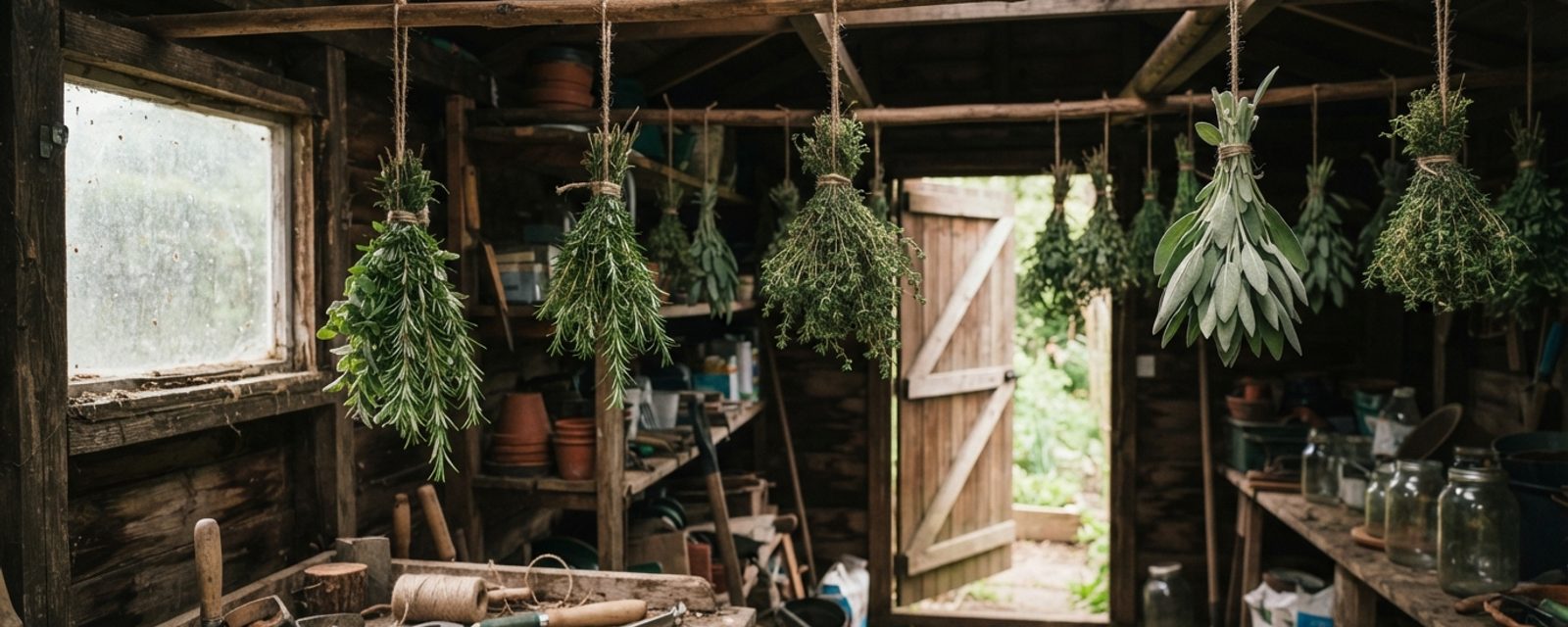
Rosemary, thyme, sage, oregano, bay, winter savory and summer savory are all dried the same way, and RHS states this method identically across each of their pages: gather sprigs into small bunches and hang them in a warm, dark, well-ventilated place. In practice, a bunch about the width of a finger and thumb circle, tied at the cut end with string or an elastic band, dries evenly without the inner stems staying damp the way a fat bundle can. Darkness matters more than people expect, direct light bleaches colour and degrades flavour compounds faster than the drying process itself. RHS's own timeframe for this is "a few weeks," and how long that actually takes depends on how warm, dry and airy the spot is and how thick the bunch is, not an RHS-stated split, but as a rule of thumb a smaller bunch somewhere warm dries faster than a fat one somewhere cool. Leave them until fully dry by the test below, rather than working to a fixed date, then strip the leaves and store.
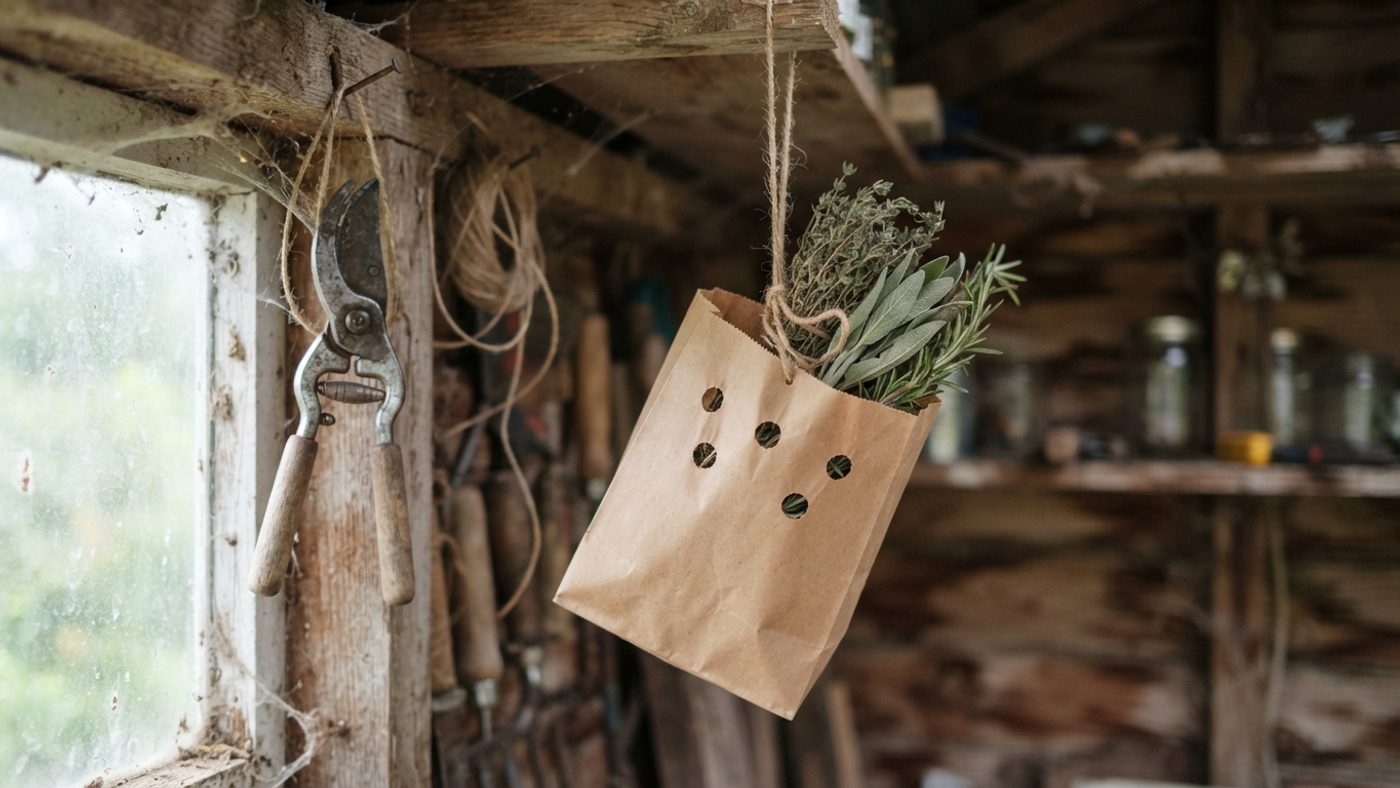
Ventilation is the part worth taking seriously in a damp Scottish climate rather than treating as a formality. An unheated shed, porch or outbuilding that feels merely cool and slightly damp to stand in is exactly the kind of air that slows drying right down and lets mould set in before the herb finishes drying. An airing cupboard, a spot near (not on top of) a boiler or stove, or anywhere with a steady, gentle background warmth and airflow will dry a bunch faster and more reliably through a damp Scottish autumn than an unheated outbuilding will. Slide bunches into a paper bag with holes punched for airflow before hanging them in a shed or porch, if that's the only space available, it catches falling leaf debris and keeps the worst of the damp off the leaves while still letting air through.
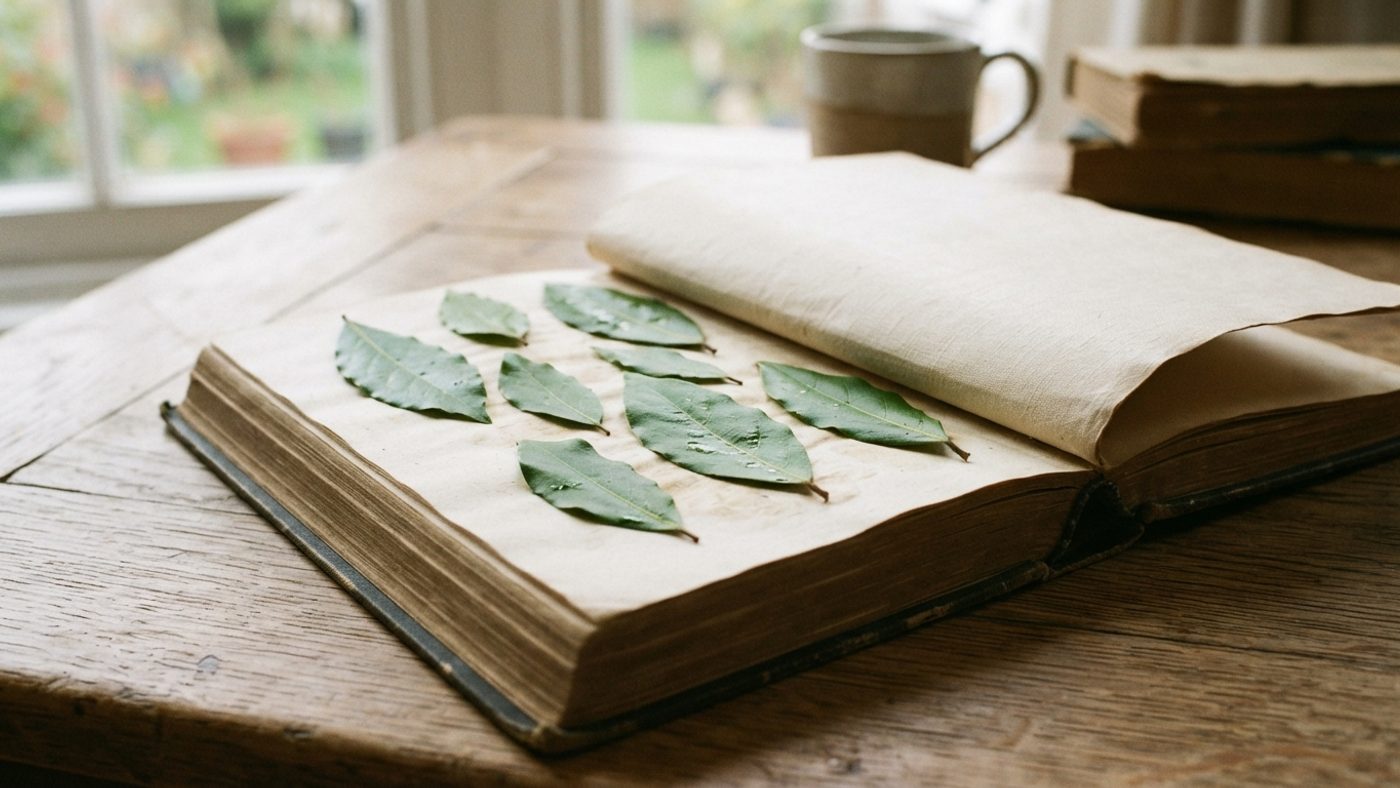
Bay is the one herb here with a second named option: instead of hanging, press the leaves flat between the pages of a book with a weight on top, which gives a more compact, flatter leaf.
Lavender doesn't fit this pattern in the same way, because what you're drying is the flower spike, not the leaf, a different plant part with a different purpose (culinary, craft or sachet use) than the leaf-drying the other seven herbs are about. RHS's own growing guide for lavender only mentions in passing that the leaves and flowers are "used for drying," without the dedicated harvest-timing, method or storage detail it gives the other seven. Cutting the flower spikes just as the lowest floretsThe individual small flower-bud clusters that make up a broccoli, cauliflower or romanesco head. Full definition → open and hanging them upside down in a warm, dark, airy spot is standard practice for lavender. For culinary drying specifically, English lavender (Lavandula angustifolia) is the type generally used, it's sweeter and less camphorous than the French and hybrid types more often grown for scent alone.
How to tell when herbs are fully dry
Leaves should feel brittle and crumble or snap when pressed, rather than bending or feeling leathery. Stems should snap cleanly rather than fold. Any give, bendiness, or residual coolness to the touch means moisture is still trapped in the leaf, which is exactly what causes mould in storage later. If in doubt, leave it another few days, a herb that's slightly over-dried is a much smaller loss than a jar that goes mouldy from being packed away damp. If you do spot mould on a bunch, whether grey fuzz or a musty smell, discard that bunch rather than trying to salvage the unaffected-looking parts, mould spreads through a bundle faster than it shows on the surface.
Storage
Once fully dry, strip leaves from the stems and store in an airtight container, kept away from light and heat, a cupboard rather than a shelf near a window or a stove. Store the leaves whole rather than crushed, and crumble them just before use; a whole leaf holds its flavour longer than one already broken down, since more of its surface area stays sealed until you need it. RHS's guidance across these herbs consistently points to airtight glass jars or tins as sufficient, there's no need for anything more specialised. Kitchen practice generally treats a well-dried, airtight-stored herb as good for several months to around a year before it's worth replacing the jar, a working range rather than an RHS-stated figure, and bay is the named exception that falls well short of it.
Not all eight keep their flavour the same way
| Herb | Best harvest timing | Drying method | How well it keeps once dried |
|---|---|---|---|
| Rosemary | Soft new growth, late spring–summer | Hang in warm, dark, ventilated spot | Dries as a viable option; no specific flavour-fade noted |
| Thyme | Soft new growth, late spring–summer | Hang in warm, dark, ventilated spot | Retains a strong flavour once dried, one of the strongest performers |
| Sage | Fresh growth, spring–summer | Hang in warm, dark, ventilated spot | Best used fresh by RHS’s own framing; dries fine but isn’t a strong dried performer |
| Oregano | Before flowers open, late spring–autumn | Hang in warm, dark, ventilated spot | Dries very well, actively recommended dried for sauces, marinades and pizza/pasta |
| Bay | Year-round (evergreen) | Hang, or press flat in a book | Flavour fades within a few months, faster than the others; freezing holds it longer |
| Lavender | Flower spikes, as lowest florets open | Not specifically detailed by RHS | Grown for the flower, not the leaf; drying method thinly documented |
| Winter savory | Most/all year; slows in winter | Hang in warm, dark, ventilated spot | Richer, spicier, more peppery profile; no specific flavour-fade noted |
| Summer savory | Before flowering, for sweetest flavour | Hang in warm, dark, ventilated spot | Fresher, sweeter, more delicate profile, especially pre-flowering |
Thyme and oregano are the two genuine standouts, both have explicit RHS language backing dried use, and oregano in particular is treated as a dried ingredient in its own right rather than a fresh substitute. Sage sits at the other end: RHS's own guidance for sage favours fresh over dried, a meaningfully different framing from thyme's explicit dried endorsement, even though the two are dried by the identical method. Bay is the clearest case of a herb that dries successfully but doesn't hold onto that result: RHS says directly to "use within a few months, before the flavour starts to fade," well short of the several-months-to-a-year window typical of the others, and RHS names freezing as the better long-term option for it specifically. Bay is also evergreen, so a plant kept somewhere sheltered gives usable fresh leaves right through winter anyway, which matters more for bay than for herbs whose dried flavour actually holds: there's less to gain from leaning on a jar that fades within months when the fresh alternative is standing outside the back door.
Common questions
How long do dried herbs actually keep their flavour?
Several months to around a year as a general kitchen-practice range, but it genuinely depends which herb it is rather than just how well you dried it, see the comparison table above. Bay is the one clear exception, fading within a few months regardless of how well it was dried.
Should I wash herbs before drying them?
Only if they need it. Extra moisture on the leaf slows drying and increases the risk of mould forming before the herb fully dries, so if a rinse is needed, pat and air the leaves dry first, worth being especially careful about in a humid Scottish autumn.
Can I use a dehydrator or oven instead of hanging herbs?
RHS’s own guidance for these eight herbs describes hanging in a warm, dark, ventilated spot as the method, not a dehydrator or oven. If you’re struggling to get a bunch fully dry by hanging alone through a damp Scottish autumn, a dehydrator on a low setting is a reasonable practical substitute, the same brittle-and-snapping dryness test still applies.
Why does bay lose flavour faster than rosemary or thyme?
RHS doesn’t explain the mechanism, only the outcome: bay’s dried flavour fades within a few months where herbs like thyme hold up well beyond that. If you use a lot of bay, freezing is the alternative RHS names for keeping its flavour intact longer.
How much dried herb do I use instead of fresh?
The standard kitchen conversion, since dried herbs are more concentrated, is to use roughly a third as much dried as a recipe calls for fresh, a teaspoon of dried in place of a tablespoon of fresh. That’s general cooking practice rather than an RHS figure, and only a starting point, taste and adjust.
Is lavender dried the same way as the other herbs on this list?
Not necessarily. Lavender is dried for its flowers, not its leaves, a different job than this article’s other seven herbs. RHS’s own lavender growing guide doesn’t give the same dedicated harvest-timing or drying-method detail it gives rosemary, thyme, sage, oregano, bay and the two savories.
What about basil, parsley or chervil, do they dry well too?
No. Soft, leafy herbs lose flavour badly in drying, chervil’s anise flavour, for instance, comes from a volatile oil that’s mostly lost once dried. Freezing is the better preservation route for that group instead.
Sources
7 sources, recorded with what each was used for
- RHS: Rosemary — Grow Your Own: Harvest timing and drying method for rosemary
- RHS: Thyme — Grow Your Own: Harvest timing, drying method, and dried-flavour retention claim for thyme
- RHS: Sage — Grow Your Own: Harvest timing, drying method, and fresh-over-dried framing for sage
- RHS: Oregano — Grow Your Own: Harvest timing tied to flowering, drying method, dried-use recommendations for oregano
- RHS: Bay — Grow Your Own: Drying methods (hanging and pressing), fresh-vs-dried flavour, flavour-fade timing for bay
- RHS: Savory — Grow Your Own: Harvest timing and flavour differences between summer and winter savory, shared drying method
- RHS: Lavender — Growing Guide: Note on lavender’s leaves and flowers being used for drying