
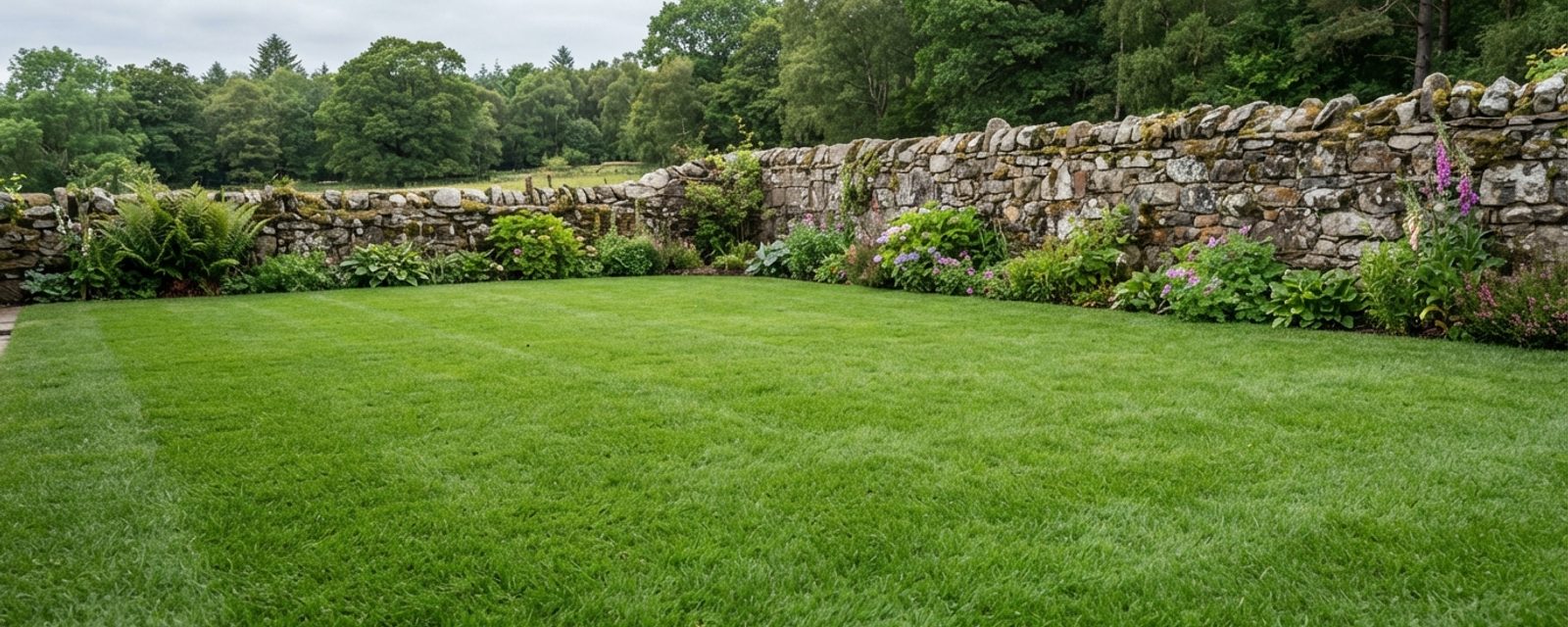
A grass seed doesn't know what month it is. Buried in the soil, it's reading one thing: temperature. Below a certain threshold, the enzymes that break down the seed's starch reserves and drive the embryo into growth barely function, so the seed simply sits there, dormant, no matter how much you water it. Once the soil warms past that threshold, germinationA seed sprouting: breaking dormancy and putting out its first root and shoot, given the right warmth and moisture. Full definition → switches on and the same seed that looked inert for weeks can be showing green shoots within days.
For the grass species used in most UK lawn mixes, perennial ryegrass, red fescue, browntop bent, that threshold sits at roughly 8-10°C, sustained in the soil, not just touched briefly on a warm afternoon. This is why sowing advice is framed around temperature and season rather than a fixed date, and it's also why a date-based rule of thumb ("sow in April") can quietly fail in a part of the country where the soil doesn't reach that threshold on the same schedule.
The Scottish temperature gap: what the numbers actually show
The two standard sowing windows are mid-spring (March-April) and early autumn (September-November), on the proviso that the soil is warm when you sow, without separate dates for different parts of the country. Met Office long-term averages (1991-2020) put actual numbers behind what "warm enough" means in practice, comparing southern England against two Scottish stations.
No published series covers soil temperature at these stations, so the figures below are air temperature, a reasonable stand-in since soil follows air temperature closely, just a little behind it. Treat them as a guide to the right general window, not an exact reading for your own garden; the soil thermometer method below closes that gap.
| Station | March | April | May | September | October |
|---|---|---|---|---|---|
| Heathrow (SE England) | 7.9C | 10.5C | 13.7C | 15.9C | 12.3C |
| Edinburgh, Gogarbank (E Scotland) | 6.0C | 8.2C | 10.8C | 13.1C | 9.8C |
| Glasgow, Bishopton (W Scotland) | 5.9C | 8.2C | 10.9C | 12.9C | 9.6C |
Mean monthly air temperature, Met Office long-term averages, 1991-2020 reference period. Read against the 8-10°C germination threshold:
| Month | Heathrow (SE England) | Edinburgh / Glasgow (Scotland) |
|---|---|---|
| March | Borderline (7.9C) | Too cold (~6C) |
| April | Safe (10.5C) | Borderline (~8.2C) |
| May | Safe (13.7C) | Safe (~11C) |
| September | Safe (15.9C) | Safe (~13C) |
| October | Safe (12.3C) | Borderline (~9.7C) |
Spring and autumn are still the right two windows in Scotland; this isn't a different season, it's a narrower one at both ends. April, a safe sowing month in the south, is only borderline at Edinburgh and Glasgow; May is where Scotland reaches the same clear margin England has a month earlier. Autumn mirrors it: September is safe everywhere, but October has already slipped back to borderline in Scotland while it's still comfortably warm at Heathrow.
Edinburgh and Glasgow are both low-lying, coastal-influenced stations, so treat this as a fair picture of the Central Belt and similar lowland areas rather than the whole country: a Highland, upland, or Aberdeenshire garden at greater altitude or more exposure will typically run cooler again, and a sheltered, south-facing town garden anywhere in Scotland will typically run warmer than its region's average. Local shelter, aspect, altitude and soil type all shift the real date for a given garden.
Cooler starting soil isn't the only reason to be careful with timing, either: ground that's still waterlogged from winter shouldn't be sown into at all, regardless of temperature. Seed needs air as well as warmth to germinate, and standing water will simply rot it. This matters more in the west than the east: Met Office regional climate data shows western Scotland as substantially the wetter half of the country (its Atlantic-facing upland areas regularly exceed 3,500mm of rain a year, against under 700mm on parts of the drier east coast), and per the table above it's barely any warmer, so western gardens are more likely to still be sodden right when the spring window opens. If your lawn area is slow to drain, that's worth fixing before you sow rather than after: see our guide to fixing a waterlogged lawn on clay soil.
One thing works in Scotland's favour rather than against it: at these latitudes, summer daylight runs noticeably longer than further south, so once the soil does cross the germination threshold, seedlings get more daily light to grow on than an equivalent English sowing in the same calendar week, a real offset to the shorter, later-starting window, even if it doesn't fully cancel it out.
When to sow grass seed in Scotland
Given the above, the two practical windows are:
- Spring: mid/late April into May, once the soil has had a real run of milder weather, rather than jumping in as soon as the calendar says March.
- Autumn: September, tipping over into early October at the latest in most of lowland Scotland, later than that and germination becomes a race against falling soil temperature, with seedlings that don't have time to establish before growth slows for winter.
Whichever window you use, you also need to stay clear of frost risk at both ends: a late spring frost can knock back tender seedlings, and sowing too near the first autumn frost leaves them without time to root before the cold sets in. Our regional frost-date reference has the detail for your area. As a general shape rather than specific dates, aim to sow far enough after the last expected spring frost, and far enough before the first expected autumn frost, that seedlings have several weeks of frost-free growing time either side.
Between the two, early autumn is usually the stronger choice where practical: the soil is at its warmest for the year rather than only just reaching the threshold, and there's less competition from weed seeds, which mostly germinate in spring.
Sowing outside these two windows, high summer or the depths of winter, isn't recommended: soil is either too dry and heat-stressed for reliable germination in mid-summer, or too cold and too short on daylight through winter, regardless of the temperature threshold being met on a mild winter day.
Checking your own soil, and choosing a mix to suit it
The 8-10°C figure is only useful if you can check it against your own ground rather than the regional average. A basic soil thermometer pushed in to about 5-7.5cm depth, read at the same time of day (mornings are more consistent than a warm afternoon spike) over several consecutive days, tells you far more about whether your particular patch is ready than any regional table can: a sheltered, south-facing bed can run warmer than the nearest weather station, and an exposed, shaded, or north-facing one can run cooler.
Worth checking at the same time: soil pH. Grass grows best in slightly acidic to neutral soil, roughly pH 5.5-7. Scotland's own national soil survey records notably higher shares of naturally acidic podzol and peat soils here than the European average, concentrated in the Highlands and Southern Uplands rather than spread evenly, so it's genuinely worth checking rather than assuming your soil is neutral by default. A cheap soil-testing kit will tell you whether liming is worth doing before you sow, rather than guessing. If a test shows the soil is more acidic than that, apply lime during the ground-preparation stage below, well before sowing, since it needs time to work into the soil rather than sitting on the surface; the five-to-six-week settling period in the next section is a natural point to do it.
Seed mix choice matters too: a shaded garden needs a shade-tolerant fescue-heavy mix rather than a standard hard-wearing ryegrass blend, since ryegrass performs poorly without good light, and a mix marketed for damp or heavy ground is worth choosing over a standard mix if the site is naturally on the wetter side once any drainage problem is actually fixed. Check the product's own description rather than assuming one mix suits every garden.
Preparing the seedbed
Grass seed germinates well only where it makes firm, close contact with soil; a rough or loose surface leaves seed sitting in air pockets, which dries it out and kills it before it roots. Preparation matters as much as timing:
- Clear the ground. Remove perennial weeds well ahead of sowing; established weed roots left in place will out-compete new seedlings.
- Break up compaction. Where soil is compacted, dig or rotovate to around 20cm deep.
- Improve poor soil. Work in well-rotted manure or compost on light, fast-draining soils to help moisture retention.
- Let it settle. Leave the dug area for five to six weeks before sowing, so the soil has time to consolidate rather than sinking unevenly later.
- Firm it. Tread over the whole area in different directions to firm the surface without over-compacting it.
- Rake level. Rake thoroughly in various directions to break up clods and leave a fine, level, crumbly surface (a "tilthThe crumbly, fine texture of well-prepared soil, achieved by raking the surface, that small seeds are typically sown into. Full definition →", the fine crumbly texture gardeners aim for before sowing) with no large lumps for seed to fall between.
- Feed, optionally. A general-purpose pre-seeding fertiliser can be raked in at this stage; check the product's own rate rather than assuming a figure.
If you're patching bare or thin areas in an existing lawn rather than starting from bare ground, the same seed-to-soil contact principle applies at smaller scale: rake the patch hard enough to break the surface and expose bare soil (don't just scatter seed over old thatch or existing grass), work in a little compost or topsoil if the patch is compacted or poor, then treat it exactly as a mini version of a new sowing for watering, protection and first cut.
Sowing rate and technique
Seed rate varies by species and by the specific blend; a fine fescue mix and a hard-wearing ryegrass mix aren't sown at the same density, so the weight printed on your packet is the real figure to use. Sow at that stated rate, splitting the total in half and sowing each half at right angles to the other (one pass north-south, one pass east-west) to get more even coverage than a single pass gives you.
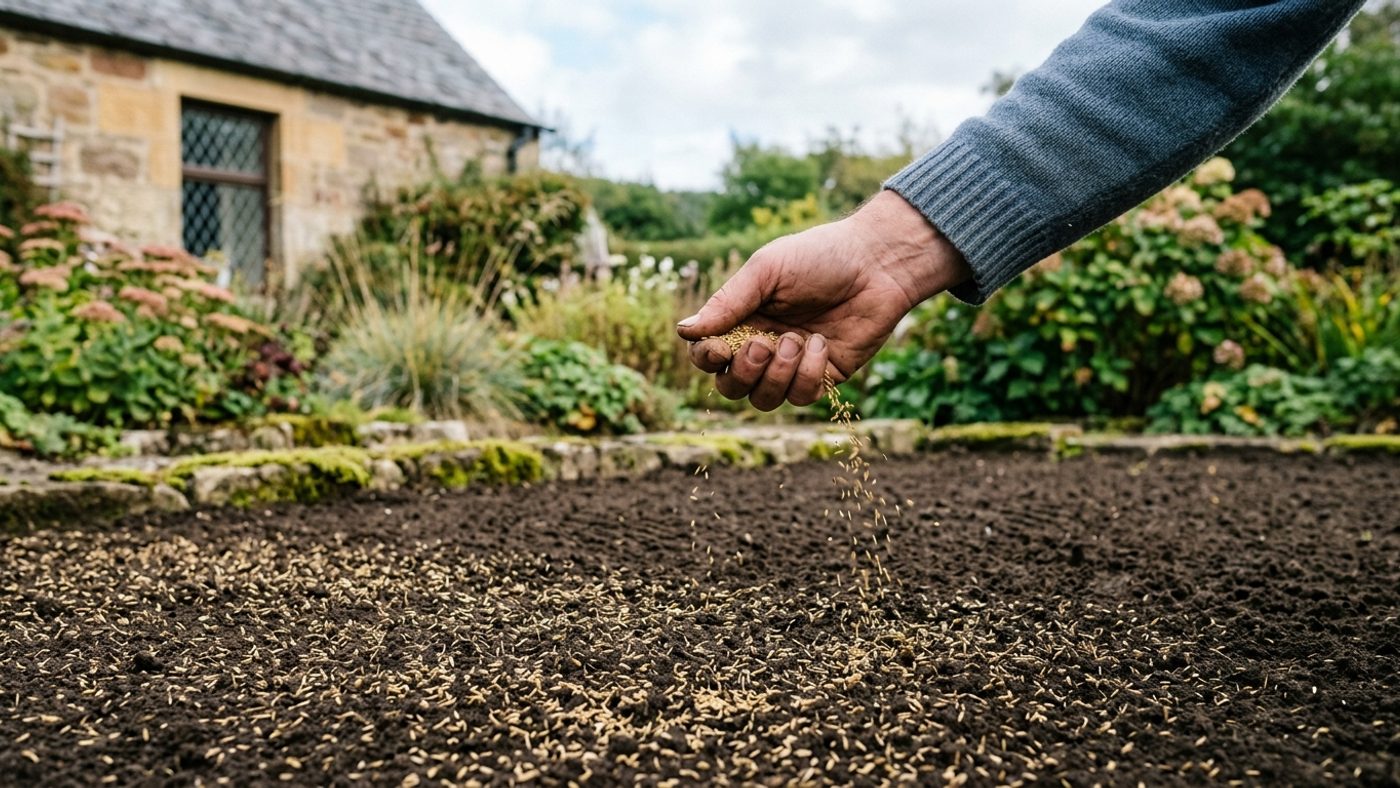
After sowing, lightly rake the seed into the top of the soil so it's covered but not buried; the goal is contact with soil on all sides, not depth. Then firm again lightly, either by treading or with the back of a rake, to press seed against soil rather than leaving it sitting loose on the surface.
Watering a new sowing
Newly sown grass seed needs the seedbed kept consistently moist, not waterlogged, from sowing right through to establishment. Water gently with a fine rose or spray immediately after sowing if rain isn't forecast, then keep watering every few days as needed so the surface never dries out completely; a seed that germinates and then dries out in its first few days, before it's built a proper root system, dies just as surely as one that never germinated. A heavy, hard jet of water will wash seed into clumps or off bare patches entirely, so a fine spray matters more than volume in any single watering. Keep this up through germination and into the first few weeks of establishment, easing off only once the new grass has rooted and is growing away.
Protecting from birds and pets
Freshly sown seed and newly germinated shoots are an easy target; birds will take seed straight off the surface, and cats, dogs or foot traffic will disturb the seedbed or compact germinating patches before roots have taken hold. The straightforward options are covering the area with horticultural fleeceA lightweight, breathable fabric laid or draped over plants to trap a little warmth and keep off frost, wind and some flying pests. Full definition → (weighted down at the edges so it doesn't blow off) or bird-scaring tape strung across the area, combined with keeping pets and foot traffic off the area entirely until grass is established.
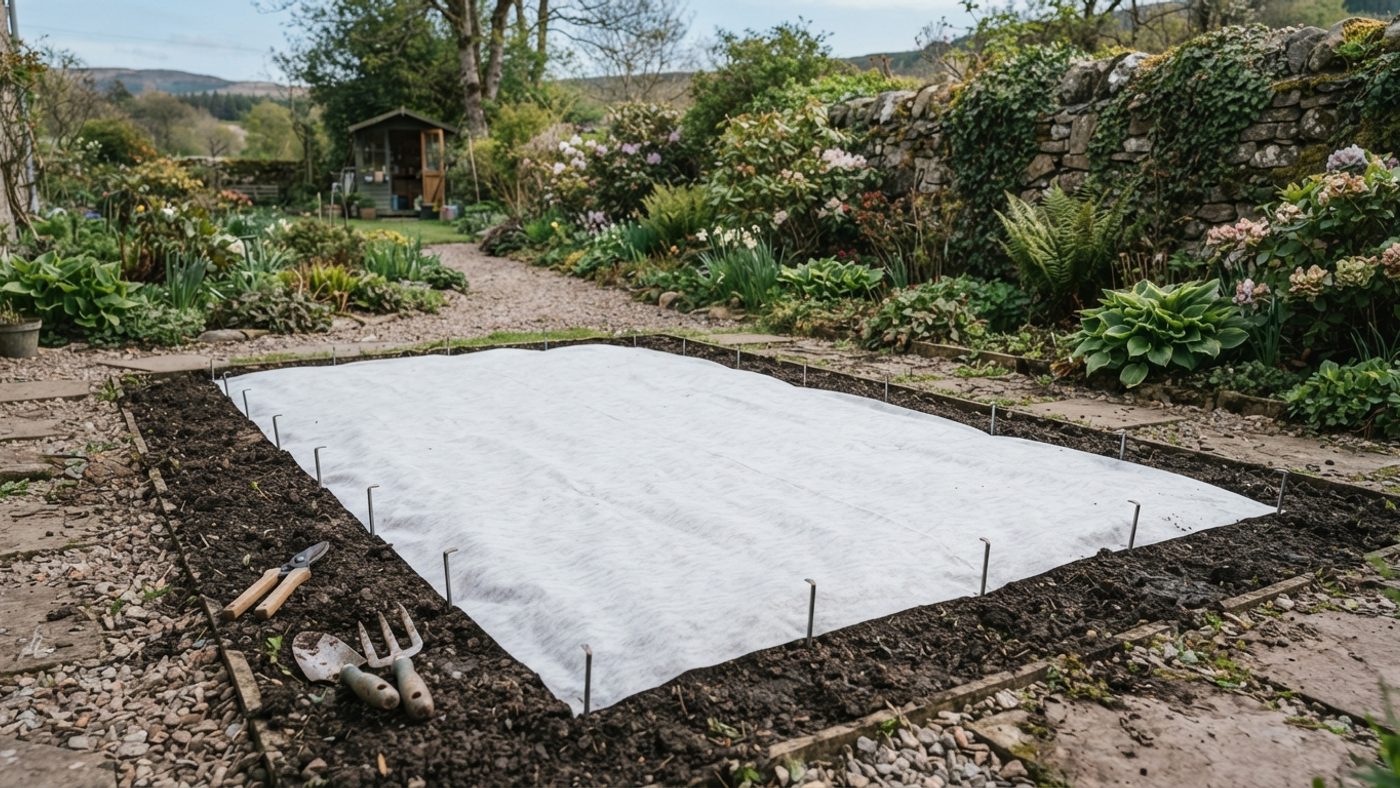
If you'd rather not cover the area, increasing your sowing rate by around 50% is a reasonable trade-off: it doesn't stop birds taking seed, but it means enough survives the losses to still give even coverage, though it does nothing for pets or trampling, which only fleece or keeping animals off the area actually solves.
In an exposed or coastal garden, wind is worth planning for separately from birds: loose surface seed can simply blow into drifts before it's rooted, especially on a light or sandy soil. Firming the seed in well after raking and choosing a still day to sow both help; fleece pegged down at the edges does double duty here, holding seed in place as well as keeping birds off.
First cut
Don't cut a new lawn on the same schedule as an established one. Wait until new grass has reached roughly 5-7.5cm tall, then take off only around a third of that height in the first cut; cutting harder than that stresses shallow-rooted seedlings before they're ready for it. Use a cylinder mower with the front roller removed if you have one, or otherwise the highest cutting height your mower offers, and make sure the ground is firm enough underfoot that the mower doesn't tear up soft, still-rooting turf. If that first cut lands on a damp week, the general guidance on mowing wet grass applies here too, on top of the extra care young turf needs.
Troubleshooting poor or patchy germination
If seed hasn't come up within a couple of weeks of the expected 7-10 day germination window, the likely causes, roughly in order of probability, are:
- Soil too cold. Given the temperature data above, this is the most likely cause of a slow or failed sowing outside the safer April-May and September windows in Scotland; the seed may simply be dormant, waiting for warmth, rather than dead. Patience, and checking against a soil thermometer if you have one, is often the answer before resowing.
- Seedbed dried out. A single missed watering during a dry spell can kill seed that has already started to germinate; this is the most common cause of patchy rather than total failure, since drying is rarely perfectly even across an area.
- Poor seed-to-soil contact. Seed sitting on a crusted or loose surface rather than pressed into fine soil will germinate unevenly or not at all; this is a preparation problem rather than a temperature or watering one, and it's worth checking the firming and raking steps if a whole area rather than random patches has failed.
- Bird or pest losses. Uneven, thin patches with no obvious pattern, especially near field edges or open ground, often point to birds rather than a growing-conditions problem.
- Leatherjackets or chafer grubs. These soil-dwelling larvae feed on grass roots and can thin or kill patches of an establishing lawn from underneath rather than the surface; a patch that lifts or peels back easily, or shows birds actively probing the turf for grubs, points here rather than to germination failure. Leatherjackets in particular favour damp soil, so this is worth checking first in the wetter west and after a wet autumn generally.
- Slugs. Damp Scottish soil that suits germination well also suits slugs, which will graze off tender new shoots at ground level almost as soon as they emerge; thin, nibbled-looking patches rather than bare unsown-looking ground point here. Watering in the morning rather than evening, so the surface isn't wet overnight when slugs are most active, and clearing nearby debris where they shelter both help without needing chemical control.
- Sowing into waterlogged ground. If the ground was still wet or standing with water at sowing, seed may simply have rotted rather than failed to germinate; see the waterlogged-lawn guide linked above.
Where the cause looks like cold soil rather than a preparation fault, oversowing the same area once conditions genuinely warm up (rather than immediately re-digging everything) is usually the right fix.
Common questions
Can I sow grass seed in Scotland in March?
You can, but it's a weaker bet than waiting: dormant seed sitting in cold soil for several extra weeks is exposed for longer to drying out, birds, and slugs, with nothing to show for the wait until the soil actually warms up. If you've already prepared the ground and want to get ahead of the season, a soil thermometer is a better guide than the calendar: sow once your own patch is reading consistently above 8°C, whenever that falls.
What temperature does grass seed need to germinate?
Around 8-10°C, sustained rather than just touched on a warm afternoon. In practice this is easiest to check with a cheap soil thermometer rather than guessing from the weather forecast: push it in to around 5-7.5cm and take a reading at the same time each day for a few days running.
How long does grass seed take to germinate?
Around seven to ten days once soil temperature and moisture conditions are right. If nothing has appeared after two or three weeks, cold soil or a dried-out seedbed are the most likely explanations rather than dead seed.
When can I overseed bare patches in an existing lawn rather than starting from scratch?
The same temperature and timing logic applies to patch repair as to a full new sowing: the seed doesn't care whether it's surrounded by bare ground or existing turf. Rake the patch back to bare soil for proper seed-to-soil contact, sow and water as you would a new area, and keep foot traffic off it until it's established.
When can I mow a newly sown lawn for the first time?
Once the new grass reaches about 5-7.5cm tall, and then only take off around a third of that height. Cutting earlier or harder risks pulling out shallow-rooted seedlings rather than just trimming them.
Sources
7 sources, recorded with what each was used for
- RHS: Starting a lawn from seed: UK-wide sowing windows (spring/autumn), seedbed preparation steps, watering guidance, bird protection methods, and first-cut height/technique
- Met Office: Location-specific long-term averages, Edinburgh Gogarbank: 1991-2020 monthly mean air temperature data for eastern Scotland
- Met Office: Location-specific long-term averages, Glasgow Bishopton: 1991-2020 monthly mean air temperature data for western Scotland
- Met Office: Location-specific long-term averages, Heathrow: 1991-2020 monthly mean air temperature data for southeast England, used as the UK-wide comparison point
- Met Office: Western Scotland climate: Annual rainfall figures for western Scotland (regularly exceeding 3,500mm in upland areas), used for the west-vs-east rainfall/waterlogging comparison
- Met Office: Eastern Scotland climate: Annual rainfall figures for eastern Scotland (under 700mm on parts of the coast), used for the same comparison
- Scottish Government: The Scottish Soil Framework: National soil-type shares (higher-than-European-average podzol and peat coverage) and their concentration in the Highlands and Southern Uplands, used for the soil-acidity point