
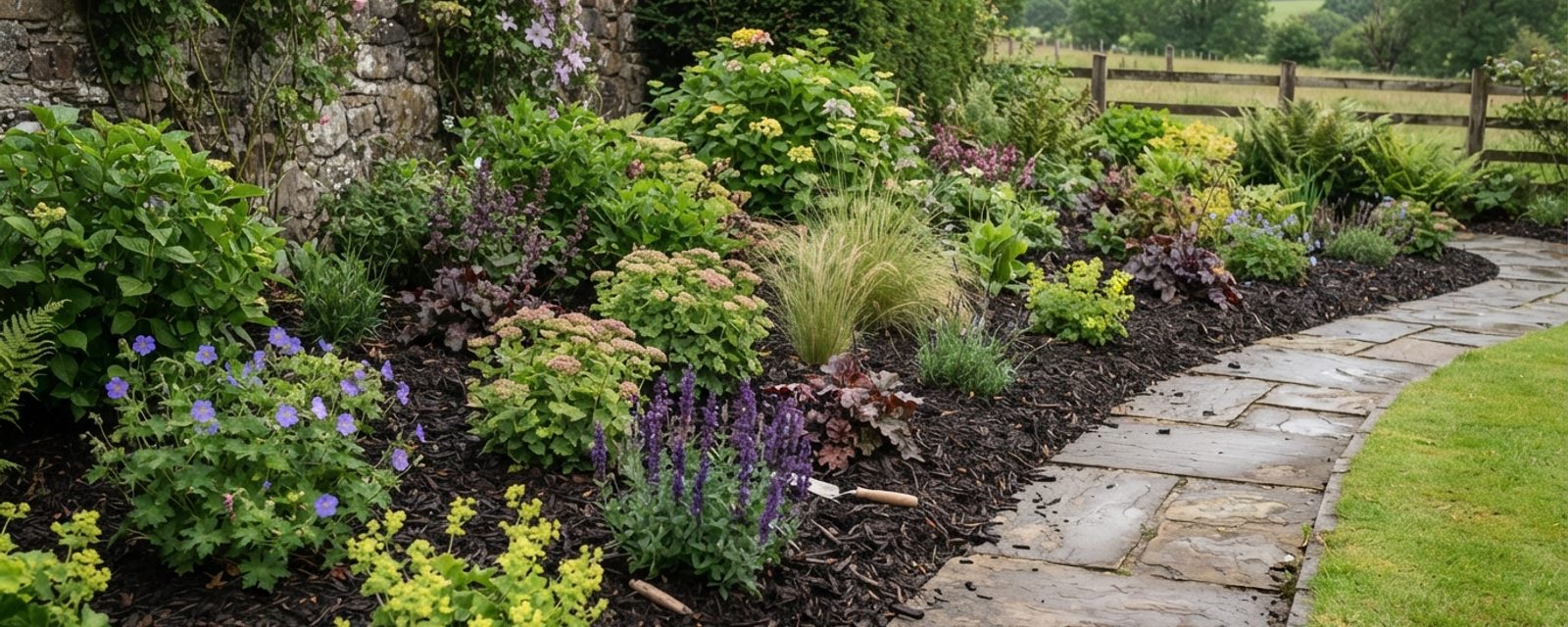
Ask five gardeners when to mulchA layer of material spread over the soil around plants to suppress weeds, retain moisture, and improve soil structure as it breaks down. Full definition → and you'll likely get five different answers, and most of them will be right. That's because "put mulch down" isn't one job done once a year. It's at least two different jobs, done at two different times, for two different reasons.
Mulch in late autumn or early winter, while soil is still holding some warmth and moisture from the growing season, and you're insulating roots against frost and locking in that dampness before the ground turns hard. Mulch again in late winter or early spring, once the worst of the cold has passed but before annual weeds germinateA seed sprouting: breaking dormancy and putting out its first root and shoot, given the right warmth and moisture. Full definition →, and you're doing something else entirely: smothering the weed seedlings before they get going and feeding the soil ahead of the new season's growth. Get the timing wrong, mulching very early while the ground is still cold, and you can actually trap that cold in and slow your plants down rather than help them.
So before getting into materials and depths, it's worth fixing this in your head: mulch is not a single autumn-or-spring task you tick off once. It's an ongoing bit of soil management, and which season you're doing it in changes what the mulch is actually achieving.
What mulch actually is
Mulch is simply a layer of material spread over the surface of the soil, at least 5cm thick, left there rather than dug in. That's the whole definition. What it's made of, and what it does once it's down, varies a lot, but the basic idea is always the same: cover bare soil so that moisture doesn't evaporate as fast, weed seeds struggle to germinate under it, soil temperature stays steadier, and, for organic materials, nutrients and structure slowly work their way into the ground beneath as the mulch breaks down.
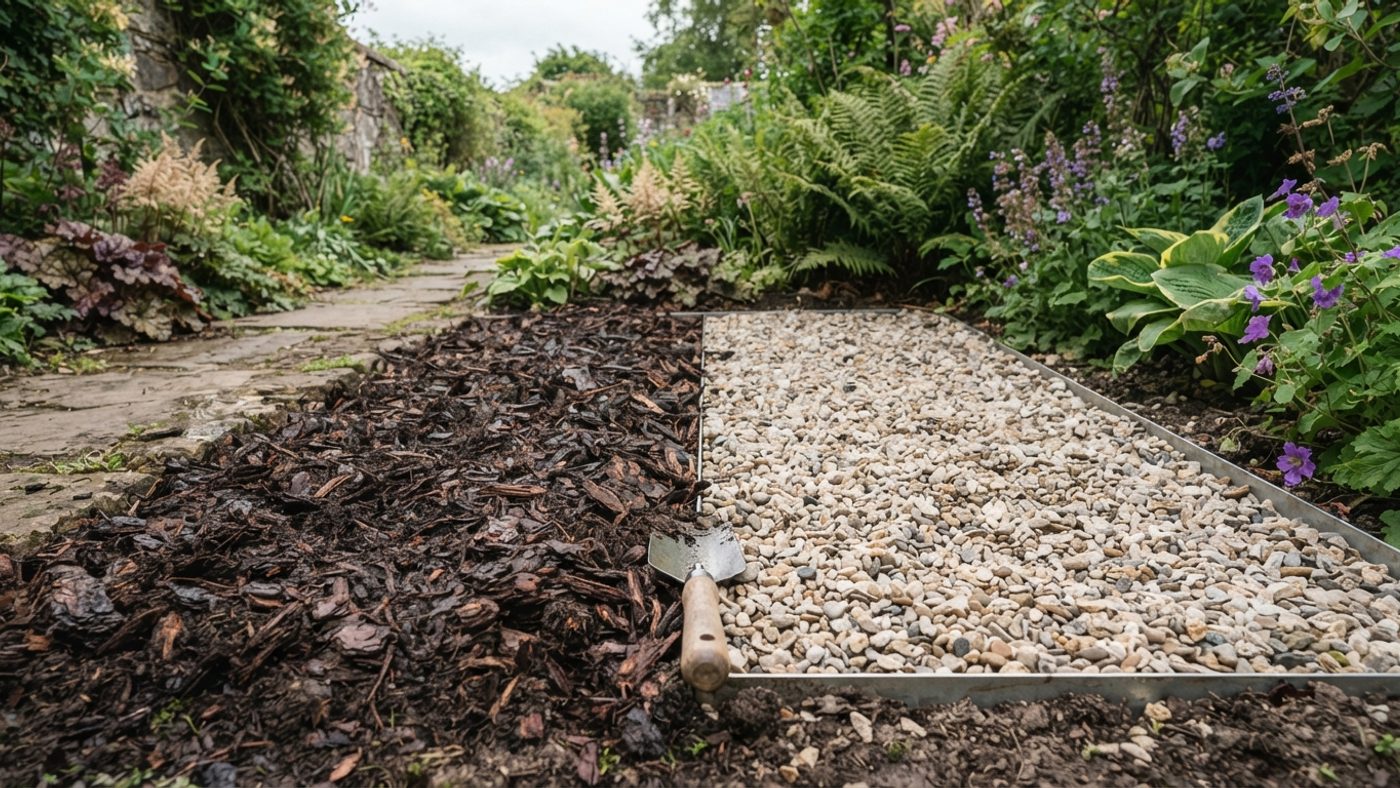
Mulches split into two broad camps. Biodegradable, or organic, mulches feed the soil as they rot down: things like garden compost, bark, well-rotted manure and leaf mould. Non- biodegradable mulches don't feed the soil at all, they just sit there suppressing weeds and holding moisture: gravel, slate, pebbles, and woven landscape fabricA permeable fabric laid over soil to block weeds while still letting water and air through, often planted through with holes cut for each plant. Full definition → or membrane. Neither camp is "better" outright. Which one suits a bed depends on what you're growing and what job you actually need done.
The real options: mulch materials compared
| Material | Type | Typical depth | Best used for |
|---|---|---|---|
| Garden compost (home-made) | Organic | One bucket per square metre, topped up over time | General borders; feeds soil slowly, needs topping up for weed control |
| Green waste compost (coarse) | Organic | About 7cm | Ornamental beds and perennials |
| Green waste compost (fine) | Organic | Three buckets per square metre | Around food crops |
| Composted/processed bark | Organic | About 7cm | Shrub borders, paths between beds; never dig uncomposted bark into soil |
| Well-rotted manure | Organic | 5-7.5cm | Feeding hungry beds, roses, vegetable plots |
| Leaf mould | Organic | 2-7cm | Improving structure and moisture retention; low in nutrients |
| Straw | Organic | A loose layer, a few cm | Strawberries and similar fruiting crops, keeping fruit off wet soil |
| Cardboard (plain, uncoated) | Organic | Single layer, topped with about 15cm of compost or soil | Smothering weeds before starting a new bed |
| Seaweed | Organic | A few cm, well rinsed if collected fresh | Coastal gardens; a real source of nitrogen, potassium, phosphate and magnesium |
| Gravel, slate, pebbles, chippings | Non-biodegradable | 5-7.5cm | Mediterranean and gravel gardens, alpines, drainage-loving plants |
| Woven landscape fabric/membrane | Non-biodegradable | Laid as sheet, often topped with gravel or bark | Long-term weed suppression under paths or new beds |
A few things worth knowing that don't fit neatly into a table. Composted bark should always be composted, not fresh, before you use it: fresh wood chippings and bark encourage soil microorganisms that use up nitrogen as they break the material down, leaving less available for your plants. Leaf mould is the odd one out nutritionally, it does very little to feed the soil, but it's excellent for structure and moisture. Cardboard works surprisingly well as a weed-suppressing base layer under a proper mulch, though a solid layer can also stop rain getting through to the soil beneath, so it suits smothering an area you're about to plant rather than an established bed you still need to water.
How deep, and how to actually apply it
The general rule, regardless of material, is a minimum of 5cm, ideally 7.5cm. Thinner than that and weeds punch straight through; there's rarely a good reason to go much past 7.5-10cm on an established bed, since more material doesn't multiply the benefit and just wastes mulch.
The method itself is straightforward. Clear the area first: dig out perennial weeds properly, since mulch won't smother anything with established roots, though annual weed seedlings can be left where they are and buried. Water the soil if it's dry, mulch works best laid over damp ground rather than bone-dry soil. Tip the material out in small piles across the bed rather than one big heap, then spread it evenly with a rake or fork, working around existing plants by hand.
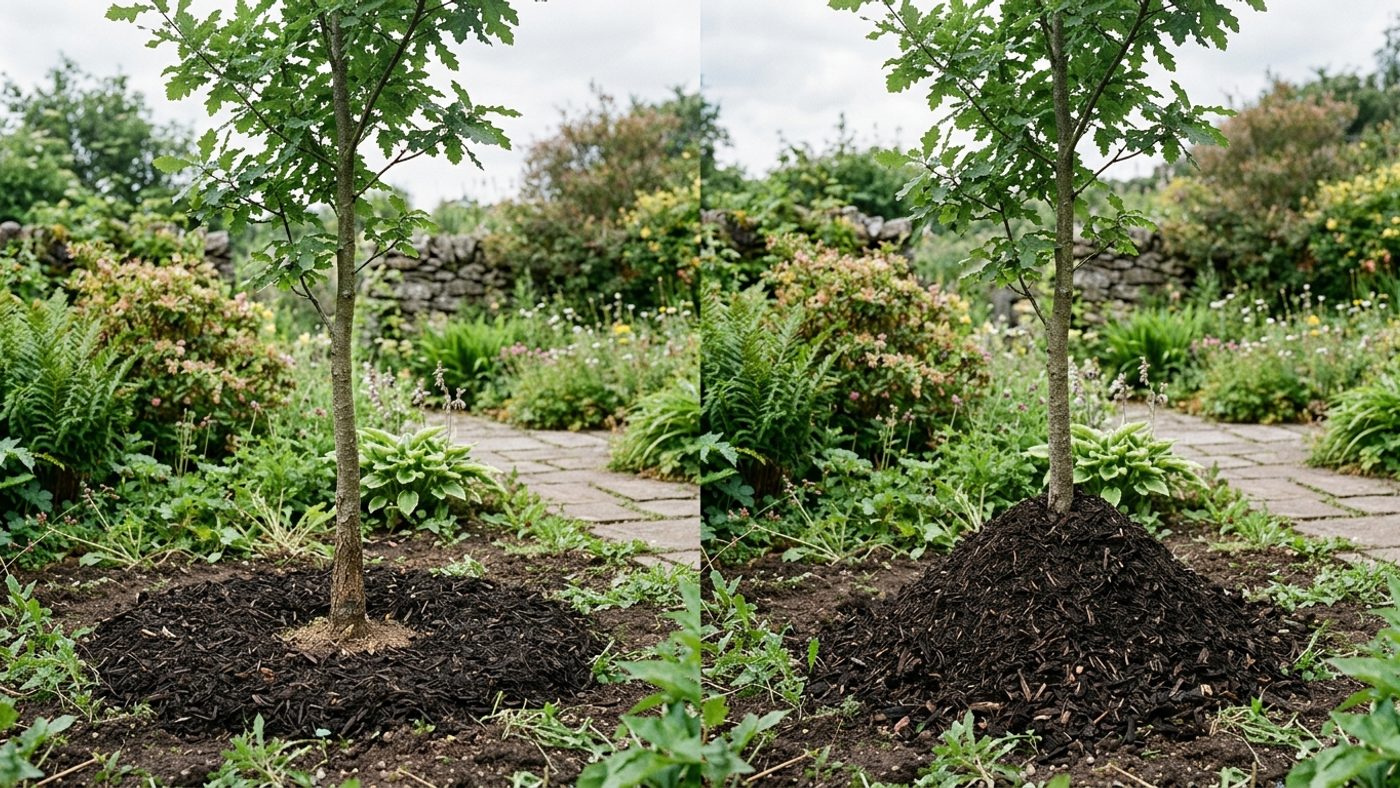
Keep a stem gap whatever material you use, and the same applies to tree trunks: a mulch ring around a young tree should sit as a flat circle out to roughly the edge of the canopy, not piled up against the bark like a volcano, since constant contact softens bark and invites rot and disease.
Lawns aren't mulched in the same way; grass clippings left on the surface after mowing act as a light natural feed instead, a different technique from bed mulching.
Some Scottish councils sell composted green waste through their recycling centres, so it's worth checking your own local authority's site before buying bagged material elsewhere. On an exposed site, west coast, upland or island gardens especially, a lighter material like leaf mould or fine compost can blow off an open bed before it settles; firming it down well after spreading, or choosing a heavier material like well-rotted manure or bark for the most exposed spots, helps it actually stay put.
For mulching a brand-new bed on heavy clay soil specifically, see our guide to no-dig gardening on heavy clay soil. For working organic matter into clay more generally, see our guide to improving clay soil.
Spring mulching vs autumn mulching: two different jobs
This is the part that trips people up, because the advice sounds contradictory until you separate the two seasons out.
Autumn mulching is applied as plants are dying back for the year, while the soil still has some residual warmth and moisture in it from summer. A mulch laid now acts mainly as insulation: it buffers root temperatures against hard frosts and helps keep the moisture already in the soil from draining or evaporating away over winter. This is the mulch that protects tender roots and crownsThe base of a perennial plant where roots and shoots meet, often sold and planted as a ready-made dormant plant rather than grown from seed. Full definition → through the cold months.
Spring mulching does a different job. Applied in late winter to mid-spring, timed so that annual weed seeds haven't germinated yet and herbaceous plants are still dormant, its main purpose is weed suppression and feeding the soil ahead of the growing season, not frost protection. The sweet spot is early spring as the ground is just starting to warm rather than the depths of winter, since laying it too early holds the cold in the ground instead of letting it lift, and Scotland's longer, colder tail-end of winter makes that mistake easier to make here than further south, where the ground warms sooner.
Treat these as two separate applications with two separate purposes, rather than one job you can do "whenever."
Does mulch make slug problems worse in Scotland?
It's a fair question to ask in a country with Scotland's reputation for wet weather, and it deserves a straight answer rather than folklore either way.
What's genuinely known: slugs favour damp, sheltered conditions, and that's true anywhere in the UK, not something specific to Scotland on its own. A thick, consistently damp mulch layer can offer exactly that kind of shelter. That mechanism is real and worth being aware of.
What isn't known, and what no study has actually tested, is whether mulched beds in Scotland specifically suffer worse slug damage than the same beds would in a drier part of the UK. That direct comparison simply hasn't been done, so the popular claim that "mulch causes worse slug damage here" is unproven rather than confirmed, and it's equally wrong to claim the opposite. It's an open question, not a settled one.
There's also a related finding worth knowing, because it complicates the picture rather than resolving it. A garden- realistic RHS trial tested bark mulch, copper tape, eggshells, sharp grit and wool pellets specifically as slug barriers, materials gardeners commonly use hoping to repel slugs, and found none of them reduced slug damage at all. That result argues against "mulch repels slugs" as a protective barrier, but it says nothing about whether a mulched bed attracts more slugs than bare soil would.
Mulching is still worth doing for its soil and moisture benefits, and keeping mulch pulled back a few centimetres from stems is sensible good practice everywhere, not a Scotland-specific fix. If slugs are already a real problem in your garden, see our guide to slug deterrents that actually work for what's worth doing beyond mulch choice.
A few problems worth watching for
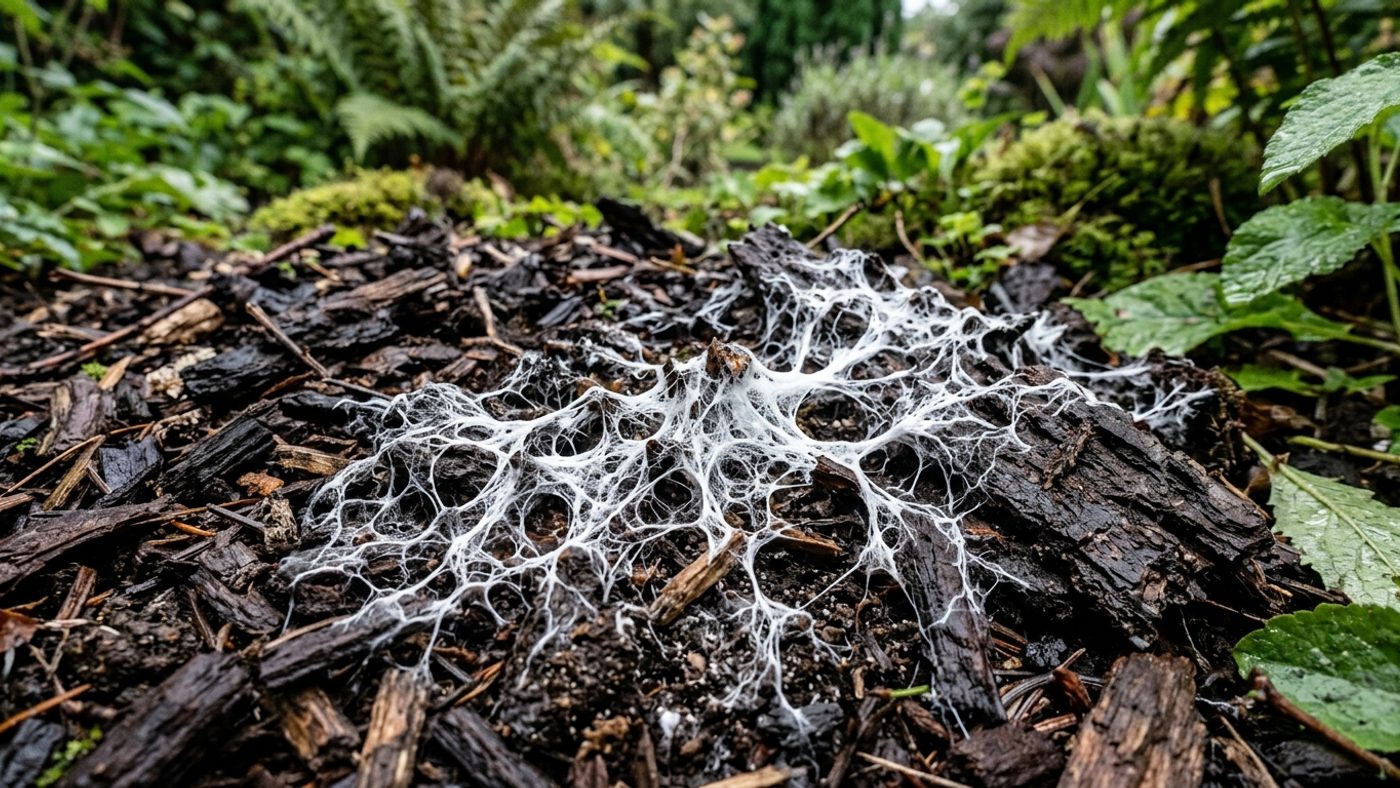
Mulching goes wrong in fairly predictable ways. Piling mulch up against stems rather than leaving a gap softens bark and invites rot and disease, this is the single most common mistake. Poor- quality or unfinished compost can introduce weed seeds, pests or plant diseases into a bed that didn't have them before, so source material you trust. Fresh, uncomposted wood chippings or bark can temporarily lock up nitrogen in the soil as they break down, starving nearby plants of it, which is why composted bark is preferred over fresh. And a white, cobwebby growth sometimes appears in organic mulch: this is a harmless fungus feeding on the dead plant material, doing exactly its job of breaking the mulch down, and it doesn't need removing.
One material worth a specific caution if you have dogs or cats: cocoa shell mulch, sold for its dark colour and rose-garden smell, is toxic to pets if eaten in any quantity, so choose something else where animals have access to the bed.
Common questions
Do I need to mulch every year?
For organic mulches, yes, ideally. They break down and feed into the soil over a year or so, so an annual top-up keeps both the weed suppression and the soil-feeding benefit going. Non-biodegradable mulches like gravel or membrane last much longer and don't need yearly renewal.
Can I mulch straight onto weeds?
Only annual weed seedlings, which mulch can smother. Perennial weeds with established roots, like dandelions or couch grass, need digging out first, since a layer of mulch on top won't stop them coming back through it.
Is bark or compost better for a general border?
Neither is universally better, they do different jobs. Composted bark suppresses weeds well and lasts longer before it needs topping up, but adds relatively little nutrition. Garden compost feeds the soil more but breaks down faster and needs replenishing more often.
What's the difference between mulch and compost dug into the soil?
Mulch sits on the surface and is never dug in, it does its job by covering the soil, not by being incorporated into it. Digging organic matter into the soil is a different technique aimed at improving structure throughout the root zone, most relevant when preparing a new bed.
Will mulch stop me needing to water as much?
It reduces water loss from the soil surface through evaporation, so mulched beds generally need watering less often than bare soil in the same conditions. It doesn't remove the need to water altogether, and mulch should be laid over already-moist soil, not used as a substitute for watering dry ground.
Sources
4 sources, recorded with what each was used for
- RHS: Mulches and mulching: Definitions, biodegradable/non-biodegradable material categories, spring and autumn timing windows, problems with mulching, seaweed as a mulch material
- RHS: How to mulch with organic matter: Application method and sequence, depth (5-7.5cm), stem gap (10cm), coverage calculation (1m³ covers 15-20m²)
- RHS: Slugs and snails: Garden-realistic barrier trial finding that bark mulch, copper tape, eggshells, sharp grit and wool pellets did not reduce slug damage
- Garden Organic: Best mulches for spring: Material-specific application rates (compost, green waste compost, bark, leaf mould, cardboard), the too-early-mulching-traps-cold caveat