
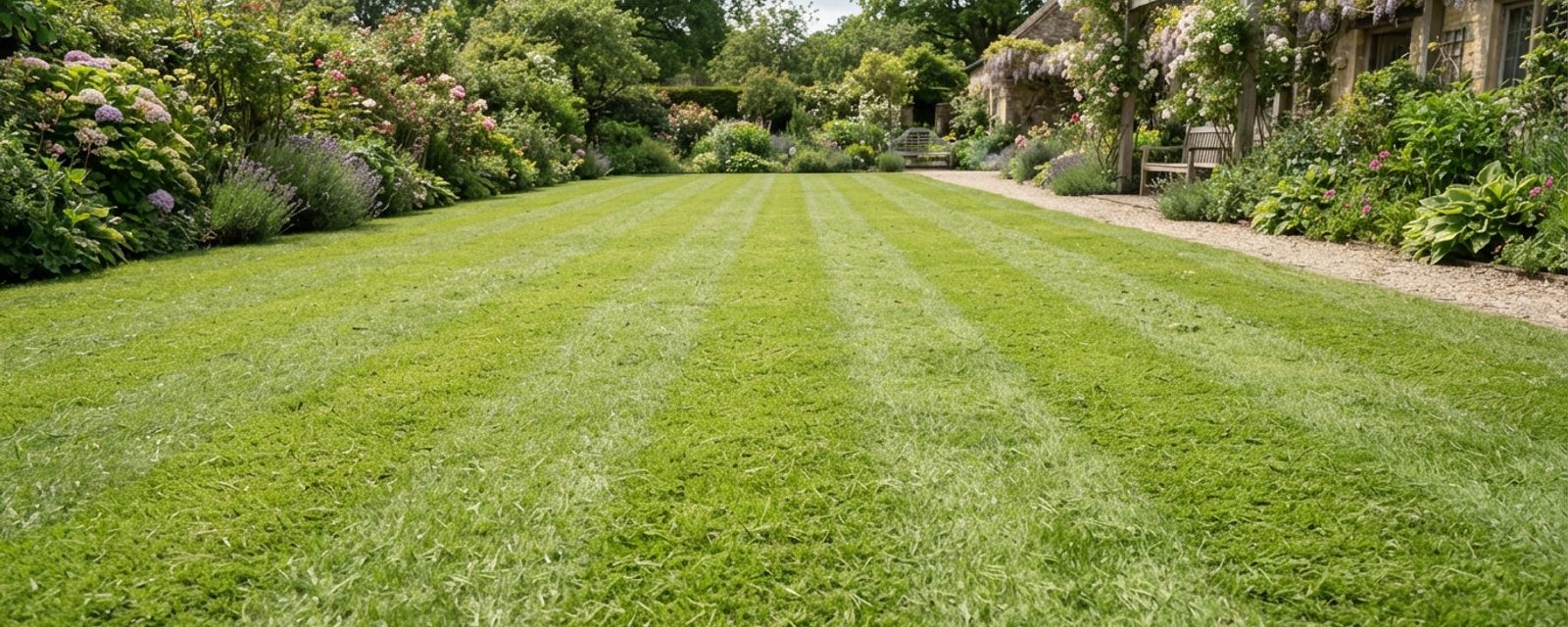
A cut blade of grass left on the lawn doesn't sit there inert. Within days, soil microbes and earthworms start breaking it down, and as that tissue decomposes it releases the nitrogen, phosphorus and potassium the grass plant had already absorbed, back into the soil around its own roots. This is the entire mechanism behind "grasscycling" or mulchA layer of material spread over the soil around plants to suppress weeds, retain moisture, and improve soil structure as it breaks down. Full definition → mowing: instead of removing nutrients from the lawn in a collection bag, you let the grass feed itself. It only works cleanly under certain mowing conditions, though, and it stops working if the clippings themselves are too long, too wet, or too heavy to break down before they mat down on top of the grass.
Turf clippings carry a meaningful dose of nitrogen, roughly 6-7% by dry weight, alongside smaller amounts of phosphorus and potassium, and returning them to the lawn can supply around a quarter of its total annual fertiliser needs. If your mower has no bagging or mulching option to begin with, leaving clippings is already the default: there's nothing extra to do beyond not raking up what falls behind it, unless it's genuinely sitting in visible clumps.
Why leaving clippings works
The RHS recommends mowing lawns "lightly and frequently" rather than infrequently and hard, and specifically suggests leaving short clippings in place during dry spells, where they act as a moisture-retentive mulch on the surface as well as a nutrient source underneath. The two ideas are connected: a clipping only decomposes fast and disappears into the turf if it's short enough and dry enough for soil organisms to process quickly. A fine scattering of grass fragments, from mowing regularly, does that. A layer of long, wet cuttings does not.
A mulching mower, one with a blade and deck designed to chop clippings finer and recirculate them rather than throw them out to the side, makes this easier to keep up, since it does more of the shredding work a standard rotary mower leaves to time and soil organisms. It's not essential; a standard mower cutting little and often achieves much the same result, just with slightly coarser fragments.
Straight after a mow, correctly-short clippings are still visible sitting on top of the grass for a short while; that's normal and not a sign anything's gone wrong. They settle down into the turf and stop being visible within a day or two once soil organisms get to work, rather than sitting on the surface indefinitely the way an over-long clipping would.
The one-third rule
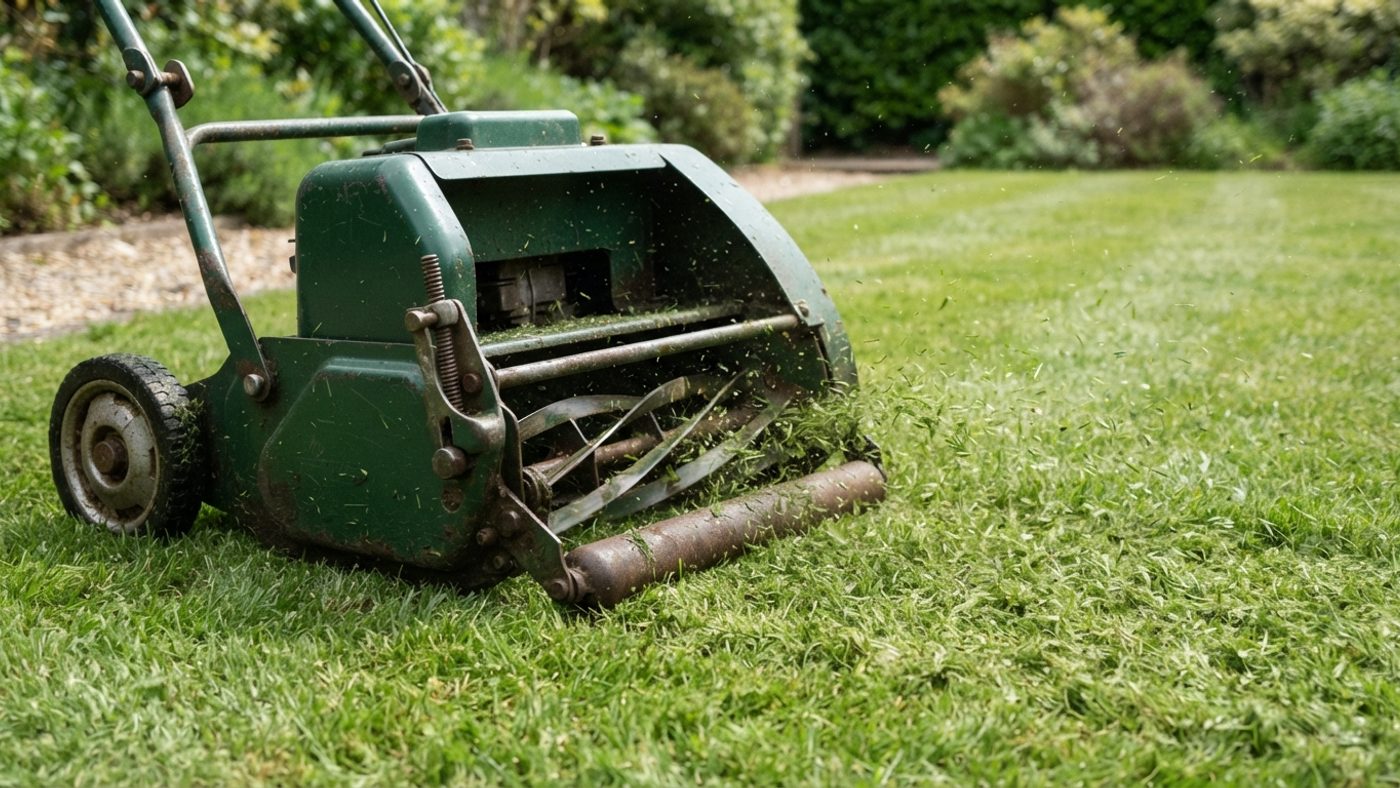
The RHS's guidance is not to remove more than one-third of the grass blade's height in a single cut. Following that rule keeps the clippings short enough to filter down between the remaining blades and reach the soil, rather than sitting on top as a visible mat. It also keeps the plant healthier generally, since scalping a lawn stresses the grass and slows regrowth. In practice this usually means mowing weekly to fortnightly through the main growing season, typically March to October in the south but starting later and finishing earlier further north as the ground warms up more slowly, and adjusting the frequency to how fast the grass is actually growing rather than a fixed calendar.
The thatch myth
A common objection to leaving clippings is that they'll build up into thatch, the spongy brown layer between soil and living grass. Grass clippings are around 80-85% water and contain very little lignin, so short clippings from frequent mowing break down within one to two weeks in favourable conditions and don't accumulate. Thatch itself is mostly made up of dead stems, roots, and other slow-to-rot plant debris that builds up over years, not surface clippings, and it's dealt with by scarifying in autumn, not by bagging your mowings.
That one-to-two-week breakdown figure comes from a warmer climate than Scotland's, and cooler soil slows down the soil organisms doing the actual decomposing. A clipping that vanishes within a week in a mild summer can sit visibly longer on a cool spring or autumn lawn, which is one more reason to keep clippings short and dry rather than relying on decomposition to catch up with them later.
When to collect instead of leave
If the ground itself is sodden, that's a different problem from what to do with the clippings: mowing wet, waterlogged turf at all risks compacting and rutting the soil, whatever you do with the cuttings afterwards. Check the guide to mowing a wet lawn first in that case.
Assuming you do mow, the RHS advises regularly emptying the clippings box or raking up clippings to prevent clumps and reduce fungal problems, rather than leaving them to lie. Collect rather than leave clippings when:
| Situation | Why it's a problem |
|---|---|
| Clippings are longer than about 1cm (roughly a fingertip's width) | Longer, heavier cuttings don't sift down to the soil and instead sit on the leaf surface |
| Clippings are wet (rained-on grass, or morning dew) | Wet clumps stick together and mat down instead of dispersing, blocking light and air to the grass beneath |
| The lawn has an active fungal disease (fusarium patch, red thread) | A damp mulch layer on top of infected grass can help disease spread |
| You've skipped a mow and the grass has grown long | Cutting overgrown grass produces long clippings even with a sharp blade, undoing the "short and dry" condition that makes grasscycling work |
A mat left sitting on the surface doesn't just risk generic "fungal problems": fusarium patch (pink snow mould), the disease most associated with damp, matted grass through a cool Scottish autumn, thrives in exactly that combination. The same mat also blocks light to the grass underneath, and moss establishes fastest exactly where grass is weak and light-starved, so a neglected mat can leave you fighting moss on top of disease.
The decomposition mechanism itself doesn't change with climate; the same nitrogen release happens whether a lawn is in Perthshire or Kent. What changes in a wetter, cooler climate is how often you actually get a mowing window: the guide to mowing a wet lawn sets out why a proper dry window can be scarce for days or weeks at a stretch on Scotland's west coast and in the uplands. If wet weather repeatedly delays a cut, the grass grows longer between mows, and the eventual clippings end up both longer and wetter, exactly the two conditions that push you from "leave it" to "collect it" above. The fix is the same one-third rule and mowing little and often; it just takes more deliberate effort to keep up through a run of wet weeks.
Other uses for collected clippings
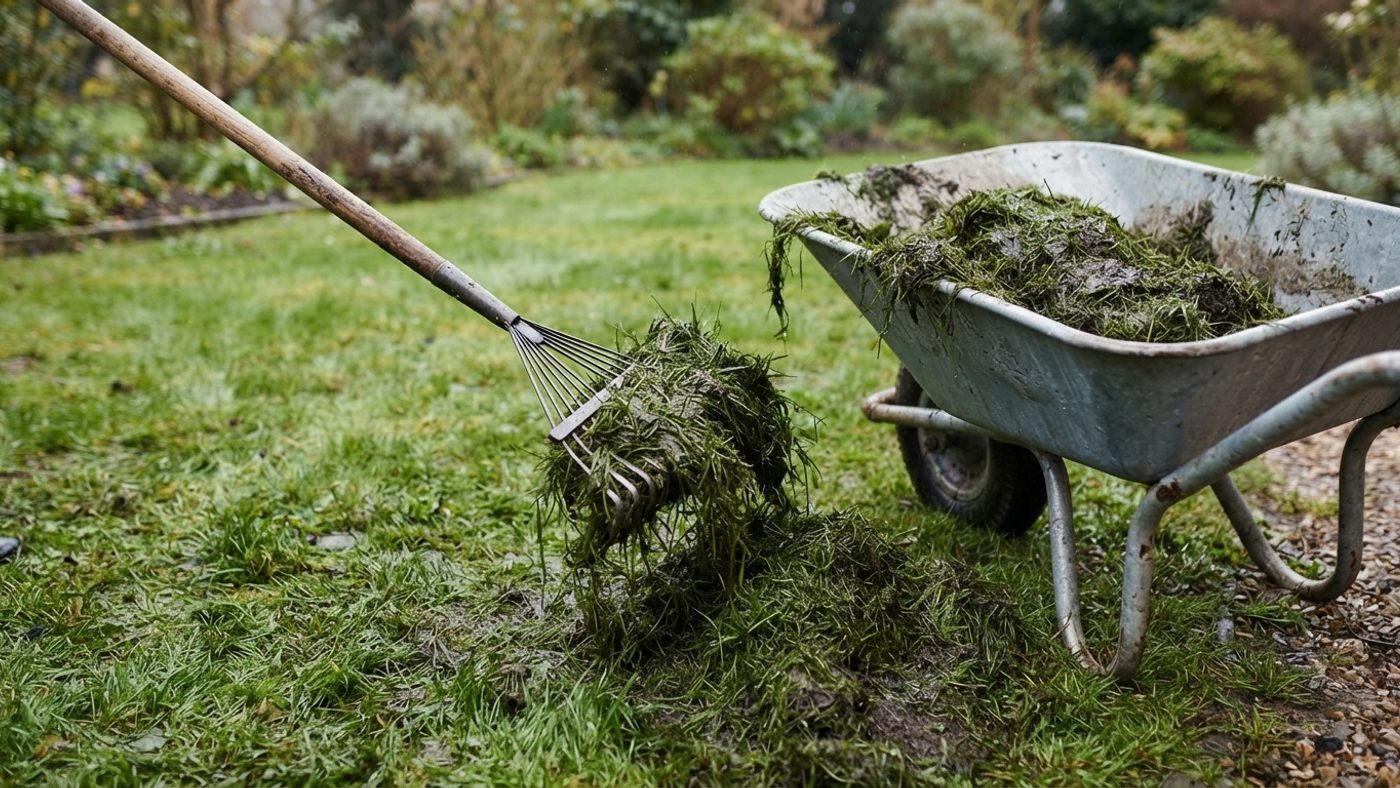
If you are collecting, because the grass has grown too long, the weather's been too wet, or you simply prefer a boxed-off lawn, the clippings don't have to go to landfill.
As a garden mulch
A thin layer of clippings (no more than a couple of centimetres, added a little at a time) can be used as mulch around vegetables or border plants, where it suppresses weeds and returns some of the same nitrogen back to the soil. Use dry clippings and let each layer dry out a little before adding more, since a thick, wet layer of grass will mat and turn slimy in a border in the same way it does on the lawn.
As a compost activator
Grass mowings are a nitrogen-rich "green" material for the compost heap, and mixing them well with carbon-rich "browns" (cardboard, dry leaves, woody prunings) helps a heap heat up and avoids the slimy, smelly mess that comes from adding grass clippings alone in a thick layer. Getting a heap to heat up properly is already a slower business in a cool, damp climate, which is one more reason to mix greens and browns thoroughly here rather than relying on volume alone; the guide to hot composting vs cold piles sets out which approach suits a larger volume of clippings if a single heap can't keep up.
The herbicide caution
Don't compost clippings from the first cut or two after treating a lawn with a selective hormonal weedkiller containing clopyralid. These persistent herbicides can survive the composting process and go on to damage sensitive plants, such as tomatoes, peas, and other vegetables, when the finished compost is used the following season, in much the same way that aminopyralid-contaminated manure causes damage. Check the specific product label for how long to wait, and when in doubt, leave those clippings on the lawn instead, where they break down in place rather than concentrating in a compost bin.
Common questions
Does leaving clippings on the lawn cause thatch?
No. Grass clippings are mostly water and low in lignin, so short clippings from regular mowing decompose within one to two weeks in good conditions rather than accumulating. Thatch is made up mainly of dead stems, roots and other slow-to-break-down plant material, and is removed by scarifying, not by bagging clippings. If your soil is cool and decomposition is slower than that, it's a reason to keep clippings extra short, not a reason to start collecting by default.
How short do clippings need to be to leave them on the lawn?
Aim for clippings under about 1cm, which generally means following the one-third rule (never removing more than a third of the grass height in one cut) and mowing regularly enough that the grass doesn't get away from you between cuts. A mulching mower makes this easier to hit consistently, but isn't required.
Is it fine to leave clippings on a wet lawn?
Better not to. Wet clippings clump and mat instead of dispersing to the soil, which can block light and air to the grass underneath and encourage moss as well as fungal disease. If the grass or ground is wet enough that mowing itself is a bad idea, that's covered separately in the guide to mowing a wet lawn.
Can I compost grass clippings after using a weedkiller?
Not straight away. Selective lawn weedkillers containing clopyralid can survive composting and damage sensitive plants later. Check the product label for the recommended waiting period, and leave the first post-treatment clippings on the lawn rather than adding them to the compost heap.
Does leaving clippings actually reduce how much fertiliser I need to buy?
It reduces it rather than replacing it outright, and the timing matters: the nitrogen boost is most useful matched to spring and summer growth, not relied on as a late-season feed, since pushing soft new growth into a wet Scottish autumn adds to the fusarium risk covered above. Phosphorus, potassium and any autumn feed a lawn needs still have to come from elsewhere.
Sources
6 sources, recorded with what each was used for
- RHS: How to Mow a Lawn: The one-third rule, mowing frequency, the short-dry-clippings guidance, and the advice to rake up clumps in wet conditions
- RHS: Monthly gardening tips, August: lawns: The mulch-mowing-in-hot-weather guidance and mulching-mower detail
- RHS: Weedkiller in Manure: The clopyralid/aminopyralid persistent-herbicide caution around composting treated clippings
- RHS: Lawns – Dry Patch Problems & Fixes: The definition of thatch and the scarifying/compaction context
- Garden Organic: Composting hints and tips: Grass mowings as a nitrogen-rich "green" compost material and the advice to mix with browns
- University of Nebraska–Lincoln, Water: Nutritional Value for the Landscape: The NPK percentage figures and the roughly 25% annual nitrogen contribution figure