
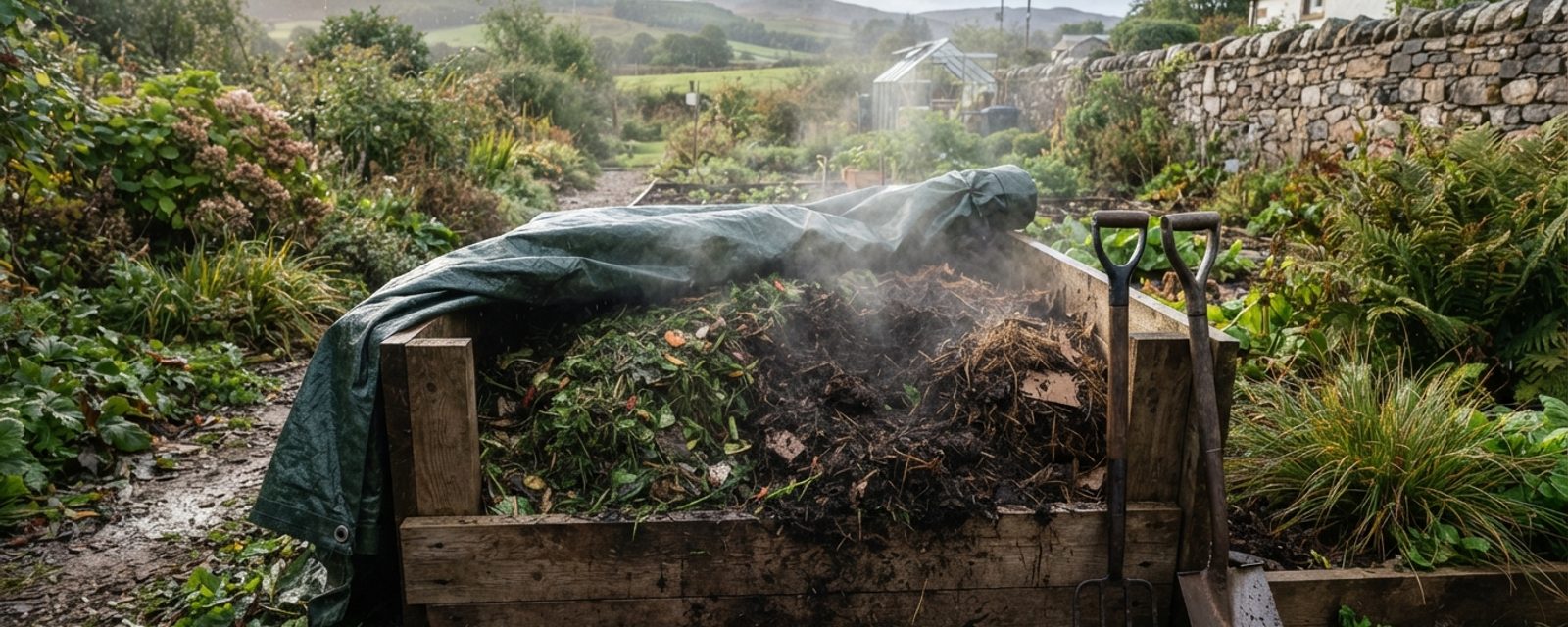
Somewhere in a shed or a gardening forum thread is a set of instructions for building a hot compost heap: chop everything small, get the greens and browns balanced, fill the whole bin in one go, and within a few days it'll be steaming when you turn it. Plenty of Scottish gardeners have followed that exact method in spring, done everything on the list, and ended up with a heap that stayed stubbornly, disappointingly lukewarm. The instructions weren't wrong. They were mostly written somewhere warmer and drier, and that gap is worth understanding before you build another one, or decide it's not worth the effort at all.
What "hot" and "cold" composting actually are
Both methods rely on the same thing, decomposition by bacteria, fungi and other organisms breaking plant material down into usable compost. What separates them is whether that process generates real heat.
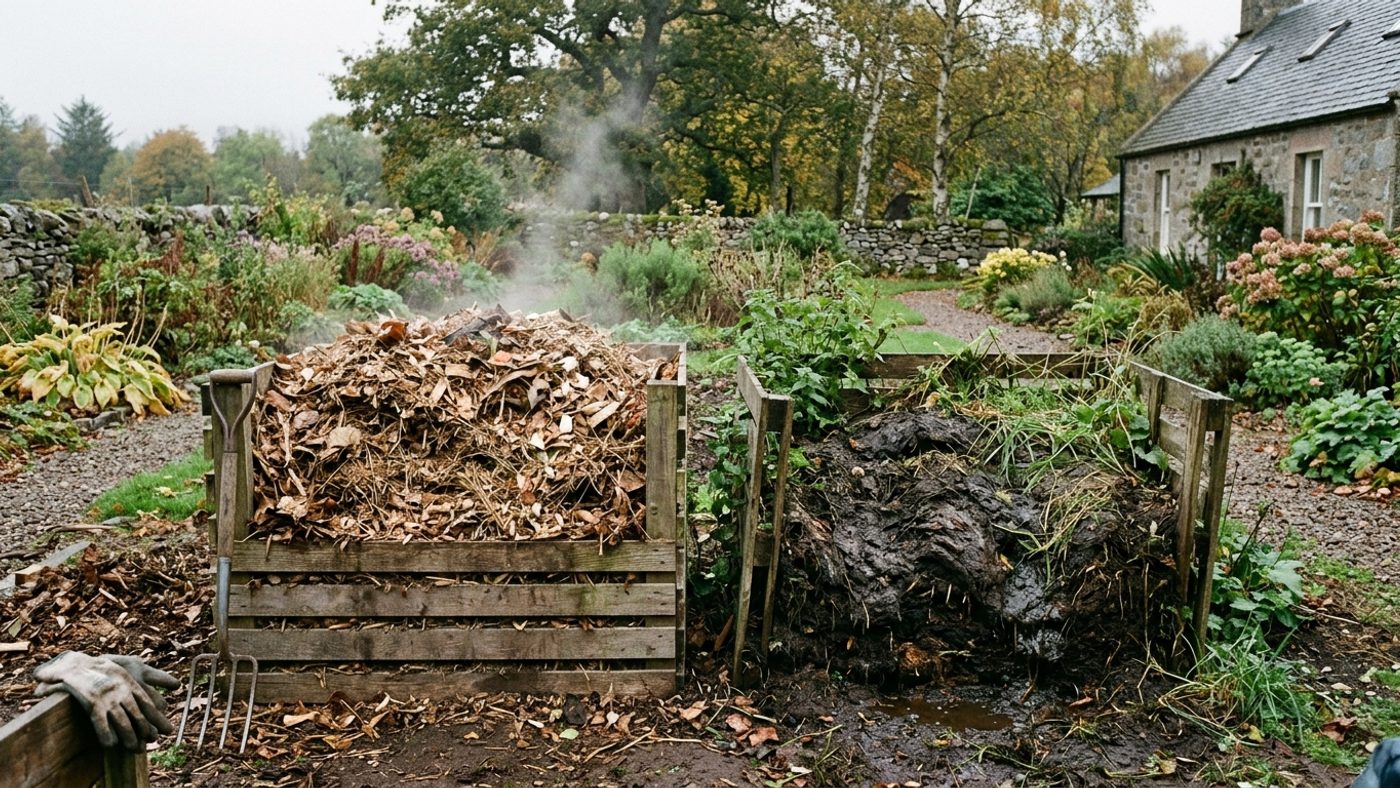
A cool or cold heap is the default most gardeners fall into without deciding to: material gets added whenever it's available, kitchen peelings this week, a barrow of prunings the next, without much attention to ratio or timing. It rarely gets much hotter than the air around it, stays that way for as long as it takes worms, insects and slow-working microbes to finish the job, and can take up to three years to fully break down a heap built this way.
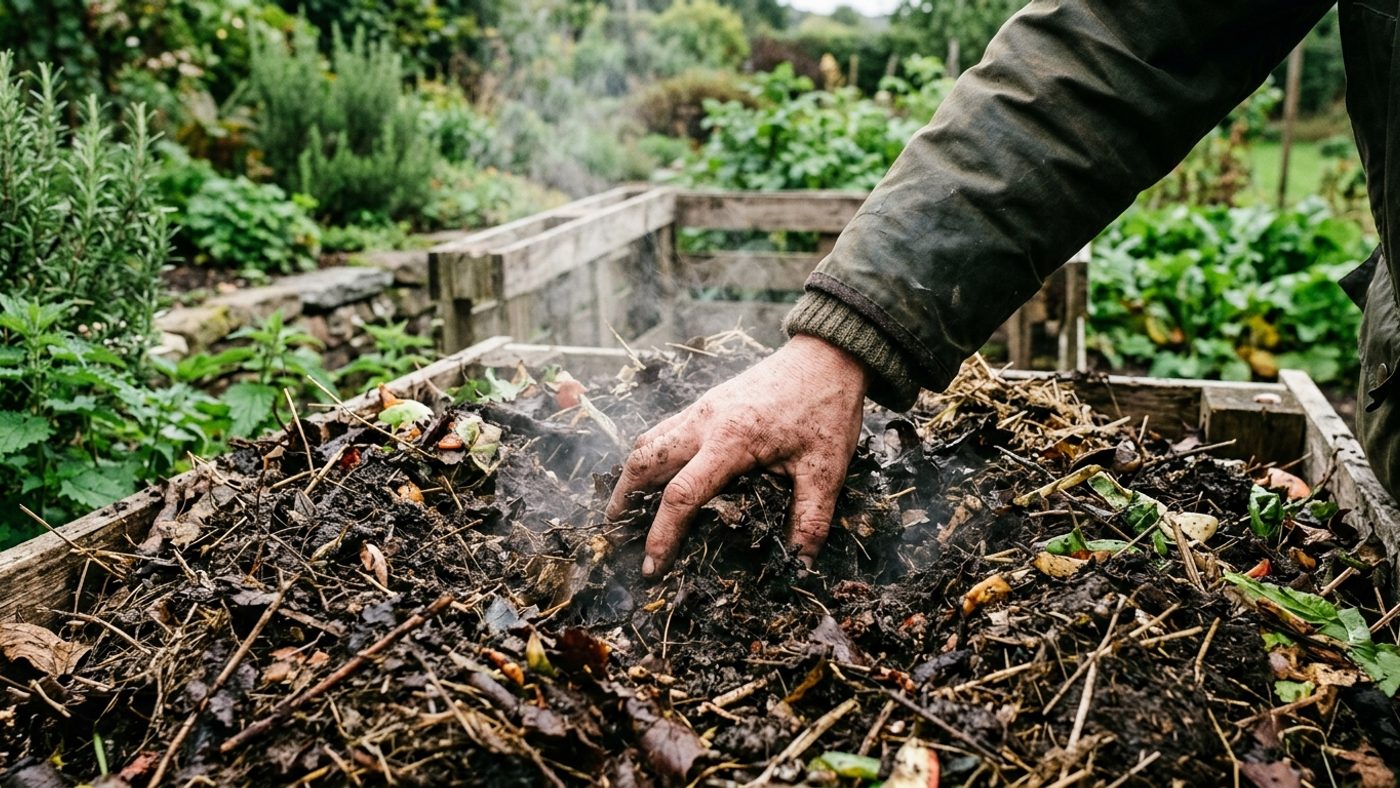
A hot heap is a deliberate, one-off build rather than an ongoing habit: material chopped into small pieces and mixed together before it goes in, filled close to capacity in a single session rather than topped up gradually, with roughly a quarter to a half soft green material (kitchen waste, grass clippings, annual weeds) by volume and the rest drier brown material (cardboard, straw, woody prunings) driving the process. Get that mass and mix right and thermophilic, heat-loving bacteria take over within days, pushing the centre of the heap hot enough to be uncomfortable to touch. That heat is the whole point: sustained above roughly 60C, it's what destroys weed seeds and plant pathogens that a cool heap simply can't be relied on to kill.
Why hot piles are genuinely harder to hold here
The heat in a hot pile is generated by the bacteria themselves, not borrowed from the weather, so in principle it should work anywhere with the right mass and mix. Two real features of the Scottish climate work against it anyway, and both are worse outside the summer months this whole comparison assumes, so a pile started heading into fewer hours of weak autumn sun or into winter proper starts from an even harder position than the figures below describe.
The first is genuine, if modest: summer temperatures are lower here than in the parts of the UK most composting advice is written for. A cooler surrounding air temperature doesn't stop bacterial heat generation, but it does mean an exposed pile loses heat to its surroundings faster than the same pile would further south, which matters most at the edges of a heap that's already working hard to stay hot in the middle.
The second matters more: rain. Scotland doesn't just get more of it, it gets it more consistently through the months when a hot pile is most likely to be built. Both the Met Office's Western and Eastern Scotland climate summaries independently make the same point, that Scotland remains under the influence of Atlantic depressions through much of summer, unlike other parts of the UK where the season more reliably dries out. A hot pile depends on air pockets between the material for the bacteria doing the work, and a heap that's rained on repeatedly through the exact season it's meant to be heating up loses those air pockets to waterlogging, which cools it and pushes it toward anaerobic decomposition instead, the slimy, sour-smelling state most gardeners actually notice first (and that also draws flies and vermin, see keeping rats out of your compost heap if that's a recurring problem, worth acting on quickly rather than leaving), exactly the failure mode of the heap that never got hot.
| July daily max | Wet days, summer | |
|---|---|---|
| London (for comparison) | 23.5C | — |
| Eastern Scotland (mildest inland areas) | ~20C | ~27 (East Lothian/Fife coast) |
| Western Scotland (mildest southern areas) | ~19C | ~35 (coast), 40+ (high ground) |
| Western Scotland (high ground) | under 15C | 40+ |
Even the country's own warmest, driest corner falls well short of a typical English summer on both counts, and the two effects compound: a pile losing heat faster to cooler air is also the pile most likely to be sitting wet from a summer that doesn't reliably dry out the way it does further south.
Building a hot pile that actually works here
Two details make the real difference between a heap that heats up and one that doesn't.
Build big enough, in one go
A bin smaller than roughly a cubic metre is generally less efficient at generating and holding heat, though it will still compost eventually, just more slowly. A bigger mass has less surface area relative to its volume, so it loses heat to cool, damp surrounding air more slowly than a small one does, which is exactly the margin worth having here. Fill it in one session from chopped, mixed material rather than adding to it gradually; a heap built up over weeks never has enough fresh material heating at once to reach and hold thermophilic temperatures.
Site it on bare earth, and cover it
Where the heap sits matters before it's even built: a sheltered spot in partial or full shade avoids extremes of both temperature and moisture, and standing a bin on bare earth rather than paving gives worms and other soil organisms access from below and lets excess water drain away rather than pooling in the base, exactly the waterlogging risk the rain above is already working against. A hard standing surface still works, just add a few spadefuls of soil into the bottom to get it started.
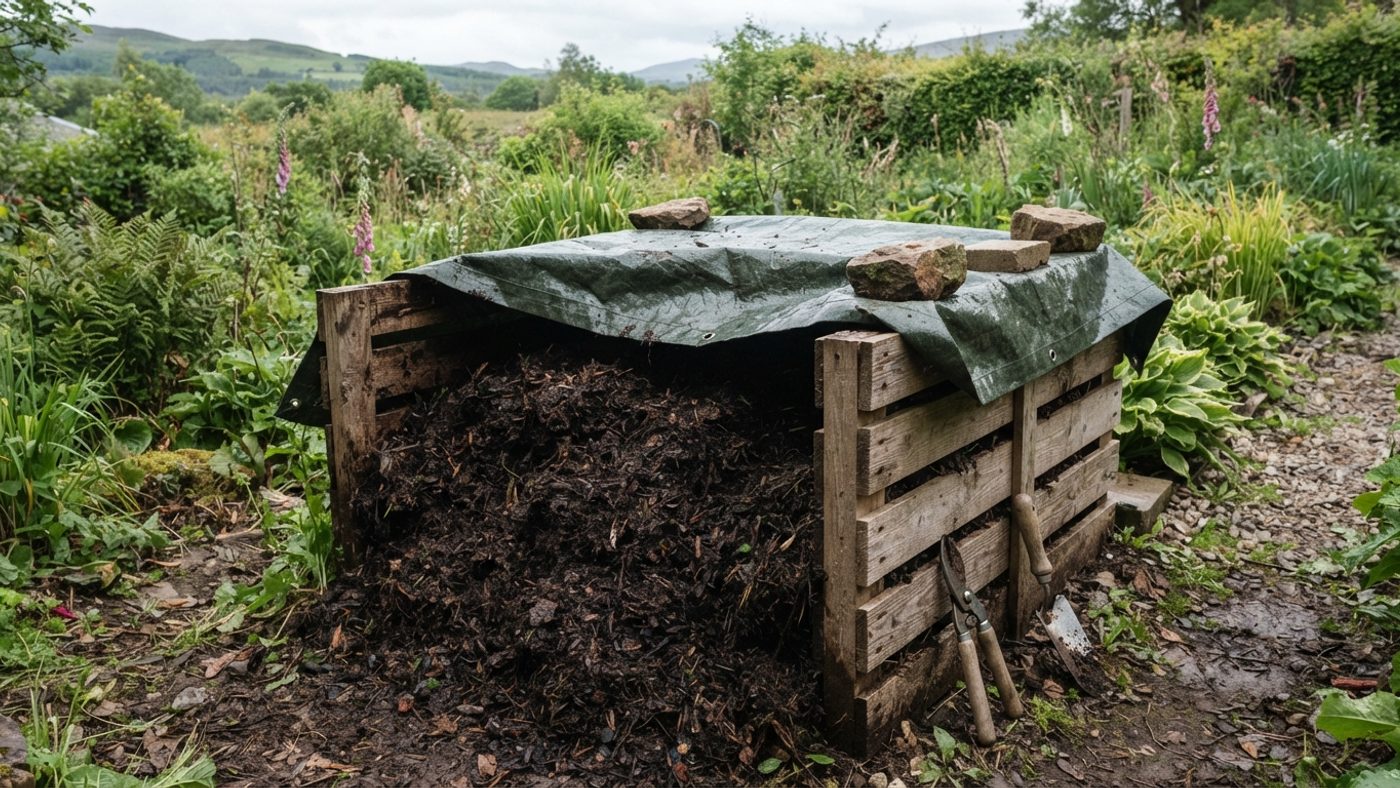
Covering or insulating the heap, a tarp, a sheet of cardboard, or an old carpet weighted down over the top, does two jobs at once: it holds the bacterial heat in rather than letting it escape into cool air, and it keeps direct rain off a pile that would otherwise be catching a genuine share of Scotland's summer wet days. Turning the heap serves the same dual purpose once it's built, it lets you check whether the centre is still genuinely hot rather than assuming a covered heap is automatically fine; a heap that's cooling faster than expected usually means it's either drying out or waterlogging, and turning is how you find out which.
An insulated purpose-built hot bin does the same siting and covering job more completely than a homemade cover, holding heat well enough to keep working through cold, wet stretches that would stall an open heap, and can turn out usable compost in around 12 weeks rather than the months a standard bin needs. It's a genuine upgrade specifically because ordinary Scottish weather works against an open pile more than it would somewhere drier and milder.
Cold composting done properly, not just neglected
A cold pile isn't a failed hot pile, it's a different, genuinely lower-effort method, and it's worth running deliberately rather than treating it as whatever happens when nobody manages a heap. Add material as it becomes available, still aiming for a roughly even mix of green and brown rather than an all-kitchen-scraps heap, and turn it every few months if you can manage it, more often speeds things along but isn't essential the way it is for a hot pile.
Expect four months to over a year for a reasonably managed cold heap to produce usable compost, and longer, up to three years, for one that's genuinely left alone with minimal turning. That's the real trade against a hot pile's weeks-to-months timeline: slower, but forgiving of an irregular feeding schedule, a smaller heap, or a gardener who doesn't have a free weekend to chop and mix a bin's worth of material in one go, which describes most ordinary home composting more accurately than the hot-pile instructions assume. A cold pile isn't fighting to reach thermophilic temperatures in the first place, so it's far more forgiving of Scotland's cooler, wetter summers than a hot pile is. It's not entirely unaffected, though: the worms, insects and microbes doing the work are also slower in cold, wet conditions than in mild, dry ones, so a cold heap here tends to sit toward the slower end of its own timeline too, just without the sharp all-or-nothing failure a hot pile risks.
What a cold pile can't do is the real limit: it isn't reliably hot enough to kill weed seeds or plant pathogens, so anything that's already set seed, spreads from root fragments, or is visibly diseased, clubrootA soil-borne fungal disease of the brassica family that swells and distorts roots, and survives in soil for years. Full definition →-affected brassicaThe cabbage family: cabbage, kale, broccoli, cauliflower, Brussels sprouts, kohlrabi, swede, turnip and more, sharing the same pests, diseases and rotation rules. Full definition → roots from ground that's slow to dry are a genuine example, shouldn't go in one at all, whatever the rest of the heap is doing. It's the main reason to actually decide between hot and cold rather than just letting a heap happen, since what you're allowed to put in it depends on the answer.
| Hot pile | Cold pile | |
|---|---|---|
| Minimum practical size | ~1m³, built in one session | No real minimum; small heaps work |
| Effort | Chop, mix, fill at once; turn regularly | Add as available; turn every few months |
| Time to usable compost | ~12 weeks (insulated bin) to a few months | 4 months to over a year; up to 3 years if neglected |
| Weed seeds & pathogens | Reliably destroyed above ~60C | May survive; don't add seeded weeds or diseased material |
Either kind of finished compost is genuinely useful stuff once it's ready, especially dug into clay or other heavy, slow-draining soil, common across much of Scotland. See our guide to improving clay soil for how organic matter and drainage work together there. One timing note worth knowing ahead of time: don't apply garden lime and fresh compost to the same bed at once, see garden lime, when and how much for why.
Deciding which one fits your garden
Two questions do most of the work. First, is there a specific reason compost needs to be pathogen- and seed-free, a barrow of seeded annual weeds, clubroot-affected brassica roots, or something similar waiting to go somewhere? If yes, that alone is worth committing to a proper hot build for, even just once, rather than routing that material through an everyday cold heap. Second, realistically, is there a free weekend to chop and fill a cubic-metre bin in one go, and the discipline to keep it covered and checked through whatever the weather does next? If not, a cold pile isn't a compromise, it's the method actually suited to how most people garden day to day, and it still produces good compost, just on its own slower schedule.
Nothing stops running both: a cold heap for the everyday kitchen and garden waste, and a separate hot batch built specifically when there's a pile of seeded weeds or diseased material that needs dealing with properly rather than composted around.
Common questions
Can you actually hot compost in Scotland, or is it a waste of time?
It's possible, not a waste of time, just harder to sustain than the instructions assume. A large enough pile (at least a cubic metre), built all at once from chopped material in the right green-to-brown ratio, insulated and kept out of the worst of the rain, can still heat up here. What rarely works is the same technique used further south applied to a smaller heap left open to Scottish summer rain, which is the setup most people accidentally start with.
Do I need a special insulated hot bin, or will an ordinary bin do?
An ordinary bin can get hot if it's built as a proper hot heap, chopped, mixed, filled in one go, at least a cubic metre. An insulated bin (the kind sold specifically for hot composting) makes it considerably easier to hold that heat through a cool, wet Scottish spell, and keeps working through cold stretches that would stall an open heap. It's a genuine upgrade for hot composting here specifically, not just a gadget.
What shouldn't go in a cold pile?
Perennial weed roots (dandelion, bindweed, couch grass), annual weeds that have already set seed, and any diseased plant material are the main things to keep out of a cold heap, since a cold pile isn't reliably hot enough to kill any of them. Put those in council green waste collection instead, or in a genuinely well-managed hot pile if you're confident it's reaching temperature.
How do I know if my pile is actually 'hot', or just a bit warm from decomposition?
Push a hand or a metal rod into the centre of the heap a few days after building or turning it. A hot pile is noticeably hot to the touch, uncomfortably so if you leave a bare hand in, not just mild warmth. If it never gets past faintly warm, treat it as a cold pile rather than assuming it's working as a hot one.
Can I turn a cold pile into a hot one partway through?
Not easily once material has settled and compacted, since hot composting depends on a fresh, chopped, well-mixed mass rather than an already-decomposing heap. It's more realistic to start a genuinely fresh hot batch alongside an existing cold pile than to convert one into the other midway.
Sources
5 sources, recorded with what each was used for
- RHS: Composting: Green-to-brown ratio (25-50% soft green material to 75-50% brown), the roughly 1 cubic metre threshold below which a bin is less efficient, turning several times a year, watering in summer if dry, the 6 months to 2 years general timeline, and siting guidance (sheltered partial/full shade, bare-earth base for drainage and soil-organism access, or a hard surface started with a few spadefuls of soil)
- Garden Organic: Different composting methods: The hot vs cool heap distinction itself: cool heaps rarely exceed 60C and may not destroy weed roots or seeds and can take up to three years to fully decompose; hot heaps need material chopped small and mixed before filling, get hot within days, destroy weed seeds, are more labour-intensive, and insulated hot bins can produce usable compost in around 12 weeks and keep working through winter
- Soil Association: How to make your own compost: Even green/brown mixture, 4 months to over a year timeline, turning at least once every few months, and the specific tarp/cardboard/old-carpet covering technique that heats the pile while keeping it from getting too wet, plus the warning that too much moisture harms the aerobic bacteria doing the work
- Met Office: Western Scotland climate: July/August mean daily maximum temperatures (under 15C on high ground to just over 19C in the mildest southern areas, against 23.5C for London), spring/summer wet-day counts (around 35 on the coast, 40+ over high ground), and the finding that Scotland remains under the influence of Atlantic depressions through much of summer, unlike other parts of the UK
- Met Office: Eastern Scotland climate: July mean daily maximum approaching 20C inland, the warmest anywhere in Scotland but still well under London's, summer wet-day counts (around 27 on the East Lothian/Fife coast, 40+ over the Grampians), driest annual rainfall figures (under 700mm on sheltered east-coast areas) and the same Atlantic-depressions-through-summer finding independently stated