
Standing over the recycling bin with an egg carton in one hand and a squash bottle in the other, it's a fair question: is any of this actually useful in the garden, or is keeping it just wishful thinking dressed up as good intentions? Some household waste genuinely does have a second life outdoors, with a real mechanism behind why it works rather than just a vague feeling that reuse is virtuous. Four items are worth the cupboard space: egg cartons, plastic bottles, ice lolly sticks, and cardboard. Here's what each one actually does, and how.
Egg cartons: a built-in seed-starting module tray
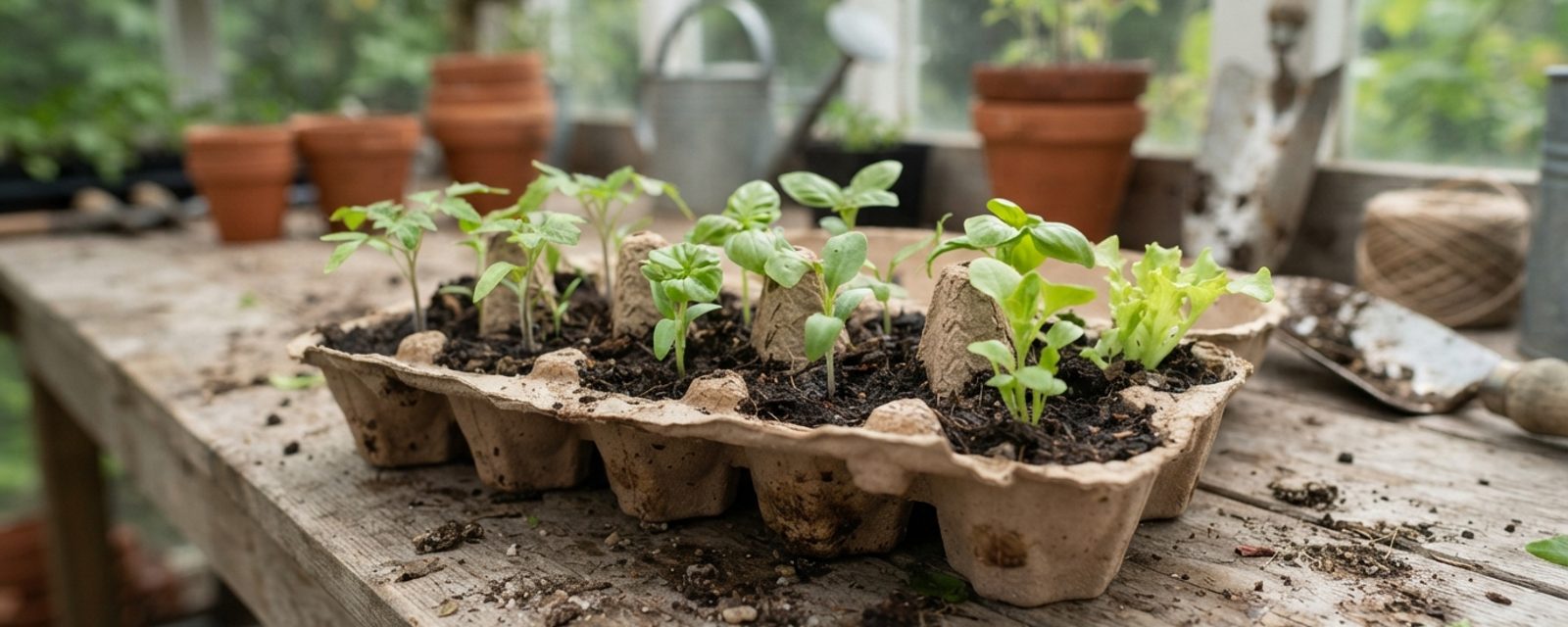
Cardboard egg cartons are already shaped like something the RHS specifically recommends for young seedlings: individual cells that let a plant be moved on without disturbing its roots. The RHS describes modular trays as "small individual cells, usually in a tray, used for sowing seeds," adding that "the resulting seedlings can be transplanted with minimal root disturbance." An egg carton's twelve cups do the same job by shape alone, and the RHS's own guidance on containers already points toward this kind of reuse generally, recommending "recycled food containers" and biodegradable pots as sowing options alongside dedicated seed trays.
How to use one
Fill each cup with peat-freeCompost made without peat, which is harvested from a slow-forming, carbon-storing wetland habitat that peat extraction damages. Full definition → seed compost, described by the RHS as "free-drainingSoil that lets water pass through quickly rather than pooling, so roots aren't sitting in wet ground after rain. Full definition →" and "formulated for germinatingA seed sprouting: breaking dormancy and putting out its first root and shoot, given the right warmth and moisture. Full definition → seed" with deliberately low nutrient levels so as not to damage young seedlings. Sow at the depth the seed packet gives, since this varies by species, but the general rule is "a light covering of sieved compost, usually no more than the depth of the seed." Once seedlings are ready to move on, a card egg carton can be cut apart cup by cup and the whole cup planted straight into the ground or a larger pot, since the cardboard breaks down in damp soil rather than needing to be peeled away. That avoids disturbing the roots at exactly the transplant stage the RHS's moduleA tray divided into small individual cells, each sown with its own seed or seedling, so each plant grows undisturbed roots until it's ready to plant out. Full definition →-tray advice is built around.
Two caveats worth naming honestly: a polystyrene or plastic egg carton doesn't break down the way card does, so only the cardboard kind is worth planting whole, and the shallow cell depth of most cartons makes them a starting point for seedlings that get potted onMoving a plant into a larger pot as its roots fill the current one, giving it more room and fresh compost before it becomes pot-bound. Full definition → again before they outgrow the space, not a container to grow anything to full size in. Cardboard tubes from toilet rolls or kitchen roll are worth keeping for the same reason, alongside the cartons rather than instead of them: they're deeper than an egg carton's cup, which suits sweet peas, beans and other deeper-rooted seedlings better before they go outside.
Plastic bottles: cloches and slow-drip watering
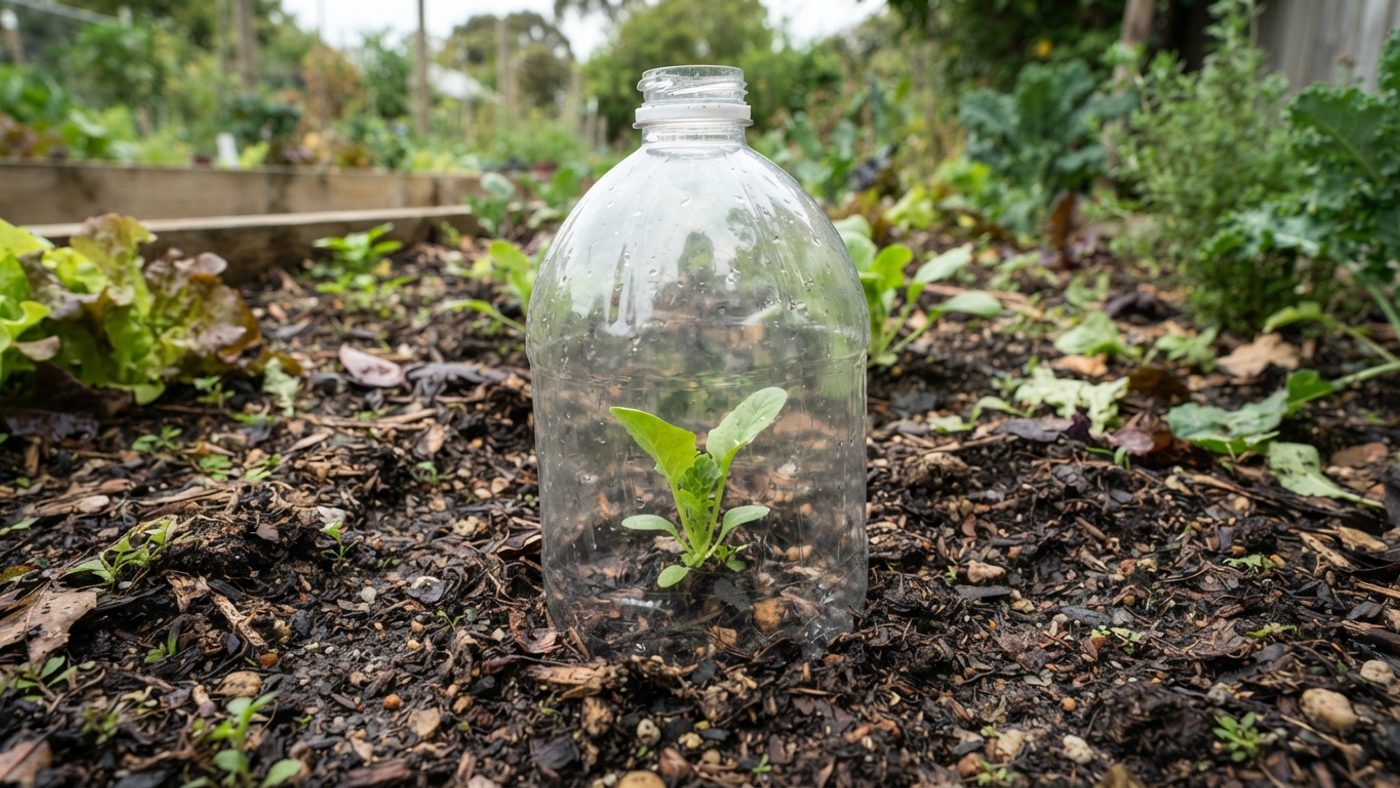
A cut-down plastic bottle makes a passable mini clocheA small, portable clear cover placed over an individual plant or short row to trap warmth and keep off wind, rain and pests. Full definition →: it traps a still-air layer around a seedling the way a cold frame does at much smaller scale, taking the edge off a cold night without any structure to buy or build. Scotland's frost dates run later in spring than most of England's, so tender seedlings and early sowings spend more of their life exposed to a cold snap here, and every extra degree of warmth held around a young plant in April or May buys real time against that later frost window.
Making one
Cut the base off a bottle with scissors or a sharp knife on a stable surface, away from fingers, since the cut plastic edge stays sharp afterwards. Keep the cap on or off depending on whether ventilation is needed on a mild day, and push the cut edge a couple of centimetres into the soil around a single seedling so wind doesn't lift it. A bottle cloche on an exposed plot is worth weighting or pushing in firmly rather than balancing loosely, since a wind that would barely trouble a heavier cold frame can knock a light plastic bottle clean off a seedling overnight.
Take the cap off on a mild, still day rather than leaving it sealed throughout: condensation building up inside an unventilated bottle keeps foliage constantly damp, and damping-offA fungal disease that kills seedlings at soil level, usually caused by overwatering, poor airflow, or reused unsterilised compost or trays. Full definition → (a fungal rot that kills seedlings at the base in warm, wet, still conditions) is already a bigger risk in a generally damp climate like Scotland's before a sealed cloche adds to it. Remove the cloche altogether once the plant has outgrown the space or nights have reliably warmed up, since a sealed bottle left on too long in full sun can also scorch a plant it was meant to protect.
A bottle also makes a slow-drip waterer: puncture small holes in the cap and lower body, bury it neck-down beside a thirsty plant, and fill it so water seeps out slowly at root level rather than running off the surface. This one is a genuine time-saver for anyone watering containers through a dry spell, but not something Scotland's climate makes more or less necessary than gardening anywhere else in the UK.
Ice lolly sticks: labels, and small splints
A wooden ice lolly stick, written on in pencil or waterproof pen and pushed into the compost beside a row or a pot, is a free plant label wherever you garden, Scotland included; there's no regional angle here worth inventing. It's a small thing, but it solves the real problem of forgetting which of six identical seedling trays is which by the time anything's up.
The same sticks work as a lightweight splint for a young plant with a bent or slightly damaged stem, taped loosely alongside the stem to hold it upright while it recovers, then removed once the plant has firmed up on its own.
Cardboard: free sheet-mulch material for weed suppression
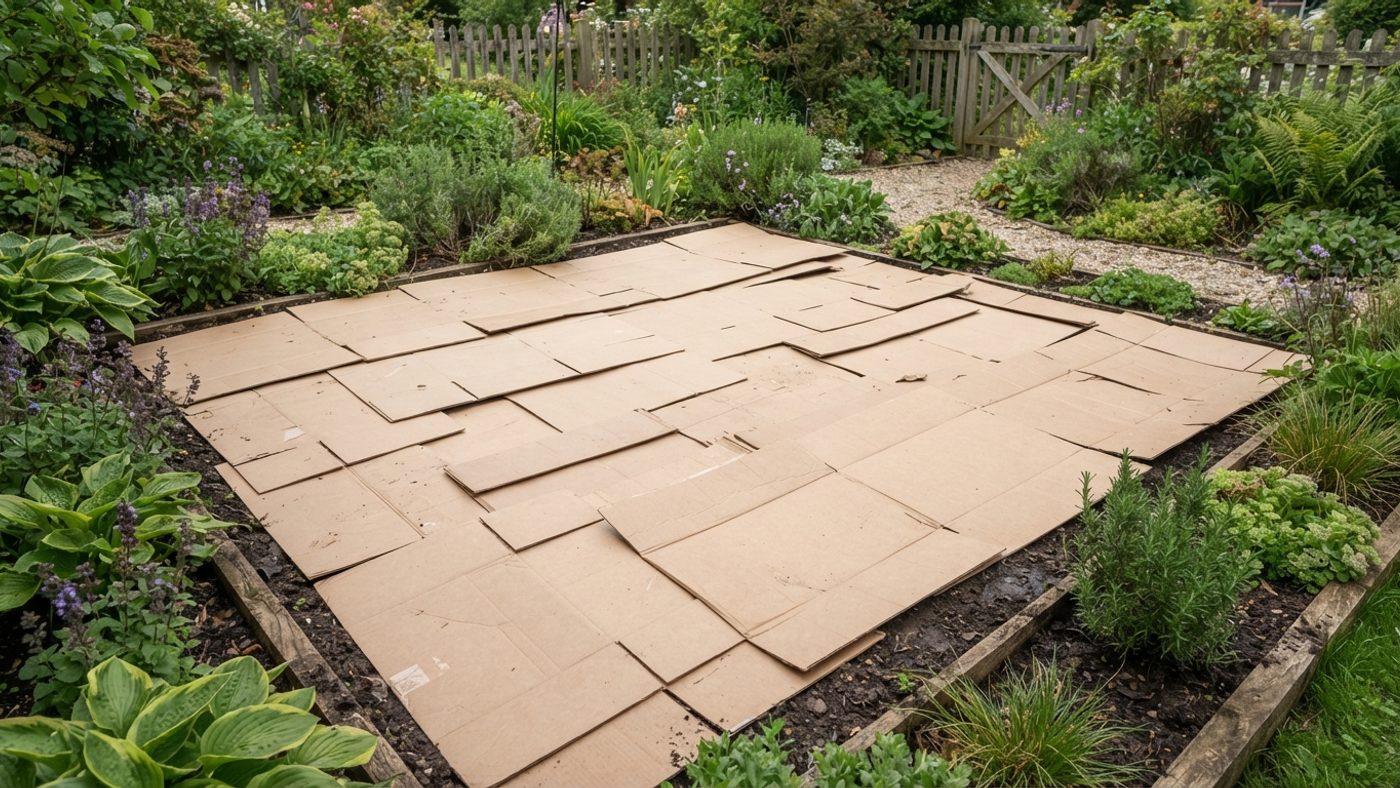
No-digA growing method that avoids turning the soil over, building fertility instead by adding organic matter on the surface. Full definition → gardening means leaving the soil itself untouched, never turned or dug over, and instead covering it with layers on top: a light-blocking sheet first, to kill off whatever's growing there without disturbing the ground, then organic mulchA layer of material spread over the soil around plants to suppress weeds, retain moisture, and improve soil structure as it breaks down. Full definition → on top of that. Plain cardboard is the free version of that first sheet layer. Laying it down before autumn and winter sets in, when Scotland's west and uplands especially turn genuinely waterlogged, lets weeds die back over the months clay and heavy soil are usually too wet to work by any other method anyway. Garden Organic's guidance for the method is to "lay sheets of light-excluding material (cardboard, etc) so the ground is completely covered," then add "a 15-20cm thick layer of mulch" on top and "tread down firmly." A flattened cardboard box works for that first layer as well as a bought weed-suppressing sheet, provided it's plain: ordinary brown packaging card, printed or not, breaks down fine, but remove tape, staples and anything glossy or plastic-coated (a laminated fruit box, for instance), since that coating doesn't break down and can leave plastic fragments in the soil.
A damp cardboard-and-mulch layer is also good slug and vine weevil shelter, more of a live concern in a climate that already favours slugs than it would be somewhere drier. Keep the sheet's edge a little distance from anything young and vulnerable, and lift a corner occasionally to check for slugs clustered underneath, clearing them by hand if there's a heavy build-up rather than leaving the layer undisturbed indefinitely.
That's the whole trick for the reuse itself: a spare box does the sheet-mulch job. For the full method beyond that first layer, bed preparation, mulch material choice on clay, and how long the structural change to the soil actually takes, the no-dig gardening guide covers it in depth.
What to expect, and how long it takes
Garden Organic's die-back timeline varies by weed type rather than being one fixed number:
| Weed type | Time to die back |
|---|---|
| Annual weeds | 2–3 months |
| Perennial weeds generally | Often up to a year |
| Bindweed, dock, bramble | Up to a year, deep/extensive roots |
| Recommended minimum wait before checking progress | At least 6 months |
On its own, plain cardboard isn't a permanent weed barrier; it needs the mulch layer on top to keep light out for as long as the card takes to break down. RHS guidance puts that ongoing mulch at a depth of "at least 5cm (2in), but ideally 7.5cm (3in)," applied in late winter or early spring, before weed seeds germinate and while the soil is still damp. That timing suits a cardboard layer laid the previous autumn well: by the time the spring mulch goes on, a wet Scottish winter has already softened the card underneath and the weed die-back is well under way.
Common questions
Can I plant an egg carton straight into the ground, cardboard and all?
Yes, if it's genuinely cardboard rather than polystyrene or plastic. Cut the cups apart and plant each one whole; the card breaks down in damp soil and the roots inside are never disturbed, which is the same benefit the RHS describes for modular trays generally.
Will a plastic bottle cloche actually make a difference in a Scottish spring?
It won't turn a frost-prone night safe on its own, but trapping a still-air layer around a single seedling takes the edge off a cold snap, and Scotland's shorter, cooler season means that margin matters more here than somewhere with a longer, milder start to the growing year. Remove it once nights have reliably warmed up or the plant has outgrown the space.
Does cardboard sheet mulch need to be a specific thickness, or is any flattened box enough?
A single layer of ordinary cardboard is usually enough on well-mown ground, with a mulch layer on top doing the ongoing weed-suppression work. Ordinary printed brown packaging is fine; remove tape, staples and anything glossy or plastic-coated first, since that coating doesn't break down the way plain card does.
How long before a cardboard-mulched bed is actually weed-free?
Annual weeds die back within two to three months. Perennial weeds, and especially bindweed, dock or bramble with deep or extensive root systems, can take up to a year, and Garden Organic's general advice is to wait at least six months before judging the bed's progress.
Does a cardboard mulch layer attract slugs?
It can, since damp, sheltered ground under a mulch is exactly what slugs favour. It's not a reason to skip mulching: keep the sheet's edge a little distance from anything young and vulnerable, lift a corner every so often to see what's built up underneath, and clear slugs by hand if there's a real cluster rather than leaving the layer undisturbed all season.
Sources
3 sources, recorded with what each was used for
- RHS: How to Sow Seeds Indoors: Container options (including recycled/biodegradable containers), seed compost description, sowing depth guidance, and the modular-tray minimal-root-disturbance mechanism
- RHS: How to mulch with organic matter: Mulch layer depth (at least 5cm, ideally 7.5cm) and timing (late winter/early spring) for weed suppression
- Garden Organic: No-dig Gardening (The No-Dig Method): Cardboard sheet-mulch method (light-excluding layer plus 15-20cm mulch, treading down firmly) and weed die-back timelines