
You go out in the morning and find a row of young bean shoots reduced to stubs overnight, or a hosta that was full and glossy the day before now a cluster of bare stalks. The cut ends aren't torn or shredded, they're clean, almost angled, as if someone had gone along the border with a pair of secateurs. That precision is the tell. Deer rip and tug at what they browse, because they have no upper incisors and have to tear a stem free rather than sever it, which leaves a ragged, frayed edge. Slugs leave irregular holes rasped through leaf tissue, usually with a slime trail nearby. A clean, close-to-the-ground cut with nothing torn about it points to an animal with a full set of cutting teeth working low to the ground, a rabbit.
Once you know what to look for, the rest of the diagnosis is quick, and so is the fix, because rabbits are diggers and squeezers rather than jumpers. That single fact changes almost everything about how you keep them out compared with deer.
Confirming it's rabbits, not something else
Rabbit damage tends to cluster low down, most of it under about 50cm, roughly as high as a rabbit can reach up on its hind legs to nip at foliage and shoot tips. Alongside the clean-cut stems, look for:
- Bark stripped or gnawed from the base of young tree trunks and shrub stems, especially over winter when green growth is scarce.
- Shallow scrapes and holes dug into lawns and borders.
- Small, round, pea-sized droppings scattered across the damaged area, often in clusters.
If the damage is higher than about 50cm, or trunks are torn rather than cleanly gnawed, deer are the more likely culprit, see Keeping Deer Out of a Scottish Garden for that damage pattern in full. If the leaf surface itself is pitted or holed with slime trails nearby, that's slugs or snails, not rabbits at all.
Why fence height doesn't matter and buried depth does
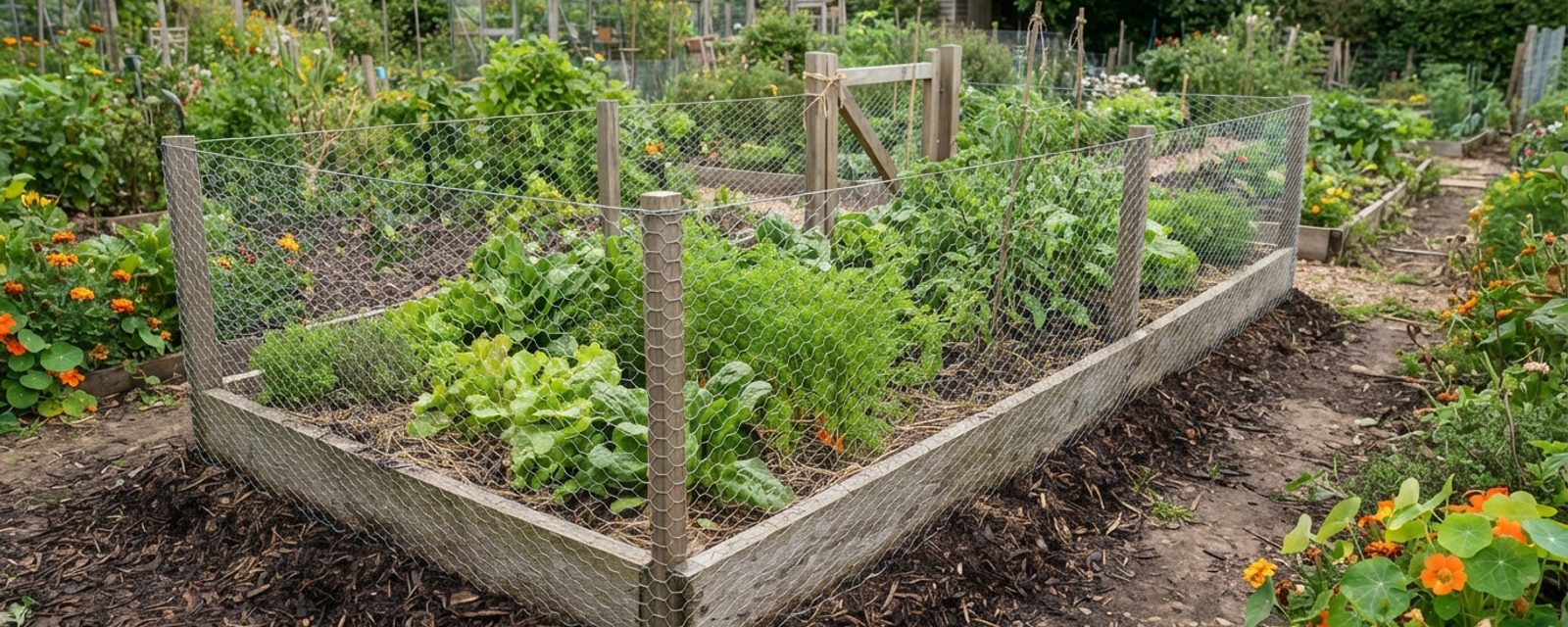
A rabbit-proof fence needs to meet the following specification:
| Element | Rabbit fencing spec |
|---|---|
| Mesh gap | 2.5cm (1–1¼in) wire mesh |
| Height above ground | 120–140cm (48–54in) |
| Buried depth | Bottom 30cm sunk below ground |
| Outward-turned skirt | Lower 15cm of the buried section bent outward, forming an L-shape |
| Individual plant guards | 90cm netting is sufficient; no burial needed for guards around single plants |
The outward-turned skirt is the part gardeners most often skip, and it's the part doing the real work: a rabbit that starts digging straight down at the fence line hits mesh bent away from the fence before it gets under it, rather than a straight vertical edge it can simply tunnel beneath. An electric fence, of the kind available through agricultural merchants, is also a practical option in some gardens where digging pressure is severe, though it's more of a smallholding-scale option than a typical back-garden one, and needs the same safety consideration around pets and children as any electric fence. A fence built to this spec still fails if a gate is left open or doesn't seal at the bottom: gates and other entrances need to be just as rabbit-proof as the rest of the run, and kept shut when not in use.
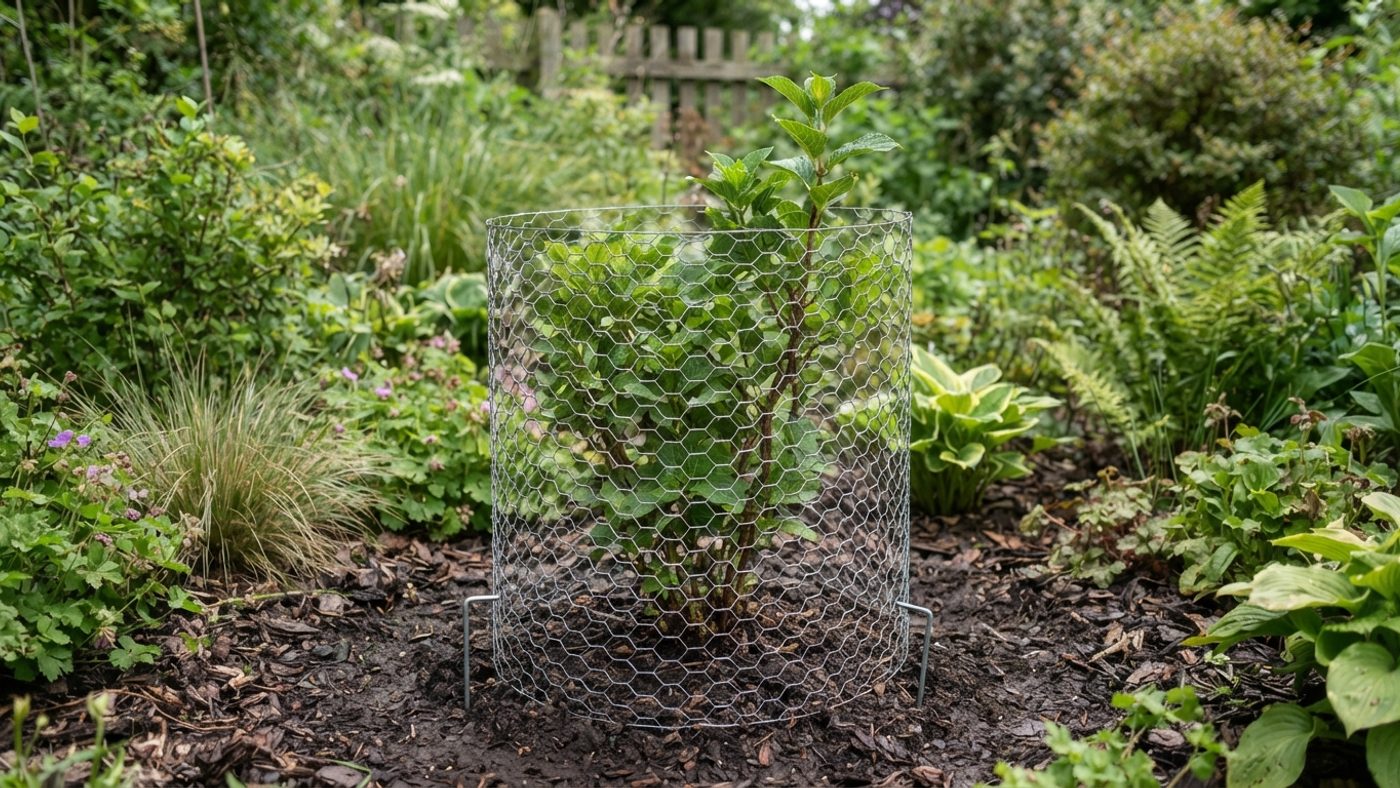
For younger plantings or single vulnerable specimens, a simple 90cm cylinder of netting around the trunk or crownThe base of a perennial plant where roots and shoots meet, often sold and planted as a ready-made dormant plant rather than grown from seed. Full definition →, without any burial, is usually enough, rabbits are working at ground level on soft new growth, not scaling the guard.
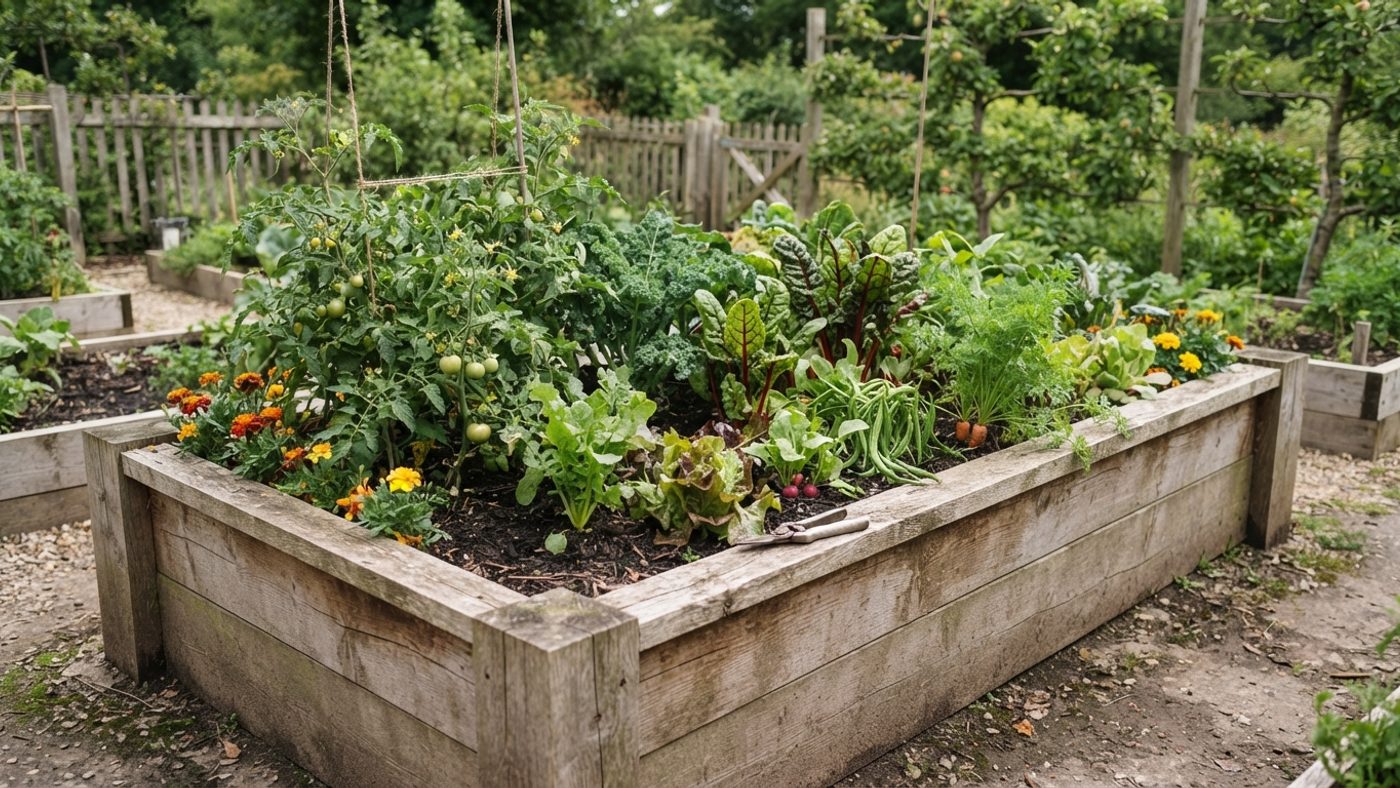
A raised bed with solid sides is a practical shortcut to the same result for a vegetable plot: a rabbit still has to get over or under the sides, so a bed built tall enough and set on a solid base does much of the work a buried skirt would otherwise do, without fencing the whole garden. Where the problem is already severe and a full fence isn't realistic this season, individual netting cages around the worst-hit beds buy time while a proper perimeter gets planned and built.
Repellents, folklore, and what actually has backing
Gardeners reach for a long list of home remedies before they get round to fencing, so it's worth separating what has documented backing from what's folk wisdom with no real evidence behind it.
| Method | Evidence status |
|---|---|
| Buried, outward-skirted mesh fencing | Proven — RHS's primary recommendation, with exact specifications |
| Individual netting/tree guards | Proven for young plants and specimens |
| Named commercial repellents | Supported, with caveats — bitter taste makes them unsuitable on edible crops close to harvest |
| Electric fencing | Supported as a practical option in some gardens |
| Rabbit-resistant plant choice | Partially reliable — recent plantings and soft spring growth can still be eaten even on normally-resistant plants |
| Chilli/pepper spray, human hair, blood meal, predator urine, ultrasonic deterrents | Not addressed by RHS guidance — treat as unverified folklore |
As with deer and foxes, physical exclusion is the only method with a real specification behind it. Repellents buy time but come with caveats, and most of the spray-and-scatter home remedies simply aren't backed by any documented evidence.
Trapping and lethal control sit outside the scope of what an ordinary garden needs, but it's worth knowing that Scotland has tightened the law on some methods people might otherwise reach for: the Wildlife Management and Muirburn (Scotland) Act 2024 makes glue traps illegal from 1 July 2026 and restricts snares to licensed, hand-operated use only. Neither was ever a sensible tool for a domestic garden, but the ban closes off that route in Scotland specifically.
Plants and crops rabbits go for
Hostas, lilies, crocus, and young beech (Fagus) are particularly vulnerable to rabbit damage, alongside the broader categories of herbaceous plants, trees, shrubs and vegetables generally. Bark-gnawing on young trees and shrubs is most likely over winter, when soft green growth is scarce and rabbits turn to woody material instead.
For plants that are usually left alone, the more rabbit-resistant choices include hellebore, dahlia, lupin, iris and peony among herbaceous perennials, and bay (Laurus nobilis), butterfly bush (Buddleja davidii), rhododendron and azaleas, elder (Sambucus) and lilac (Syringa vulgaris) among shrubs and small trees. On the vegetable side the resistant list is short: potato, rhubarb, and globe or Jerusalem artichoke. Everything else in a typical vegetable bed, and young, recently planted specimens of even the "resistant" plants above, should be treated as at risk until established: soft spring growth is eaten regardless of a plant's usual reputation.
Why rabbit pressure swings from year to year
The rabbit is an introduced species in Scotland, not a native one, the mountain hare is Scotland's only native lagomorph (the group that includes rabbits and hares), but it's now well-established here.
The clearest documented driver of boom-and-bust rabbit numbers is myxomatosis: the disease reduced the rabbit population across Britain to a very low level in the 1950s, and it remains present today at reduced virulence rather than having disappeared. A local population knocked back by disease one season can rebound quickly, given how fast rabbits breed:
| Breeding measure | Figure |
|---|---|
| Gestation | 28–30 days |
| Litter size | 3–6 kits |
| Litters per year | Up to 5 |
| Main breeding season | January–July |
A garden with no rabbit problem this year is not necessarily protected next year, and the January start to the breeding season means fencing or netting checked and repaired before late winter catches the year's numbers building rather than after. Where the ground is thin, rocky, or peaty and burying a 30cm skirt genuinely isn't practical, a paving slab or timber gravel board laid flat at the base of the fence, butted up tight to it, does much the same job as burial by giving a rabbit nothing to get a foothold under.
If you're dealing with other garden wildlife
Rabbits are rarely the only visitor. If browsing damage sits higher than about 50cm or looks torn rather than cleanly cut, check Keeping Deer Out of a Scottish Garden instead. For nighttime digging, droppings, or damage that looks more opportunistic than grazing, see Foxes and Badgers in a Scottish Garden. And if it's bird feeders or bulbs being raided rather than borders being grazed, Red Squirrels in Your Garden covers that pattern separately.
Common questions
How do I tell rabbit damage from deer damage on the same border?
Cut end and height are the two quickest checks: rabbit damage sits low and clean-cut, deer damage sits higher and ragged. If both signs turn up in the same border, that's not a mistake, both animals will happily visit the same garden on different nights, treat it as two separate exclusion jobs (buried mesh for rabbits, fence height for deer) rather than looking for a single fix that covers both.
Does fence height matter for keeping rabbits out?
Not much, unlike with deer. Rabbits don't jump garden fences, they dig under or squeeze through gaps, so what matters is 2.5cm mesh, buried 30cm deep with the bottom 15cm bent outward, and standard fencing 120–140cm high is more than sufficient above ground.
Do commercial rabbit repellent sprays actually work?
Specific named products do have a genuine bitter-taste deterrent effect, but they're unsuitable on edible crops close to harvest. They're a supplement to fencing, not a substitute for it.
Are chilli spray, human hair, or ultrasonic devices worth trying?
There's no documented evidence behind any of these. Buried, outward-skirted mesh fencing is the only method with a real specification and a track record behind it.
Will planting only rabbit-resistant plants solve the problem?
Partly, but not completely. Resistant plants are genuinely less palatable to rabbits, but recent plantings and soft spring growth on those same plants can still be eaten. Protect anything newly planted until it's established, resistant list or not.
Sources
5 sources, recorded with what each was used for
- RHS: Rabbits in Gardens — Deterrent Tips: Symptoms, fencing/netting specifications, electric fencing, named commercial repellents, myxomatosis history, breeding biology, plant/vegetable damage categories
- RHS: Rabbit-resistant plants: Resistant plant and vegetable list, spring-growth caveat
- RHS: Deer: Ragged, torn stem damage caused by deer tugging rather than cutting, used for the deer-vs-rabbit identification contrast
- NatureScot: Hares and rabbits: Rabbit's status as an introduced (non-native) species in Scotland, alongside the mountain hare as the country's only native lagomorph
- Wildlife Management and Muirburn (Scotland) Act 2024, glue trap ban announcement: Confirms the glue trap ban takes effect 1 July 2026 and restricts snares to licensed, hand-operated use only