
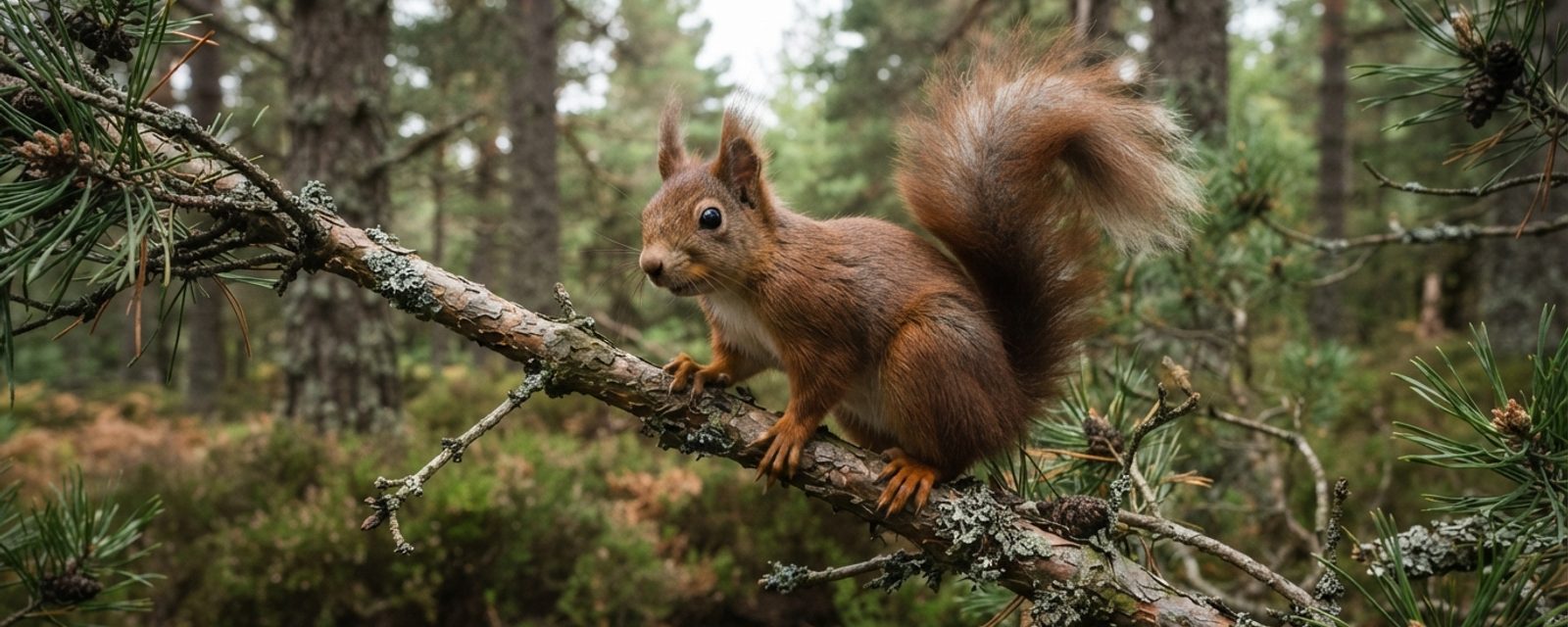
There's a red squirrel on your lawn right now, or it was there a second ago and vanished up a tree, and you're standing at the window with a half-formed instinct to either run out with a bag of nuts or leave everything exactly as it is in case you get in trouble. Both instincts are half right. You're not going to get in trouble for feeding it. You do need to know what to feed it, what to leave strictly alone, and why a grey squirrel turning up at the same spot is a bigger problem than it looks.
Is it actually a red squirrel?
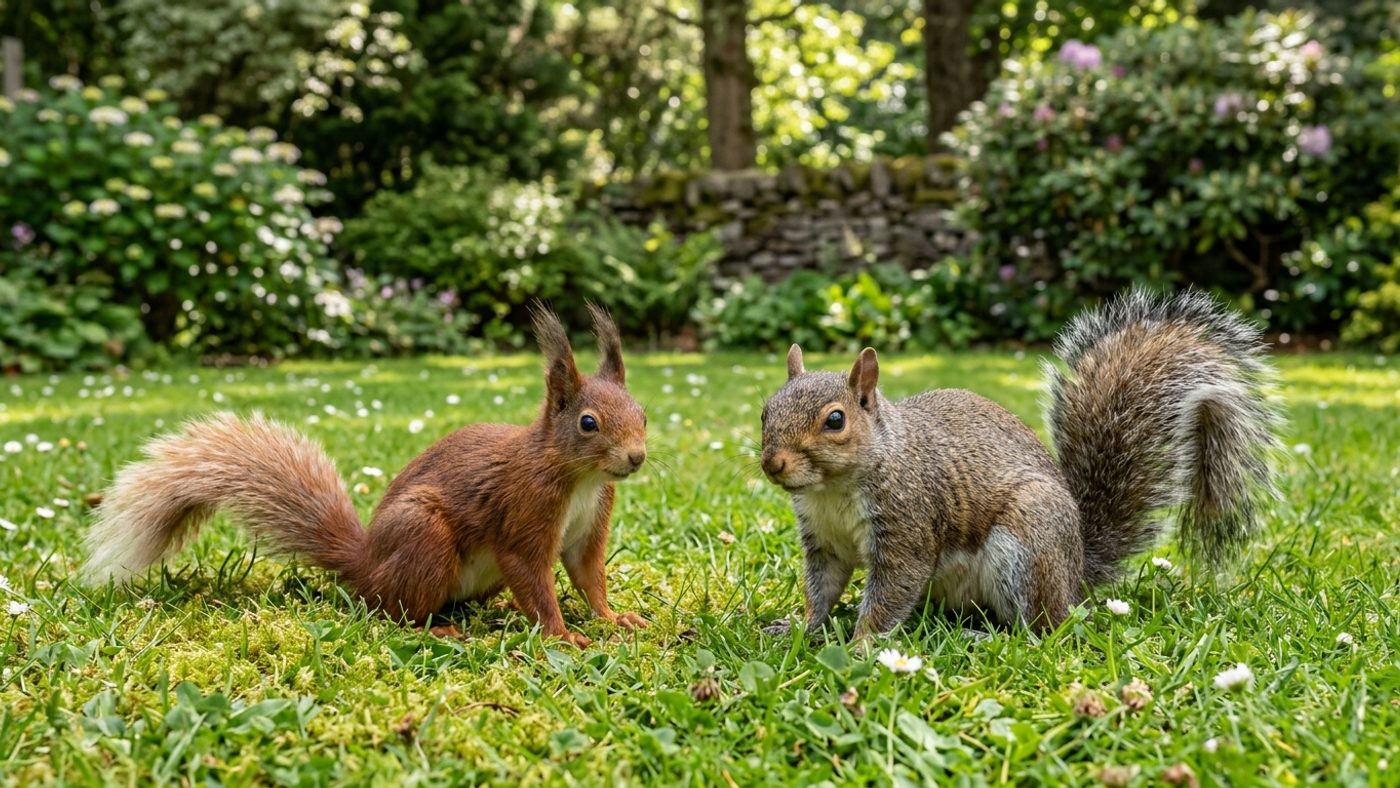
Colour alone won't settle it. Some greys have reddish-brown patches, especially in summer coat, and some reds look dark or almost black in certain lights. The reliable markers are size, ears and tail.
| Feature | Red squirrel | Grey squirrel |
|---|---|---|
| Size | Smaller, more slender | Noticeably bulkier |
| Ear tufts | Prominent, especially in winter | None |
| Tail | Reddish, often paler or cream fringe | Grey, bushier, no red tones |
| Body colour | Red to chestnut, can look dark | Grizzled grey, sometimes with rusty patches |
| Overall build | Lighter, quicker, more acrobatic-looking | Heavier, slower-looking on the ground |
Location narrows it further before you've even looked closely. Scotland's red squirrel strongholds are the Highland pine forests and Dumfries and Galloway. Most of the Central Belt, including Glasgow and much of Edinburgh, is grey-only territory, so a squirrel in a Central Belt city garden is more likely to be grey by default. If you're in or near a stronghold and you see ear tufts, it's almost certainly a red. Still unsure? A photo beats a description: ear tufts and tail colour are the two features that show up clearly even at a distance.
What the law actually says
Red squirrels are protected under the Wildlife and Countryside Act 1981, the same Act that covers the whole of Great Britain, and they're listed in both Schedule 5 and Schedule 6. In practice, Schedule 5 is the general protection, against killing, injuring, taking, disturbance, and Schedule 6 separately bans specific methods of killing or trapping. Unlike some species that get only partial protection under Schedule 5, there's no carve-out reducing what it covers for red squirrels: the full set of protections applies. What makes this matter specifically here is where the reds actually are. Scotland holds the large majority of Britain's remaining wild population, so this is a law that does most of its practical work in Scottish gardens, not English or Welsh ones.
Section 9 of the Act makes it an offence to intentionally kill, injure or take a red squirrel, or to possess or control a live or dead one, or anything derived from one, without a licence. It also protects the places they live in: intentionally or recklessly damaging or destroying a drey, a squirrel's nest, usually a tight ball of twigs and leaves built high in a tree, disturbing a red squirrel using one, or blocking access to it, is an offence. Selling or transporting a red squirrel for sale is also prohibited.
None of that stops you feeding one. The protection around disturbance doesn't apply to areas where red squirrels only feed: the law is protecting nest sites and dreys, not a feeding station on your bird table. So you don't need a licence to put out food, and you're not at legal risk for doing so. What you do need to leave alone is any drey you find, in a garden tree or hedge: don't move it, don't prune around it if you can avoid it during the season it's in use, and don't disturb whatever's using it. If you're planning tree work and you suspect a drey is active, it's worth pausing and checking rather than assuming it's fine.
Feeding: what actually works
If you decide to feed, do it properly rather than defaulting to whatever's left in the bird feeder.
Good foods: hazelnuts in their shells, unsalted peanuts, and sunflower seeds, roughly four parts peanuts to one part sunflower seeds if you're mixing your own. Beech nuts, sweet chestnuts and pine nuts are also good if you can get hold of them affordably.
A diet heavy in peanuts or sunflower seed on its own can cause calcium deficiency, so it's worth adding a calcium source alongside: a product like Collo-Cal D added to drinking water, bone meal mixed into the dry feed, or a cuttlefish bone or piece of antler left near the feeder. Apples and carrots also help. Avoid sweet, dried foods like raisins and sultanas: it's tempting to think of them as a harmless treat, but they can actually contribute to the calcium deficiency problem rather than just failing to help with it.
Placement matters more than most people assume. Site the feeder as high as you reasonably can. Cats are one of the biggest causes of squirrel deaths in gardens that feed them, and height is your main defence. Put it against a wall or tree trunk rather than out in the open, so the squirrel isn't crossing exposed ground to reach it, and ideally under some tree cover, which cuts the risk from birds of prey overhead. If your garden backs onto a busy road, think about whether a feeder will pull squirrels across it. Sometimes the safer choice is not to feed at all.
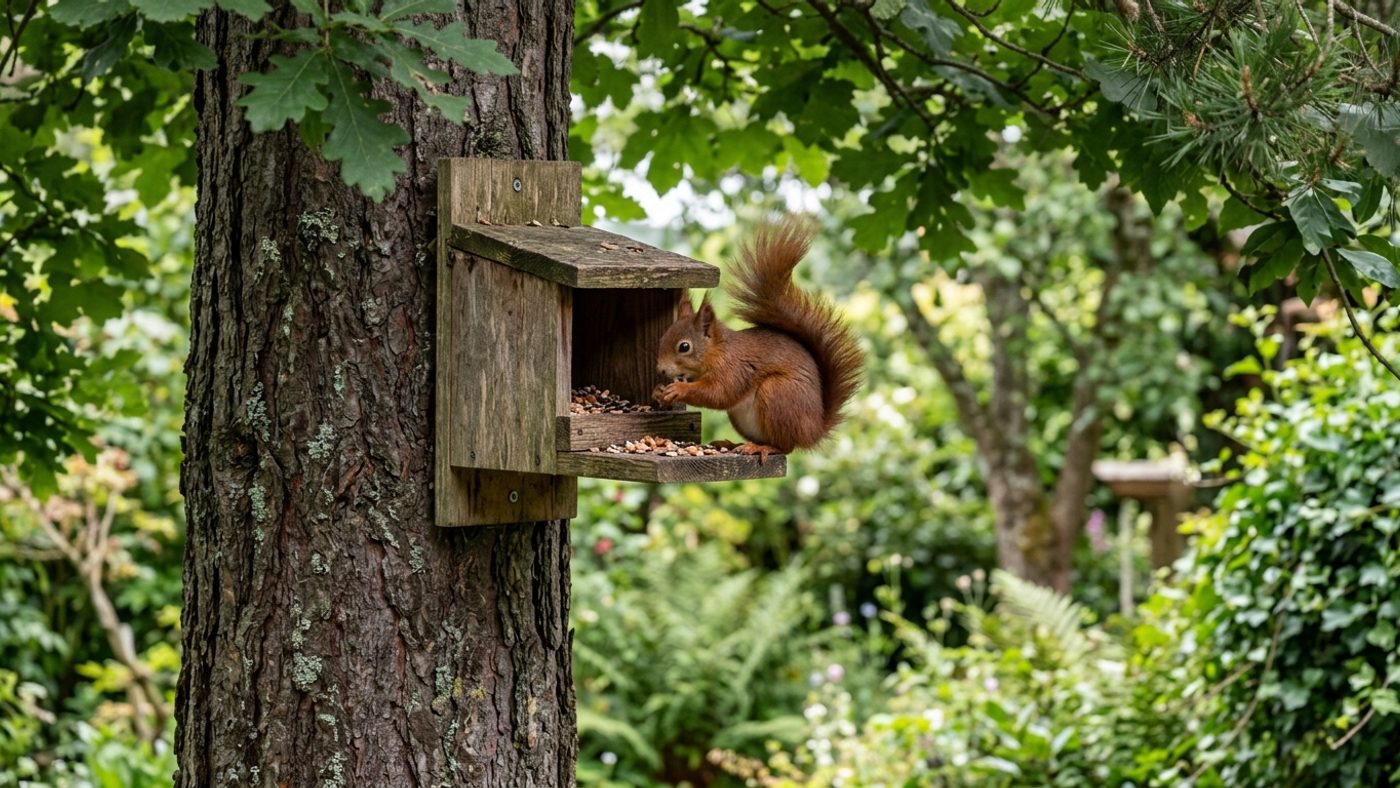
Frequency: small amounts every three to four days, not a constantly topped-up supply. The point isn't stinginess, it's to stop squirrels becoming dependent on you and giving up natural foraging. The period this actually matters is summer, in the gap before nuts, fruit and conifer seed ripen and wild food gets scarce. Feeding through winter too is fine, but summer is when supplementary feeding does the most good.
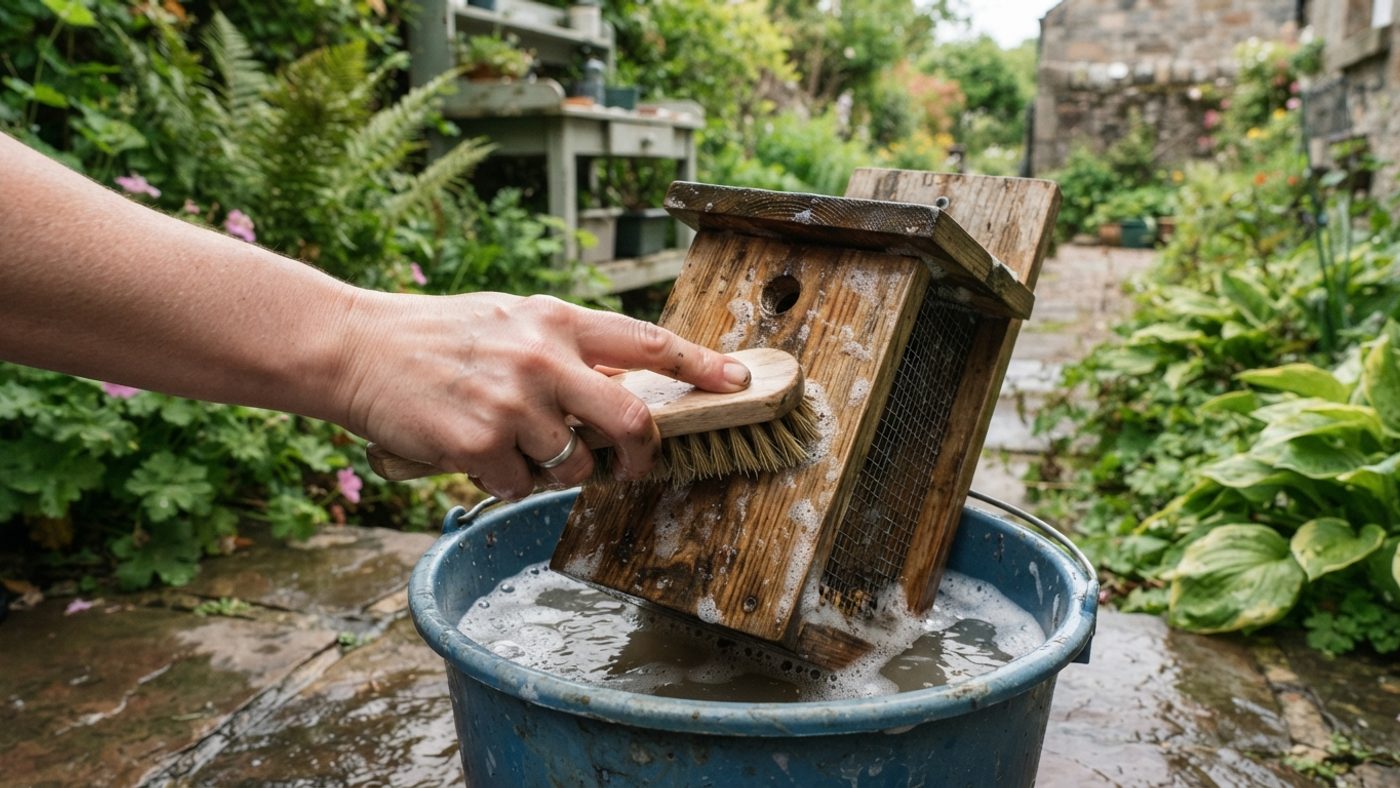
Hygiene: give feeders a proper scrub with detergent monthly, and bin any old or mouldy food rather than leaving it to accumulate, since mouldy food has been linked to Adenovirus risk in squirrels. Spray with a pet-safe or bird-safe disinfectant before refilling under normal circumstances.
Squirrelpox: the risk that actually matters
A shared feeder can do more harm than good, and the reason comes down to how the virus actually moves between the two species.
Squirrelpox virus is carried by grey squirrels without causing them any harm, they're asymptomatic carriers. In red squirrels, it's usually fatal, typically within about two weeks of infection. Infected reds develop weeping lesions and scabs around the eyes, nose, mouth, ears, feet and genitalia, become lethargic, and lose the ability to feed properly. A single outbreak can wipe out a local red squirrel population within weeks, possibly the single greatest risk to the future of red squirrels in Scotland. The disease currently sits in south Scotland, but has proved very hard to contain there, with the rest of the Scottish population still at risk.
A feeder is a meeting point. It can bring red and grey squirrels into closer contact than they'd otherwise have, and that contact is exactly how the virus spreads. If you start seeing both reds and greys at the same feeder, report the sighting to Saving Scotland's Red Squirrels, and seriously consider stopping supplementary feeding altogether rather than risk being the point of contact between the two.
If you're in or near a known squirrelpox-risk area, ordinary detergent and standard anti-bacterial sprays won't kill the virus on feeders. The anti-viral disinfectant Virkon S is what's actually effective, used according to its safety instructions.
Planting instead of, or alongside, feeding
Feeding fills a short-term gap. Planting does the same job for free, for years, without the squirrelpox contact risk a shared feeder carries. In the wild, a single squirrel gets through the seed of up to 20,000 cones a year, mostly pine, spruce and larch, plus hazelnuts, beech mast, fungi, shoots and fruit. That's not a random list: pine, spruce and larch are exactly what make up the Highland forests named earlier as Scotland's red squirrel strongholds, so planting any of the three is planting toward the same habitat that already supports the largest populations. None of that grows overnight, so treat it as a longer-term project alongside feeding rather than a replacement for it this year.
Common questions
Is it legal to trap or move on a grey squirrel I keep seeing near my feeder?
Grey squirrels have no protection under the Wildlife and Countryside Act 1981, but the Act still covers them in one direction: it's an offence to release a trapped grey squirrel back into the wild. If you're dealing with greys regularly, report sightings to Saving Scotland's Red Squirrels rather than trap and release one yourself.
I've found what looks like a dead red squirrel. Does that mean anything for the ones still visiting?
It's worth treating as a possible early sign of squirrelpox if you're near a known-risk area in south Scotland, especially if it looks thin or has visible sores. Stop feeding at that spot and report the sighting to Saving Scotland's Red Squirrels rather than assuming it's unrelated to the live squirrels still coming to your garden.
Can I buy a feeder that keeps grey squirrels out but lets reds in?
Weight-restricted "squirrel-proof" feeders exist for keeping squirrels off bird feeders generally, but the two species are close enough in size that a simple weight gate won't reliably separate them. Placement, hygiene and watching for grey squirrels at the feeder do more real work than relying on feeder design alone.
What's the single biggest mistake people make when they start feeding?
Treating it like a generic bird feeder: unlimited peanuts or sunflower seed with no calcium source, no thought to feeder height, and no plan for what happens if a grey squirrel finds it too.
Sources
6 sources, recorded with what each was used for
- Wildlife and Countryside Act 1981, Section 9: Legal protections around killing, injuring, possessing and disturbing red squirrels and their dreys
- NatureScot: Protected species — red squirrels: Confirmation of Schedule 5/6 status and that protection does not apply to feeding-only areas
- NatureScot: Red squirrel species page: Squirrelpox distribution in south Scotland
- Saving Scotland's Red Squirrels: Squirrelpox — staying ahead of the spread: Squirrelpox mechanism, symptoms and transmission detail
- Saving Scotland's Red Squirrels: Supplementary Feeding of Red Squirrels (Feb 2025): Suitable foods, calcium deficiency guidance, feeder placement, feeding frequency and hygiene/disinfection advice
- Forestry and Land Scotland: Red squirrel: Scotland's share of the British red squirrel population and diet/habitat detail