
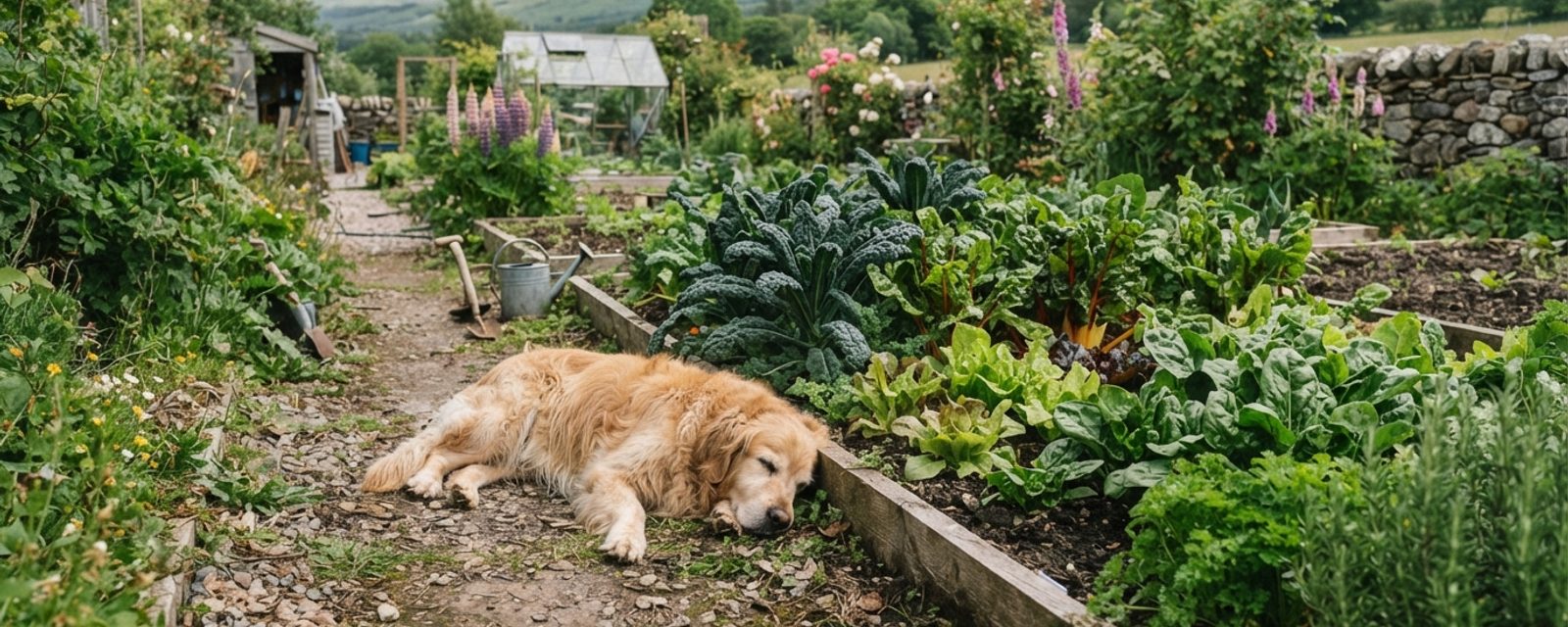
A dog that eats grapes is in a different category of danger to a dog that eats an onion, and the difference comes down to a transporter system dogs don't have. Grapes and raisins contain tartaric acid. Most mammals clear organic acids like this through transporters in the kidney's proximal tubules; the leading explanation for canine grape toxicity is that dogs largely lack those transporters, so the acid accumulates inside the tubule cells instead of passing through them. The result is direct, severe damage to the tissue that filters the blood: diffuse tubular degeneration, in some cases outright necrosis, and acute kidney failure. What makes grape toxicity particularly frightening for vets is that it isn't reliably dose-dependent, some dogs go into kidney failure after eating a small handful, others eat more and are fine, and there's no safe threshold anyone can currently give an owner. Every grape or raisin ingestion is treated as a potential emergency, full stop.
Most of what follows is much less dramatic than grapes, a green potato sprout is not a kidney emergency, but a Scottish vegetable and fruit garden is unusually likely to contain several of these plants at once.
If a dog has just eaten any of the plants below, call a vet or a poisons line straight away rather than waiting to see what happens, and don't try to make the dog sick at home: a vet will only induce vomiting in the first few hours after ingestion, using a controlled injection, and getting this wrong at home can do more harm than good. Bring a sample of what was eaten, or the packet if it was dried fruit, so the vet knows exactly what they're dealing with.
Severity at a glance
| Crop | Toxic part | Mechanism | Typical severity | What to do |
|---|---|---|---|---|
| Grapes, raisins, dried currants, sultanas | Whole fruit, fresh or dried | Tartaric acid accumulates in kidney tubule cells dogs can't clear it from | Severe and unpredictable, acute kidney failure possible from small amounts | Emergency vet call immediately, any amount |
| Onions, garlic, leeks, chives | All parts, raw, cooked or dried | Thiosulphates/disulphides cause oxidative damage to red blood cells, leading to haemolytic anaemia | Dose-dependent, mild GI upset in small amounts; anaemia risk rises with quantity, symptoms can lag 1-5 days | Vet advice for any ingestion; urgent care for a large quantity |
| Rhubarb leaves (not stalks) | Leaves only | Soluble calcium oxalates bind blood calcium and crystallise in the kidneys | Serious, vomiting, drooling, tremors, risk of kidney injury | Vet immediately if leaves are eaten |
| Potato, green tubersA swollen underground stem or root a plant uses to store energy, which can also grow into a new plant, the classic example being a potato. Full definition →, sprouts, foliage, stems | Green/unripe parts and foliage, not cooked ripe tuber | Solanine-family glycoalkaloids | Usually mild-moderate GI upset; worse with a large quantity of green material | Monitor; vet if a large amount eaten or symptoms appear |
| Tomato plants, unripe green tomatoes | Foliage, stems, unripe fruit, not ripe fruit | Tomatine (solanine-family glycoalkaloid) | Usually mild-moderate GI upset; weakness or cardiac signs possible with large ingestion | Monitor; vet if a large amount eaten or symptoms appear |
| Apple, cherry, plum trees | Stems, leaves, seeds/stones, especially wilting material | Cyanogenic glycosides release cyanide | Serious in quantity, brick-red gums, breathing difficulty, shock | Vet if a dog has chewed prunings, wilting branches or a quantity of pips/stones |
Why this matters more in a Scottish garden specifically
The plants on this list aren't more toxic in Scotland, a dog's biology doesn't change at the border. What changes is which crops a typical Scottish garden actually contains. Rhubarb and alliums aren't just common here, they're two of the best-suited food crops in the country. Rhubarb needs a sustained period of winter cold to break dormancy and crop well the following season, and an ordinary Scottish winter supplies that without any effort from the gardener, it's part of why rhubarb crownsThe base of a perennial plant where roots and shoots meet, often sold and planted as a ready-made dormant plant rather than grown from seed. Full definition → are such a fixture of Scottish allotments and back gardens. Garlic specifically also benefits from a proper cold winter, which triggers the vernalisation that lets the bulb split into well-formed cloves rather than staying undivided. Onions and leeks are grown widely here too. Scotland is also a major producer of certified seed potatoes, and the tattie patch is a familiar sight on Scottish allotments and back gardens too, often with several rows earthed upDrawing soil up around a plant's base as it grows, most often potatoes, to keep light off developing tubers and support tall stems. Full definition → at dog-digging height. A dog owner with a fairly ordinary Scottish vegetable plot is therefore more likely than average to be growing at least two or three plants from this list, purely because those are the crops that do well here.
Dessert grapes are the exception rather than the rule. Outdoor vines are only reliably viable in Britain south of a line between Pembroke and the Wash, well south of any part of Scotland, so a garden grapevine is an unusual find here even where the rest of this list is common. The realistic route to grape exposure in a Scottish garden is more often dried fruit in the kitchen, fruit cake, mince pies or mixed fruit ending up on the compost heap, not a vine in the ground. Garden blackcurrant and redcurrant bushes are a different plant entirely (Ribes, not the grapevine genus Vitis) and aren't part of this risk, it's specifically dried Zante currants, made from grapes, that carry it.
The crops, in order of severity
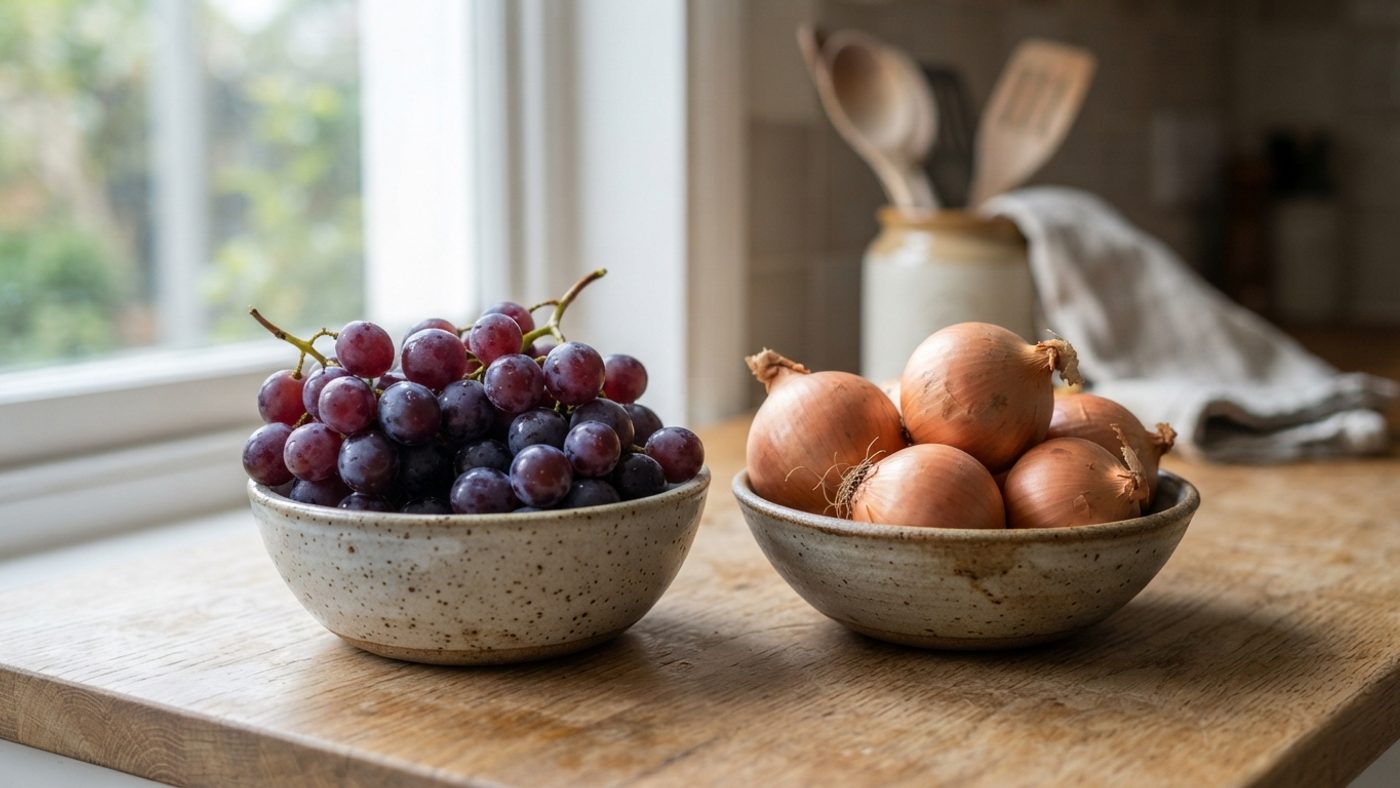
Grapes and raisins, severe, unpredictable, always an emergency
Watch for vomiting, lethargy, loss of appetite and reduced urination over the following 24-72 hours, but don't wait for symptoms before calling, by the time signs of kidney failure appear, treatment is already racing against the clock. No variety is safer than another, and eating grapes off a fed vine is no different from raisins in a fruit cake or dried fruit on the compost heap.
Onions, garlic, leeks and other alliums, dose-dependent, genuinely serious in quantity
Every allium, onion, garlic, leek, chive, shallot, contains thiosulphates and disulphides that oxidise red blood cells. Garlic in particular needs a proper cold winter to form well, which an ordinary Scottish winter supplies without effort, and onions and leeks are grown just as widely, so alliums as a group are staple beds here, not an occasional crop. Once the oxidant load inside a red blood cell outpaces the cell's own antioxidant capacity, the cell ruptures; enough ruptured cells causes haemolytic anaemia. All parts of the plant carry the risk, raw, cooked or dried, and none of it is destroyed by cooking. Unlike grapes, the risk here is genuinely dose-related: small amounts typically cause nothing worse than vomiting, diarrhoea or a sore stomach, and initial gastrointestinal symptoms can appear within a day. The anaemia itself, breathlessness, lethargy, pale gums, tends to develop later, from one to five days after ingestion, which is exactly why a dog that seems fine the evening it raids the onion bed shouldn't be assumed clear. With veterinary treatment, most dogs recover well and fatalities are rare, but a large ingestion (a dog that's eaten a significant amount of home-grown garlic or a whole leek) still needs urgent veterinary attention.
Rhubarb leaves, serious, but only the leaves, and easy to avoid
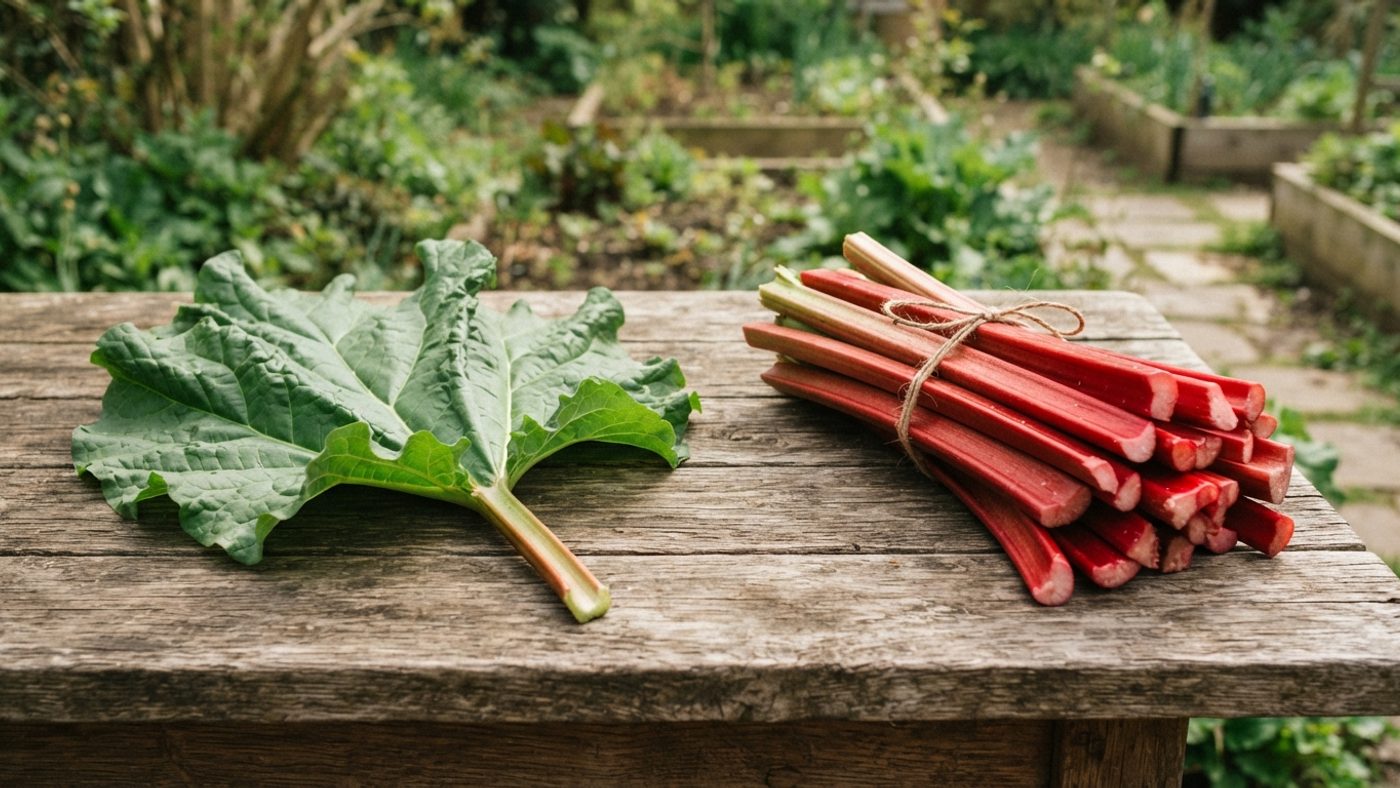
Rhubarb stalks are the part gardeners actually cook with, and they aren't the concern here, for dogs as for people, it's the leaves. Rhubarb leaves contain soluble calcium oxalates, which bind calcium in the blood and crystallise out in the kidneys. Reported effects include vomiting, drooling and tremors, and the crystal formation can progress to kidney failure. Because Scottish gardens so often grow rhubarb as a permanent, low-maintenance perennial, it's not the crop itself that's a problem: it's making sure a dog can't get at the leaves once they're pulled and left on the compost heap, which is often the actual point of contact. For the forcingCovering plants to exclude light and speed early, tender growth in the dark, most associated with rhubarb and sea kale in late winter. Full definition → technique some Scottish gardeners use to get an early crop, and the growing guide generally, see forcing rhubarb.
Potato plants and green potatoes, usually mild, occasionally worse in quantity
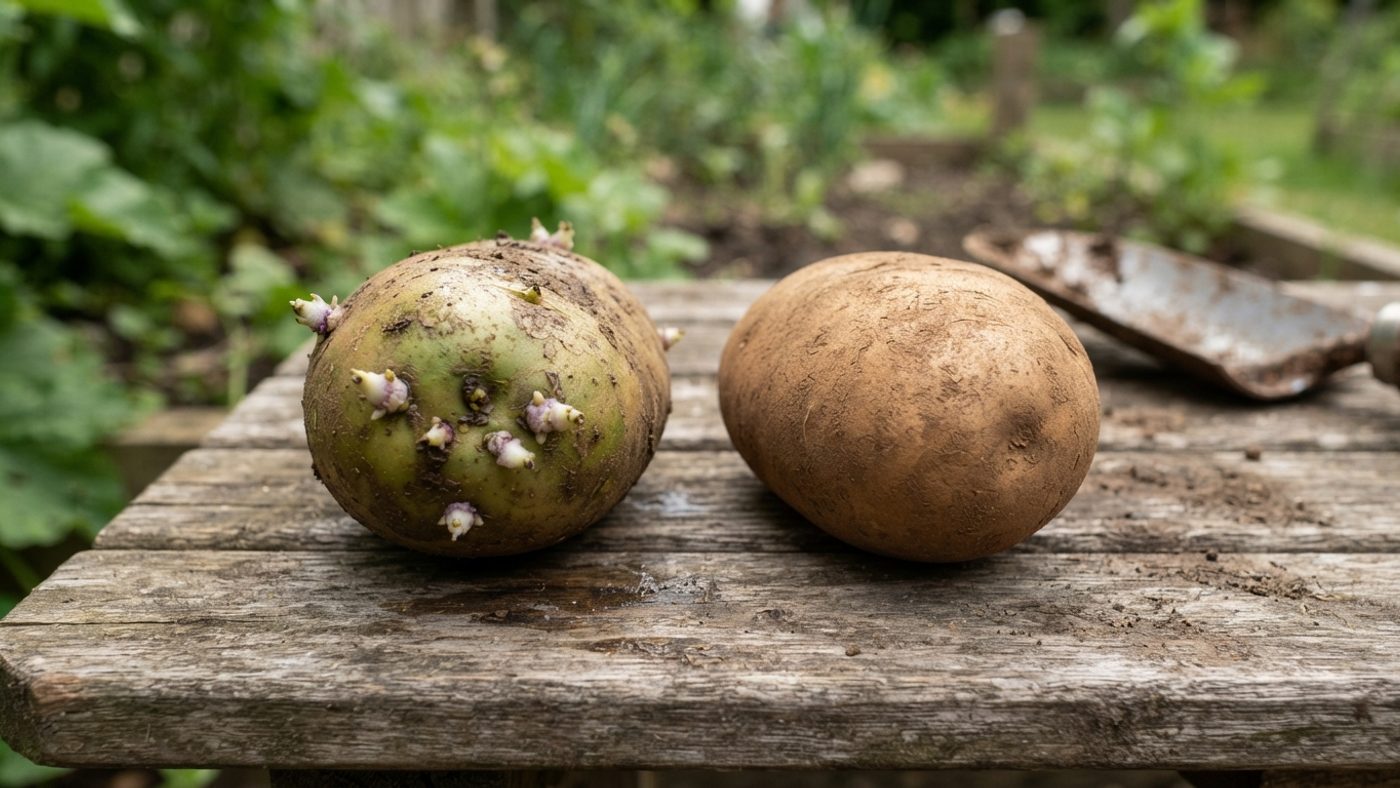
Given how standard the tattie patch is on a Scottish plot, this is worth knowing on almost any allotment. The tuber itself, once ripe and cooked, isn't the hazard, a cooked potato is a safe treat in moderation. The risk sits in the green parts: foliage, stems, sprouts, and any tuber that's turned green from light exposure, all of which belong to the same nightshade family as deadly nightshade and share its toxic principle, solanine. Raw potato in general is enough to cause significant gastrointestinal upset in a dog even without solanine being the driver. A dog that snatches a green potato out of the ground or chews on foliage will typically show vomiting or a sore stomach; more serious signs are associated with eating a substantial quantity of the greener, more concentrated parts of the plant rather than an incidental mouthful.
Tomato plants and unripe green tomatoes, usually mild, same family as potato
Tomato plants and unripe fruit contain tomatine, again part of the solanine family of glycoalkaloids. Clinical signs described for the plant include hypersalivation, reduced appetite, gastrointestinal upset, weakness and, in more severe cases, a slowed heart rate and dilated pupils. Ripe tomato flesh is a different story, tomatine levels drop sharply as the fruit ripens, and a ripe tomato is considered a safe occasional treat. The risk in a vegetable garden is a dog working through the plant itself or eating fruit straight off the vine before it's coloured up.
Apple, cherry and plum trees, stems, leaves and seeds, not the ripe flesh
Apple, cherry and plum trees are common in Scottish gardens and allotments, and all three carry the same risk: their stems, leaves and seeds contain cyanogenic glycosides, compounds that release cyanide once broken down. This is particularly concentrated in wilting plant material, such as a fallen, part-dried branch or a pile of prunings left where a dog can chew them. Clinical signs include brick-red gums, dilated pupils, difficulty breathing, panting and shock. The fruit flesh itself isn't the hazard; the risk is a dog chewing through fallen branches, prunings or a mouthful of pips and stones, particularly windfall fruit left to rot under the tree, which is also when it wilts and becomes more concentrated.
Slug pellets: a hazard from protecting these crops, not the crops themselves
Several of the crops above, potatoes, alliums, rhubarb among them, are exactly what a gardener reaches for slug control to protect. Metaldehyde slug pellets, historically the most common chemical control, were withdrawn from outdoor use across Great Britain, partly over the harm they caused to pets and wildlife alongside slugs. Ferric phosphate pellets are the organic alternative most commonly sold now. If a dog has eaten any slug pellets, treat it the same way as the crops above: contact a vet or a poisons line rather than waiting to see what happens, and take the packet with you so the active ingredient is known.
Keeping garden and compost waste away from dogs
Several of these risks come from garden waste rather than the growing plant itself: rhubarb leaves pulled at harvest through spring and early summer, onion and potato peelings, windfall fruit and prunings left under apple, cherry or plum trees into autumn. An open compost heap a dog can reach is often the actual point of contact, more so than the plant standing in the ground. Composting in a closed bin, or keeping a compost heap fenced off from a dog's usual run, removes most of this risk without changing how the garden is grown.
Common questions
My dog ate one grape off the ground, do I really need to call the vet?
Yes. Grape and raisin toxicity in dogs isn't reliably linked to the amount eaten, so a single grape gets the same call as a handful.
Is cooked onion in leftovers as dangerous as a raw onion from the garden?
Cooking doesn't remove the toxic compounds, thiosulphates and disulphides survive cooking, drying and freezing, so cooked, raw and dried alliums all carry the same risk per gram.
Can my dog eat the rhubarb stalks I'm cooking with, or just not the leaves?
The leaves are the documented hazard; stalks are the part gardeners actually eat and aren't the concern here, though there's no reason to deliberately feed raw stalks to a dog either, keep the trimmed leaves and any garden waste well out of reach.
Is a ripe tomato from the vine actually fine for my dog?
Yes, the toxin (tomatine) drops off sharply as the fruit ripens, and a ripe tomato is considered a safe occasional treat. It's the plant itself and unripe green fruit that carry the risk.
My dog dug up and chewed a potato that had gone green, how worried should I be?
Green potato skin, sprouts and foliage contain solanine and are more concerning than a normal cooked potato; watch for vomiting or lethargy and contact a vet if your dog has eaten a substantial amount or starts showing symptoms.
Sources
15 sources, recorded with what each was used for
- ASPCA: People Foods to Avoid Feeding Your Pets: Grape/raisin tartaric acid mechanism; onion and garlic red-blood-cell damage
- ASPCA: Toxic and Non-toxic Plants, Rhubarb: Rhubarb toxic principle (soluble calcium oxalates) and clinical signs
- ASPCA: Toxic and Non-toxic Plants, Tomato Plant: Tomato plant toxic principle (solanine), clinical signs, ripe fruit exemption
- ASPCA: Toxic and Non-toxic Plants, Apple: Cyanogenic glycosides in stems, leaves and seeds; clinical signs
- ASPCA: Toxic and Non-toxic Plants, Cherry: Cyanogenic glycosides in stems, leaves and seeds; clinical signs
- ASPCA: Toxic and Non-toxic Plants, Plum: Cyanogenic glycosides in stems, leaves and seeds; clinical signs
- ASPCA: Our Top Three Summer Garden Safety Tips: Raw vs. cooked potato GI upset; tomatine in unripe tomatoes; allium red blood cell damage
- ASPCA: Pets and Produce, Top Tips on Vegetable Garden Safety: Potato and tomato plant risk in a vegetable-garden context
- PDSA: Onion and Garlic Poisoning in Dogs: Allium mechanism, affected plants, symptom timeline (1-5 days), recovery rates, treatment protocol, and the first-aid point that vets induce vomiting under controlled conditions rather than an owner attempting it at home
- RHS: Potentially Harmful Garden Plants: Rhubarb listed as harmful if eaten except cooked leaf stalks
- RHS: Rhubarb, grow your own: Rhubarb crowns needing a period of winter cold to break dormancy before cropping
- RHS: Garlic, grow your own: Garlic's need for one to two months at 0-10°C for vernalisation and bulb development
- RHS: Grapes, outdoor cultivation: Outdoor vines only reliably viable south of a line between Pembroke and the Wash
- SASA (Science and Advice for Scottish Agriculture): The Scottish Seed Potato Classification Scheme: Scotland as a major producer of certified seed potatoes
- Garden Organic: RHS trials, organic slug pellets perform as well as those with toxic metaldehyde: Metaldehyde slug pellets withdrawn from outdoor use in Great Britain, and ferric phosphate as the organic alternative