
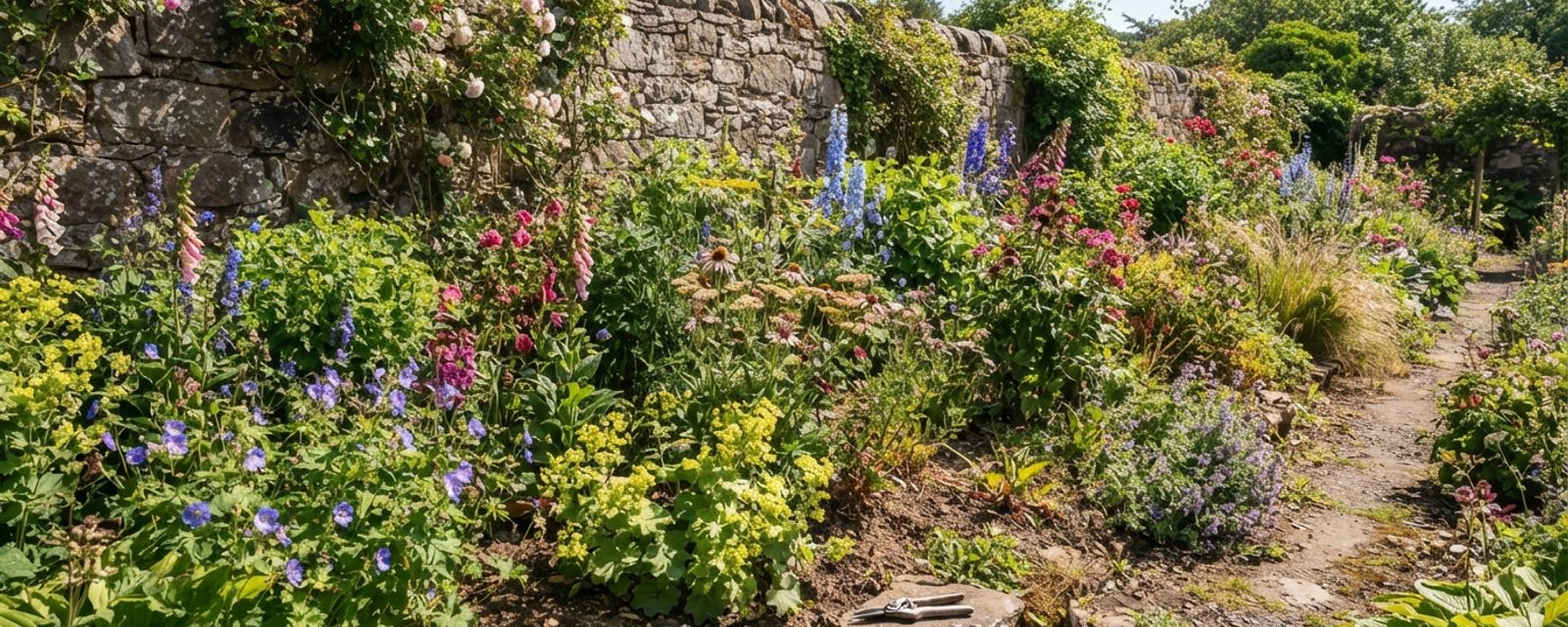
Your tomatoes are drooping by mid-afternoon. It's the fourth warm, dry day running, the forecast says more of the same through the weekend, and every instinct says get the hose out before it's too late. That instinct is right often enough elsewhere in the UK that it's become a reflex worth having. In Scotland, that exact same drooping leaf could just as easily mean the compost is already too wet, and overwatering is the likelier of the two to do real harm in an ordinary Scottish hot spell.
What "heatwave" actually means where you're gardening
A UK heatwave isn't one fixed temperature. It's officially declared when a location records at least three consecutive days with daily maximum temperatures at or above a threshold set specifically for that area's own climate, calculated from 1991-2020 daily-maximum records at the mid-point of meteorological summer. That local calibration is the whole point: a run of days that would be entirely ordinary in one part of the UK counts as genuinely unusual in another.
| Region | Heatwave threshold (3+ consecutive days) |
|---|---|
| Most of Scotland | 25C |
| Most of England (varies by county) | 26-27C |
| Central/south-east England (Surrey, Berkshire, Buckinghamshire, Bedfordshire, Hertfordshire, Cambridgeshire) | 28C |
So the same three-day run of 26C days that would be a real, officially-declared heatwave in most of Scotland is just a warm week in Surrey. The threshold is set from each place's own normal range, so it reflects what's genuinely unusual there rather than one fixed number applied everywhere. It does mean, though, that the water-saving advice written for a 30C-plus event further south doesn't map cleanly onto a Scottish "heatwave", which is very often a milder, shorter, and less soil-drying event than the word suggests.
How hot, how often — the numbers behind the tilt
Actual temperature and rainfall records back up why that gap exists. Even Scotland's warmest, driest corners fall well short of a typical English summer on both counts, and the two effects compound: less heat to dry the soil out, arriving on top of more rain to keep it wet in the first place.
| July/Aug daily max | Summer wet days | |
|---|---|---|
| London (for comparison) | 23.5C | n/a |
| Eastern Scotland (mildest inland areas) | ~20C | ~27 (East Lothian/Fife coast) |
| Western Scotland (mildest southern areas) | ~19C | ~35 (coast) |
| Scottish high ground (Grampians, Southern Uplands) | under 15C | 40+ |
Beyond temperature, the rain doesn't stop for summer the way it more reliably does further south: Scotland stays under the influence of Atlantic depressions through much of summer, a finding stated independently for both the eastern and western halves of the country. A soil that's rarely getting hot enough to dry out fast, and is getting rained on through the exact weeks a "heatwave" is happening, starts from a genuinely different baseline than the one most hot-weather watering advice assumes.
The country's own all-time high temperature, 34.8C recorded at Charterhall in the Borders in July 2022, shows genuinely hot, dry spells aren't impossible here. They're just far rarer and shorter-lived than the England-wide average this advice usually gets written against — and even on the single hottest day Scotland has ever recorded, the right response still isn't to water everything. It's to put the water available where it matters most: containers, new plantings and vegetables before anything already established, the same priority order that applies to any ordinary dry spell here, just under more pressure.
Why overwatering is the likelier mistake here
The mechanism matters more than the postcode. Waterlogged soil displaces the air pockets roots depend on, so the roots are literally short of oxygen and can't take up the water sitting right next to them, or the nutrients that water would normally carry. That's why an overwatered plant can wilt, its leaves can yellow, and it can look exactly like it needs more water when what it actually needs is to be left alone. Left longer, roots turn blue-black and start to smell sour and rot outright. A drought-stressed plant and an overwatered one can produce close to the same wilting from opposite causes, which is exactly why a droopy leaf on its own isn't a reliable diagnosis — the soil itself, not the leaf, is what actually tells you which one you're looking at.
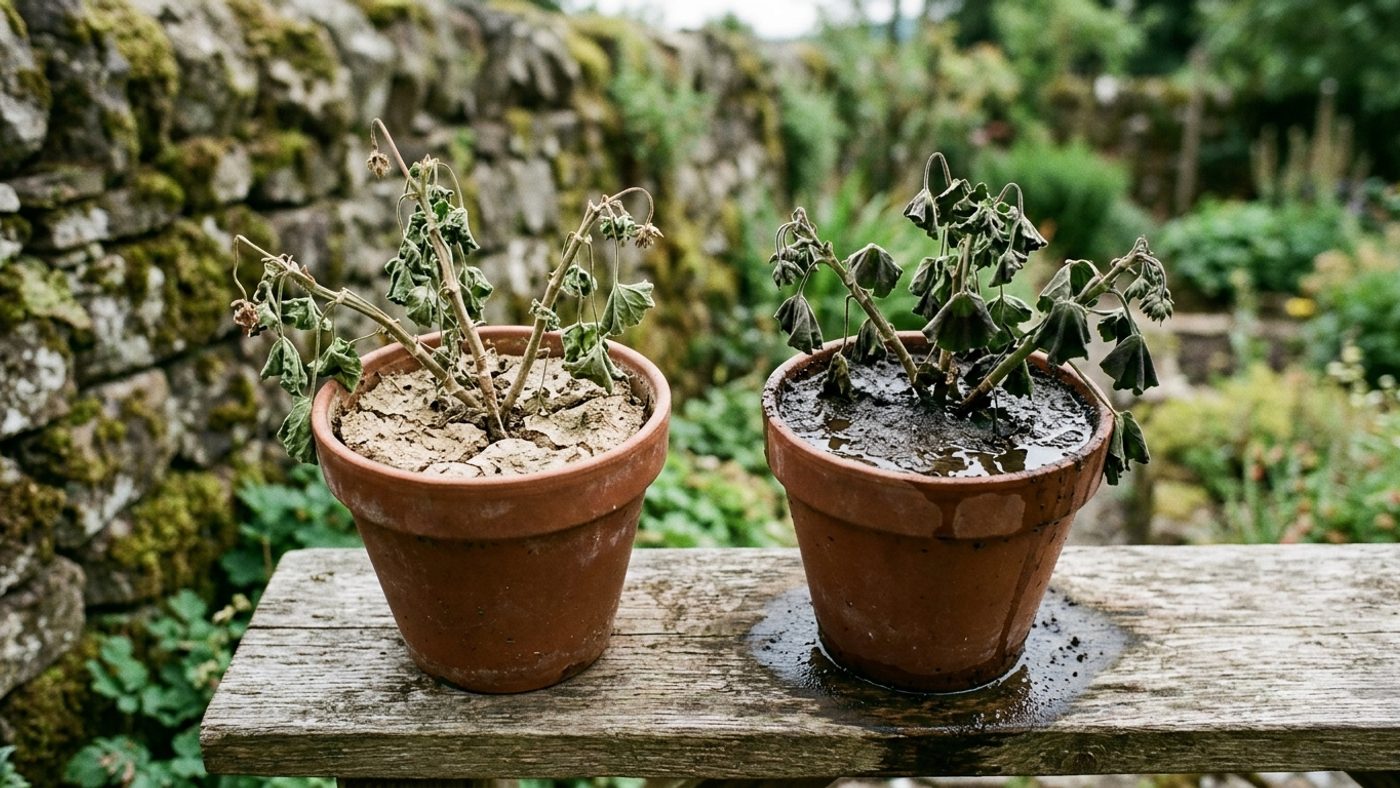
Wet soil causes trouble beyond the plant's own roots, too. Slugs and snails are well suited to the UK's damp, mild climate and are most active in damp conditions, so keeping soil wetter than it needs to be gives them more of exactly what they want, in gardens that are already home to more of them than a drier climate would support. The same excess moisture favours Phytophthora, a root-rot pathogen that mainly attacks plants in heavy or waterlogged soil and whose damage is often hard to tell apart from waterlogging itself. Both are a practical downside of Scotland's wetter baseline, and another reason "leave it alone and let it dry out" is usually the safer default here than reaching for the hose.
Even authorities writing for a warmer, drier climate than Scotland's say the same thing about restraint. Established trees, shrubs and most perennials are genuinely tough and tolerate dry spells well once they're settled in, needing supplemental water only in extreme, prolonged drought rather than every warm week. If that's the advice for a country with a hotter summer and less rain to begin with, it applies with more force here, where the soil usually isn't drying out nearly as fast in the first place.
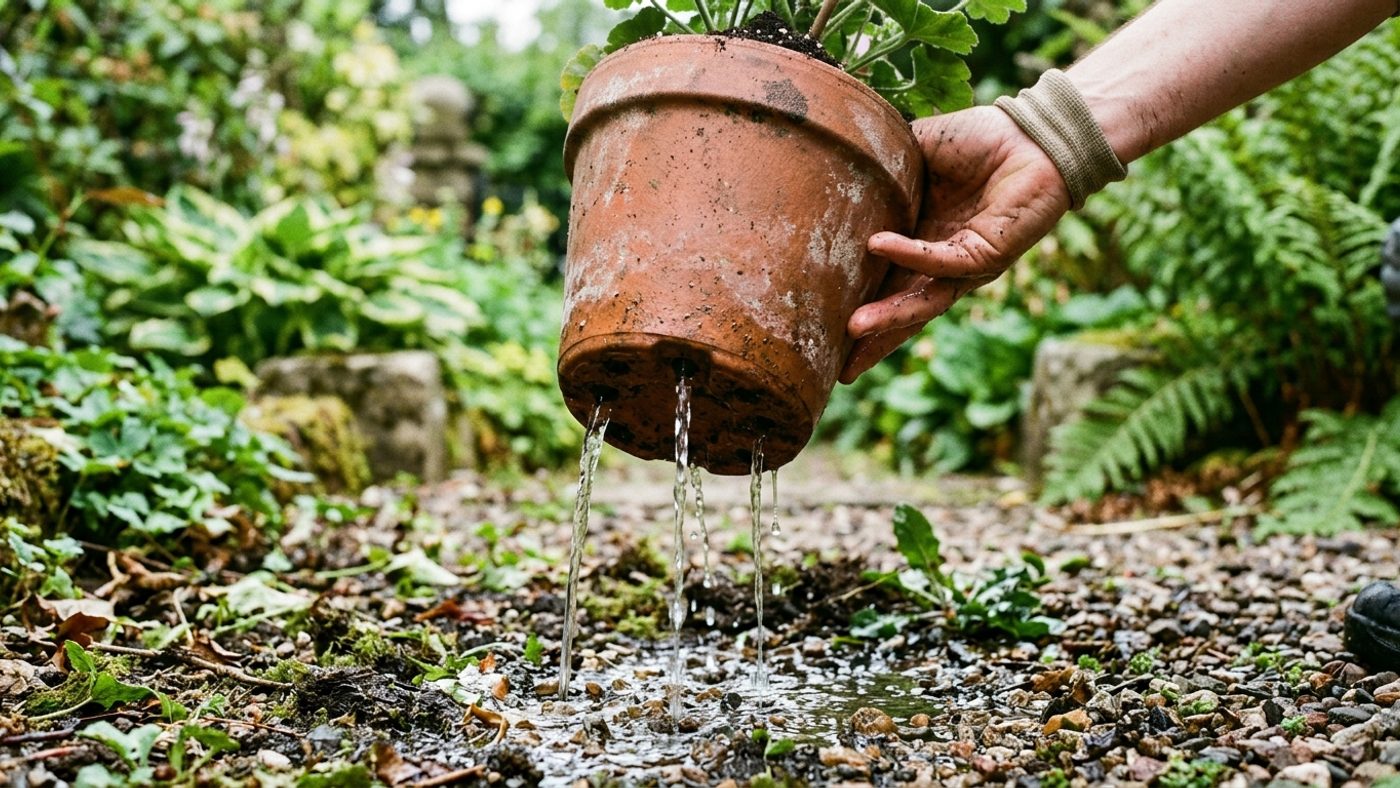
If a plant already looks like this (wilting, yellowing, soil that's wet rather than dry underneath), the fix is to stop adding water, not to change what's already been added. Let the surface dry out properly before checking again. A container is the easiest case to recover: tip it slightly to let any pooled water drain from the base, or move it somewhere it can drain freely, since compost that can't escape a saucer or an outer pot stays waterlogged no matter how dry the surface looks. In a border, there's less to actively do beyond waiting and not compounding the mistake with more water.
None of that means watering is never the right call in a hot spell: vegetables, new plantings and container plants often do genuinely need it, for reasons that come down to root depth and soil volume rather than the weather alone.
The exception: when Scotland genuinely does run short
Overwatering is the likelier everyday mistake here, not the only thing that ever happens, and 2025 was the clearest recent counter-example. Three figures from SEPA (the Scottish Environment Protection Agency, which monitors Scotland's water levels and reports on scarcity) tell the story:
- Scotland's hottest March-to-August period since records began in 1884
- Eastern Scotland's driest hydrological year (the 12-month cycle water levels are measured against, running autumn to autumn rather than January to December) since 1976, with rivers and groundwater in the north-east falling to record lows
- Real water-scarcity alerts issued for parts of the country, while the west and south-west stayed at normal to wetter-than-average levels across the same period
So "Scotland" had two genuinely different years happening at once depending on which half of the country a garden was in. Soil type adds another layer of unevenness on top of geography: free-drainingSoil that lets water pass through quickly rather than pooling, so roots aren't sitting in wet ground after rain. Full definition → sandy or machair soils (the light, sandy turf and grassland found along Scotland's north and west coasts, especially the Hebrides) dry out and need checking far more often than heavy Lothian or Central Belt clay, even in the same weather, so "check before you water" is a rule to apply locally, not a single timetable that fits every garden.
That regional split is a reasonable guide to how seriously to take a hot spell locally, but the underlying risk is forecast to grow across Scotland as a whole, not just in the east: NatureScot's own projection, reported by the Scottish Parliament's own research service, is that extreme droughts could shift nationally from roughly a 1-in-20-year event (1981-2001 baseline) to roughly a 1-in-3-year event by the 2020s-2040s.
Water use habits haven't caught up with that yet either: Scots use over 180 litres of tap water a day per person on average, against 144 litres in England and Wales, despite the wetter climate — the same generous-by-default habit that shows up at the garden tap as reaching for the hose before checking whether the soil actually needs it. What a hot spell actually means for a garden is still a genuinely regional question, worth checking against current conditions during a prolonged dry spell rather than assuming either extreme, "Scotland's always fine" or "it's the same risk everywhere."
A heatwave that lands while you're away removes the one safeguard that catches most watering problems early, a person actually checking the soil, see holiday watering systems for drip kits, capillary matting and the other options built for exactly that unattended scenario.
One practical reason Scotland hasn't reached for hosepipe bans the way parts of England have is structural as much as climatic: the legal powers used for a ban in England and Wales don't apply to Scotland's publicly-owned water supply, and Scottish Water has treated a ban as a last resort, asking customers to use water efficiently instead. The last hosepipe ban in Scotland was in 1995 — genuinely rare, but a different mechanism than "it's never dry enough to need one." Even without a ban in force, reusing household greywater (cooled washing-up water, bathwater without strong detergents or bleach) cuts tap-water use without costing the garden anything. Keep it to ornamental beds rather than edible crops, since even mild detergent residue and any bacteria it carries are a different risk on something you're about to eat than on a flower border. A water butt means that choice doesn't have to wait for a restriction to be worth making.
A water butt is the more direct way to put Scotland's wetter climate to work rather than around it. Most of the year's rain falls when the garden least needs it, so a butt connected to a shed, greenhouse or house downpipe stores it up through autumn, winter and spring, giving a free supply already sitting there by the time a dry spell actually arrives, rather than having to rely on the mains at exactly the point demand across the country is highest. It's also gentler on plants than tap water straight from the mains, since it's unchlorinated and closer to the soil's own temperature, and it's the one form of watering that never needs a second thought during a hosepipe restriction, because it never touches the mains supply at all.
How to water properly during a hot spell
Once the soil check actually says water is needed, technique matters more than quantity poured on.
Check before you water, every time
Push a finger into the soil or compost a few centimetres down. Genuinely dry at that depth means it's time to water; damp or wet means the wilting has a different cause and more water will only make it worse. This single habit does more to prevent overwatering than any other single change, since it stops water going onto soil that's already holding enough. As a rough cadence: containers are worth checking daily through a dry spell, borders and established planting every two to three days, since they hold moisture for longer to begin with.
Timing the check matters too. Many plants droop a little in the heat of the afternoon as a normal response to strong sun, and perk back up by evening without any help. Wilting that's still there first thing in the morning, before the day has had any chance to heat up, is the more reliable drought signal — that's the point worth checking the soil against, not the afternoon dip most gardens show on a hot day regardless of how well they're watered.
Water deep, not often
Soak thoroughly rather than little and often, and let the surface dry out before watering again. For borders, that means watering slowly enough that the soil is genuinely moist to around 15cm depth, not just wet on top; for a newly planted tree or shrub, moisten to 20-30cm, where its roots actually are. Frequent shallow watering trains roots to stay near the surface, which is the opposite of what helps a plant cope with the next dry spell.
There's no reliable litre figure for exactly how much that takes — pot size, soil type and the plant itself all change it too much for one number to mean anything. Depth and touch are the real measure: dig or push a finger down to confirm the soil is actually wet that far, not just watered on top, and use a watering can rather than a hose where practical, since it's slower and easier to judge than a hose is. For a container, that same logic in a simpler form is to water until it runs from the drainage holes in the base, which is the point at which the whole rootballThe mass of roots and the soil or compost clinging to them, as it comes out of a pot or out of the ground when a plant is lifted. Full definition → has genuinely been reached rather than just its top few centimetres.
Time it for early morning or evening
Water applied in the heat of the day loses a real share to evaporation before it reaches the roots at all. That loss is smaller here than the figure most watering advice is written against, since Scotland's cooler air and higher humidity mean less of what goes on the soil evaporates before it soaks in, compared with a hot, dry English afternoon. Even so, morning or evening still makes a real difference. Early morning is generally best. Evening works too for the watering itself, but it's the weaker choice here specifically, not just in general: the same cooler, more humid air that slows evaporation during the day also slows how fast leaves dry off overnight, so foliage wetted in the evening stays damp for longer in a Scottish garden than it would further south, and that extra overnight dampness is exactly what fungal problems need to take hold. Aiming water at the base of the plant rather than over the leaves avoids the problem either way.
Put limited water where it actually matters
Vegetables, soft fruit, newly planted trees and shrubs, and container plants are the genuine priority during a dry spell, since none of them have the established root systems that let most of the rest of the garden simply wait it out. Containers dry out fastest of all and are worth checking daily through the growing season, watering whenever the compost is dry a few centimetres below the surface. See our tomato growing guide for a crop that's a genuine priority case, especially container- or greenhouse-grown plants, which dry out faster than anything rooted directly in open ground. Grouping pots together in partial shade during the hottest part of the day cuts down how often that daily check turns up dry compost in the first place, without doing the plants any harm.
Leave the lawn alone
An established lawn going brown in a dry spell looks alarming but usually isn't: the roots underneath are almost always still alive, and the grass greens up again once rain returns, which in most of Scotland tends not to be a long wait. Resist watering it. The exception is a lawn sown or laid within roughly the last year, which hasn't rooted deeply enough yet to cope and does need regular watering through its first dry spell.
| Plant type | Water during an ordinary hot spell? |
|---|---|
| Established borders, shrubs, trees | Rarely: only in extreme, prolonged drought |
| New plants (first year or two) | Yes, regularly, checking soil first |
| Vegetables & soft fruit | Yes, genuine priority |
| Containers | Yes, check daily, dries fastest |
| Established lawn | No, let it go brown, it recovers |
| New lawn (under ~1 year) | Yes, regularly, until established |
Greenhouses, polytunnels and cold frames are the exception
All of this advice assumes rain reaches the soil, and in a greenhouse, polytunnel or cold frame it doesn't: the whole point of the cover is to keep weather out, which means plants growing under one depend entirely on however much water a person gives them, whatever the outdoor conditions are doing. That's the reverse of an open border or bed, where Scotland's rain does most of the work, and it matters more here than it would in a drier climate, precisely because Scottish gardeners lean on polytunnels and cold frames more than most to extend a shorter, cooler growing season. A dry spell that's barely worth watering for outdoors can still leave greenhouse tomatoes or cucumbers short of water, and conversely a wet spell outside is no reason to skip checking under cover, since the soil or compost in there has had no rain at all. Check pots and beds under cover on their own schedule rather than by what's happening outside the door. Heat, not just dryness, builds up under cover too — ventilating on hot days (opening vents, doors or windows) and shading strong glass or polythene keeps the air from turning into as much of a problem as the soil.
Choosing plants that mind the damp more than the dry
Some of the classic "drought-tolerant" garden plants are a poor fit for Scotland for the opposite reason to the one gardeners usually expect: it's not that they need more water here, it's that they actively dislike the damp soil most Scottish gardens already have. Lavender needs fast-draining soil and won't tolerate wet or heavy ground; rosemary dislikes wet roots, especially over winter, and wants light, free-draining soil; cistus needs very free-draining ground and is damaged by heavy, wet conditions. All three, and most other Mediterranean or silver-leaved plants, are bred by their native climate to handle a dry summer easily and a wet winter badly, which is precisely reversed from what causes most plant trouble in an ordinary Scottish garden. Grown here, they do best in the free-draining spots already flagged above as drying out fastest: raised beds, containers, or naturally sandy or machair soil, where their dislike of standing water matters more than their tolerance of dry spells ever will. The reverse holds too: hostas, astilbes, primulas and rhododendrons are the plants a damp Scottish garden actually favours, thriving in the same moisture-retentive soil that lavender and rosemary resent — worth choosing deliberately for a damp spot rather than fighting it with drainage a Mediterranean plant would need instead.
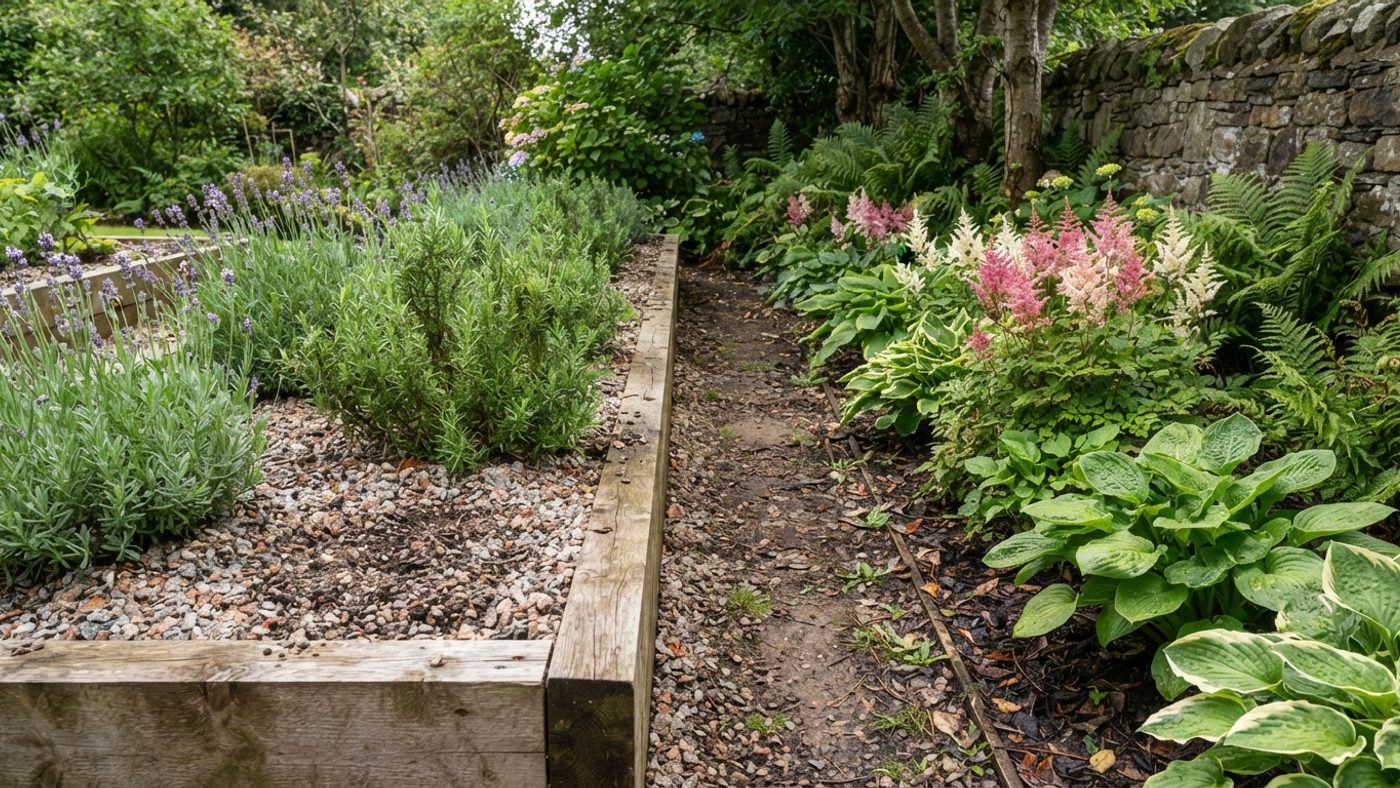
Building organic matter into the soil pays off here too, by helping it hold onto moisture between waterings rather than draining or drying straight through — the same material that helps drainage on heavy Scottish clay, covered in our guide to improving clay soil, also helps that soil retain water for longer once it does dry out. Because Scottish soil is rarely baked dry the way it can be further south, and is usually still damp going into summer for the reasons above, mulchingA layer of material spread over the soil around plants to suppress weeds, retain moisture, and improve soil structure as it breaks down. Full definition → it in spring is catching moisture that's already there rather than trying to put moisture back into ground that's already lost it. That timing makes it an easier win here than further south, where spring soil has often already dried out before a mulch goes down. Once the ground actually has baked hard, mulch can't do that job anymore, and no amount of watering afterwards makes up the difference as well as not letting it dry out in the first place would have.
Common questions
How do I tell if a plant needs water or already has too much?
Push a finger a few centimetres into the soil or compost: genuinely dry at that depth means water; damp or wet means the wilting has another cause, and more water will make it worse, not better. One extra clue beyond the soil check: real drought stress usually shows as a droop, leaves and stems going soft and hanging down, while some plants (courgettes and squash are the classic case) curl or fold their leaves inward in strong midday sun as a normal defence and recover by evening regardless of soil moisture, so curling alone isn't the same signal as drooping. For a container plant that's still ambiguous, tip it out and look at the roots directly: white or pale cream and firm is healthy; brown or black, mushy, or sour-smelling points to rot from too much water rather than too little.
Does Scotland ever have real water shortages?
Yes — 2025 was a clear recent example. Beyond the general picture, the most useful practical step is checking SEPA's current water scarcity status page for your area, since the picture changes through a season and varies sharply between east and west; it's a better guide than assuming either "Scotland's always fine" or "it's the same risk everywhere."
Sources
16 sources, recorded with what each was used for
- Met Office: What is a heatwave?: The heatwave definition itself (at least 3 consecutive days at or above a location's threshold), the threshold varying by county to reflect local climate rather than one UK-wide figure, most of Scotland sitting at 25C against the 26-28C range across central/south-east England, and thresholds being calculated from 1991-2020 daily-maximum climatology at the mid-point of meteorological summer (15 July)
- Met Office: Eastern Scotland climate: July mean daily maximum approaching 20C inland (the highest in Scotland) and under 17C over higher/coastal Grampian ground, sub-700mm annual rainfall on the sheltered East Lothian/Fife/Moray Firth coasts, summer wet-day counts (~27 East Lothian/Fife coast, 40+ Grampian mountains), and Scotland remaining under Atlantic depressions' influence through much of summer unlike other parts of the UK. Note: this PDF's own record-temperature figure (32.9C at Greycrook, 2003) predates the 2022 record and is no longer current — see the Met Office verification page below for the correct figure
- Met Office: Record high temperatures verified: Scotland's current official all-time high temperature, 34.8C at Charterhall in the Scottish Borders, verified by the Met Office as recorded on 19 July 2022, superseding the previous record of 32.9C at Greycrook (2003)
- Met Office: Western Scotland climate: July/August mean daily maxima (under 15C on the highest ground to over 19C in southern Dumfries and Galloway/the Clyde valley) against 23.5C for London, annual rainfall (under 1000mm in the upper Clyde valley/Ayrshire/Dumfries and Galloway coasts to over 3500mm over the west Highlands) against ~500mm typical of the driest parts of eastern England, spring/summer wet-day counts (~35 on the coast, 40+ over high ground), and the same Atlantic-depressions-through-summer finding stated independently
- RHS: Watering: Core watering technique: water less often but more thoroughly and let the surface dry between waterings, apply at the base rather than over foliage, water early morning or evening rather than midday, soak borders to roughly 15cm depth and new trees/shrubs to 20-30cm, check container compost daily through the growing season and water when dry a few centimetres down, that established borders generally only need watering in extreme drought while first-year plants need regular watering, and that drooping leaves 'especially in the early morning' often indicate genuine drought
- RHS: What not to do in the garden during a heatwave and drought: The direct warning against overwatering established plants ('established trees, shrubs and many perennials are incredibly tough and will tolerate dry spells well'), and the priority order for genuinely limited water: vegetables, soft fruit, newly planted trees and shrubs, and container plants first
- RHS: Waterlogging and flooding: The overwatering/waterlogging mechanism: saturated soil displaces air from around the roots, so roots are short of oxygen and can't take up water or nutrients even though the plant is sitting in it, which is why an overwatered plant can show the same wilting and yellowing a drought-stressed plant does; also blue-black, sour-smelling roots as a physical symptom
- RHS: Lawn care for drought conditions: Established lawns shouldn't be watered through a dry spell however brown they get, since the roots underneath usually survive and the grass recovers once rain returns; a lawn sown or laid within roughly the last year is the exception and needs regular watering to establish
- RHS: Slugs and snails: Slugs and snails being well suited to the UK's damp, mild climate and most active in damp conditions, which is why they're a bigger practical problem in wetter Scottish gardens than in a drier one
- RHS: Phytophthora root rot: Phytophthora root rot being primarily a disease of heavy or waterlogged soils, with symptoms often difficult to distinguish from waterlogging alone
- RHS: Lavender growing guide: Lavender needing fast-draining soil and not tolerating wet or heavy ground
- RHS: How to grow rosemary: Rosemary disliking wet roots, especially over winter, and needing light, free-draining soil
- RHS: Cistus growing guide: Cistus needing very free-draining soil and being damaged by heavy, wet ground
- SEPA: Autumn water situation report 2025: 2025 as the hottest March-August period in Scotland since records began in 1884 and the driest hydrological year in eastern Scotland since 1976, record-low river and groundwater levels in north-east rivers, the west/south-west staying at normal to wetter-than-average levels over the same period, and an elevated water scarcity risk carried into 2026 for the east without above-average winter rainfall
- SPICe Spotlight (the Scottish Parliament’s own research briefing service): Drouthy Days: is Scotland prepared for drought?: Average Scottish household water use (over 180 litres a day per person) running higher than England and Wales (144 litres), SEPA's National Water Scarcity Plan and hydrological monitoring units, and NatureScot's projection that extreme droughts could shift from roughly 1-in-20-year events (1981-2001 baseline) to roughly 1-in-3-year events by 2021-2040
- SPICe Spotlight (the Scottish Parliament’s own research briefing service): Why are there no hosepipe bans in Scotland?: Scotland's last hosepipe ban was in 1995, the Water Industry Act 1991 hosepipe-ban powers used in England and Wales don't apply to Scotland's publicly-owned water supply, and Scottish Water's own stated position of treating a ban as a last resort while asking customers to use water efficiently at home and in the garden