
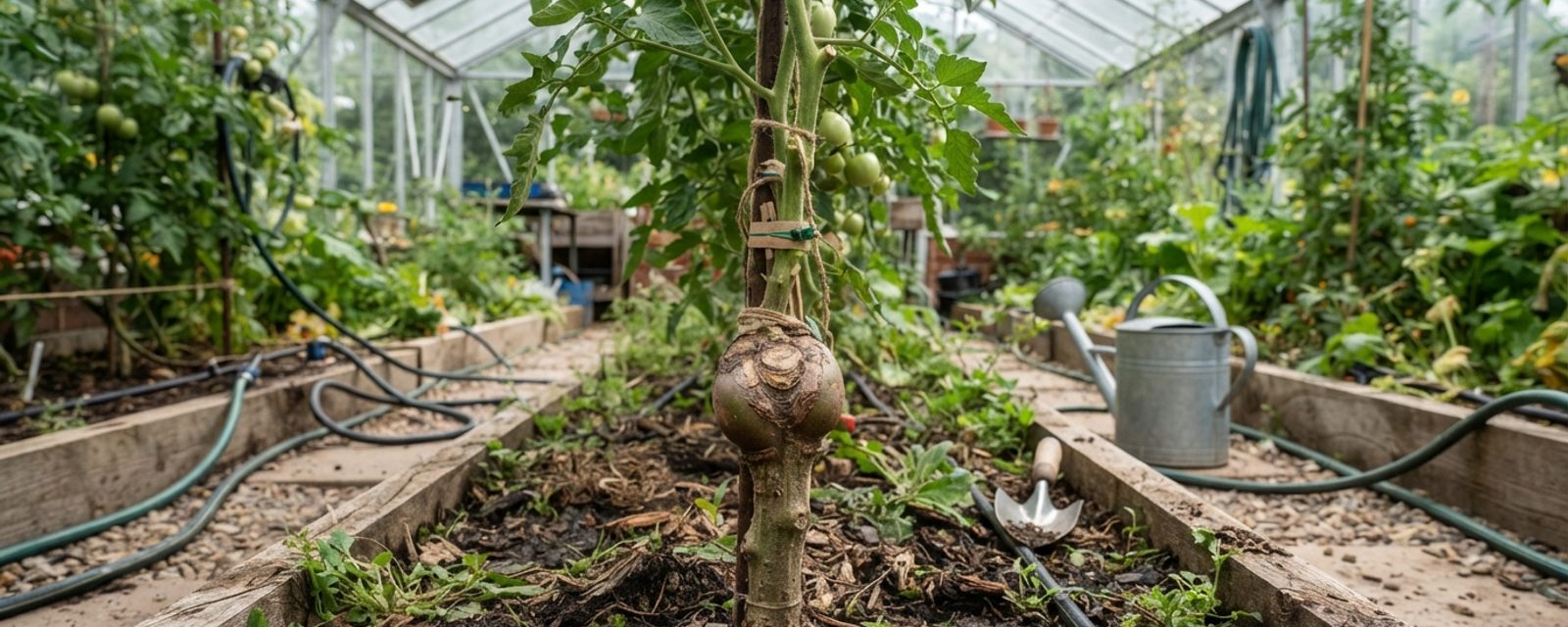
You're standing in the garden centre in April, tray of ordinary tomato seedlings in one hand, and a single graftedJoining a chosen fruiting variety onto a separate rootstock, so the tree grows the fruit of one plant on the roots of another. Full definition → plant in the other costing three or four times as much. Both are labelled the same variety. Both look, frankly, quite similar. The only real difference you can see is the small swollen join near the base of the stem on the expensive one, and the price sticker.
It's a fair question to stall on. Grafted tomatoes, cucumbers and aubergines have become a fixture of UK seed catalogues and garden centres over the past decade, sold on the promise of bigger harvests, tougher plants and a longer picking season. Those benefits are real, but conditional, not automatic just because the plant cost more. Here's what grafting actually does, and where the extra cost is and isn't worth paying in a Scottish garden, greenhouse or polytunnel.
What grafting actually is
A grafted vegetable plant is two plants joined into one. The root system and lower stem come from a separate rootstockThe root system and lower stem a fruit tree is grafted onto, chosen to control the tree's eventual size rather than for its own fruit. Full definition → variety, bred specifically for vigorous roots and resistance to soil-borne problems, rather than for its fruit. The top growth, the part that flowers and fruits, is your normal, familiar variety (a scion), sliced from its own roots and fused onto the rootstock while both are seedlings, so the two grow on as a single plant. It has nothing to do with genetic modification; it's the same technique used on fruit trees for millennia, applied to annual vegetables.
Tomatoes, cucumbers, aubergines and several related crops (melons, peppers, squashes) can all be grafted this way. On tomato labels the rootstock is often named separately from the fruiting variety, RHS advice names Aegis F1The first-generation offspring of two specific, deliberately chosen parent plants, bred for a predictable, uniform result but not worth saving seed from. Full definition → and Estamino F1 as commercial tomato rootstocks, so a "grafted Sungold" plant is Sungold fruit growing on one of these root systems, not a different tomato altogether. Grafting your own plants at home is possible but genuinely fiddly, matching stem thickness, keeping the join humid while it heals, and timing two sowings correctly, which is why most gardeners buy grafted plants ready-made rather than attempting it themselves. Ready-grafted plants aren't in every garden centre in the same range as ordinary seedlings; the widest choice of varieties and rootstocks tends to come from mail-order specialist plant and seed suppliers rather than a general trip to a local centre, so it's worth checking online if a particular rootstock or variety combination matters to you. Popular combinations from these suppliers tend to sell out well before an April planting date, so order earlier than you would ordinary seedlings if you want a specific one. Because they arrive by post already growing, give them a few days to settle indoors before hardening offGradually getting young plants raised indoors used to outdoor conditions over 7–14 days before planting out, so cold, wind and direct sun don't shock or damage them. Full definition →, a plant that's spent a day or two in transit and then goes straight into a cold, unheated April greenhouse is starting from a worse position than one bought locally and acclimatised gradually.
One limit worth knowing before you pay the premium: grafting only strengthens what's happening below ground. Grafted plants "are as prone to the usual above-ground pests and diseases as their ungrafted counterparts", a grafted tomato in a damp, poorly ventilated space is exactly as vulnerable to grey mould or blight as a seed-grown one standing next to it. The rootstock is insurance against soil-borne problems specifically, not general-purpose toughness.
For sowing dates, spacing, pinching outRemoving the soft growing tip of a stem to stop upward growth and make the plant branch out sideways instead. Full definition → and feeding once you've decided which type of plant to grow, see the full growing guides for tomatoes, cucumbers and aubergines.
The claimed benefits
The case made for grafted plants, consistently across suppliers and horticultural bodies, comes down to five things:
- Vigour. The rootstock's root system is larger and more efficient than an ordinary seedling's, so the whole plant grows away faster and stronger.
- Disease and pest resistance. Rootstocks are bred to resist specific soil-borne fungal wilts and nematodes that build up in soil used to grow the same crop year after year.
- Earlier and heavier cropping. A more vigorous plant reaches fruiting size sooner and can sustain a bigger fruit load through the season.
- Longer season. Because the plant stays healthier for longer, it keeps producing later into autumn than a plant that succumbs to soil-borne stress partway through.
- Better tolerance of difficult conditions. Poor soil, containers reused without fresh compost, or a stressed growing environment are all cited as situations where a stronger root system pays off.
The Royal Horticultural Society backs the core mechanism: grafted plants "have greater vigour and/or more resistance to soil-borne diseases and pests such as nematodes", and this is "particularly useful when growing vegetables in the greenhouse border when it may be impractical to use fresh soil every year or practice crop rotationMoving each crop family to different ground each year, on a multi-year cycle, so pests and diseases that build up in soil don't get a repeat host. Full definition →."
Does the yield claim hold up?
The benefit is genuinely narrow: greater vigour and resistance to soil-borne disease and pests, useful specifically where soil can't be refreshed or rotated. A plant grown in clean, disease-free soil has little disease pressure for the rootstock to protect against, so the vigour benefit alone is a smaller, less certain reason to pay several times the price.
Grafting compared across the three crops
| Crop | Typical claimed benefit | How strong is the evidence | Where it matters most |
|---|---|---|---|
| Tomato | Vigour, resistance to fungal wilts (e.g. Fusarium, Verticillium), extended cropping | Named commercial rootstocks (Aegis F1, Estamino F1) exist specifically to fight these diseases | Permanent greenhouse/polytunnel borders grown in the same soil year after year |
| Cucumber | Vigour, resistance to soil pests including nematodes, stronger performance in cool/wet conditions | The rootstock cucumber 'Triumph' is the variety most commonly available to home gardeners | Growbags or borders reused without sterilising between seasons |
| Aubergine | Vigour, earlier fruiting, better tolerance of a marginal UK climate for a heat-loving crop | No aubergine-specific rootstock is commonly named the way tomato and cucumber ones are, so treat the vigour benefit as plausible but the disease-resistance case as unproven for this crop specifically | Unheated Scottish greenhouses, where aubergine is already at the edge of viability |
The real cost-benefit trade-off
The honest downside: a grafted plant typically costs several times more than a seed-grown one of the same variety, and exactly how much more varies by retailer and by crop, so it's worth comparing the price on the label rather than assuming a fixed multiple.
The practical costs beyond the price tag:
- The graft union must stay above soil or compost level. If the scion variety is allowed to root into the soil above the graft, you lose the rootstock's benefits entirely and have, in effect, paid a premium for an ordinary plant. When buying, look for a visible, healed join a few centimetres up the stem, a swollen or slightly offset ring where two different stems meet, and plant so that join sits clear of the compost.
- Grafted tomatoes need a generously sized pot or border. The vigorous root system is somewhat wasted if it's confined. This is worth checking specifically for a Scottish setup, where the crop is typically grown under cover in a fixed greenhouse or polytunnel border rather than open ground, if that border is small, a cramped root run cancels out much of what the premium is paying for.
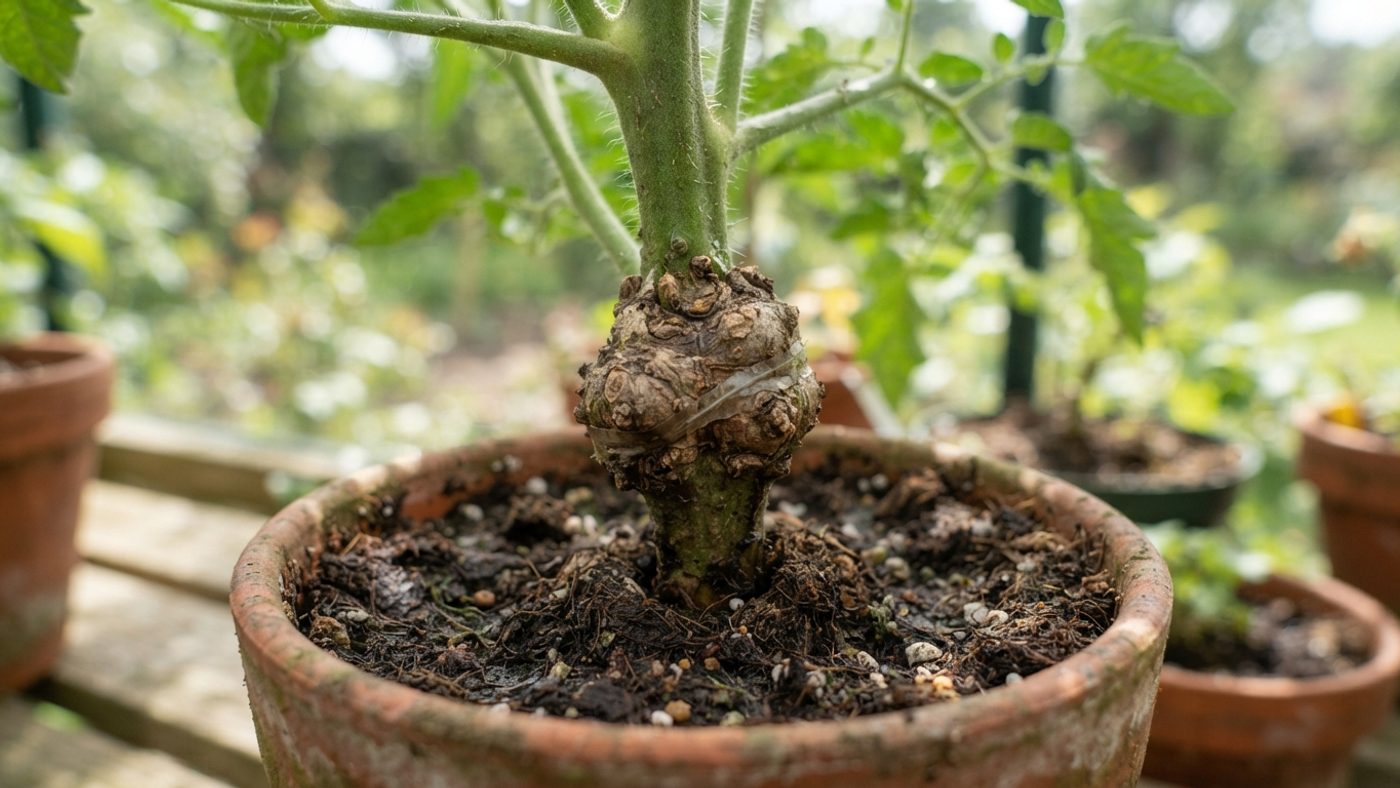
Set against that: the claimed saving is in avoided plant loss and avoided replacement cost, not just bigger harvests. If a soil-borne wilt kills or badly stunts one or two plants in your border most years, the grafted premium can pay for itself through survival alone, regardless of any extra yield on plants that would have thrived either way.
The Scottish angle: does a shorter season change the maths?
Two obvious Scottish arguments get made for grafting, "cooler climate means more disease pressure" and "shorter season means extended cropping matters more", and they don't both hold up equally well.
On disease pressure: RHS's own advice on fusarium wilt describes it as "often diseases of hot weather and warm soils", while noting some strains can still cause trouble at lower temperatures. That cuts against a simple "Scotland is cooler, so wilt risk is higher" claim, if anything, fusarium is somewhat less of a natural fit for a cool climate, not more. Verticillium wilt, similarly, is described as showing symptoms mostly in spring-to-autumn warmth, with plants able to recover in cooler, wetter conditions. Neither disease is presented as a specifically Scottish or specifically cold-climate problem.
What is genuinely Scottish, though, is the growing setup rather than the climate itself. Outdoor tomatoes are marginal outside the mildest coastal parts of Scotland, and aubergines and cucumbers are grown under cover as standard practice, meaning a permanent, unheated greenhouse or polytunnel border reused season after season, exactly the scenario RHS identifies as the strongest case for grafted disease resistance, in preference to costly annual soil replacement or strict crop rotation that a small home plot often can't manage. Disease-resistant rootstock genuinely earns its keep in Scotland, then, but because of how Scottish tender crops are typically grown under cover in fixed borders, not because the cold itself raises wilt risk.
On season length: this holds up better. Scotland's outdoor growing season is shorter than southern England's, and in the north and east in particular, tender crops need cover and a compressed sowing-to-harvest window to fruit at all before autumn cold ends the season. A plant that reaches cropping size faster and keeps producing for longer into a shortening autumn genuinely buys more usable weeks in a Scottish year than the same head start would in a longer, milder English season, where a slower plant has more spare time to catch up anyway. This is a real and defensible Scotland-specific case for the vigour and earliness side of grafting, even where the disease-resistance case rests more on cultivation practice than climate.
Verdict: who should actually pay the premium
Worth it:
- Anyone growing tomatoes, cucumbers or aubergines in a permanent unheated greenhouse or polytunnel border that isn't rotated or replaced with fresh soil each year, this is the exact scenario the disease-resistance benefit was bred for.
- Gardeners who have previously lost plants to wilt, dieback or general lack of vigour partway through the season and want insurance against a repeat, particularly in a Scottish setup where cover growing in fixed borders is the norm rather than the exception.
- Growers chasing every extra week of harvest in a shorter Scottish season, where earlier fruiting and a later finish genuinely add usable cropping time rather than just cosmetic vigour.
Not worth it:
- Anyone growing in growbags or fresh multi-purpose compost each year, since a new sterile growing medium removes most of the soil-borne disease risk the rootstock is protecting against.
- Gardeners who haven't had disease or vigour problems with ordinary seed-grown plants, the rootstock's benefit is tied to soil-borne pressure, so where there's no underlying soil problem to solve, there's correspondingly little for the premium to buy.
- Anyone growing only one or two plants as a hobby rather than for volume, where three to four times the cost for a marginal or unrealised yield gain is hard to justify next to buying two or three ordinary seed-grown plants instead.
In short: pay the premium for the border you can't rotate, not for the variety you already grow well.
Common questions
Do grafted tomatoes really taste different from ordinary ones?
No — grafting joins a normal fruiting variety onto a different rootstock, so the fruit itself is genetically identical to the ungrafted version of that same variety. Any flavour difference reported by gardeners is more likely down to the plant’s improved vigour and stress tolerance affecting ripening and fruit set, not a genetic change to the fruit.
Can I graft my own tomato plants at home to save money?
Yes, it’s possible, but it’s fiddly: it requires sowing rootstock and scion seed at slightly different times so stems match in thickness, a clean cut and join technique, and keeping the graft in high humidity while it heals, usually in a propagator or clear bag, for around a week. Most home gardeners find buying ready-grafted plants more reliable than a first attempt at grafting.
Do grafted cucumbers and aubergines need different care from ordinary plants?
Mostly not — day-to-day feeding, watering, and training follow the same routine as any seed-grown plant of that crop. The one graft-specific rule is to keep the graft union above soil or compost level at all times; burying it lets the top variety root on its own and cancels out the rootstock’s benefits.
Is it worth buying grafted plants for growbag growing?
Generally no. Fresh growbag compost each year avoids most of the soil-borne disease build-up that grafted rootstocks are bred to resist, so the main justification for paying the premium doesn’t apply. The vigour benefit still exists in theory, but it’s the weakest case for the premium of any of the situations covered here.
Are grafted plants better suited to a Scottish greenhouse than an English one?
The disease-resistance case is about how the crop is grown, an unheated, permanently sited greenhouse or polytunnel border, common practice for tender crops in Scotland, rather than about the Scottish climate itself increasing disease risk; RHS describes the relevant wilts as more associated with warm conditions, not cool ones. The season-length case is more clearly Scotland-specific: a shorter growing season means extra earliness and a longer autumn cropping tail buy more genuinely useful weeks than the same head start would further south.
Sources
3 sources, recorded with what each was used for
- RHS: Grafting Vegetables: What grafting does, the vigour/disease-resistance claim, named tomato rootstocks (Aegis F1, Estamino F1), the named cucumber rootstock (Triumph), and the above-ground-pest vulnerability caveat
- RHS: Fusarium Wilts: That fusarium is generally a warm-weather, warm-soil disease, cutting against a simple "Scotland is cooler so wilt risk is higher" claim
- RHS: Verticillium Wilt: That verticillium symptoms show mainly in spring-to-autumn warmth, with recovery more likely in cooler, wetter conditions