
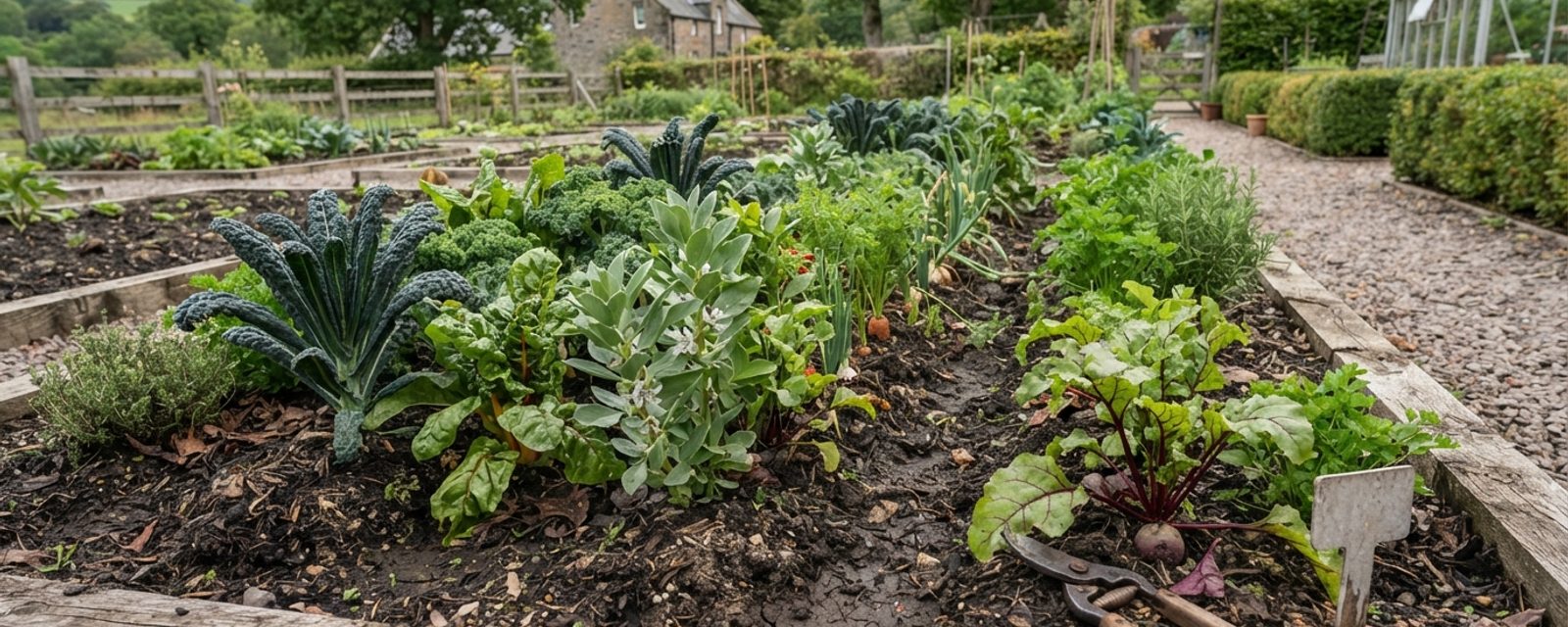
Stand in the soil-improver aisle of a garden centre and there's usually a bag promising to be a "clay breaker" or "clay improver", granules, a few pounds for 10kg, a photo of cracked earth turning to crumbly loam on the label. Turn it over and the active ingredient is almost always gypsum. It sounds like exactly what a Central Belt clay bed needs: a scientific-sounding fix, cheaper than a season of manure, no digging required beyond scattering it. Whether it's worth carrying to the till depends on a question the bag doesn't answer: what kind of clay is actually in the ground it's going onto.
Our general guide to improving clay soil covers the everyday fixes: raised beds and mounding for drainage, organic matter for structure, and why sand makes clay worse rather than lighter. Gypsum got one line there. It deserves a proper look on its own, because the honest answer, once the chemistry is followed through, is not "yes" or "no", it's "only if your clay has a specific problem that Scottish garden clay very rarely has."
What gypsum actually is
Gypsum is calcium sulphate, mined as a mineral or produced as a byproduct of flue-gas desulphurisation in coal-fired power stations, then ground into the granules or powder sold as "clay improver." It is the active ingredient of most commercial clay improver products. Unlike lime, gypsum does not raise soil pH, it supplies calcium without pushing acid soil toward alkaline, which is why it's the alternative reached for on ground that's already neutral or alkaline, where adding lime as well would overshoot.
The real chemistry: what flocculation actually is
The pitch behind every clay-improver bag is flocculation: calcium ions from the dissolving gypsum bond to the flat, negatively charged faces of clay particles and pull them together into larger crumbs, opening up the pore spaces between them for air and water to move through. That part is real chemistry, not marketing. Clay particles are small and flat enough that they naturally pack tightly, which is exactly why clay drains so slowly and cracks so hard when dry; flocculation is a genuine, if partial, structural fix, and it's the reason gypsum earns a place in soil science at all.
Where it gets more complicated is that flocculation isn't clay's only problem to solve. In a soil where the particles are already loosely bound together by calcium and magnesium, adding more calcium via gypsum doesn't do much: the crumbs are already forming, the drainage bottleneck is elsewhere, and the added calcium has nothing to displace.
Sodic soil is the specific problem gypsum was built for
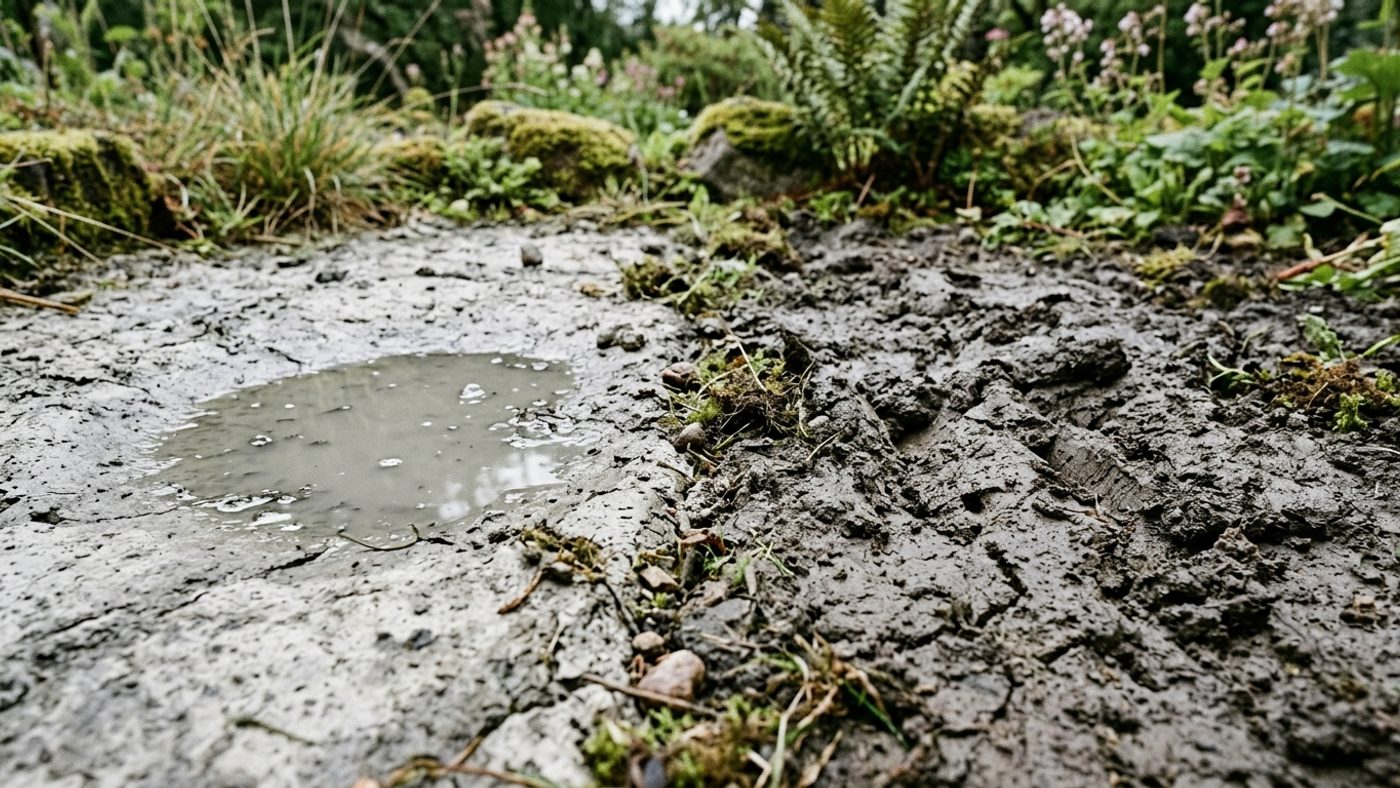
Gypsum's real, well-documented job is fixing sodic soil, ground where sodium, not calcium or magnesium, dominates the clay particles' surface. Soils high in exchangeable sodium relative to calcium and magnesium are classed as sodic, and their pH usually runs above 8.5. Sodium ions don't bond clay particles together the way calcium does; instead, they disrupt the electrical balance that holds the flat clay platelets in stable crumbs, so the particles repel each other and disperse into a dense, structureless mass. The visible result is a soil that seals over: a dark or pale crust on the surface, water pooling rather than soaking in, and root damage from direct sodium toxicity on top of the physical waterlogging.
This is where gypsum genuinely earns its reputation. Dissolved calcium from gypsum has a stronger pull on the clay surface than sodium does, so it displaces the sodium; irrigation or rain then leaches the freed sodium down through the profile and away from the root zone, and the clay's crumb structure reforms behind it. Applied to a soil that's actually sodic, gypsum does real, measurable, structural work, it's the standard reclamation treatment for it.
Sodic soil like this is a genuine problem in parts of the world: arid and semi-arid regions with naturally sodium-rich parent rock, or irrigated farmland where years of mineral-laden irrigation water have built sodium up faster than rainfall washes it out. Neither of those conditions describes an ordinary Scottish garden.
Is Scottish garden clay actually sodic?
This is the question the bag never asks, and it's the one that decides whether gypsum does anything at all. Scotland's high, reliable rainfall is precisely the condition that prevents sodium building up in soil in the first place, it's the same leaching that keeps Scottish soils trending acidic rather than alkaline, washing soluble elements out faster than a drier climate would. Sodic soil, by contrast, forms where evaporation outpaces rainfall and salts concentrate rather than wash away, or under sustained irrigation with mineral-rich water, neither of which is how an outdoor Scottish bed is managed.
Garden-soil sodicity isn't treated as a live issue in Scottish agricultural or horticultural guidance, and that silence is itself the finding: it isn't a gap in the research, it's that ordinary Scottish clay isn't the soil type the problem applies to. The standard caveat on gypsum points the same direction without naming sodicity outright: some, but not all, clay soils respond to extra calcium, and the standing advice is to test on a small area first to check it's effective on your type of clay, a direct admission that the product doesn't reliably work, precisely because most UK garden clay isn't the sodic type gypsum was designed to fix.
None of this means Scottish clay has no calcium-related problems ever, a soil genuinely low in calcium, or a bed near the coast that's picked up salt from sea spray or winter road grit, could behave differently, and a proper soil test is the only way to know rather than guess from a bag's marketing. But for the ordinary heavy Central Belt clay or gley bed most gardeners are dealing with, dominated by calcium and magnesium already and kept that way by Scotland's own rainfall, gypsum has nothing to displace and nothing much to fix.
How much to apply, if you decide to try it
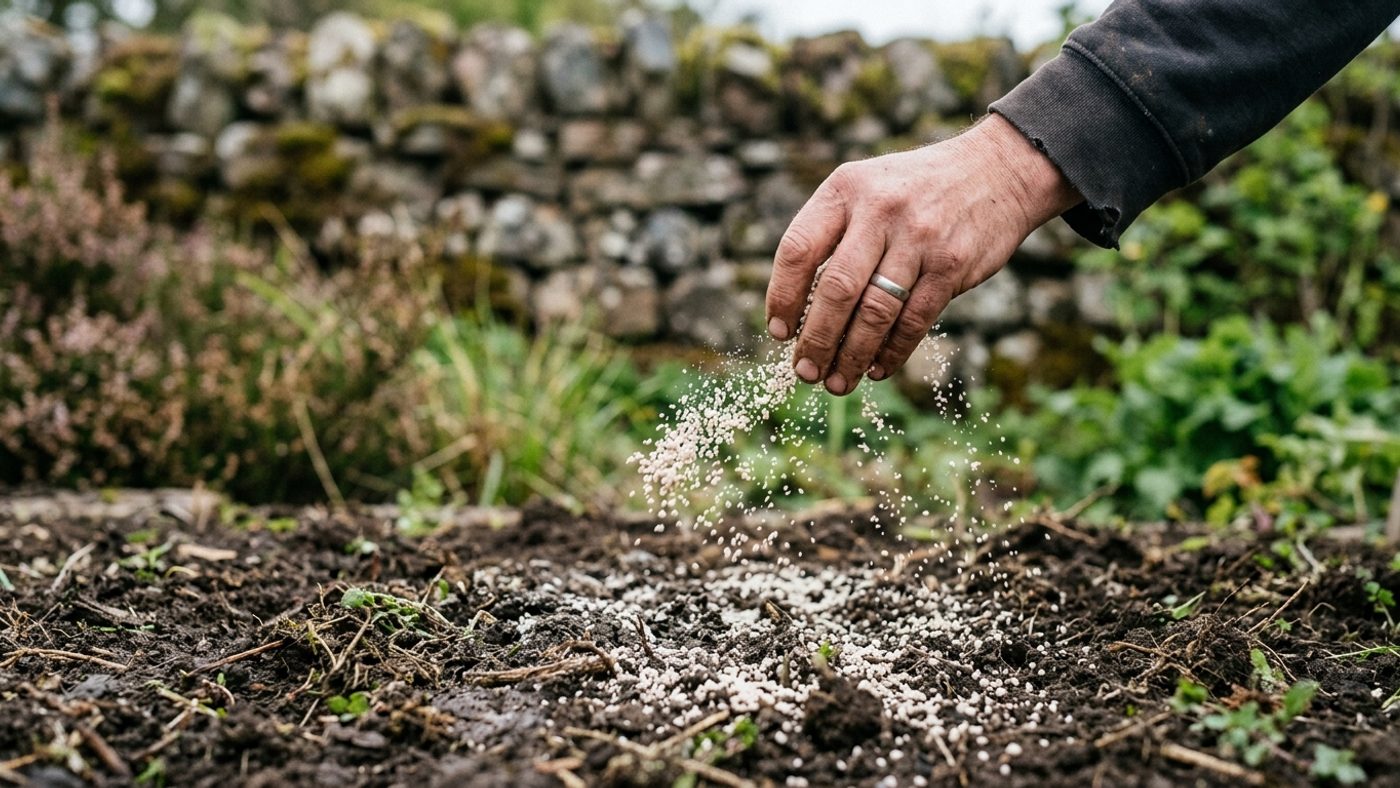
If a soil test genuinely shows sodium dominance, or the bag's own small-area test shows a real improvement, no published source gives a home-garden dose in kilograms per square metre, the figures that exist are farm-scale, tonnes-per-hectare rates calculated from a soil test's specific sodium reading, not a fixed number that suits any garden. Follow the rate printed on the product itself, and treat the small-area trial as the standing rule rather than digging a whole bed's worth in on the strength of the label.
The honest verdict
For the typical Central Belt or west-coast Scottish garden, gypsum is very unlikely to be the fix a clay-improver bag promises. The chemistry it relies on is real, but it solves a specific problem, sodium-dominated soil, that Scottish rainfall makes rare here in the first place. Money and effort spent on organic matter and drainage, covered in full in the main clay-soil guide, does the structural work gypsum can't on ordinary garden clay, and does it reliably rather than as a gamble on a small test patch. Buying a bag isn't a wasted trip if a soil test flags genuine sodium or calcium problems, or if a small trial area shows a real difference, but going in expecting a universal clay-breaker, the way the packaging is written, sets most Scottish gardeners up to be disappointed by a product that was never really formulated with their soil in mind.
Common questions
Will gypsum hurt my plants or soil if it doesn't help?
No. Unlike lime, it doesn't push pH toward alkaline, so applying it to soil that doesn't need it is a wasted purchase rather than a harmful one. The real cost is money and effort spent on a fix that isn't addressing the actual problem, not damage to the bed.
How do I know if my soil is actually sodic?
A proper soil test that measures exchangeable sodium against calcium and magnesium is the only reliable way, visually, a sealed, crusted surface with water pooling rather than draining is the classic sign, but ordinary compacted or waterlogged clay can look similar without being sodic at all. A basic pH test is a partial clue too: sodic soil typically runs above pH 8.5, well outside the range most Scottish garden soil sits in.
If gypsum won't fix my clay, what will?
Raised beds or mounding for drainage, and repeated organic matter additions for structure, are the two fixes that work regardless of whether the clay is sodic.
Is gypsum the same as garden lime?
No. Both supply calcium, but lime raises soil pH and gypsum doesn’t, which is why gypsum is the one reached for on ground that’s already neutral or alkaline.
Can gypsum be used safely near acid-loving plants like rhododendrons or blueberries?
Yes, more safely than lime, since it doesn't shift pH, but there's little reason to use it near them either, since the calcium-dispersion problem it fixes isn't the one an ericaceous bed usually has.
Sources
4 sources, recorded with what each was used for
- RHS: Clay soils: Gypsum as the active ingredient of clay improvers, the flocculation mechanism, the "some, but not all" caveat, the "test on a small area" recommendation, lime-vs-gypsum by soil pH
- UC Integrated Pest Management Program: Nutrient and Mineral Excesses, Salinity, and Salt Toxicity: Definition of sodic soil, how sodium disrupts clay aggregate structure, crusting/slow water penetration symptoms, gypsum-then-leaching reclamation mechanism
- gov.scot: The Scottish Soil Framework: General context on Scottish soil character
- Scotland's Soils (Scottish Government soils portal): Scotland's wet climate washing elements out of soil, leaving it relatively acid-rich and nutrient-poor, the leaching mechanism behind why sodium doesn't build up here