
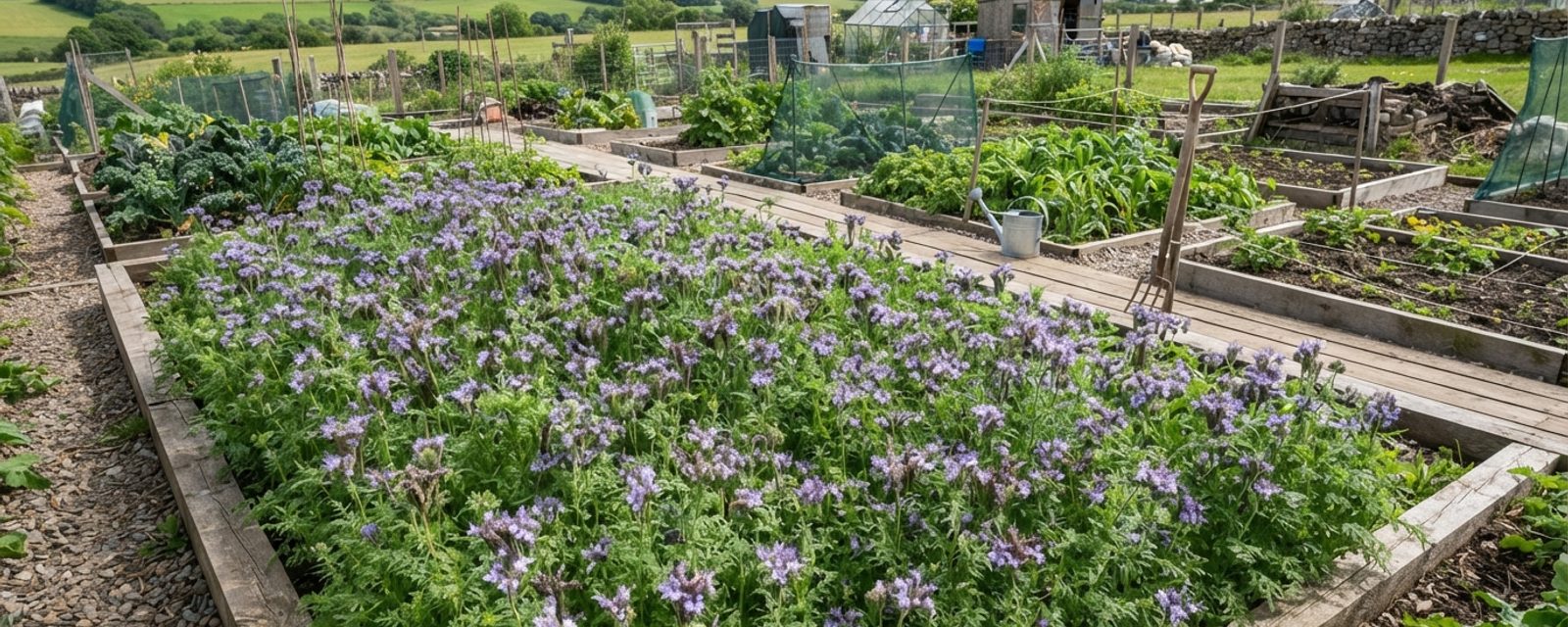
A green manureA fast-growing crop sown specifically to be dug back into the soil, adding organic matter and, with legumes, fixing nitrogen. Full definition → is a crop you sow with no intention of eating it. That sounds like wasted space until you look at what's actually happening below ground while it grows.
Living roots feed soil biology in a way bare or fallow ground can't. Root exudates, the sugars and compounds plants leak into the soil around them, feed bacteria and fungi, which in turn cycle nutrients and build the sticky compounds that hold soil crumbs together. Pull the plant out and dig the top growth back in, and that same biomass becomes organic matter: it feeds soil organisms as it breaks down, improves how the soil holds water and drains, and over seasons builds the crumbly structure that lets roots and worms move freely.
Legume green manures, clovers, vetches, field beans, do something more specific. Their roots host rhizobia bacteria in nodules that pull nitrogen gas from the air and convert it into a form plants can use. Some of that nitrogen becomes available to the next crop once the green manure is dug in and decomposes. Nothing else in the garden does this for free.
A green manure canopy also keeps the ground physically occupied. Bare soil over a Scottish winter loses nitrate to leaching in the rain and loses structure to compaction and erosion; a root system and a leaf canopy hold both nutrients and soil in place. Some species go further and actively suppress weeds and soil-borne problems: brassicaThe cabbage family: cabbage, kale, broccoli, cauliflower, Brussels sprouts, kohlrabi, swede, turnip and more, sharing the same pests, diseases and rotation rules. Full definition → green manures like mustard release compounds as they break down that are toxic to some weed seedlings and soil pathogens, and dense, fast canopies simply out-compete weeds for light before they can establish.
None of this requires imported inputs or bagged fertiliser. It requires garden space and, in Scotland, a season that's shorter and starts later than most UK growing advice assumes, which is the actual constraint to plan around.
Three different jobs, not one interchangeable crop
The species sold as "green manure" mixes do genuinely different jobs, and treating them as interchangeable is the most common way a green manure fails to deliver what a gardener expected.
Nitrogen-fixing legumes, clover, vetch, field beans, build soil nitrogen through their rhizobia partnership. They're comparatively slow to bulk up and don't suppress weeds as fast as the quick growers, and most need to reach flowering, or overwinterKeeping a plant alive and intact through the cold months, whether left outdoors, moved under cover, or stored dormant. Full definition →, before they've fixed a meaningful amount of nitrogen, which is exactly the stretch of growth a short, late-starting Scottish season is most likely to cut short if they're sown too late in spring.
Quick-growing weed-suppressors, mustard, phacelia, buckwheat, germinateA seed sprouting: breaking dormancy and putting out its first root and shoot, given the right warmth and moisture. Full definition → fast, canopy over within weeks, and smother weed seedlings by denying them light. They add organic bulk and, in mustard's case, a biofumigant effect on top of that, the same compounds that make mustard's break-down toxic to weed seedlings and soil pathogens, released into the soil as the plant is dug in. None of the three fix any nitrogen, and buckwheat and phacelia are frost-tender annuals that die back the moment a hard frost arrives.
Overwintering soil-cover species, grazing rye, winter tares, winter field beans, are the most cold-tolerant of the lot and are grown specifically to occupy ground through the wet, leaching-prone winter months. They protect soil structure and hold nutrients that would otherwise wash out, and the legumes among them (winter tares, winter field beans) fix nitrogen too, but they need the better part of six months in the ground to do it properly.
Sow a summer weed-suppressor when what the plot actually needs is winter ground cover, or vice versa, and it won't do the job, mustard sown in October won't survive to smother spring weeds, and grazing rye sown in June just occupies a bed a summer vegetable could have used.
Species compared for a short Scottish window
| Species | Job | Scotland sowing window | Weeks to incorporation | Hardiness |
|---|---|---|---|---|
| Mustard (Sinapis alba) | Quick weed-suppressor, biofumigant | April–early August | 6–9 weeks | Non-hardy, killed by first frost |
| Phacelia (Phacelia tanacetifolia) | Quick weed-suppressor, pollinator forage | April–July | 6–9 weeks | Non-hardy, killed by first frost |
| Buckwheat (Fagopyrum esculentum) | Quick cover, phosphorus scavenger | May–July only | 6–9 weeks | Frost-tender, dies at the first touch of frost |
| Crimson clover (Trifolium incarnatum) | Nitrogen-fixing legume | March–July | 8–12 weeks to flowering | Hardy annual |
| Winter tares (Vicia sativa) | Nitrogen-fixing legume, overwinter cover | July–early September | Overwinters; incorporate the following spring | Hardy |
| Winter field bean (Vicia faba) | Nitrogen-fixing legume, overwinter cover | September–October | Overwinters; incorporate the following spring | Hardy |
| Grazing/forage rye (Secale cereale) | Overwinter soil cover, deep-rooting, weed suppression | August to early October (as late as early October near Aberdeen) | Overwinters; incorporate the following spring | Hardy, the most cold-tolerant of the commonly grown green manures |
The practical split for a short Scottish season is between the quick summer growers and the overwintering species. Mustard, phacelia and buckwheat all need six to nine weeks of reliable warmth to do their job before they're either dug in or killed by frost, workable in the Central Belt or along the milder coasts if sown within the windows given, genuinely marginal in the Highlands, the islands, or at any altitude where frosts arrive earlier and warmth is shorter-lived.
The overwintering legumes and grazing rye are, if anything, a better fit for Scotland than for milder parts of the UK: they're sown into the gap between a summer crop coming out and the ground being wanted again in spring, a gap Scotland's later spring and earlier autumn frost make wider, not narrower, in the parts of the country where upland ground closes down early. Forage rye and vetch mixes have been successfully established near Aberdeen as late as the first couple of weeks of October, which gives a genuine late-sowing option once summer crops are cleared, provided the mix goes in before the ground turns too cold and wet for germination.
Incorporating a green manure: timing and the wait before the next crop
Cut or dig a green manure in before it sets seed, once flowering finishes and seed forms, the plant has put its energy into seed rather than leafy bulk, and self-seeded green manure becomes next season's weed problem. Brassica green manures like mustard carry a second reason to be timely: they're in the same plant family as cabbages, sprouts and other brassica crops, so letting one grow on, flower and seed near ground earmarked for a brassica crop risks building up clubrootA soil-borne fungal disease of the brassica family that swells and distorts roots, and survives in soil for years. Full definition →, a soil-borne disease that can persist for years, has no cure once established, and takes hold fastest in damp, acidic soil, conditions plenty of Scottish plots already have to manage.
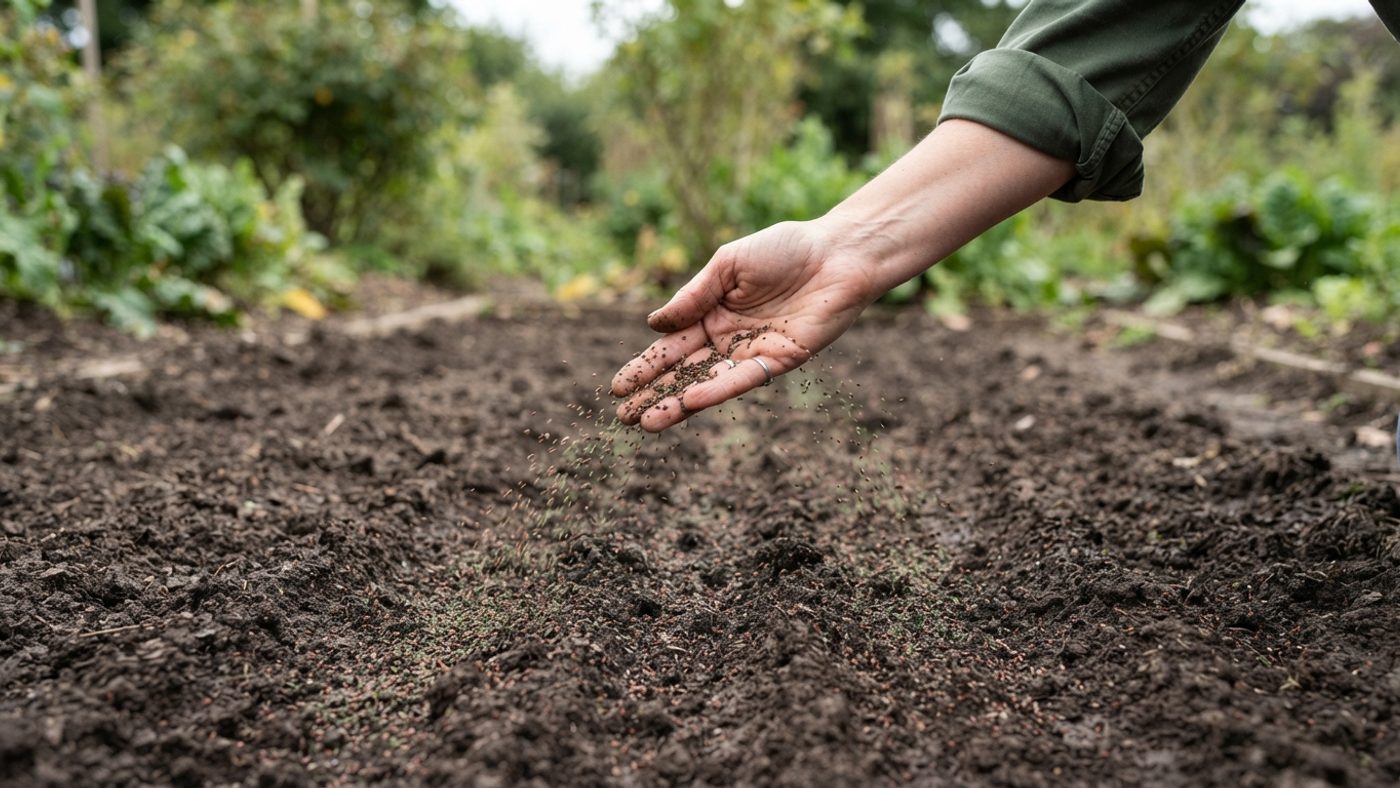
Sow most green manures by broadcasting seed thinly and evenly over prepared, raked soil, then raking again to cover it lightly, the same method used for a lawn seed mix; sowing rate varies by species and is given on the seed packet, so weigh out what it recommends rather than guessing. Winter field beans and larger-seeded legumes are better sown in shallow drills a few centimetres deep, since broadcast seed that large is too easily taken by birds. Seedling green manures are as vulnerable to slugs as any other seedling in a wet Scottish spring or autumn, and a slow-germinating sowing can be grazed off before it ever canopies over, the usual slug precautions (sowing into moist but not waterlogged soil, checking for damage while seedlings are small) apply here as much as to any vegetable crop.
Young, soft growth (mustard, buckwheat, phacelia before flowering) can be hoed off and left on the surface or dug shallowly into the top 15cm or so of soil. On a no-digA growing method that avoids turning the soil over, building fertility instead by adding organic matter on the surface. Full definition → plot, soft growth can instead be cut at ground level and left as a surface mulchA layer of material spread over the soil around plants to suppress weeds, retain moisture, and improve soil structure as it breaks down. Full definition → to break down in place, avoiding disturbance to heavy, wet clay that digging when the soil's still damp can compact rather than improve. Bulkier or fibrous material, overwintered grazing rye especially, which can stand knee-high by spring, is easier to manage cut down first with shears or a strimmer, then chopped and turned under with a sharp spade; on heavier ground, bury it a little deeper, up to around 25cm, since fibrous material breaks down more slowly and benefits from being further from the surface where it won't get in the way of an early sowing.
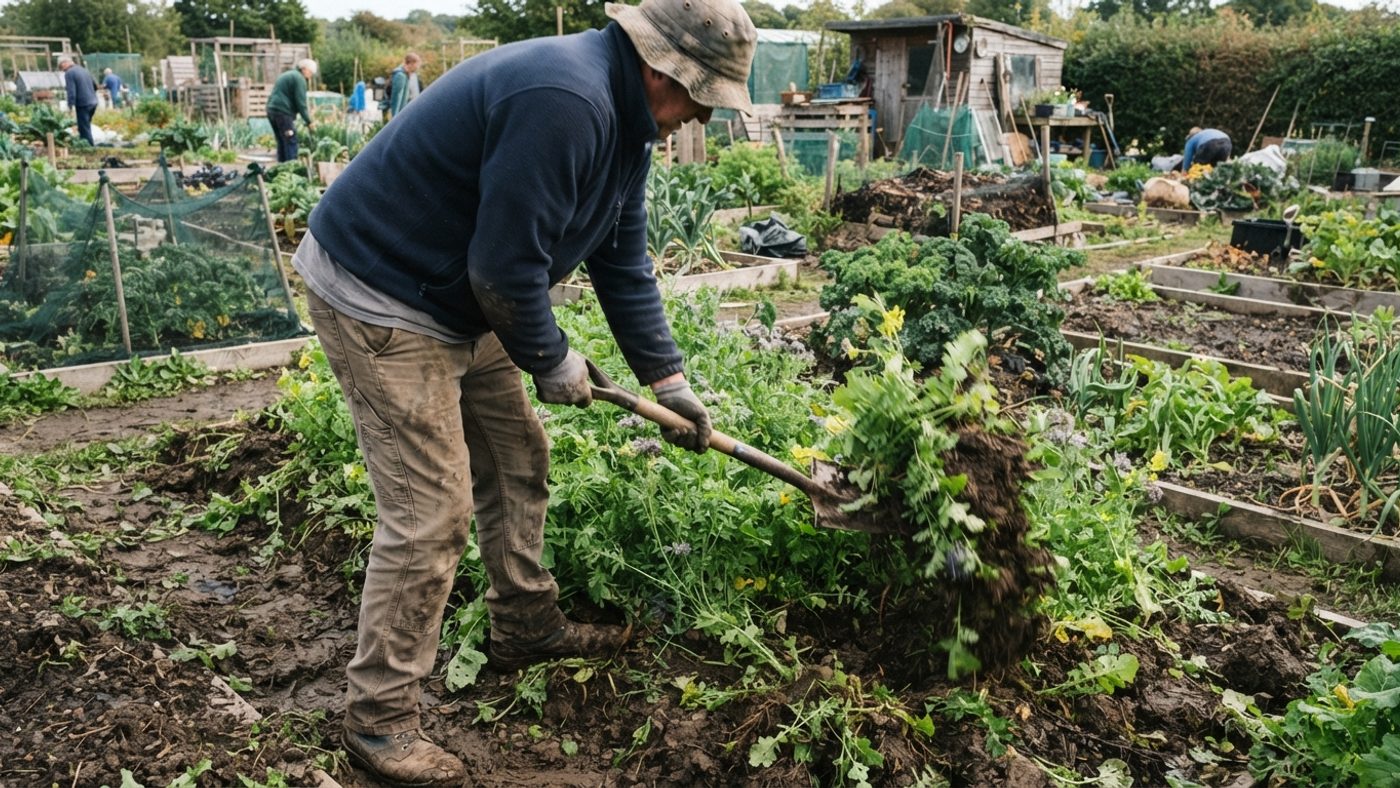
Decomposing green manure suppresses growth in whatever's sown straight afterwards, so it isn't ready for the next crop the moment it's dug in. For quick leafy green manures, allow roughly three to four weeks between incorporation and sowing or planting the next crop. For bulky, fibrous material like overwintered grazing rye, a realistic figure is around six weeks before the residue has broken down enough not to hinder the crop that follows, and in cold, wet Scottish spring soil, where microbial breakdown runs slower than in a milder or drier climate, that six weeks is a minimum rather than a guarantee. Transplants generally cope with a shorter wait than direct-sown seed, since they're past the vulnerable germination stage by the time they go in.
Realistic sowing windows for Scotland
| Region (representative station) | Last spring frost | First autumn frost |
|---|---|---|
| Central Belt, lowland (Edinburgh) | Mid-to-late April | Late October |
| Northeast, lowland (Aberdeen) | Early May | Late October |
| Southwest, lowland (Dumfries) | Late April | Late October |
| Upland/inland (Braemar, Eskdalemuir) | Late May–early June | Mid-to-late September |
Lowland gardens keep a frost-free window into late October, long enough for a mustard, phacelia or buckwheat sowing made by midsummer to establish, canopy, and be dug in before the ground is wanted for an autumn or winter crop. Upland and inland gardens lose that margin at both ends: frost can persist into late May or June and return by mid-September, which compresses the useful season for a quick summer green manure to a few weeks and makes the overwintering options the more dependable choice, their whole point is to occupy ground through exactly the months an upland plot can't otherwise use for growing anything. For a fuller regional picture, including islands and the Borders, see the frost-dates reference.
Common questions
Can I sow a green manure and dig it in the same season?
Yes, if it’s a quick weed-suppressing species (mustard, phacelia, buckwheat) sown with enough warm weeks ahead of it, reckon on six to nine weeks of growth before digging in, plus a further three to four weeks before the next crop goes in. In most of lowland Scotland that means sowing needs to happen by mid-to-late summer at the latest to clear the bed in time for autumn planting.
Do I need a legume if I just want to improve soil structure?
No. Nitrogen fixation is specific to legume green manures (clover, vetch, field beans). If the goal is bulk organic matter, weed suppression, or winter ground cover rather than added nitrogen, a non-legume like mustard, phacelia or grazing rye does that job without needing rhizobia at all.
Is buckwheat worth growing in Scotland given how frost-tender it is?
It can work in milder, lowland gardens sown well within its May–July window, where it scavenges phosphorus and grows fast. It’s a poor choice for a late-season or upland sowing, since a single early frost will kill it outright before it’s done any good.
Can I skip digging in altogether and just leave cut green manure on the surface as mulch?
For soft, young growth on a no-dig plot, yes, cutting at ground level and leaving it to break down as a surface mulch works and avoids disturbing the soil structure underneath. It doesn’t work as well for bulky, fibrous material like overwintered grazing rye, which breaks down far more slowly left on the surface than it does turned into the soil, and a thick mat of uncut rye left lying on a bed can also smother whatever you try to sow through it next.
Why do overwintering green manures suit Scotland better than summer ones in some gardens?
They’re grown in the months a summer vegetable crop wasn’t going to use anyway, after autumn harvest and before spring sowing, so they don’t compete with the growing season for space. In upland or northern gardens where the frost-free window is short, that makes them the more realistic option compared with a quick summer green manure that needs weeks of reliable warmth it may not get.
Sources
4 sources, recorded with what each was used for
- RHS: Green manures: Species list (over-wintering and non-hardy categories), sowing windows and durations per species, incorporation depth, the “allow a month” post-incorporation wait, clubroot risk with brassica green manures, slug/snail risk
- Garden Organic: Green manures: Incorporation method and depth by soil type, six-week duration for quick growers (phacelia, mustard), three-to-four-week wait before the next crop, legume nitrogen-fixation mechanism, phacelia and crimson clover as pollinator forage
- Farm Advisory Service Scotland: There’s Still Time to Establish An Over-Winter Crop Cover: Aberdeenshire sowing of forage rye/vetch mixes into early October, the roughly six-week post-incorporation wait for bulky biomass crops like forage rye, phacelia as pollinator option
- Farming for a Better Climate (SRUC/Scottish Government): Use of Cover Crops: Mechanism detail on nitrogen fixation, weed suppression via allelopathy and smothering, soil structure improvement from high-biomass species, biodiversity benefits