
Tomato Blight is a serious disease that affects tomatoes in Scotland. Here is what it looks like, the conditions it needs, and the controls that actually work.
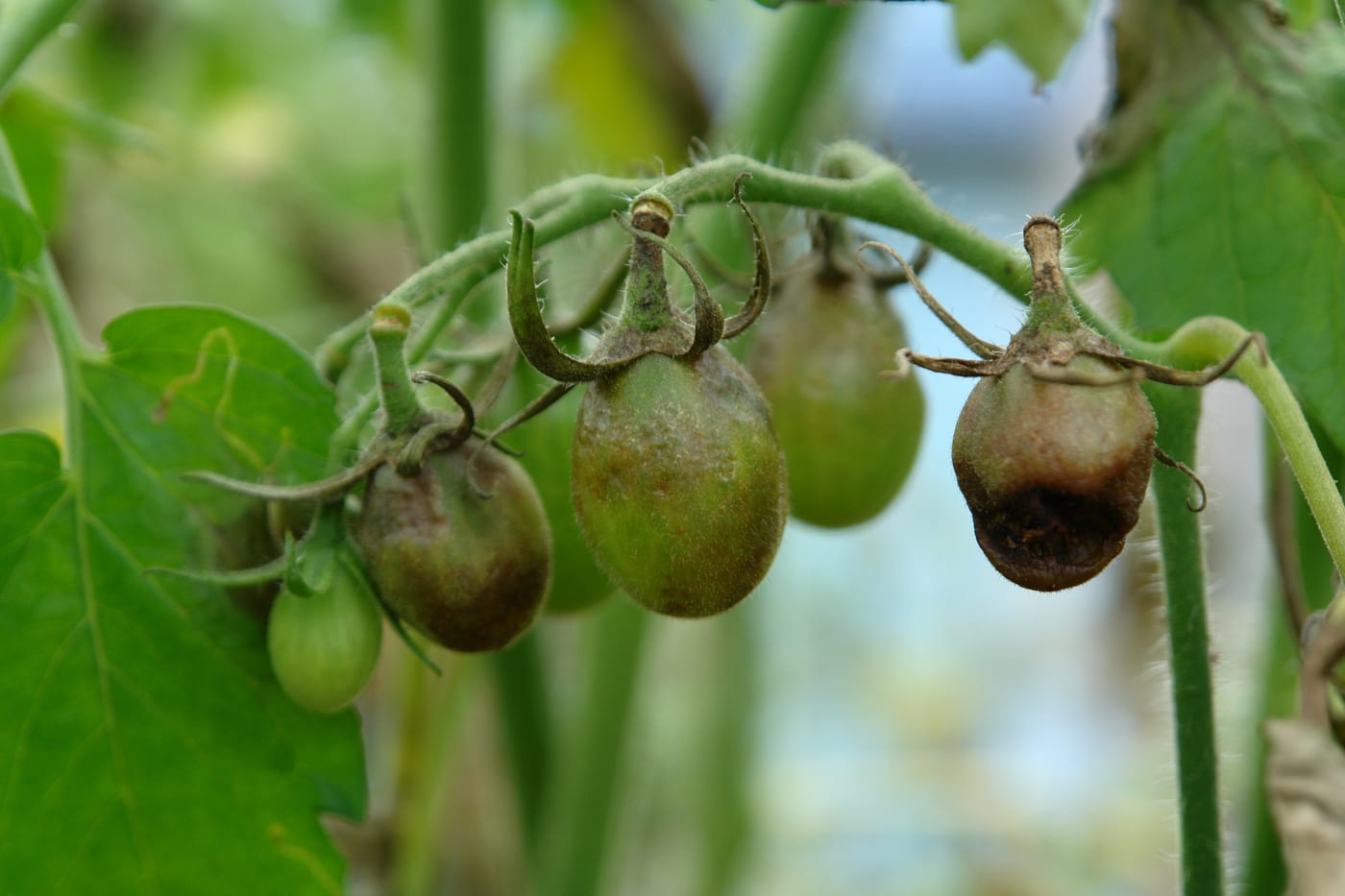
What does it look like?
On leaves: Rapidly spreading, watery rot of leaves, which soon collapse, shrivel and turn brown.
On stems: Brown lesions that can cause collapse.
On fruit: Watersoaked patches turning brown on green fruit; mature fruits decay rapidly.
What causes it
Infection needs prolonged surface wetness, several hours of it, rather than a passing shower, so a settled damp spell is the real trigger.
Tomato blight and potato blight are the same organism, Phytophthora infestans. If you also grow potatoes, a wet spell that starts an outbreak here is a real risk to them too, so check them as well. See Potato Blight →
Life cycle
The disease doesn't usually start from last year's tomato material at all: the primary source each year is normally affected potato plants, since the pathogen overwinters inside infected potato tubersA swollen underground stem or root a plant uses to store energy, which can also grow into a new plant, the classic example being a potato. Full definition → left in the ground. Most garden infections then arrive as wind-blown spores from elsewhere, other gardens, allotments or commercial potato crops, rather than from anything carried over on-site. A newer detail worth flagging honestly: some blight strains can now produce resting spores capable of contaminating soil directly, though this hasn't yet been confirmed in UK tomato crops specifically.
Growing under cover
Growing under cover reduces blight risk — but it is not a shield, and in Scotland the caveat matters more than the benefit.
RHS: 'Tomatoes grown in greenhouses are less likely to be affected but can still suffer badly at times', because 'wind-blown blight spores are less likely to reach the plants'.
RHS: if spores do enter through doors or vents, 'the high humidity inside usually leads to very rapid development of symptoms'.
Mitigation: Keep greenhouse foliage dry.
Controls: what actually works
All the methods below are backed by real evidence, not just repeated folklore.
Chemical control
RHS: 'There are currently no fungicides available for use by gardeners against blight.'
What actually works: The same is true here: no fungicide helps, so keep greenhouse foliage dry, grow a resistant variety such as 'Crimson Crush' or 'Mountain Magic', and destroy infected material rather than composting it.
Keep foliage dry and manage greenhouse humidity
Keep greenhouse foliage dry. That is the mitigation for the high-humidity risk that follows once spores get into a greenhouse.
Grow blight-resistant varieties
'Crimson Crush' and 'Mountain Magic' both carry strong resistance, and both 'performed very well at Wisley in 2021, when blight was extremely widespread'.
Cultural controls: dispose of infected material by deep burial, green waste collection or burning — never compost; minimum four-year rotationMoving each crop family to different ground each year, on a multi-year cycle, so pests and diseases that build up in soil don't get a repeat host. Full definition →; monitor blight forecasts
The Hutton Criteria forecast applies here identically: same organism, same trigger conditions as potato blight.
Use affected fruit promptly; make unripe green fruit into chutney or sauce rather than trying to ripen it indoors
RHS: 'Use the fruit from affected crops as soon as possible. Once a plant has developed high levels of the disease on the leaves and stems it is likely that many of the fruit will also have been infected, even if they don't yet show symptoms.'
This answers the question most gardeners actually have once blight appears: can I still use the fruit? The advice is not to try ripening green fruit indoors, since much of it may already be infected without showing it — a large share is likely to rot instead. Using it straight away, for example as chutney or green tomato sauce, is the safer option.
Frequently asked questions
What should I do first if I find tomato blight in my garden?
Start with keep foliage dry and manage greenhouse humidity. After that, grow blight-resistant varieties. Work through the rest in order of how well-evidenced they are if the first two aren’t enough on their own.
Is there a spray that works?
No. There are no amateur chemical treatments available for tomato blight. The controls that work are cultural: the measures listed above.
How much of this advice is actually proven?
Every control listed above is evidence-based, not just repeated folklore. None of it is a guess.
Sources
2 sources, recorded with what each was used for
- RHS1: organism, leaf/stem/FRUIT symptoms, warm wet conditions, life cycle and overwinteringKeeping a plant alive and intact through the cold months, whether left outdoors, moved under cover, or stored dormant. Full definition → via potatoes, greenhouse reduces spore arrival but high humidity accelerates symptoms if breached, keep foliage dry, no amateur fungicides, 'Crimson Crush'/'Mountain Magic' Wisley 2021, disposal and four-year rotation
- RHS1: corroborates organism and the no-amateur-fungicides finding