
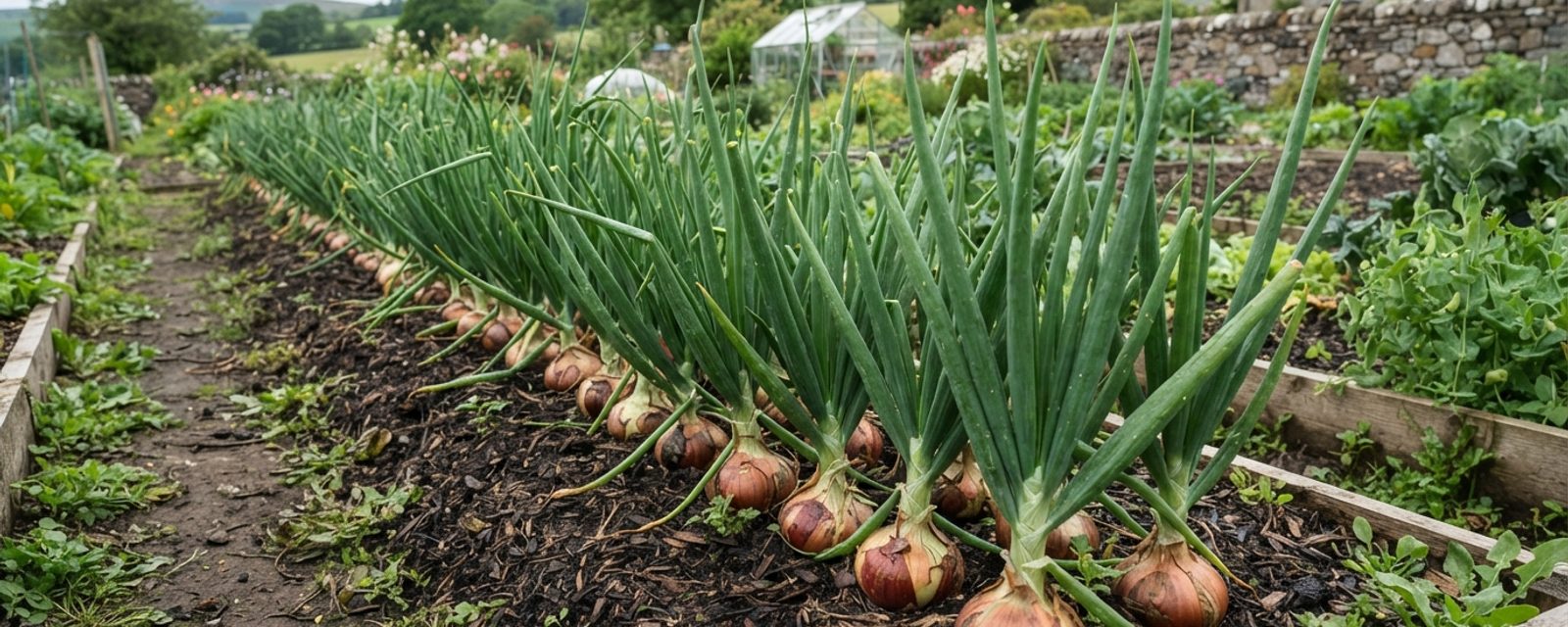
Plants don't measure daylight the way a gardener glances at the sky, they measure darkness, and Scotland's summer nights are too short for that to go unnoticed.
What a plant is actually sensing
A plant that changes behaviour with the seasons, flowering, bulbing, going dormant, isn't simply reacting to how much light energy it has soaked up that day. It's reading a calendar. The mechanism is called photoperiodism: the ability to detect the length of day and night and use that as a seasonal timer, independent of temperature, rainfall, or total sunlight received.
The counterintuitive part, confirmed by RHS explanations of how plants sense their environment, is that plants are timing the dark period, not the light period. Classic experiments in the 1920s (Garner and Allard, working with tobacco) showed that a plant would only flower once nights reached a certain uninterrupted length, even a brief flash of light in the middle of the night could reset the clock and stop flowering from being triggered. So-called "short-day plants" are more accurately "long-night plants": what they're detecting is a stretch of continuous darkness longer than some threshold, not a stretch of daylight shorter than one.
This matters for anyone deciding when to sow, why a crop suddenly runs to seed, or why an onion won't swell into a bulb no matter how well it's fed and watered. The trigger, in many cases, isn't heat, isn't feeding, and isn't even really "not enough light", it's what the plant's internal clock reads off the length of the night.
The three photoperiod categories
Plants are conventionally grouped into three broad response types, based on how flowering (or in some crops, bulbing) relates to day length.
| Category | Mechanism | Example garden plants |
|---|---|---|
| Long-day plants | Flower (or bulb) once day length exceeds a critical threshold, typically triggered in late spring/summer as nights shorten | Spinach, lettuce, onions, radish, Nigella (love-in-a-mist), spring-flowering bulbs |
| Short-day plants | Flower once the uninterrupted dark period exceeds a critical threshold, typically triggered as nights lengthen in late summer/autumn | Chrysanthemums, poinsettias, Christmas cactus, dahlias (flowering slows/stops as days lengthen, resumes as they shorten), some late-season asters |
| Day-neutral plants | Flowering is driven mainly by plant age/maturity, temperature, or other cues rather than day length | Tomatoes, cucumbers, peas, sweetcorn, most everyday fruiting vegetables |
RHS guidance on how plants sense their environment gives chrysanthemums as a standard short-day example and Nigella as a standard long-day one, while noting tomatoes as day-neutral, flowering there is governed by plant maturity and conditions rather than the clock. Many everyday vegetable garden crops fall into the day-neutral category, which is one reason day length as a growth factor gets overlooked: it doesn't affect the crops most people grow most of.
Garlic, often grouped with onions as a bulbing allium, actually runs on a different clock: its trigger is a spell of cold rather than day length, per RHS growing guidance, most varieties need one to two months at 0-10°C for good bulb development, which is why garlic goes in the ground in autumn to get its cold exposure over winter, not for the daylight it will see the following summer.
Strawberries follow a similar split to the three categories above, even though RHS growing guidance describes the two main types by cropping pattern rather than by naming the trigger directly: traditional summer-fruiting types crop in one short, heavy flush and behave like a short-day plant, setting next year's flower buds as summer nights lengthen; perpetual (everbearerA strawberry type that produces smaller flushes of fruit continuously through the season, rather than one large crop over a few weeks. Full definition →) types crop in smaller flushes across a much longer stretch of the season, closer to day-neutral behaviour.
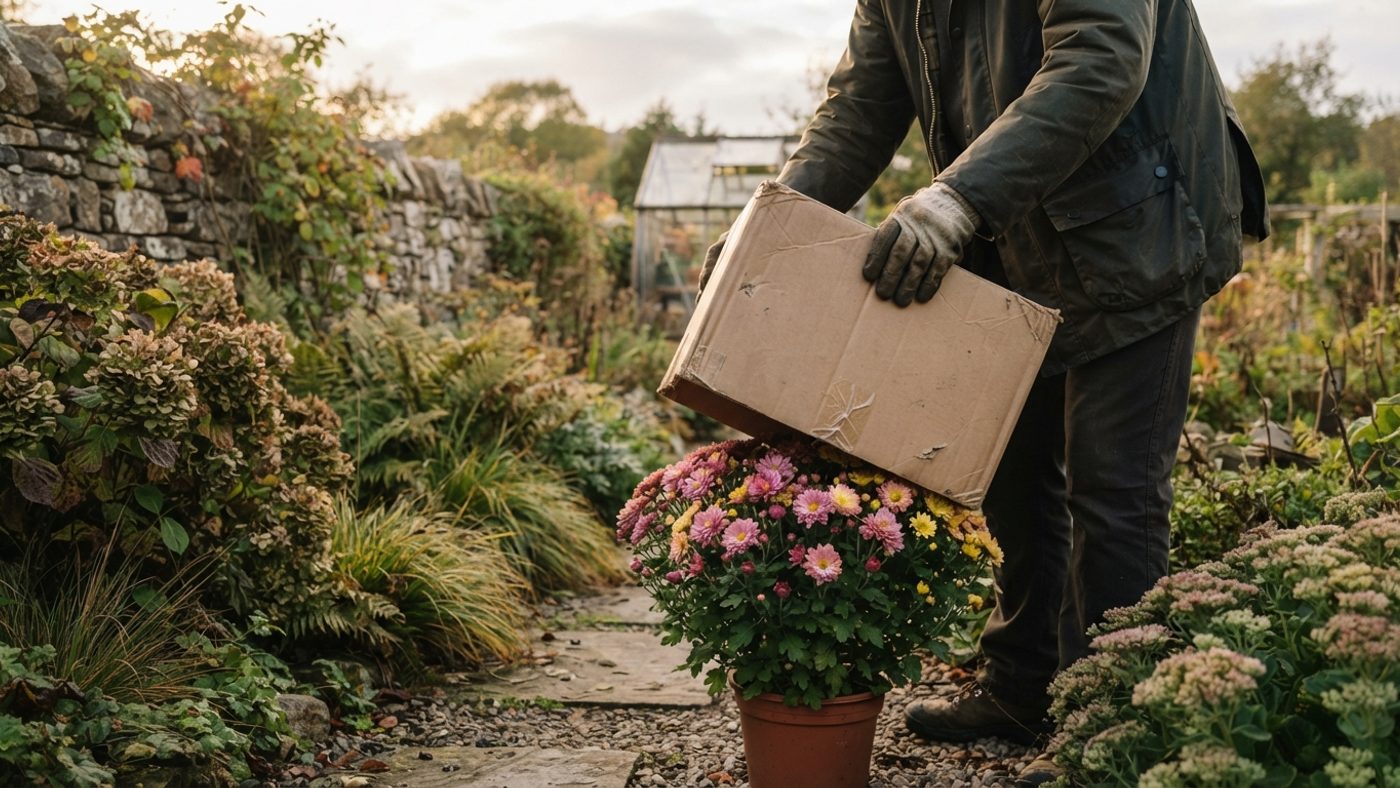
Knowing the mechanism also explains how commercial growers cheat the calendar: chrysanthemum growers use blackout fabric to artificially lengthen the night and bring flowering forward to summer, or run lights through part of the night to shorten it and delay flowering to winter, which is exactly why you can buy a flowering chrysanthemum in a supermarket almost any month of the year. A home gardener can use the same trick on a smaller scale, covering a short-day plant with a light-proof box or bag from late afternoon for a few weeks brings its flowering forward; leaving a light on nearby into the evening can delay or prevent it.
Bulbing onions: the clearest checkable example
Onions are one of the best-documented photoperiod-driven crops in UK growing, and the mechanism is exactly the one described above: bulb formation is triggered by day length, not simply by the plant reaching a certain size. RHS growing guidance for onions states plainly that the lengthening days trigger the formation of bulbs, and that the more leaf growth a plant has built up by that point, the larger the resulting bulb will be. In other words, day length decides when bulbing starts; the plant's condition at that moment decides how big the bulb gets.
Commercial and amateur onion breeding has formalised this into named variety categories, based on how many hours of daylight are needed to trigger bulbing:
| Variety category | Daylight needed to trigger bulbing |
|---|---|
| Short-day | roughly 10-12 hours |
| Intermediate-day | roughly 12-14 hours |
| Long-day | roughly 14-16 hours |
This is why the category matters for location, not just preference. A short-day variety bred for latitudes where daylight only reaches 10-12 hours at the height of summer will, if grown somewhere like the UK, hit its trigger threshold almost immediately, bulbing prematurely on a small, weak plant, or in some cases barely bulbing at all if the plant hasn't built enough leaf growth first. Conversely, a genuinely long-day variety in the UK gets the extended late-spring and summer daylight it needs to build a full canopy of leaves before bulbing kicks in, which is what produces a decent-sized bulb.
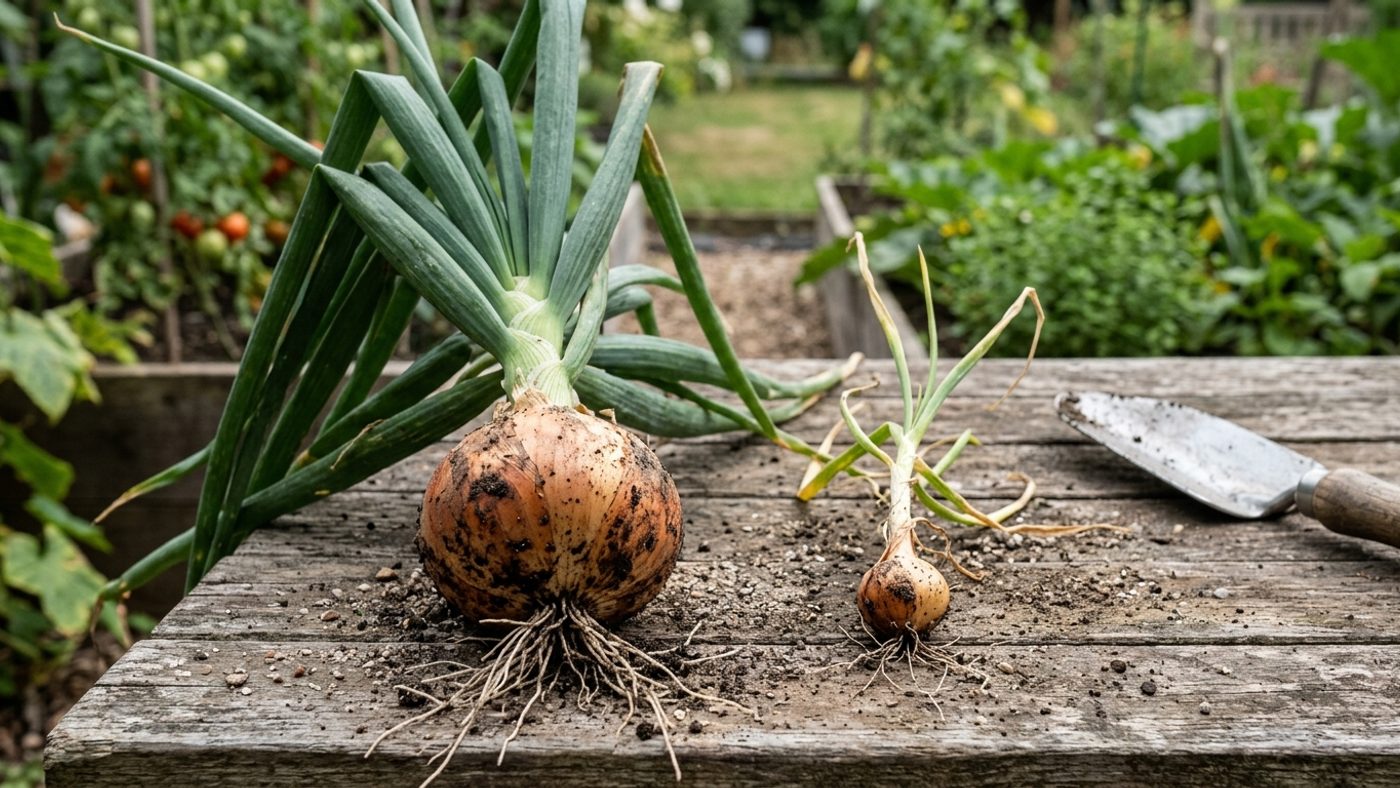
This is a well-established reason long-day and intermediate-day onion varieties, rather than short-day types, are the standard recommendation across the UK, short-day onions such as those bred for the southern United States are a mismatch for British daylight hours at any UK latitude, north or south.
Most UK onion-set catalogues and seed packets describe varieties by colour, sowing time and storage quality rather than printing a day-length category on the label, even though the underlying variety is a known long-day or intermediate-day type. That's a labelling gap worth knowing about before you buy: mainstream sets and seed sold by UK garden centres and seed merchants are long-day or intermediate-day by default, since that's what the market has settled on to suit British daylight hours, so a variety bought from a normal UK supplier is very unlikely to be a mismatch. The one case worth actually checking is an onion variety ordered from an overseas seed website, especially a US one, where short-day varieties bred for southern states are common; search the variety name plus "day length" or "short day" before ordering if you're buying from outside the UK.
Whether you're growing from sets or from seed under a windowsill light doesn't change any of this: the day-length trigger is about the calendar outdoors once the plant is growing on, not about how or when it was started. Starting onion seed early under a grow light gets you a bigger plant sooner, which helps it build more leaf growth before the same outdoor daylight threshold arrives, it doesn't shift the threshold itself.
Bolting: day length and heat, not one or the other
BoltingA plant switching early into flowering and seed production, usually triggered by stress, after which leaves, roots or bulbs turn bitter or unusable. Full page →, a vegetable crop running prematurely to flower and seed, is often blamed entirely on hot weather, but it has two separate triggers that can act together or independently, per RHS advice: cold spells and changes in day length through the seasons. Onions, leeks, carrots and beetroot are the biennialA plant that completes its life cycle over two years: growth in year one, then flowering, seeding and dying in year two. Full definition → crops most often caught out this way: a young plant that goes through a prolonged cold spell can be tricked into behaving as though it's already lived through a winter, and runs to flower the same year instead of the next, which is why an early, exposed spring sowing is the riskier one for these crops specifically, separately from anything to do with day length.
For annual crops sown in spring, lettuce, spinach, and some radish varieties among them, these are long-day plants that initiate flowers when day length increases, and bolting is a natural progression for spring-sown annuals to run to seed as summer progresses, per RHS guidance. That is a day-length effect, and it happens even in a cool summer, because the plant is responding to the calendar, not the thermometer.
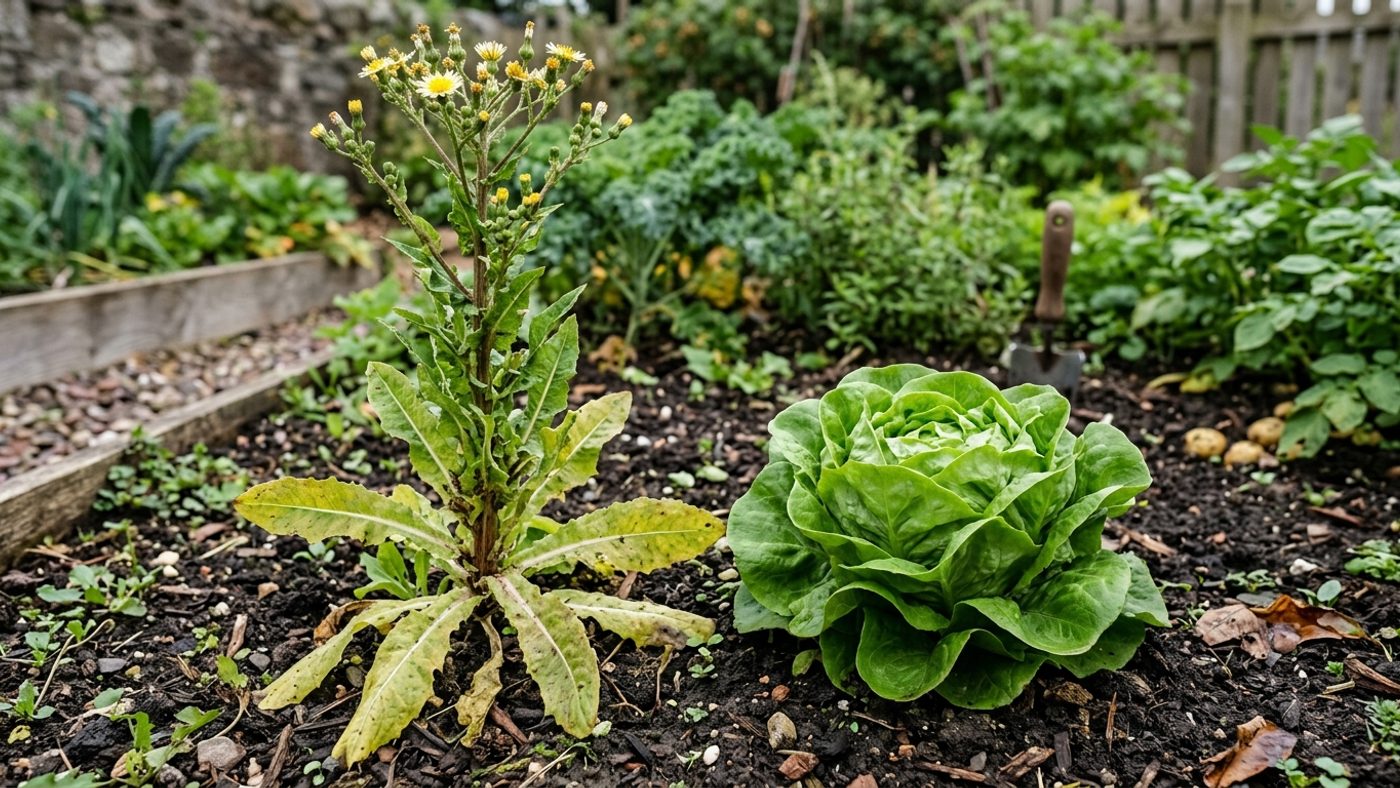
Heat compounds this rather than replacing it. RHS advice notes that lettuces bolt sooner in hot, dry weather, and separately flags that for some heat-sensitive crops (radicchio, Florence fennel, oriental greens) bolting is triggered mainly by warm nights, roughly above 10-13°C. So a lettuce sown in long June days that also hits a hot, dry spell gets a double push toward bolting, day length setting the underlying seasonal clock, heat and drought stress accelerating it. Neither factor on its own tells the whole story, and treating bolting as purely a heat problem misses why lettuce and spinach can bolt even in a mild, damp Scottish summer.
Because day length is doing part of the work regardless of the weather, the practical fixes worth knowing are ones that work with the calendar, not just against the heat: sow lettuce and spinach in smaller batches every couple of weeks (succession sowing) rather than one large sowing, so a bolting batch doesn't take the whole crop with it; choose varieties bred to be slower to bolt, seed packets usually flag this directly; and for a summer sowing, favour partial shade and consistent watering, which slows the heat side of the equation even though it can't touch the day-length side.
Scotland's day-length swing is real and larger than in southern England
Because Scotland sits at a higher latitude, its day length varies more dramatically between the summer and winter solstices than southern England's does. This is fixed astronomy, not weather, it holds true whatever the cloud cover on a given June or December day. Real sunrise/sunset figures for the June and December solstices in 2026, from timeanddate.com, show the scale of the difference:
| Location | June solstice day length | December solstice day length | Annual swing |
|---|---|---|---|
| London | 16h 38m (04:43-21:21) | 7h 50m (08:03-15:53) | 8h 48m |
| Edinburgh | 17h 36m (04:26-22:02) | 6h 58m (08:42-15:39) | 10h 38m |
| Lerwick (Shetland) | 18h 56m (03:38-22:34) | 5h 49m (09:08-14:57) | 13h 06m |
Edinburgh gains nearly an hour more daylight than London at the June solstice, and loses nearly an hour more at the December solstice, its swing across the year is roughly two hours greater than London's. Lerwick, at the country's northern extreme, pushes the summer end of that range close to 19 hours of daylight, while its December day shrinks to under 6 hours, a swing of over 13 hours across the year, roughly half again as wide as London's. For the fuller monthly sunshine-hours picture behind these figures, and the case for supplementing that light with a grow light over the darkest months, see LED grow lights for Scottish gardens.
Shetland takes this further still, for a reason that bears directly on the dark-period mechanism described above. At Lerwick's latitude the sun never dips far enough below the horizon in June for true night to fall at all, locally known as the "simmer dim", so a short-day plant relying on an uninterrupted stretch of real darkness to trigger flowering gets none in midsummer there, whatever the clock says about sunrise and sunset times.
Does this actually change onion variety choice in Scotland?
Yes, and it's the same logic as the general UK case, just more pronounced. Since Scotland's summer days run even longer than southern England's, a short-day onion variety is even less suited here than further south, it would hit its 10-12 hour bulbing threshold long before the plant has built meaningful leaf growth. Long-day and intermediate-day varieties, which need the extended daylight Scotland's summer already provides in abundance, remain the sound choice, if anything, Scotland's longer summer days make long-day varieties a safer bet than they already are for the rest of the UK, rather than creating any need to hunt for a different category.
Does it shift when short-day plants like chrysanthemums come into flower?
In principle, a short-day plant is triggered once its night reaches a critical length, and because Scotland's overall summer-to-winter swing is bigger, its nights are, on average, lengthening across a wider range through the autumn than southern England's, which could mean the trigger is crossed slightly earlier here. But garden chrysanthemum varieties are bred and selected for their own critical night-length threshold and are also strongly influenced by temperature, and no measured figure for a Scotland-versus-south flowering-date shift, isolated from temperature, exists to confirm it, the onion example above is the stronger, checkable Scotland-specific outcome.
Common questions
Is photoperiodism about total daylight or day length specifically?
Neither, strictly, it's the length of the uninterrupted dark period, day length only matters as a mirror of that. This is why growers can force or delay flowering artificially with blackout fabric or a well-timed light.
Why won't my onions bulb up properly?
The most common cause tied to day length is growing a short-day variety somewhere with long summer days, or a long-day variety somewhere with short ones. In the UK, including Scotland, long-day and intermediate-day varieties are the standard recommendation; a mismatched short-day variety can bulb prematurely on an undersized plant, or fail to bulb well at all.
Does day length cause lettuce to bolt, or is it the heat?
Both, and they compound each other. Day length is the underlying seasonal trigger for spring-sown annuals like lettuce and spinach, with hot, dry weather accelerating the process. A cool summer can still see lettuce bolt from day length alone; a hot one makes it worse.
Are tomatoes affected by day length?
No, tomatoes are day-neutral. Their flowering is governed mainly by plant maturity and growing conditions rather than day or night length, which is one reason most everyday vegetable crops don't show obvious photoperiod effects.
Does Scotland's day-length swing matter for seed-starting under grow lights?
Yes, but for a different reason than flowering triggers: winter sowings need extra light because there isn't enough of it, not because of a photoperiod threshold. See our LED grow lights guide for the monthly sunshine-hours figures and the case for supplementing them.
Sources
8 sources, recorded with what each was used for
- RHS: How plants respond to light and environment: Mechanism of photoperiodism, dark-period detection, short-day/long-day/day-neutral category definitions and examples
- RHS: Bolting in vegetables: Day-length and cold-spell triggers for bolting; lettuce/spinach as long-day annuals; heat and warm-night effects on bolting
- RHS: How to grow onions: Statement that lengthening days trigger onion bulb formation, and that leaf growth at that point determines bulb size
- RHS: How to grow garlic: Cold-period (vernalization) requirement for garlic bulb development, contrasted with onions' day-length trigger
- RHS: How to grow strawberries: Summer-fruiting vs perpetual (everbearer) cropping-pattern description
- timeanddate.com: Sun in Edinburgh, June & December 2026: June and December solstice sunrise/sunset and day length for Edinburgh
- timeanddate.com: Sun in London, June & December 2026: June and December solstice sunrise/sunset and day length for London
- timeanddate.com: Sun in Lerwick, June & December 2026: June and December solstice sunrise/sunset and day length for Lerwick, and the "simmer dim" (no recorded night total in midsummer)