
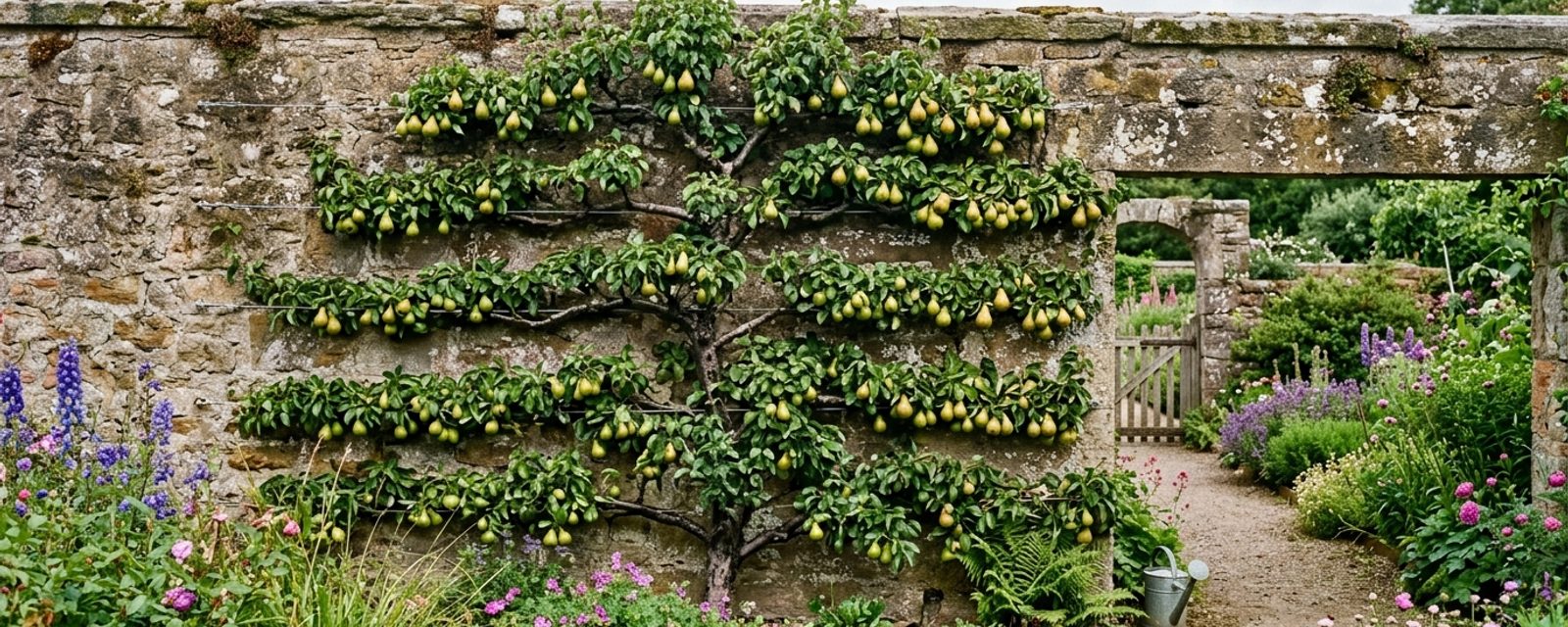
Eight pear varieties hold the RHS Award of Garden Merit (AGMThe RHS's Award of Garden Merit: a UK-wide trials award for reliable performance, not a Scotland-specific recommendation. Full definition →), a mark for reliable UK garden performance. The pears growing guide covers four of them, Conference, Beurré Hardy, Concorde, and Beth, in full, alongside rootstocksThe root system and lower stem a fruit tree is grafted onto, chosen to control the tree's eventual size rather than for its own fruit. Full definition →, spacing, pruning, and planting. This page covers the other four, and which of all eight actually fits the site you have. Conference is the best overall pick for most Scottish gardens, the only one of the eight tagged for coping with cooler conditions.
Quick answer
Conference is the safest default for an average Scottish site. With a genuinely warm, sheltered wall, Doyenné du Comice (flavour) or Gorham (reliability) are worth the extra risk. Beth suits the smallest, shortest-season plot; Beurré Hardy suits a wet, disease-prone one.
All eight, side by side
| Variety | Ripens | Site needed | Standout trait |
|---|---|---|---|
| Conference | Oct–Nov | Copes with cooler conditions | Self-fertileA plant that can set fruit using its own pollen, without needing a second, different variety nearby to cross-pollinate it. Full definition →; the one to start with on an average site |
| Beurré Hardy | Nov–Dec | Sheltered, sunny | Scab resistant; slow to start bearing |
| Concorde | Mid-season | Average | Reliable, heavy crops; partially self-fertile; a Conference × Comice cross |
| Beth | Sept | Average, less time needed | Compact; earliest to ripen |
| Beurré Superfin | Late | Warm, sheltered (needs it) | Excellent flavour |
| Doyenné du Comice | Mid-season | Warm, sheltered | Best flavour of the eight; only moderate crops |
| Gorham | Early | Warm spot (needs it) | Reliable where it gets the warmth |
| Joséphine de Malines | Late | Warm, sheltered (needs it) | Keeps into the New Year; tip bearerWhether a fruit tree carries its fruit mainly on short side-shoots along older wood (spur-bearing) or at the tips of the previous year's growth (tip-bearing). Full definition →, best as a bush |
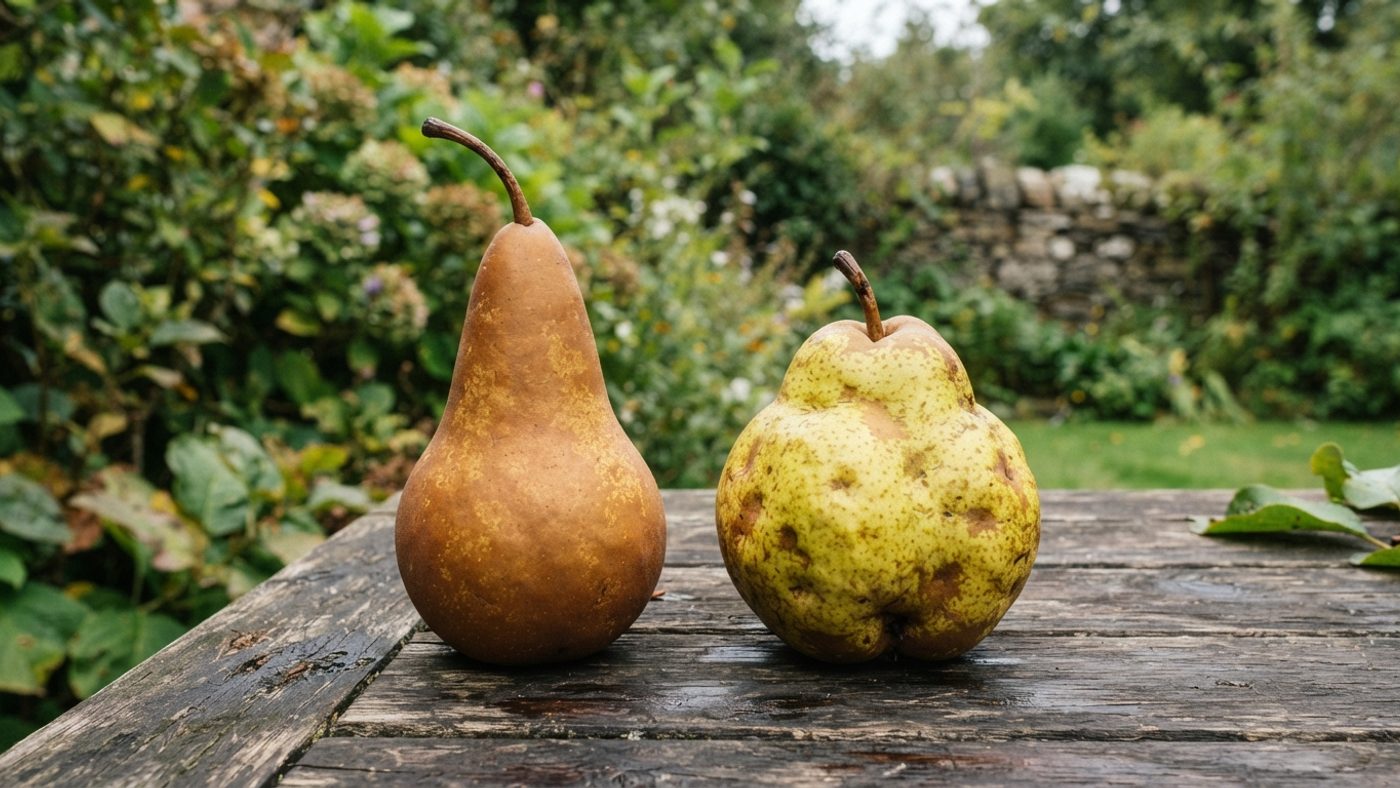
The four the guide doesn't cover in depth
Beurré Superfin needs a warm, sheltered site to perform well, and in exchange gives what several sources single out as the best flavour among AGM pears. Worth it only with a genuinely warm, sun-trapped spot to offer, a south-facing wall or a similarly sheltered corner; without one, the flavour advantage doesn't survive a disappointing crop.
Doyenné du Comice needs the same warm, sheltered, south- or west-facing site as Beurré Superfin, and gives only moderate crops even with excellent flavour and texture, a trade worth making deliberately rather than by accident. If a single tree needs to earn its space with volume, this isn't the pick; if flavour matters more than yield, it's the one most sources point to first.
Gorham needs the same warm, sheltered site as Beurré Superfin and Comice, but is reliable rather than temperamental once it has that warmth, and self-fertile in its own right, unlike either of them: an early-ripening option for a warm site that wants a dependable cropper rather than a flavour-first specialist like Comice.
Joséphine de Malines is the latest-keeping of the eight, often still in storage into the New Year, but it needs the same warm, sheltered site as the flavour-first varieties above, not an easy, average-site pick. Worth it specifically for stretching the pear season deep into winter, alongside an earlier variety rather than instead of one, and best grown as a bush rather than a cordonA fruit tree or bush trained as a single main stem with short fruiting side-spurs, usually grown at an angle against a wall, fence or wire. Full definition →: it's a "tip bearer," meaning it fruits at the ends of its branches rather than on the short spurs a cordon's close pruning relies on, so hard pruning would cut away the very growth that produces the crop.
Which one for your situation
- No warm wall, an average site: Conference.
- Smallest, shortest season: Beth.
- Warm, sheltered wall to spare: Comice for flavour, Beurré Superfin as the close second, Gorham for reliability.
- Longest season, warm site available: an early variety (Beth or Gorham) paired with Joséphine de Malines for winter storage.
- Wet, humid site: Beurré Hardy, for its scab resistance.
Pollination
Conference and Gorham are self-fertile, so a single tree of either will set fruit alone. Concorde is partially self-fertile: it crops on its own but better with a partner nearby. Beth, Beurré Superfin, Doyenné du Comice, and Joséphine de Malines all need a compatible variety flowering in the same window to crop reliably; Beurré Hardy's self-fertility isn't published anywhere checked for this comparison, so treat it as needing a partner until confirmed otherwise. The pears growing guide covers matching pollination groups and rootstock choice once a variety's picked.
Blossom frost
Pear blossom opens early enough in spring to be at real risk from a late frost, whichever variety is grown; a layer of fleeceA lightweight, breathable fabric laid or draped over plants to trap a little warmth and keep off frost, wind and some flying pests. Full definition → over the branches on a night frost is forecast, removed again once it's passed, protects the flowers. Check the frost dates page for typical last-frost timing in your area before committing to a planting spot.
Soil pH
There's no UK-published pH figure for pears. Other sources put it around 6.0 to 7.0, broadly neutral, a reasonable reference point, but not a UK-verified one.
Pests worth knowing per variety
Beurré Hardy's scab resistance is a genuine reason to lean toward it on a damp site; see the apple/pear scab page for what that resistance is actually protecting against. Fruit aphids affect all eight varieties equally, not a distinguishing factor between them. The growing guide's Common problems section covers the full list.
Common questions
I don't have a warm wall to spare. Am I limited to Conference?
Mostly, yes, among the eight AGM varieties, though a sheltered spot away from wind (not necessarily a wall) can be enough for Beth, which asks less of its site simply by finishing its crop earliest. Everything else on this list either needs or clearly benefits from the extra warmth a wall provides.
Is Doyenné du Comice worth growing despite the lower yield?
If flavour is the priority and you have the warm, sheltered site it needs, yes: it's the variety most sources single out for taste. If you're planting one tree and want a reliable, sizeable crop from it, Concorde's reliability matters more than Comice's flavour edge.
What's the latest-keeping pear for a Scottish garden?
Joséphine de Malines, which stores into the New Year. It needs the same warm, sheltered site as the flavour-first varieties, not an easy pick, but worth it specifically for extending the season if that site is available.
Are any of the eight varieties genuinely unsuited to Scotland, not just riskier?
None are ruled out outright; it's a matter of the site you can offer, not the climate overall. Beurré Superfin, Doyenné du Comice, Gorham, and Joséphine de Malines all need the same warm, sheltered, south- or west-facing site, so they're the four to skip without a proven warm spot, not because a Scottish garden can't grow them at all.
Sources
8 sources, recorded with what each was used for
- RHS: Grow Your Own – Pears: All eight AGM varieties and their individual descriptive tags, including the four not covered in depth on the growing guide
- Pyrus communis 'Beurré Hardy': Beurré Hardy's scab resistance
- Pyrus communis 'Beurré Superfin': Beurré Superfin's site requirement and flavour description
- Pyrus communis 'Doyenné du Comice': Doyenné du Comice's site requirement, moderate cropping, and flavour
- Pyrus communis 'Gorham': Gorham's site requirement and self-fertility
- Pyrus communis 'Joséphine de Malines': Joséphine de Malines's site requirement and tip-bearing habit
- Gardener's World: How to grow pears: Concorde's parentage (a Conference × Doyenné du Comice cross)
- University of New Hampshire Extension: Growing Pears: Soil pH figure (US source, not UK-verified)