
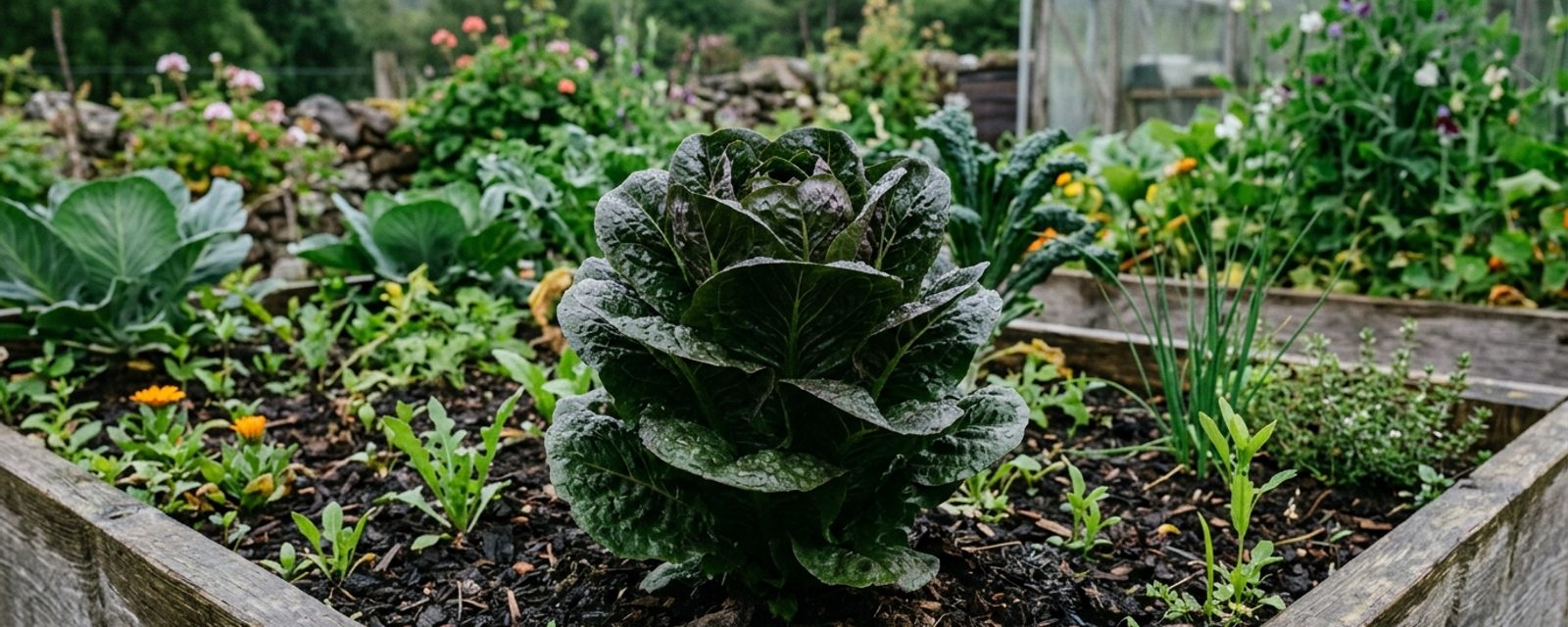
Lettuce boltsA plant switching early into flowering and seed production, usually triggered by stress, after which leaves, roots or bulbs turn bitter or unusable. Full page →, sends up a flower stalk and turns bitter, because the plant is a long-day species wired to flower once daylength and temperature cross certain thresholds it reads as "summer is here, time to set seed." Heat speeds that internal clock up, which is why hot, dry spells push lettuce to flower sooner than usual. Growers also widely report a second, less precisely defined trigger: a cold snap arriving after a spell of mild weather can disrupt the plant in a similar way, tipping it into premature flowering even when the calendar still says spring. Scotland rarely delivers the sustained summer heat that troubles lettuce growers further south, but it delivers unstable spring weather often, a mild week followed by a sharp cold snap is a familiar pattern here, and that's the point at which most named varieties, bred and rated against conditions across the whole UK, stop being equally good choices for a Scottish plot.
Quick answer
For most Scottish gardens, Winter Density is the best all-round pick, it's the only RHS Award of Garden Merit (AGMThe RHS's Award of Garden Merit: a UK-wide trials award for reliable performance, not a Scotland-specific recommendation. Full definition →) lettuce with both stated overwinteringKeeping a plant alive and intact through the cold months, whether left outdoors, moved under cover, or stored dormant. Full definition → ability and stated bolt resistance, which covers Scotland's two real lettuce failure points: the early-spring hungry gap and cold-snap bolting. For continuous summer cut-and-come-again cropping, Salad Bowl or Hollywood are better suited; for containers or small spaces, Little Gem is the more practical choice.
Seven lettuce varieties currently hold the RHS Award of Garden Merit: Winter Density, Hollywood, Sioux, Little Gem, Lobjoit's Green Cos, Navara and Salad Bowl. The AGM tells you a variety performed well in UK trials, it doesn't tell you which of the seven actually suits a Scottish sowing calendar, and the seven divide unevenly once you look at what each one is individually documented as being good at.
Each variety below is also given a hardiness ratingThe RHS's H1a–H7 scale for how much cold a plant can survive outdoors, H1a being tender indoor-only and H7 hardy anywhere in the UK. Full definition →. H2 means tolerant of low temperatures but not hard frost (roughly 1 to 5°C); H3 means hardy in coastal and relatively mild parts of the UK, surviving down to around -5°C, one step hardier than H2, but that rating assumes a mild or coastal site, and inland or upland Scottish gardens see colder than that in a normal winter.
At a glance
| Variety | Type | Hardiness | Key trait | Best use in Scotland |
|---|---|---|---|---|
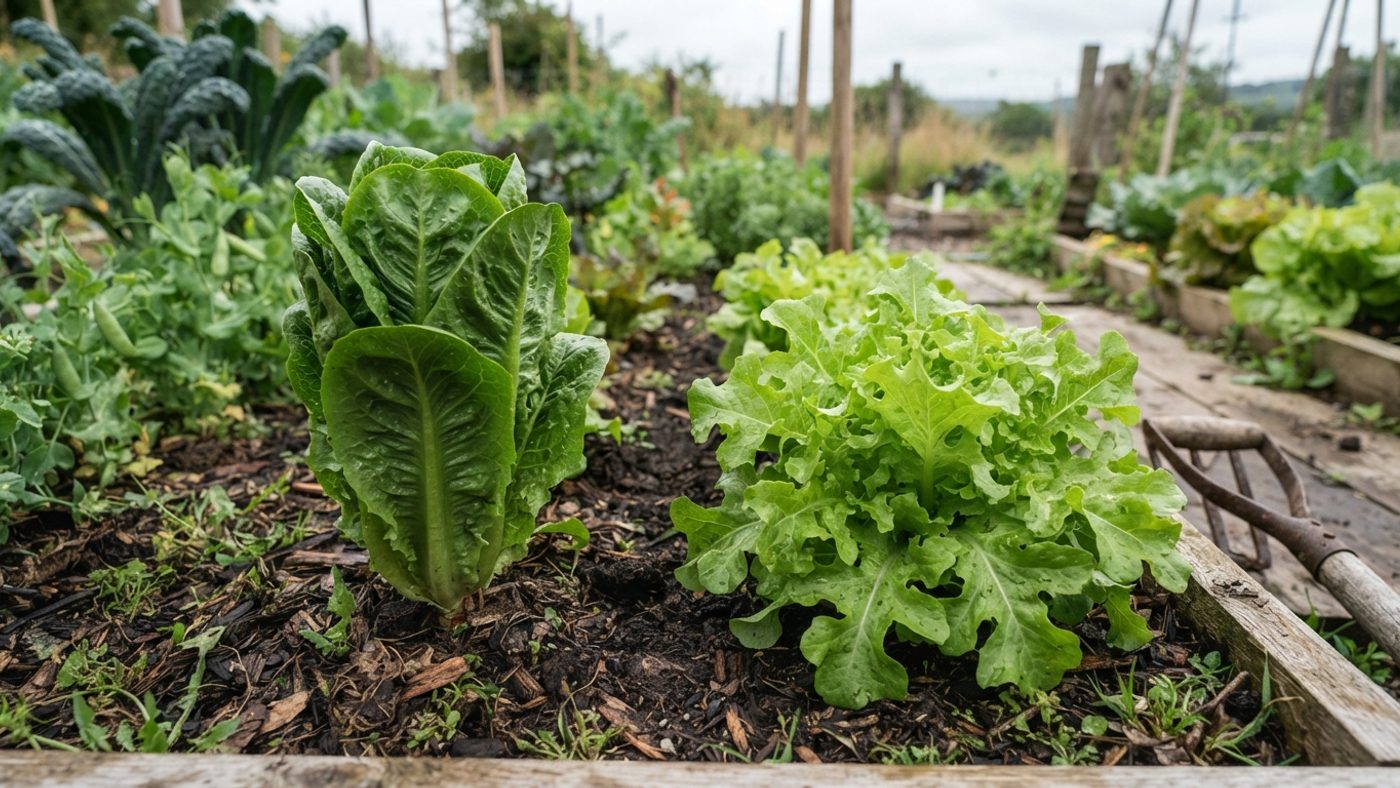
| Winter Density | Semi-Cos | H2 | Winter-hardy, slow to bolt | Overwintering for an early spring crop |
| Little Gem | Dwarf Cos | H2 | Resistant to lettuce root aphid | Containers, small spaces |
| Hollywood | Crisphead | H2 | Downy mildew resistant | Wetter/humid sites, summer cropping |
| Navara | Loose-leaf (oakleaf) | H2 | Downy mildew and aphid resistant | Summer cropping, colour interest |
| Salad Bowl | Loose-leaf | H3 | Slow to bolt, cut-and-come-again | Continuous summer harvest |
Lobjoit's Green Cos and Sioux also hold the AGM and are covered further down; neither has a trait as distinct as the five above.
The two decisions that actually matter for Scotland
Before comparing named varieties, it's worth separating two different things that get bundled together as "bolt resistance":
Heat-triggered bolting, the classic problem: hot, dry weather pushes lettuce to flower early, and crisphead types are named as the most bolt-resistant type as a result, alongside routine light shade and watering. This is a real risk in Scotland but a smaller one than in warmer parts of the UK.
Cold-snap bolting in spring, a mild spell followed by a cold snap, which can disrupt the plant into flowering even though it isn't hot. Given how much more often Scotland sees unsettled spring weather than sustained summer heat, this is arguably the trigger to plan around here.
The practical answer to both is the same: choose varieties with a documented bolt-resistance or winter-hardiness claim, rather than relying on the AGM alone.
There is also a slower-moving spring constraint worth planning around: cold soil delays germinationA seed sprouting: breaking dormancy and putting out its first root and shoot, given the right warmth and moisture. Full definition → as much as it triggers bolting later on. A March sowing straight into an unwarmed outdoor bed can sit and do nothing for weeks, so starting seed indoors or under cover and planting out once the soil has warmed is usually more reliable than an early direct sowing outdoors.
Overwintering: the genuinely distinct category
Sowing a hardy variety in September/October to crop through the following spring is its own strategy, separate from a normal spring/summer sowing, and only two named varieties carry a real, sourced overwintering claim.
Winter Density (semi-Cos, AGM, H2) shows "good winter hardiness enabling autumn sowings that will crop in early spring," and separately, is "slow to bolt in warmer weather." That combination, winter hardiness plus bolt resistance, is not repeated by any of the other six AGM varieties, which is why it's the strongest general recommendation on this list. The general lettuce advice recommends sowing "a winter variety such as 'Winter Density' in September/October, either in a greenhouse or in mild areas under clochesA small, portable clear cover placed over an individual plant or short row to trap warmth and keep off wind, rain and pests. Full definition → or in a coldframe" for spring harvests, coldframe or cloche protection is worth planning for outside the mildest parts of the country.
Winter Gem, a mini-Cos type named by Gardener's World rather than as an AGM holder, is a second, genuinely different overwintering option: "suitable for growing over winter (sow August to January) if protected from frost." It isn't one of the seven AGM varieties, but it's worth knowing about if Winter Density seed isn't available, the two are not the same variety and shouldn't be treated interchangeably.
No other variety in this article has a stated overwintering claim. Little Gem, Hollywood, Navara, Salad Bowl, Lobjoit's Green Cos and Sioux are all spring/summer varieties, not autumn-sown ones. For those spring sowings, cold-snap bolting is the bigger risk than winter cold, a cloche or fleeceA lightweight, breathable fabric laid or draped over plants to trap a little warmth and keep off frost, wind and some flying pests. Full definition → over an early sowing does not just guard against frost, it also buffers the sudden temperature swings that can tip a young plant into bolting before it has made any size.
Downy mildew resistance: a real wet-climate advantage
Two AGM varieties carry a specific downy mildew resistance claim, a genuine advantage in Scotland's generally wetter, more humid growing conditions:
Hollywood (crisphead/Iceberg type, AGM, H2) has "good resistance to downy mildew," and as a crisphead type also benefits from the general bolt resistance attributed to that type as a class.
Navara (AGM, H2) is resistant to "downy mildew and aphid." Its own listing describes it as an oakleaf lettuce with very dark red, glossy foliage, it is a loose-leaf/oakleaf type, not a butterhead, whatever else you may have read. Its sowing guidance is "successional sowings from spring to summer," with no autumn or winter sowing mentioned, so treat it as a summer cropper rather than an overwintering option.
Little Gem: the compact, container-friendly Cos
Little Gem (dwarf Cos, AGM, H2) produces "small, dense heads with a crisp, sweet heart from spring to autumn according to sowing date," and is resistant to lettuce root aphid. Its own listing makes no bolt-resistance claim, so don't assume one, it's included here for its compact habit and root-aphid resistance rather than for bolting behaviour. Its small size makes it the practical pick for containers, raised beds, or anywhere space is tight.
Salad Bowl: cut-and-come-again with a genuine slow-to-bolt claim
Salad Bowl (loose-leaf, AGM) is a deeply lobed, oak-leaf-shaped cut-and-come-again type, harvest the outer leaves over several weeks rather than lifting a whole head. It's rated H3, a step hardier than the H2 rating given to the other varieties covered here, though that reflects the plant's general cold tolerance rather than a stated overwintering recommendation, so it shouldn't be read as a third overwintering option. Gardener's World separately states that Salad Bowl (red and green forms) is "slow to bolt." Its own sowing window is March to July, cropping May to September, making it a strong choice for a long summer cut-and-come-again supply.
Two lighter mentions
Lobjoit's Green Cos (AGM, H2) is a third Cos type alongside Winter Density and Little Gem, producing large, firm, self-folding hearts. Beyond a larger heart size, its own listing carries no bolt-resistance or winter-hardiness claim that distinguishes it from the other two Cos varieties here, worth growing if you specifically want a bigger heart, but not a variety with a unique Scotland-relevant trait.
Sioux is named on the general grow-your-own page as an AGM crisphead, but its own listing carries no cultivation, hardiness, or bolt-resistance detail beyond generic genus text, an AGM crisphead is as much as can be said about it here.
These seven cover the AGM list, but they aren't the only lettuce worth growing in Scotland; other Cos and leaf varieties bred for cooler, more exposed conditions exist without carrying the AGM, and are worth asking about at a Scottish seed supplier if none of the seven above quite fit your plot.
Other Scotland factors to plan around
Slugs, aphids and grey mould (botrytis) are the main lettuce pests and diseases to watch for regardless of variety, and all three are worse in damp conditions, the same wetter, humid climate that makes downy mildew resistance useful also favours slugs and grey mould. None of the varieties above are documented as resistant to slugs or botrytis specifically, so garden hygiene and slug control matter whichever variety you grow. The full growing guide covers sowing depth, spacing, watering and slug defence in detail.
On soil pH: no specific figure is published for lettuce, general well-drained, moisture-retentive soil suits it regardless.
A greenhouse, polytunnel or coldframe stretches the season at both ends, not just for Winter Density's autumn sowing, an early spring sowing under cover also escapes the worst of the cold-snap bolting risk above, since the temperature swing that triggers it is blunted by the extra protection.
Working varieties into a sowing plan
Because none of the varieties above cover the whole year on their own, most Scottish gardens get the best results by rotating through them with the season rather than picking one variety for good: an AGM spring/summer variety such as Little Gem, Hollywood, Navara or Salad Bowl sown through spring and summer, followed by Winter Density (or Winter Gem) sown in September/October to fill the early-spring gap the summer varieties can't reach. This rotationMoving each crop family to different ground each year, on a multi-year cycle, so pests and diseases that build up in soil don't get a repeat host. Full definition → is a practical suggestion rather than a formal recommendation. Exact sowing dates for your location can be planned out using the Planting Calendar tool.
Common questions
What is the best lettuce variety for Scotland overall?
Winter Density. Sow it in September or October, ideally under a cloche or in a coldframe outside the mildest coastal areas, and it will hold through winter to give a first harvest in March or April, weeks before a spring-sown variety could produce anything.
Which lettuce variety is best for containers?
Little Gem, its dwarf Cos habit produces a small, dense head suited to pots and raised beds, and it carries resistance to lettuce root aphid.
Do I need a different variety for winter growing?
Yes. Only Winter Density and Winter Gem carry sourced overwintering claims; none of the other varieties covered here are documented as suitable for an autumn sowing to crop in spring.
Which lettuce varieties resist downy mildew?
Hollywood and Navara both carry a specific downy mildew resistance claim, which is useful given Scotland's generally wetter, more humid growing conditions.
Is a butterhead lettuce variety recommended for Scotland?
None of the seven RHS AGM lettuce varieties are butterhead types, the AGM list runs to Cos, crisphead and loose-leaf only.
Sources
9 sources, recorded with what each was used for
- Lettuce: Grow Your Own: General bolting mechanism, sowing windows, crisphead bolt resistance, Winter Density overwintering advice, the list of AGM varieties
- Lactuca sativa 'Winter Density': Winter hardiness, slow-to-bolt claim, hardiness rating, plant type
- Lactuca sativa 'Little Gem': Plant type, root aphid resistance, hardiness rating
- Lactuca sativa 'Hollywood': Downy mildew resistance, plant type, hardiness rating
- Lactuca sativa 'Navara': Plant type (oakleaf), downy mildew and aphid resistance, sowing guidance, hardiness rating
- Lactuca sativa 'Salad Bowl': Plant type, hardiness rating, sowing/harvest window
- Lactuca sativa 'Lobjoit's Green Cos': Plant type, heart size, hardiness rating
- Lactuca sativa 'Red Iceberg Sioux': The only individual plant page found for Sioux; carries genus-level text only, no cultivation detail
- How to grow lettuce: Winter Gem overwintering claim, Salad Bowl slow-to-bolt claim, general bolting/watering advice, Little Gem mention