
Celery Leaf Mining Fly is a common pest that affects celery, celeriac and lovage in Scotland. Here is what it looks like, how to spot the damage, and which controls have been tested.
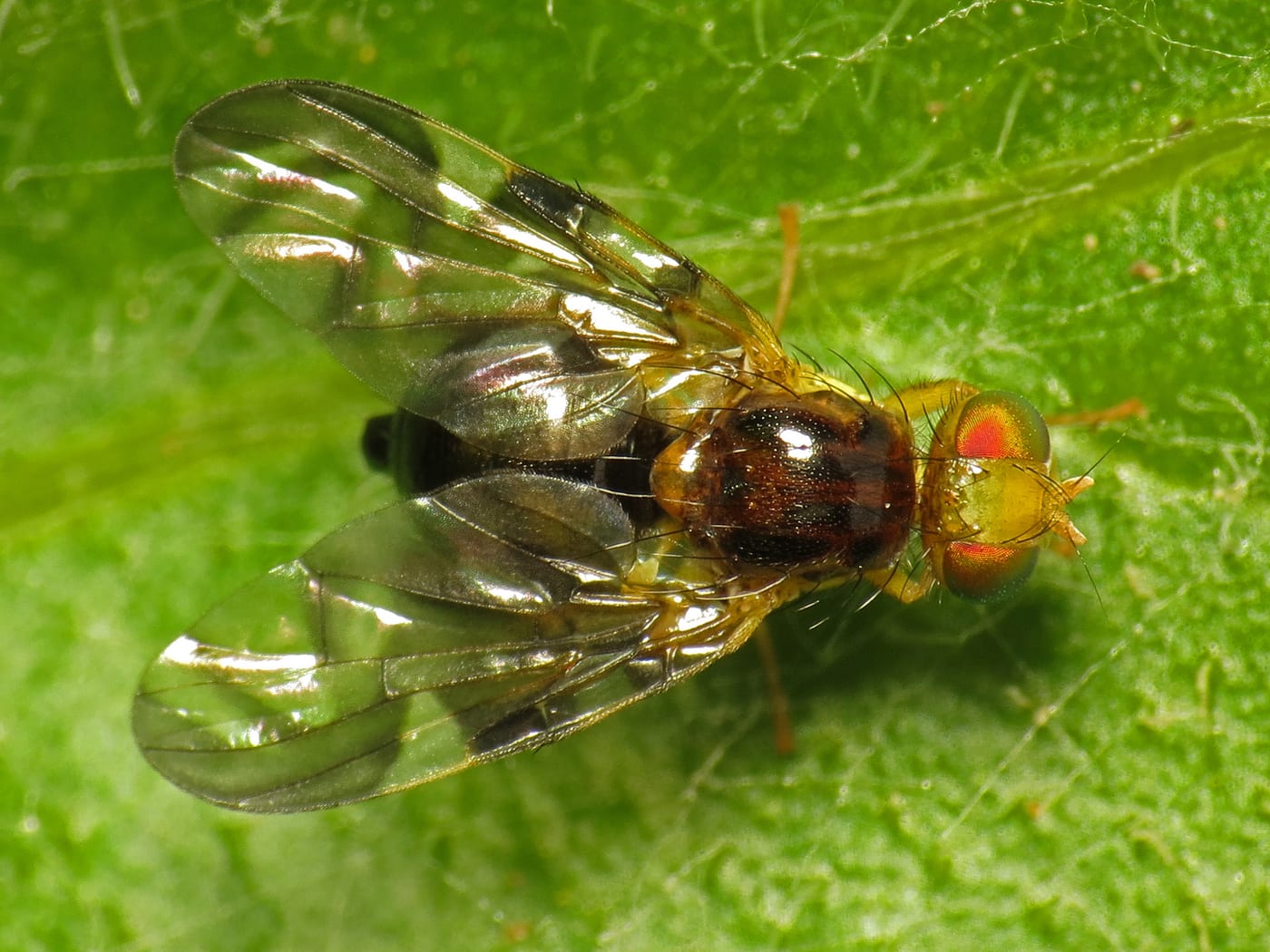
What does it look like?
Adults are light brown to black flies with a yellow thorax, about 5mm long. Larvae are white, legless, headless maggots that feed in groups within the leaf, growing up to 7mm.
The maggots themselves are rarely what you spot first: the mines they leave, pale green blotches that dry to brown and papery, are the visible sign, and they're distinctive enough on celery, celeriac, lovage, angelica or parsley to be a confident diagnosis without needing to find a larva.
What causes it
Females cut small nicks into the leaf surface to lay eggs; the larvae that hatch tunnel between the leaf surfaces to feed, which is what produces the mine. That mechanism is the same in every generation, so there's no single narrow trigger window the way a weather-driven pest has: mining follows wherever eggs have just hatched, which keeps happening as each generation runs into the next.
Is this pest active now?
Early May through autumn is the practical window, with two overlapping generations rather than one clear peak. Check leaves through both: a mine that started with the first generation and a fresh one from the second can end up on the same plant by late summer, so a clean check earlier in the season is no reason to stop looking later on. The May start date is a UK-wide figure, not a Scottish one specifically, and may run a little later here after a slow, cold spring.
Symptoms
Large, pale green blotches on the leaves dry up and turn brown and papery, giving a scorched look. On young plants hit by the first generation, this can cause a serious check to growth, sometimes leaving smaller plants with a bitter flavour.
Life cycle
At least two generations a year. After feeding, larvae pupate either inside the mine itself or in the soil below, and pupae can overwinterKeeping a plant alive and intact through the cold months, whether left outdoors, moved under cover, or stored dormant. Full definition → in either place, ready to emerge as adults the following spring, which is exactly why where a host crop was grown last year matters for this one.
Why this matters in Scotland
The risk here comes from what's grown nearby, not from Scotland's weather.
Celery, celeriac, lovage and angelica are all hosts, and all four are plants a herb or vegetable grower here might reasonably fit into the same bed or the same corner of a plot. Related wild flowers count as hosts too, common hogweed especially, a plant found on roadsides and hedgerows across most of Scotland, so a hedge or rough verge next to the garden can act as a standing reservoir that mesh and rotationMoving each crop family to different ground each year, on a multi-year cycle, so pests and diseases that build up in soil don't get a repeat host. Full definition → inside the bed do nothing about. This is common hogweed (Heracleum sphondylium), not the much larger giant hogweed that causes bad skin burns and needs careful handling: worth being clear about the difference before telling anyone to go looking for it nearby. Since pupae can also overwinter right in the soil the mines fall into, growing several cultivated hosts together without rotating them adds a second route back in.
Controls: what actually works
All the methods below are backed by real evidence, not just repeated folklore.
Insect-proof mesh: grow under fine mesh from the start, combined with crop rotation
Mesh stops females laying eggs on the foliage in the first place. Crop rotation has to go alongside it: without it, adults can emerge from pupae already overwintering in the soil and end up trapped under the netting with the crop, doing more harm than good.
Mesh only controls what's inside it. Related wild flowers count as hosts too, hogweed especially, so a hedge or rough verge next to the plot can keep supplying flies indefinitely no matter how well the bed itself is protected.
Remove affected leaves: pinch outRemoving the soft growing tip of a stem to stop upward growth and make the plant branch out sideways instead. Full definition → and destroy mined sections as soon as they're spotted
Regular checking through summer catches mines early, while they're still confined to a small section that can be pinched out rather than the whole leaf.
Bury badly affected leaves deeply rather than composting them
Deep burial destroys pupae that would otherwise overwinter in the mine and re-emerge as next year's first generation.
Encourage natural predators: parasitoid wasps and birds such as blue tits
Both feed on the larvae and provide a genuine measure of biological control without any intervention needed.
Tolerate light mining on established plants
On a well-grown plant with leaves to spare, leaving a mined leaf where it is rather than pinching it out is a genuine option too, not just a lack of effort: an intact leaf, mine and all, still photosynthesises for everything around the damaged section. Pinching out matters more on a plant that doesn't have much spare leaf yet to begin with.
Frequently asked questions
What should I do first if I find celery leaf mining fly in my garden?
Start with insect-proof mesh. After that, remove affected leaves. Work through the rest in order of how well-evidenced they are if the first two aren’t enough on their own.
Will celery leaf mining fly kill my plants?
They rarely kill established plants. The damage is usually cosmetic on outer leaves, and natural predators often bring numbers under control without you doing anything.
When are celery leaf mining fly most active in Scotland?
Check the seasonal activity section above. Scottish timings can run a few weeks behind the UK-generic figures.
Should I just leave celery leaf mining fly alone?
In most gardens, yes. celery leaf mining fly are food for birds, wasps and predatory insects, and a healthy garden carries some without trouble. Tolerance is also RHS's official position now, for that same reason.
Sources
1 source, recorded with what each was used for
- RHS1: adult and larva identification, mine appearance and progression, host plants named on this fly's own page (celery, celeriac, parsnips, parsley, lovage, related wild flowers), tolerance framing with a growth-check exception for the first generation, two generations a year and their relative timing and severity, pupation and overwintering in the mine or soil, insect-proof mesh and crop rotation, hand removal, burying affected leaves, natural predators, absence of a pesticide recommendation