
Beet Leaf Miner is a common pest that affects beetroot and chard in Scotland. Here is what it looks like, how to spot the damage, and which controls have been tested.
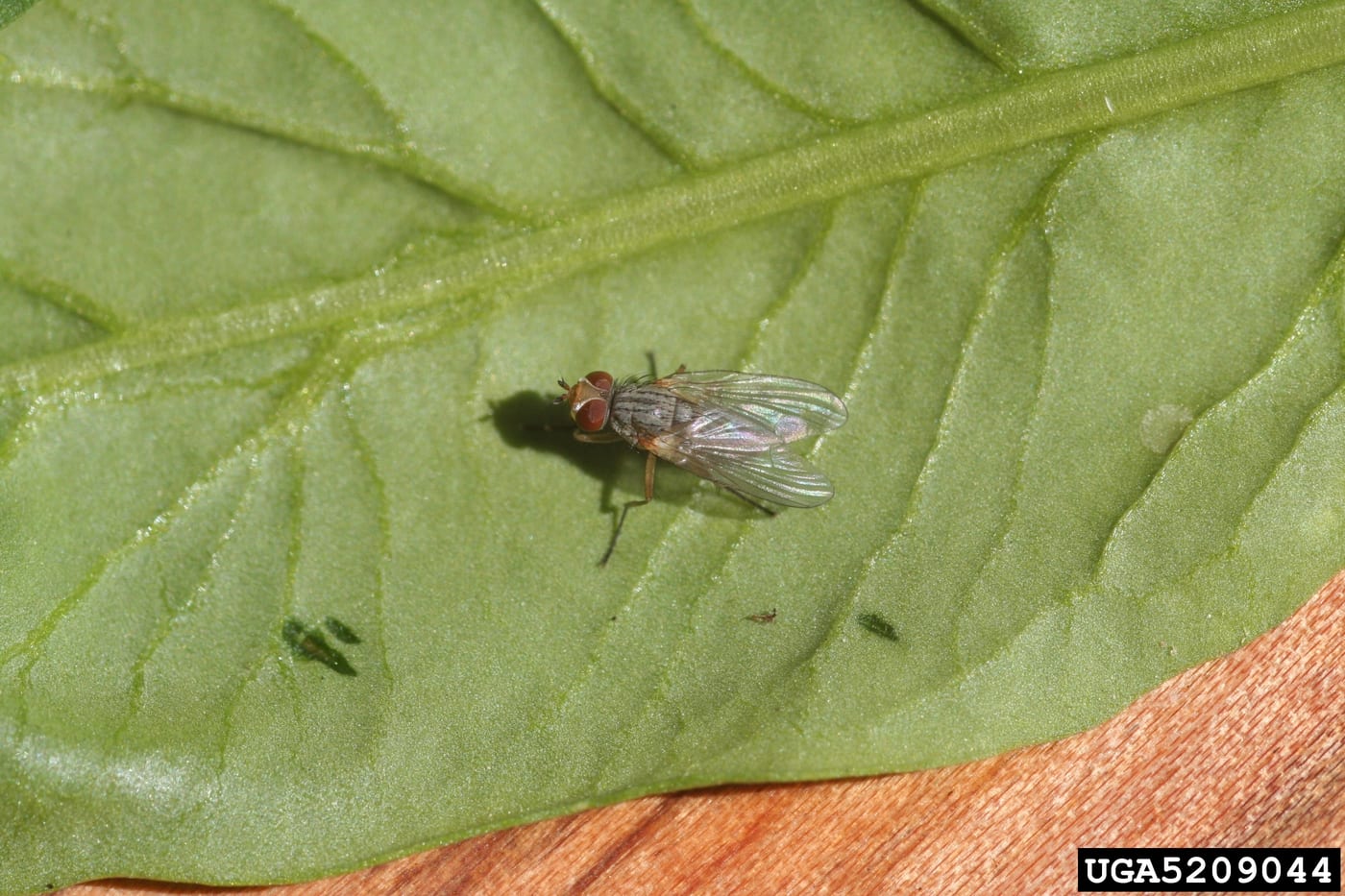
What does it look like?
Adults resemble small house flies, about 6mm long. It’s the larvae that do the damage, tunnelling inside leaves and eating the internal tissue, leaving large, irregular, blotch-shaped mines. Look for small white eggs in groups on the underside of leaves too.
What causes it
Fat hen and other weeds in the same family as beetroot and chard can carry the fly through the season, giving it somewhere to breed even when the crop itself is covered or out of season. Keeping the ground weed-free removes that reservoir.
Is this pest active now?
April to September, with the first generation the one to watch most closely: damage to young seedlings and early leaves costs the plant more than damage later in the season, once it’s established.
Symptoms
Mined patches start pale green, then turn brown and shrivel as the leaf tissue dies. Early-summer damage matters most, since it can set young plants back; damage on more mature plants has less impact on the plant itself, but a badly mined leaf is no longer worth eating.
Life cycle
Two to three generations run between April and September. Females lay small batches of eggs on the underside of leaves; the larvae mine into the leaf as they feed, then drop into the soil once fully grown and overwinterKeeping a plant alive and intact through the cold months, whether left outdoors, moved under cover, or stored dormant. Full definition → there as pupae before the cycle starts again the following spring.
Why this matters in Scotland
UK-wide guidance gives two to three generations a year; a milder growing region’s guidance gives at least three. Scotland’s cooler, shorter summers put it at the cooler end of that UK range, so two generations rather than three is the more likely pattern here.
Controls: what actually works
All the methods below are backed by real evidence, not just repeated folklore.
Insect barrier netting over susceptible plants
Stops female flies laying eggs on the foliage in the first place, the most effective single step available.
Crop rotationMoving each crop family to different ground each year, on a multi-year cycle, so pests and diseases that build up in soil don't get a repeat host. Full definition → still matters even under netting: adult flies can emerge from pupae already overwintering in that soil and end up trapped underneath it with the crop, doing exactly the damage the netting was meant to prevent.
Remove mined leaves, or squeeze the mined area to crush the larvae inside
A practical option on uncovered plants. Checking the underside of leaves for the white egg clusters and removing them before they hatch works the same way.
Control weeds, fat hen especially, around the crop
Removes an alternative host the fly can breed on even when the actual crop is netted or out of season.
Encourage natural predators
Parasitoid wasps are the main natural enemy, and birds such as blue tits will sometimes open mines to eat the larvae inside. Because the larvae feed protected within the leaf, though, most predators can’t reach them, so this helps rather than solves the problem on its own.
Dig over the soil after harvest
Disturbing the ground where the crop grew destroys overwintering pupae and cuts down how many adults emerge to start next year’s generations.
Natural predators of beet leaf miner
These 2 creatures eat beet leaf miner, and each has its own page here on how to get more of them in your garden: what to plant, or what to order and when.
Frequently asked questions
What should I do first if I find beet leaf miner in my garden?
Start with insect barrier netting over susceptible plants. After that, remove mined leaves, or squeeze the mined area to crush the larvae inside. Work through the rest in order of how well-evidenced they are if the first two aren’t enough on their own.
Will beet leaf miner kill my plants?
They rarely kill established plants. The damage is usually cosmetic on outer leaves, and natural predators often bring numbers under control without you doing anything.
When are beet leaf miner most active in Scotland?
Check the seasonal activity section above. Scottish timings can run a few weeks behind the UK-generic figures.
Sources
2 sources, recorded with what each was used for
- RHS1: identification, symptoms, life cycle, active timing, netting and manual-removal controls, natural predators
- Pacific Northwest Extension18: independent corroboration of row-cover timing and parasitoid wasps as the main natural enemy; the lambsquarter alternative-host detail and the mechanism reason predators mostly can’t reach the larvae; corroborates no home chemical spray is advised