
Spotted Wing Drosophila is a common pest that affects strawberries, cherries and gooseberries in Scotland. Here is what it looks like, how to spot the damage, and which controls have been tested.
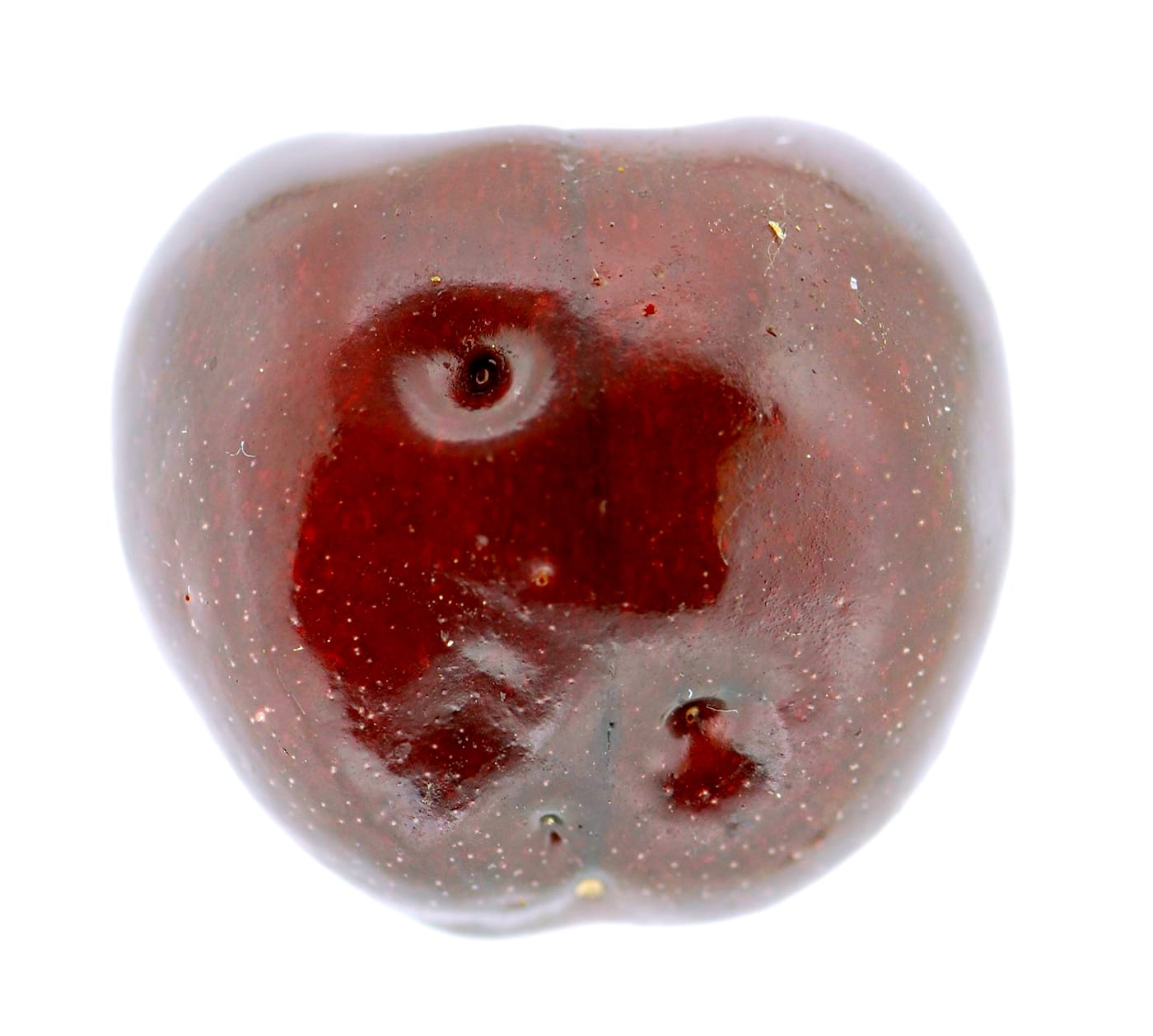
What does it look like?
Adults are small, pale brown flies, roughly 2-3mm long. Males carry a single dark spot near the tip of each wing; females lack the spot but have a serrated, saw-like egg-laying organ instead. Larvae are small white maggots up to 4mm long, found inside the fruit rather than on its surface, and can't be told apart from ordinary fruit fly maggots by eye.
What causes it
Most vinegar flies (the wider fruit-fly family this species belongs to) can only get into fruit that's already split, bruised or overripe. This species is different: the female's serrated egg-laying organ lets her cut directly into the skin of firm, ripening fruit, so damage can start on fruit that would otherwise still be perfectly sound.
Is this pest active now?
Watch from around April, when overwinteringKeeping a plant alive and intact through the cold months, whether left outdoors, moved under cover, or stored dormant. Full definition → adults become active again, right through to November. In Scotland specifically, the real build-up in numbers comes later and lighter than that full window suggests, often after strawberries, cherries, gooseberries and blueberries here have already been picked.
🌱 Plants at risk
Spotted Wing Drosophila also affects these crops:
Symptoms
Fruit collapses or develops small puncture marks, often with a tiny hole visible at the centre of each, on skin that otherwise still looks sound. Cutting into affected fruit usually finds white larvae feeding inside, and juice can seep from the puncture sites as the fruit breaks down.
Life cycle
Several generations are produced in a single season, each building on the last through summer before the population dies back for winter. Adults spend the colder months sheltering in nearby hedges, shrubberies and woods rather than dying off completely.
Why this matters in Scotland
First recorded in Scotland in 2014, with over a decade of trap monitoring since.
Numbers have been rising here since 2021, even though trap catches still run lower than England's and peak later, in November rather than through the broader UK's summer build-up. That upward trend, not the current gap with England, is why this earns a moderate rating rather than a low one: the population base to build from is already established and growing.
Controls: what actually works
All the methods below are backed by real evidence, not just repeated folklore.
Crop hygiene: harvest promptly and bin fallen or damaged fruit
Pick ripe fruit without delay, and clear fallen, surplus or damaged fruit rather than leaving it on the plant or ground. Bury it or seal it in a bag rather than adding it to the compost heap, since compost doesn't stop the fly breeding in it.
Fine mesh: net or sleeve fruit before it ripens
Standard fruit-cage netting has gaps wide enough for this fly to pass through. Mesh under 0.98mm is needed instead, distinctly finer than the netting used against most other fruit pests, or ready-made sleeves fitted over individual trussesThe flowering, then fruiting, stem cluster on a tomato plant; each truss ripens its fruit together. Full definition → or branches.
Monitoring: set traps to catch adults early
Vinegar or red-wine-baited traps, homemade or bought, catch adults before they've had a chance to lay eggs. Check traps regularly from spring through to November, matching how late in the year this species stays active.
Frequently asked questions
What should I do first if I find spotted wing drosophila in my garden?
Start with crop hygiene. After that, fine mesh. Work through the rest in order of how well-evidenced they are if the first two aren’t enough on their own.
Will spotted wing drosophila kill my plants?
They rarely kill established plants. The damage is usually cosmetic on outer leaves, and natural predators often bring numbers under control without you doing anything.
When are spotted wing drosophila most active in Scotland?
Check the seasonal activity section above. Scottish timings can run a few weeks behind the UK-generic figures.
Sources
3 sources, recorded with what each was used for
- RHS1: identification, symptoms, the intact-fruit egg-laying mechanism, life cycle and overwintering, fine mesh sizing, trap monitoring into November, absence of a specific amateur pesticide recommendation
- RHS1: cherries as the most susceptible crop, prompt harvesting and disposal of fallen or damaged fruit, spring reactivation timing, trapping window from April to November
- James Hutton Institute2: Scottish entomology monitoring: first detection year in Scotland, the rising trend since 2021, and the later, smaller seasonal peak compared with England