
Brown Scale is a minor pest that affects gooseberries and redcurrants in Scotland. Here is what it looks like, how to spot the damage, and which controls have been tested.
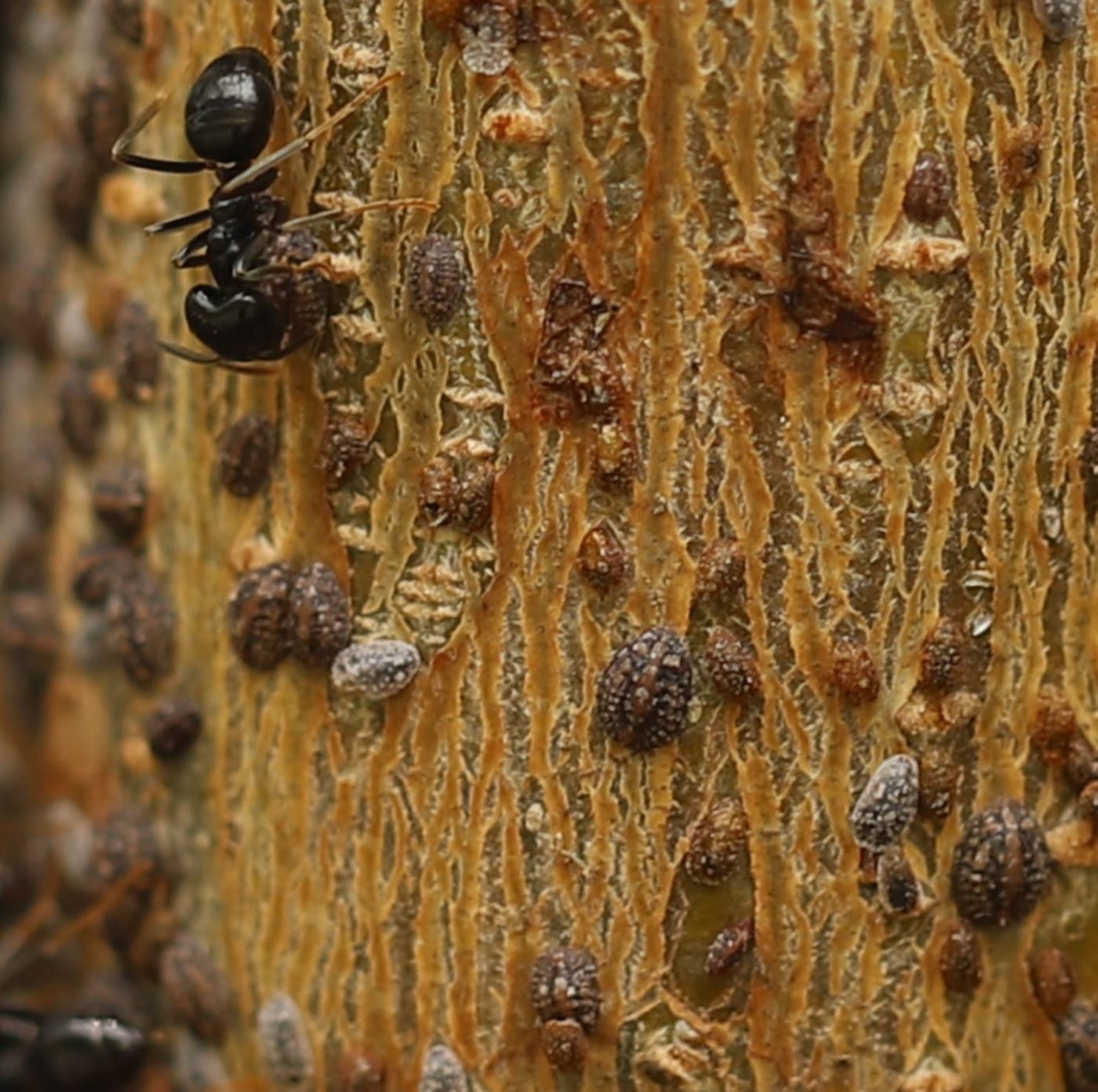
What does it look like?
Convex, oval, dark brown shells on woody stems, 3 to 6mm long. That shell is the adult female’s own protective covering, not something built separately. There are no visible legs on an adult; a mature scale looks stuck to the stem rather than crawling on it.
Gooseberry and redcurrant guides often mention woolly vine (currant) scale in the same breath as brown scale, but they’re different, related insects: woolly vine scale shows up as white waxy egg masses rather than a bare brown shell.
Is this pest active now?
Adult shells are visible on stems all year round, so there’s no single season to check for them. The one moment worth knowing is late June to July, when eggs hatch and the young scales are briefly mobile and more exposed, before they settle in for the rest of the year. Both RHS and Gardeners’ World point to this same early-summer window as the best time to act.
Symptoms
Heavily affected plants can lack vigour, and a black sooty mould often develops on the sticky honeydew the insects excrete while feeding. The mould doesn’t attack the plant directly, but a bad case can coat enough leaf surface to cut into photosynthesis.
Life cycle
Mature females lay eggs under their protective shells in early summer. The eggs hatch in late June and July, and the newly hatched scales move around briefly before settling to feed, usually on the undersides of leaves. By late summer they migrate to the bark, where they overwinterKeeping a plant alive and intact through the cold months, whether left outdoors, moved under cover, or stored dormant. Full definition → as small reddish-brown nymphs about 1mm long, completing their development the following spring.
Why this matters in Scotland
No source states that brown scale behaves any differently in Scotland: the biology, timing and severity here are general UK findings, not adjusted for a Scottish season.
Controls: what actually works
All the methods below are backed by real evidence, not just repeated folklore.
Tolerate light populations
A well-tended, healthy plant can carry a light population without needing any management at all.
Remove adult scales and egg masses by hand when seen
A practical option on a small plant or a light infestation. Gardeners’ World specifically suggests a thumbnail for scraping scales off stems.
There are real limits: this may not reduce large populations. It’s a spot-treatment for what you can reach, not a way to clear a heavy infestation.
Encourage natural predators
Some ladybirds, parasitoid wasps and some birds will eat scale insects, though only some species of each, not a blanket guarantee. Gardeners’ World independently notes birds will pick scales off too, and names a specific biological control for greenhouse use: the parasitoid wasp Metaphycus helvolus, bought by mail order.
Insecticidal soap spray for heavier infestations
A practical next step once hand removal alone isn’t keeping up with a heavier infestation.
Natural predators of brown scale
These 3 creatures eat brown scale, and each has its own page here on how to get more of them in your garden: what to plant, or what to order and when.
Frequently asked questions
What should I do first if I find brown scale in my garden?
Start with tolerate light populations. After that, remove adult scales and egg masses by hand when seen. Work through the rest in order of how well-evidenced they are if the first two aren’t enough on their own.
Will brown scale kill my plants?
They rarely kill established plants. The damage is usually cosmetic on outer leaves, and natural predators often bring numbers under control without you doing anything.
When are brown scale most active in Scotland?
Check the seasonal activity section above. Scottish timings can run a few weeks behind the UK-generic figures.
Should I just leave brown scale alone?
In most gardens, yes. brown scale are food for birds, wasps and predatory insects, and a healthy garden carries some without trouble. Tolerance is also RHS's official position now, for that same reason.
Sources
2 sources, recorded with what each was used for
- RHS1: identification, symptoms, sooty mould mechanism, life cycle, active timing, tolerance guidance, natural predators, manual removal
- Gardener's World12: independent corroboration of manual removal, birds as predators and early-summer timing; the named greenhouse biological control (Metaphycus helvolus)