
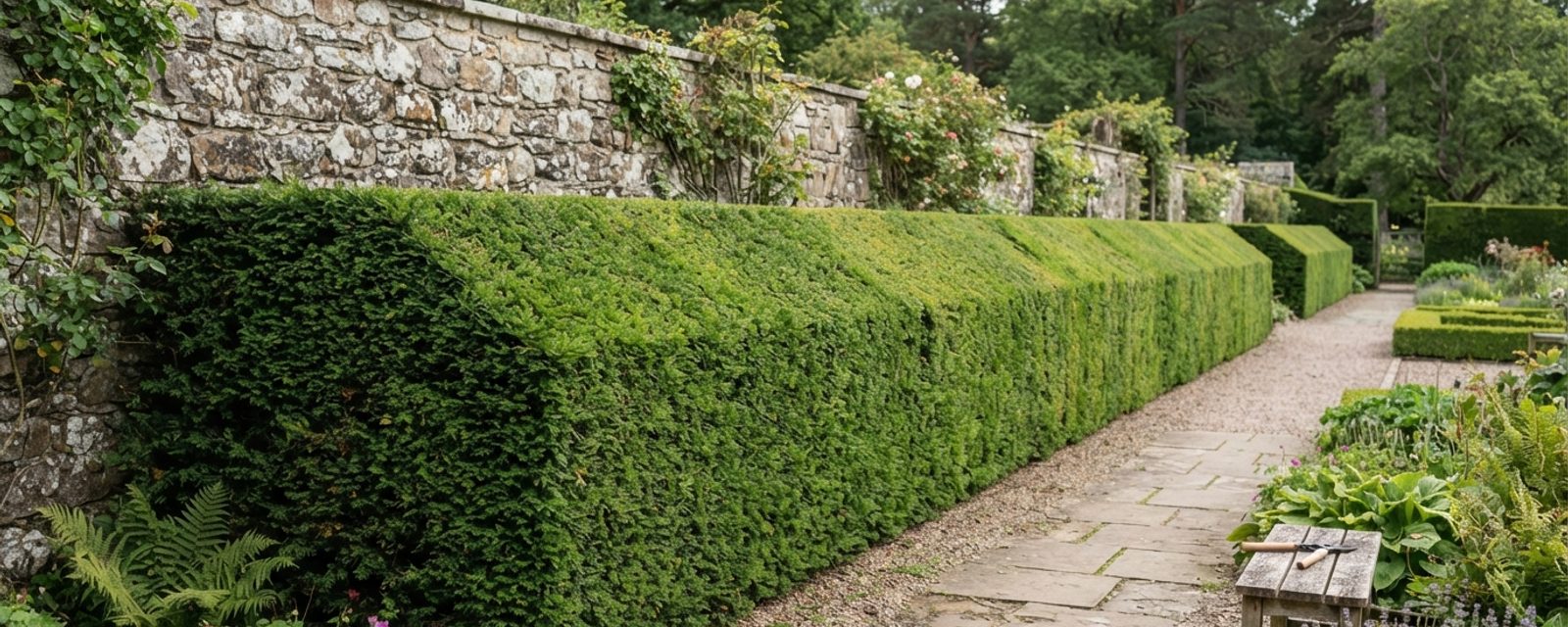
You're standing at the bottom of the garden looking at a hedge that's gone shaggy: sideshoots poking out past the line, the top starting to lean, and a free Saturday in front of you. Before the shears come out, the two questions that actually matter are: is this hedge legally and ecologically safe to cut right now, and does this species even need cutting today, or would you be better waiting a few weeks? Both questions have real, checkable answers, not vague "spring is risky" folklore.
This guide covers routine annual trimming of a hedge that's already established and in good shape. If your hedge is gappy, leggyDescribes a plant that's grown tall, thin and sparse rather than bushy, usually from too little light or not being pinched out. Full definition → at the base, or has grown into a line of bare-legged trees with foliage only at the top, that's a different job: see Hedgelaying by Hand. If you're planting a new hedge and choosing a species, see Hedge Planting: How to Choose the Right Species for a Scottish Garden. If the issue is really a dispute with a neighbour over height and light rather than routine trimming timing, that's a separate piece of Scots law, the High Hedges (Scotland) Act 2013, covered in the planting guide's "Neighbouring boundaries" section.
The law isn't a calendar ban, here's what it actually says
Most hedge-cutting advice compresses the nesting-bird law into a blanket "don't cut hedges March to August" rule. That overstates what the law itself says.
Section 1 of the Wildlife and Countryside Act 1981 makes it an offence to intentionally (in Scotland, "intentionally or recklessly") take, damage, destroy, or in Scotland's wording, "otherwise interfere with" the nest of any wild bird while that nest is in use or being built. Scotland's version of the Act, as amended by the Nature Conservation (Scotland) Act 2004, is broader than the England and Wales wording in two ways: it covers reckless as well as intentional damage, not just deliberate damage, and it extends protection to interference with a nest, not just physically destroying it. The 2004 Act also added extra, year-round protection for certain species' nest sites, on top of the general protection every nest gets while it's in use; the sourced legislation doesn't name which species for hedge-nesting purposes specifically, so the safest working rule for a garden hedge is the same one regardless: treat any nest, active or not obviously in use, with caution rather than assume it's fair game outside the breeding season.
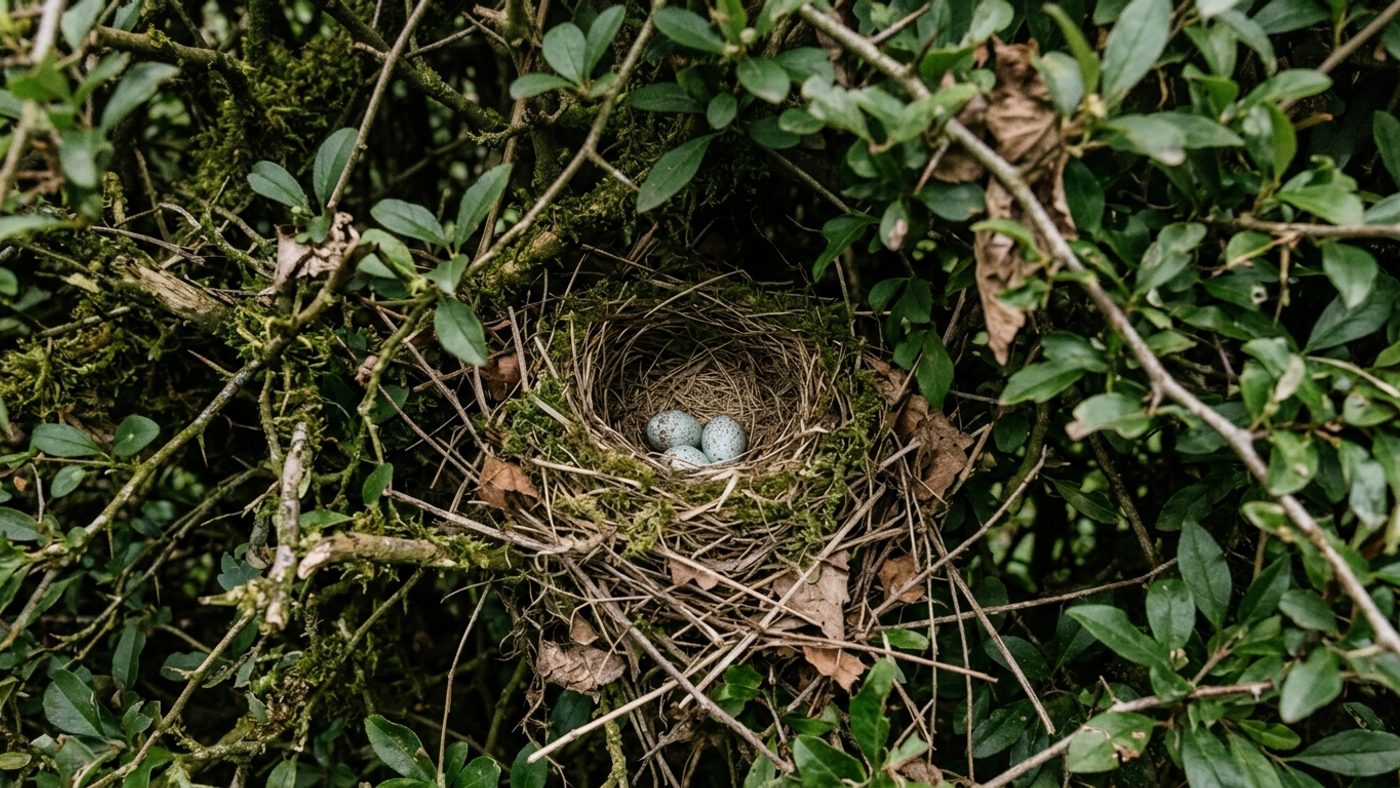
None of this sets a fixed calendar window. The Act protects an active nest, at any time of year, from any person, intentionally or recklessly damaging it: it does not say "no cutting between these dates." RSPB's own guidance on hedge law makes this explicit: you can legally cut vegetation year-round, provided no active nest is disturbed or destroyed in the process. The "September to February" or "October to February" seasons you'll see quoted by RSPB and the Woodland Trust are precautionary advice built on top of the law, not the law itself, a practical way to avoid the birds nesting in the first place, because checking a hedge thoroughly enough to be certain it's nest-free is harder than it sounds, especially in a dense, established hedge where a nest can sit well hidden a few metres up.
This distinction matters in two situations you're likely to actually face: a hedge that unexpectedly needs an urgent, safety-driven cut in June (storm damage overhanging a path, say), and simply wanting to know whether "the law" gives you a hard stop-cutting date. In both cases, the answer is the same: check for an active nest first, every time, regardless of month. If you find one, leave a clear gap of at least a couple of metres around it uncut, work the rest of the hedge if you need to, and don't go back to that section until you're sure the chicks have fledged and left, usually a few weeks after you first spot activity.
Bird nests aren't the only living thing worth checking a hedge for before cutting. Bats occasionally roost in mature, dense hedges, look for droppings (small, dark, and crumbly rather than solid like mouse droppings) caught in foliage or on the ground under a section of hedge, and are separately protected by their own UK wildlife law. Hedgehogs can overwinterKeeping a plant alive and intact through the cold months, whether left outdoors, moved under cover, or stored dormant. Full definition → or nest low down in a thick hedge base, especially over winter, so a rustle or a nest of leaves and grass tucked in low growth is worth a second look before you cut there. In parts of Scotland with red squirrels, a hedge grown into a taller, tree-like line can also hold a drey (a rough, football- sized ball of twigs and leaves, usually well up rather than at the base); leave it undisturbed the same way. Any of these is a reason to leave that section alone regardless of the season, the same as an active bird nest.
Scotland's cooler, later spring shifts the practical window, even though the law's dates don't change
The law is the same UK-wide. What differs in Scotland is biology, not statute, and the evidence for that is real and specific.
NatureScot's guidance for planning consultations on birds gives the general UK breeding season as March to August, but notes there is measurable latitudinal variation within Scotland itself: sites further north start breeding later than sites further south, by up to around ten days between the far north and far south of the country. NatureScot's precautionary advice is that working on a site any time from the end of March to the end of July or early August risks disturbing an active nest or dependent young, a window that, if anything, nudges later than the RSPB's UK-wide "1 September to 28 February" cutting recommendation once you build in Scotland's later start and the extra margin for northern sites.
Growth timing tells a similar story: hedge growth flush, the spring surge you're actually trimming in response to, follows temperature, and Met Office data shows how much that varies across Scotland.
| Region | Growing-season length | Typical last-frost date |
|---|---|---|
| Edinburgh / Glasgow | c. 200-215 days | Mid-April |
| Highlands | c. 140-150 days | Mid-to-late May |
| Southern England, for comparison | Longer still | Mid-April or earlier |
A hedge in Aberdeenshire or the Highlands is very plausibly still flushing when a hedge in Kent has already had its first cut of the year.
Put together: neither the nesting risk nor the growth flush starts earlier in Scotland than UK-wide guidance assumes, both run a little later instead, and by roughly similar margins. That's genuinely useful to know, but it doesn't hand a Scottish gardener a stricter deadline; the RSPB's cautious "finish by 28 February" cutoff already has slack built into it for most of Scotland, and the one adjustment worth actually making is leaning toward the later end of "late February to March" for that single ideal cut, rather than rushing to finish in early February the way some UK-wide advice implies you should.
The safe cutting window in practice
| Period | Status | Notes |
|---|---|---|
| September - late February | Generally safest | RSPB's recommended UK-wide window; birds not actively nesting for most of it, and Scotland's own risk window starts even later, so this stays fully safe |
| Late February - March | Ideal single cut for most hedges | Before growth flush, after winter berries/fruit have fed birds; NatureScot's own risk window doesn't start until end of March, so this stays safe for most of Scotland |
| End of March - late July/early August | Main risk window | Active nests likely; a pre-cut nest check is essential, not optional, even within this window |
| Any month, any hedge | Nest check required if cutting | The law protects an active nest regardless of date; early nesters (song thrush, from February) and late nesters (some species into September) both fall outside the "safe" calendar |
Before any cut, walk the hedge line and watch it for a few minutes to a few days if you're unsure: listen for chick calls, look for adult birds repeatedly entering and leaving the same spot, and check dense or previously-used sections carefully. If you find an active nest, cut around it and come back once the young have fledged.
How often different hedges actually need cutting
RHS species guidance gives specific frequency figures below, and they map cleanly onto how fast a species grows.
| Hedge type | Species examples | Cuts per year | Best timing |
|---|---|---|---|
| Fast-growing formal conifer | Leyland cypress, Lawson's cypress, Western red cedar | 2-3 | Spring and again in summer; a third late-summer tidy for leylandii, likely nearer 2 than 3 on a slower-growing Highland or upland site |
| Fast-growing formal broadleaf/evergreen | Privet, box, cherry laurel | 2-3 | Through the growing season, spring to late summer |
| Once-a-year formal | Yew | 1-2 | Summer, with a second light trim into autumn possible |
| Slower deciduous formal | Beech, hornbeam, hawthorn | 1 (hawthorn sometimes 2) | Beech and hornbeam: once, mid-to-late summer, timed so the fresh growth firms up before autumn rather than regrowing again before dormancy; hawthorn: summer and autumn |
| Informal/flowering hedges | Native mixed, berrying shrubs | 1, or every 2nd-3rd year | After flowering/fruiting, ideally late winter, to preserve blossom and berries for wildlife |
The pattern behind the table: species bred and clipped for a crisp formal line (privet, box, leylandii) put on continuous soft growth all season and need cutting back to shape repeatedly to stay tidy. Slower, tougher species (beech, hornbeam, yew) flush once hard in spring and then hold their shape, so one well-timed cut keeps them presentable for the rest of the year. Informal and native hedges are usually left alone even longer on purpose; cutting only every second or third winter keeps blossom and berries available for pollinators and birds, at the cost of a slightly looser shape.
If you're not sure which category your hedge falls into, watch it for a season before committing to a cutting schedule: a hedge that's still visibly growing in July needs more than one cut a year; one that stopped putting on new growth by June doesn't. The figures above come from RHS's UK-wide guidance; no Scottish trial has measured the same species over a shorter Highland or upland growing season specifically, so the honest guidance is that a species can plausibly get away with the low end of its range, or one fewer cut, on a cooler or more exposed Scottish site than the table implies. On an exposed coastal or windy upland site specifically, growth is often slower again for the same wind and salt-exposure reasons covered in the hedge planting species guide, another reason to watch your own hedge rather than follow the table as a fixed rule.
Getting the technique right, briefly
Once you're in a safe window with no active nests, cut from the base upward on the sides, keeping the hedge narrower at the top than the bottom so light reaches the lower branches; a hedge cut wider at the top shades itself out and goes bare-legged over time, which is exactly the problem that eventually needs hedgelaying to fix.
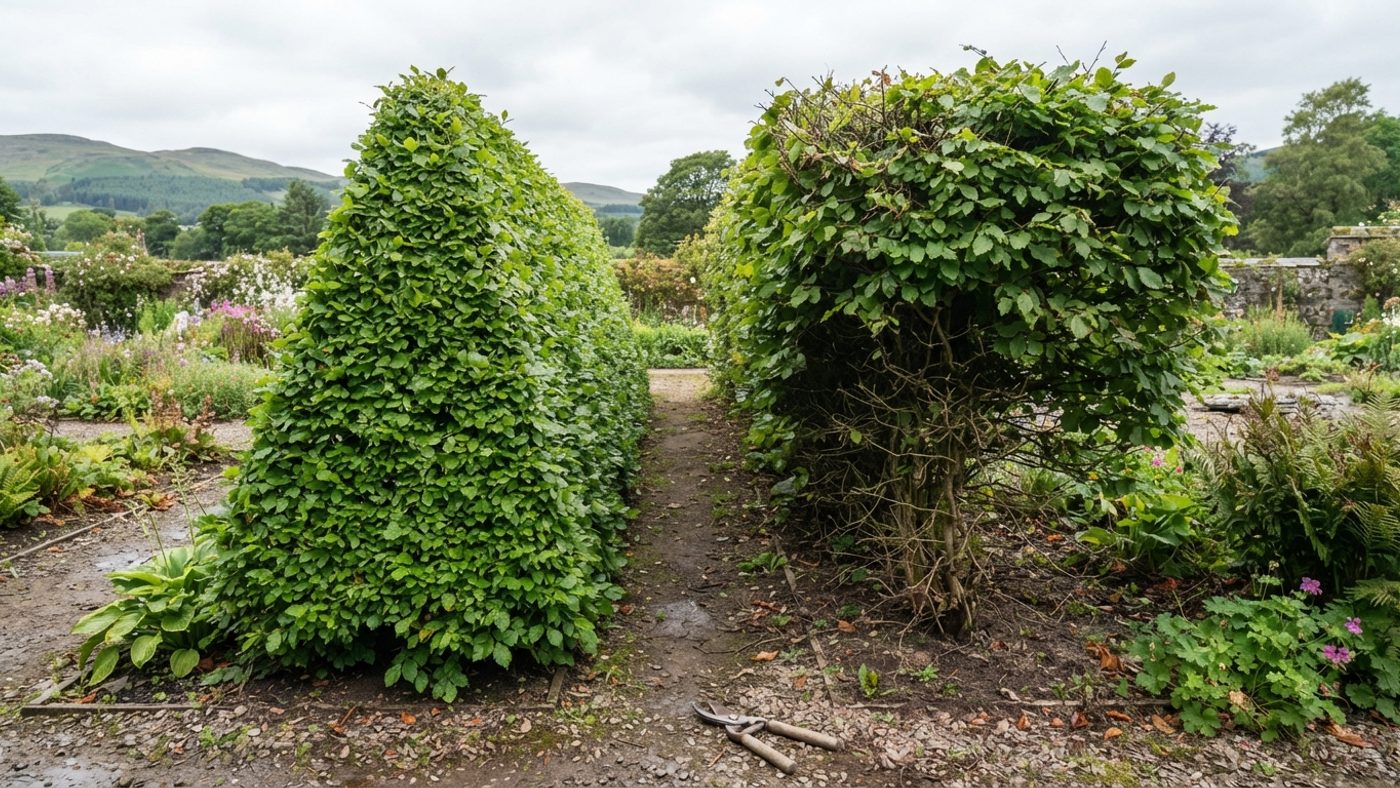
Use a string line for a straight top edge, step back regularly to check you're cutting evenly along the length, and rake clippings off the base afterwards so light and air reach the cut stems rather than being smothered by debris. Soft green clippings can go straight on the compost heap or in a council green bin; woodier prunings are better chipped or shredded first, or taken to a recycling centre, since they'll take years to break down whole. On box or other formal evergreen hedges, clean blades between plants (or between obviously different sections) with a garden disinfectant; box blight and other fungal diseases spread easily on damp, uncleaned tools moving from an infected plant to a healthy one.
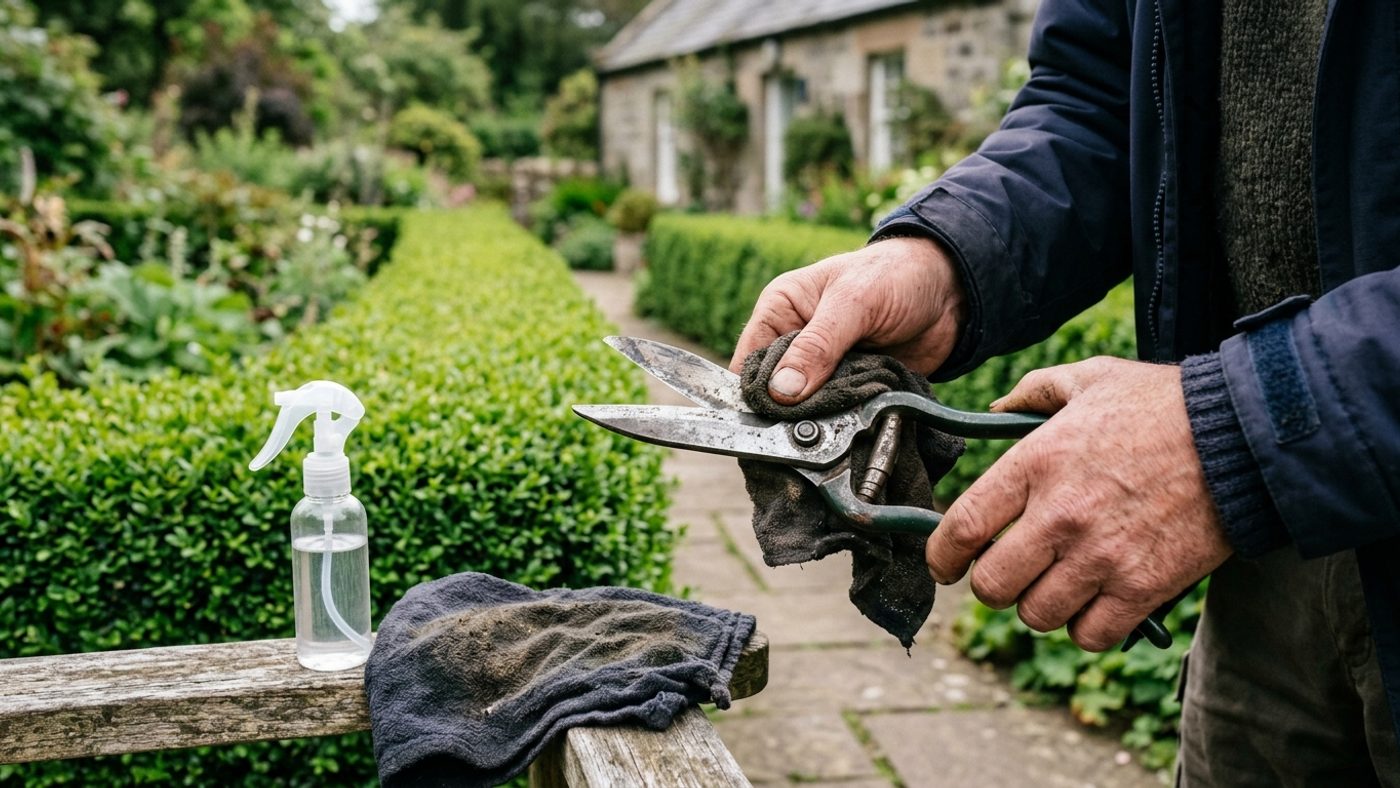
Hand shears give the most control and are easiest to use safely without practice; a powered trimmer is faster on a long or thick hedge but needs both hands and a steady footing, so it's worth starting with shears on a small hedge before moving to power tools on a bigger one.
Common questions
Can I cut my hedge in June if it is blocking a path or a driveway sightline?
Legally, yes, provided you check first and there's no active nest in the section you're cutting: the law protects nests, not a calendar date. Check thoroughly, cut only what's necessary for the safety issue, and leave the rest until the safer autumn/winter window.
Is there a different legal cutting season in Scotland from the rest of the UK?
No fixed dates change: the Wildlife and Countryside Act 1981 (broadened for Scotland by the Nature Conservation (Scotland) Act 2004) protects an active nest at any time of year rather than naming a season, in England, Wales, or Scotland alike. What's genuinely different is the biology underneath the precaution: NatureScot's own risk window for Scotland doesn't start until the end of March, and breeding starts up to around ten days later again in the far north than the far south of the country, so an early March cut, right at the edge of what some general UK advice already treats as risky, is on this evidence still ahead of when Scotland's own nesting activity typically picks up.
My hedge is leylandii and it is already looking scruffy by June: did I cut it wrong?
Probably not: fast conifers like leylandii and Lawson's cypress are meant to be cut two to three times through the growing season, so a June regrowth flush is normal and just means it's due its next trim, not that the first cut was wrong.
How do I know if my hedge needs rejuvenating instead of a normal trim?
If it's thin or bare at the base with foliage only near the top, routine trimming won't fix that: it needs cutting back hard and partially laying to force new growth from low down. See our guide to hedgelaying by hand for that process.
What is the single best time to cut a hedge if I only do it once a year?
Late February into March, after winter berries have fed birds and before the spring growth flush starts, and later in that window the further north and colder your garden is.
Sources
8 sources, recorded with what each was used for
- RHS: Pruning Hedges: Species-by-species cutting frequency and timing table (box, holly, privet, cherry laurel, Lawson's cypress, leylandii, yew, western red cedar, hornbeam, hawthorn, beech) and the UK-wide nesting-season note
- RHS: How to Trim a Hedge: Trimming technique, frequency guidance for formal hedges (up to three times a year), and nesting-bird caution restating the Wildlife and Countryside Act 1981
- RSPB: Hedge Cutting and Bird Nesting Season - The Law: Recommended 1 September-28 February cutting window, exact Section 1 legal wording, and the clarification that vegetation can legally be cut year-round provided no active nest is disturbed
- Woodland Trust: How to Plant and Maintain Hedges: October-February cutting season, preferred late-February/March single cut, and frequency guidance for wildlife hedges (every 2-3 years) versus formal hedges (1-2 times a year)
- Wildlife and Countryside Act 1981, Section 1: Exact statutory wording on nest protection, including the Scotland-specific 'intentionally or recklessly' and 'otherwise interferes with' language, and confirmation that no fixed calendar dates appear in the section itself
- Nature Conservation (Scotland) Act 2004: Confirms the Act amends the Wildlife and Countryside Act 1981 for Scotland via Schedule 6, inserting Schedule A1 (protected nests and nest sites) and broadening the offence wording
- NatureScot: Standing Advice for Planning Consultations - Birds: General UK breeding season (March-August), Scotland's latitudinal variation in breeding start dates (up to c.10 days between north and south), and precautionary end-of-March-to-end-of-July/early-August working advice
- Met Office: Spring seasonal reporting: Growing-season length by region (Highlands c.140-150 days vs Edinburgh/Glasgow c.200-215 days) and last-frost-date comparison (mid-to-late May in Scotland vs mid-April in southern England)