
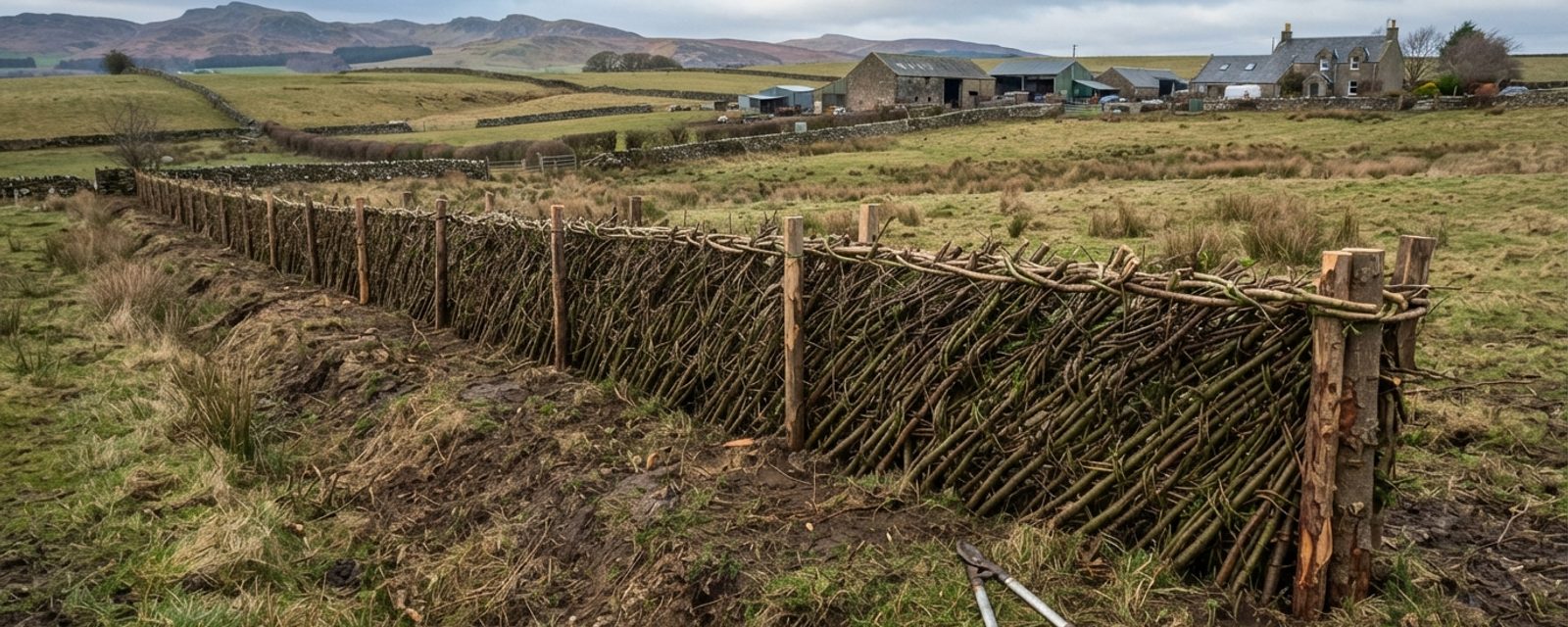
Hedgelaying works because a woody stem does not need to be fully severed to survive. The stem you're laying is called a pleacher, and the base it grows from, the permanent, rooted stump of the hedge plant, is the stool. When you cut most of the way through a pleacher near ground level, leaving a thin hinge of bark and outer sapwood intact, that hinge keeps carrying water and nutrients between the roots and the rest of the plant.
The stem is deliberately wounded, not killed. Bent over to a shallow angle and held in place, it goes on living through that narrow surviving strip while the cut and the changed angle trigger something else: a flush of vigorous new growth, both from the wound itself and from dormant buds low on the stool. That new growth comes up thick and vertical, filling exactly the gap at the base that a hedge usually struggles to hold onto. Trimming or flailing can only shape what is already there; laying restarts growth from ground level, which is why it is the technique for rejuvenating a hedge that has gone thin or leggyDescribes a plant that's grown tall, thin and sparse rather than bushy, usually from too little light or not being pinched out. Full definition → at the bottom, not just untidy on top.
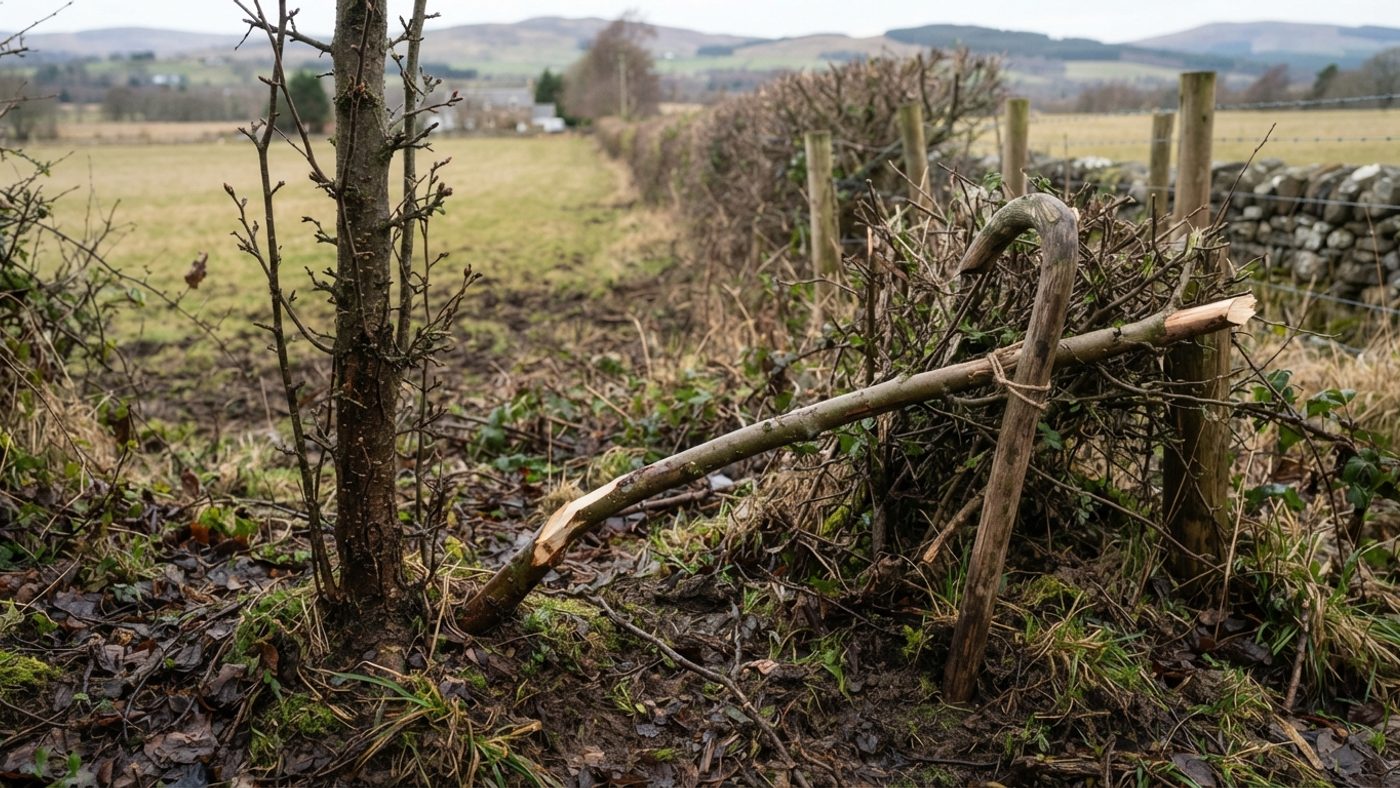
This is also why laying only works on the right hedge. Too young and there is no substantial wood to lay; too old and thick, and the pleacher is more likely to snap clean through or die rather than hinge and regrow.
Is your hedge suitable for laying
| Measure | Suitable range | Notes |
|---|---|---|
| Hedge height | 2.5-5m | Below this, there is little to gain from laying |
| Stem thickness at base | 5-10cm | The range that hinges reliably without snapping |
| Stems over 20cm thick | Remove | Too thick to pleach safely, cut out rather than laid |
| Misaligned or awkward stems | Remove | Take out rather than force into the line |
A hedge within that size and thickness range, with a reasonably continuous run of stems along the base, is a good laying candidate. A hedge that is mostly bare wood with a few isolated thick trunks is usually better handled as a partial replant with gap-filling, not a laying job.
The technique, step by step
Hedgelaying is done on the ditch side of the hedge where possible, and follows the same broad sequence whichever regional style you're working to:
- Clear and assess. Remove excess growth, dead wood, and any stems too thick, too misaligned, or too awkward to lay, so you're left with usable pleachers spaced along the line.
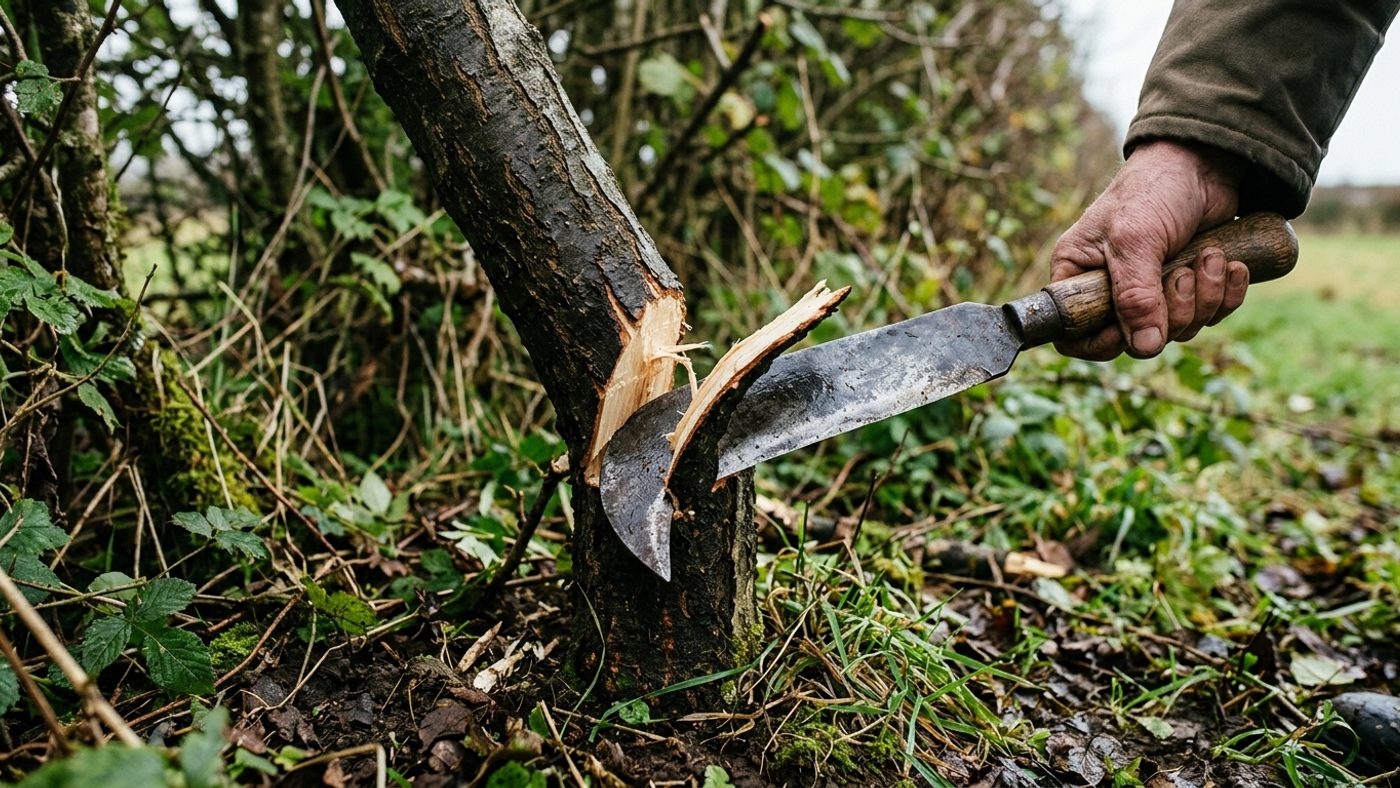
- Cut the pleachers. Cut each main stem almost all the way through near the ground, on the side opposite the direction you intend to lay it. Leave that hinge of bark and sapwood intact; this is the cut that keeps the plant alive.
- Lay the stem over. Push the pleacher down to roughly a 35-degree angle, following the line of the hedge, so it lies along rather than across the row.
- Stake the line. Drive stakes, traditionally hazel or ash, into the hedge line at roughly 40cm intervals to hold the laid pleachers in place.
- Weave the pleachers. Weave the laid stems between the stakes to lock the structure together along the row.
- Bind the top. Twist binders, coppiced hazel, sweet chestnut, or willow are traditional choices, around the tops of the stakes to bind the whole line and stop it splaying.
- Trim the stubs. Tidy up the cut ends of the pleachers close to the stool. Leaving ragged stubs invites rot to travel back into the stool itself.
After that, leave the hedge to regrow. New growth should be lightly trimmed one or two years after laying, not sooner, to encourage it to bush out and thicken rather than being cut back before it's established.
Regional styles: why Scotland doesn't have its own
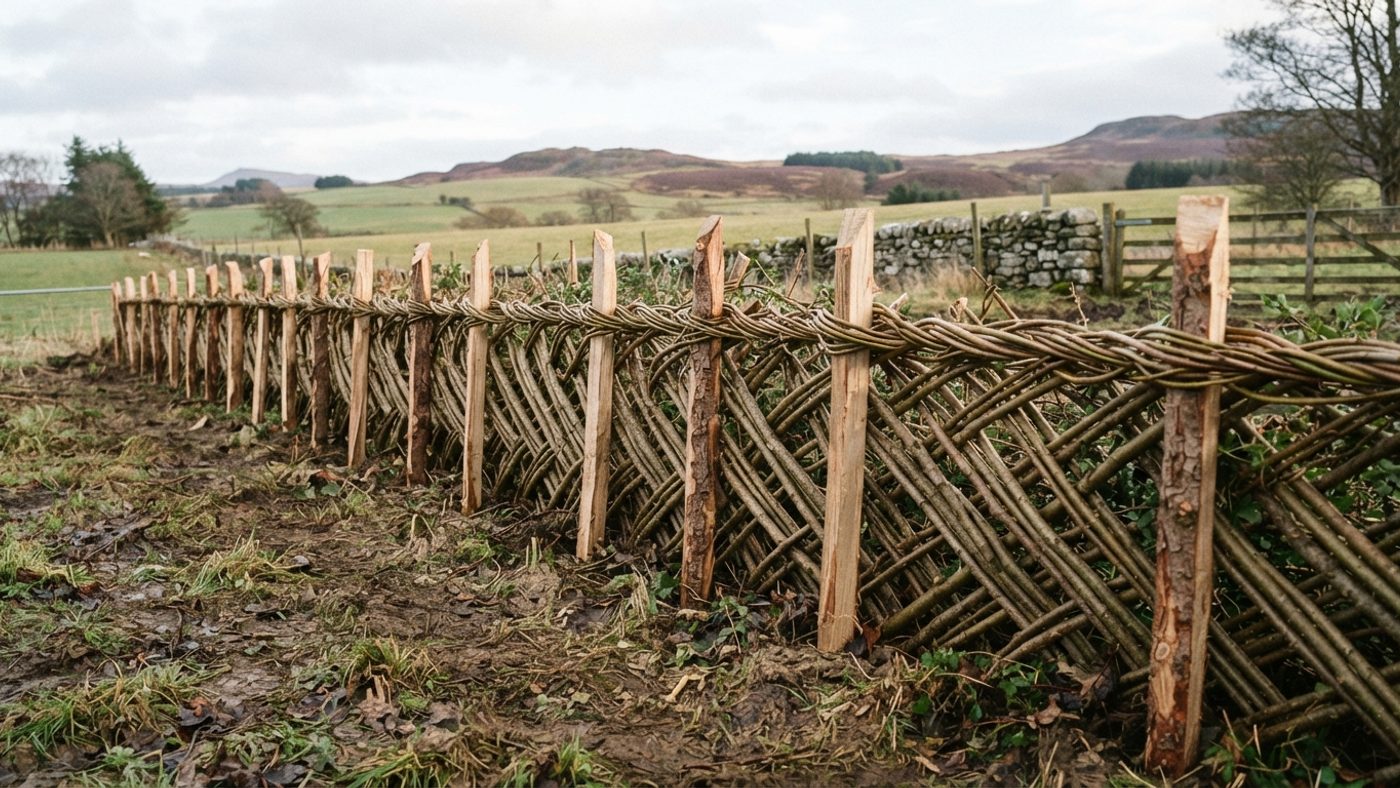
England and Wales each developed named regional hedgelaying styles, shaped by local livestock and farming systems over centuries. They differ mainly in staking and binding convention and in the finished profile of the hedge, rather than in the core pleach-and-lay method covered above. Scotland's own agricultural guidance is direct about this: there are no regional styles of hedgelaying native to Scotland as there are in England and Wales. Instead, the recommendation is to pick whichever established style suits your farm type and the hedge in front of you.
| Style | Best suited to |
|---|---|
| Midland | Mixed farms |
| Lancashire and Westmorland | Grassland/livestock operations |
| Northumberland | Grassland/livestock operations |
| South of England | Grassland/livestock operations |
In practice, the choice comes down to what the hedge is for: a Midland-style approach suits a hedge on mixed ground, while a hedge whose main job is stock-proofing grazing land suits a livestock-oriented style such as Lancashire and Westmorland or Northumberland.
When to lay a hedge in Scotland
Hedgelaying is dormant-season work. Cutting outside the growing season avoids disturbing nesting birds, protects insects that rely on spring flowers, and leaves shelter in place for anything overwinteringKeeping a plant alive and intact through the cold months, whether left outdoors, moved under cover, or stored dormant. Full definition → in the hedge base, and it isn't just good practice: disturbing nesting wild birds is a legal offence in the UK, which is the underlying reason the laying season sits inside the dormant months in the first place.
| When | What applies |
|---|---|
| 1 September - 31 March | The general laying season, worked in spells of mild weather |
| February | Best window for an old, heavily grown stool (see below) |
| March onward | Check for nesting birds before starting; if found, stop and resume in autumn |
| Every 10-20 years | Typical re-laying cycle for an established hedge, depending on species and conditions |
Scottish guidance adds one specific refinement: older hedges respond best to laying once the sap starts to rise, typically in February. If you're choosing when in the season to tackle an old, heavily grown stool, February is the point it singles out as giving the best regrowth response.
Why laying matters more on an exposed site
On an exposed upland or coastal site, a gap at ground level is exactly where wind funnels through and undermines the shelter a hedge is there to provide, and that's what makes a gap-free base worth the extra effort of laying rather than routine flailing or trimming. On a working holding where the hedge's job is livestock shelter and windbreak, hedgerows are recognised for the shade and shelter they provide livestock, alongside their other roles in water regulation and erosion control, and a hollow-based hedge delivers less of all three exactly where the wind is worst. Laying an eligible hedge on a farm holding may also qualify for support under the Scottish Government's Agri-Environment Climate Scheme, which is worth checking before you start if the work is happening on agricultural land.
Newly laid pleachers are also more vulnerable to livestock browsing while they're re-establishing than an intact hedge is, so on grazing land it's worth temporarily fencing off a freshly laid stretch until the new growth has toughened up.
Species that take well to laying
Not every species pleaches and regrows reliably from a bent, part-cut stem. Hawthorn is the best species for laying, with blackthorn, hazel, field maple, ash, and elm also suitable. Hawthorn and blackthorn are also hardy, wind-tolerant species in their own right, a useful overlap on an exposed site.
One caveat on ash: ash dieback (Chalara) is now widespread in Scottish hedgerows, and a stem already showing dieback symptoms (dead shoot tips, diamond-shaped bark lesions, blackened leaves) should be assessed rather than laid. The fungus spreads by airborne spores released from infected leaf litter, not through cutting tools or fresh wounds, so pleaching a diseased stem doesn't spread the disease any faster than leaving it alone would; but a stem already dying back is a poor candidate for laying regardless, so it's still worth knowing what you're working with before you commit it to years of new growth.
Getting help for a first attempt
Hedgelaying is a hand skill that's genuinely easier learned by watching and doing than from a written sequence. The core tools are a billhook or a slasher for cutting the pleachers, a mallet for driving in stakes, and a saw or loppers for tidying stubs and removing oversized stems.
A billhook in particular takes practice to swing safely and accurately, and it's worth getting proper instruction on technique before using one unsupervised, the same as any edged tool used at speed and close to your own legs. Cleared brash and offcuts can usually be chipped, stacked as a habitat pile for wildlife at the field edge, or burned in a small controlled fire where that's permitted locally; check with your local authority before burning any quantity of it.
If you haven't laid a hedge before, it's worth seeking out a practical training course or a demonstration day before taking a billhook to your own boundary; local countryside ranger services, conservation volunteering groups, and agricultural colleges are reasonable places to start looking for one. A couple of hours watching someone lay pleachers and bind a stretch of hedge will make the angles, the hinge cut, and the staking rhythm far clearer than any description can.
Common questions
Does hedgelaying kill the hedge?
No, if done correctly, though a poorly cut pleacher can die. The risk is cutting too far through the hinge (it snaps rather than bends) or not far enough (the stem won't lie flat and springs back upright). Trimming the cut stub afterwards also matters for the stem's survival: a ragged stub left on the stool is an entry point for rot that can kill the whole plant from the base up, even if the pleacher itself took to laying well.
What size hedge is suitable for laying?
A hedge roughly 2.5-5m tall with main stems around 5-10cm thick at the base is the right candidate. Stems over 20cm thick, or badly misaligned ones, should be removed rather than laid.
Is there a Scottish style of hedgelaying?
No. Scotland has no named regional style of its own, unlike England and Wales. Instead, pick an established style suited to the farm: Midland for mixed farms, or Lancashire, Northumberland, or South of England styles for grassland and livestock operations.
When is the best time to lay a hedge in Scotland?
Within the general dormant-season window of 1 September to 31 March, in mild weather. Older hedges specifically respond best when laid as sap starts to rise, around February. Check for nesting birds if working in March.
How often does a laid hedge need to be laid again?
Established hedges are generally worked on a 10 to 20 year cycle, depending on species and growing conditions, with only light trimming needed in the first year or two after laying.
Sources
4 sources, recorded with what each was used for
- RHS: Hedges - Renovation Techniques: The core laying technique (pleacher cutting, 35-degree lay angle, staking and binding, stub trimming), suitable hedge size and stem thickness, and species suitable for laying
- Scottish Government, Rural Payments and Services: Guidance for Laying of Hedges (Agri-Environment Climate Scheme): The absence of a distinct Scottish regional style, the four named English/Welsh styles and farm types they suit, the September-March laying season, the February sap-rise timing note for older hedges, the 10-20 year laying cycle, and nesting-bird check guidance
- Woodland Trust: How to Plant and Maintain Hedges: The wildlife/nesting-season rationale behind dormant-season cutting and laying, and corroborating why a gappy hedge base matters
- Farm Advisory Service (FAS) Scotland: Hedgerows: The corroborating point that hedgerows provide shade and shelter for livestock