
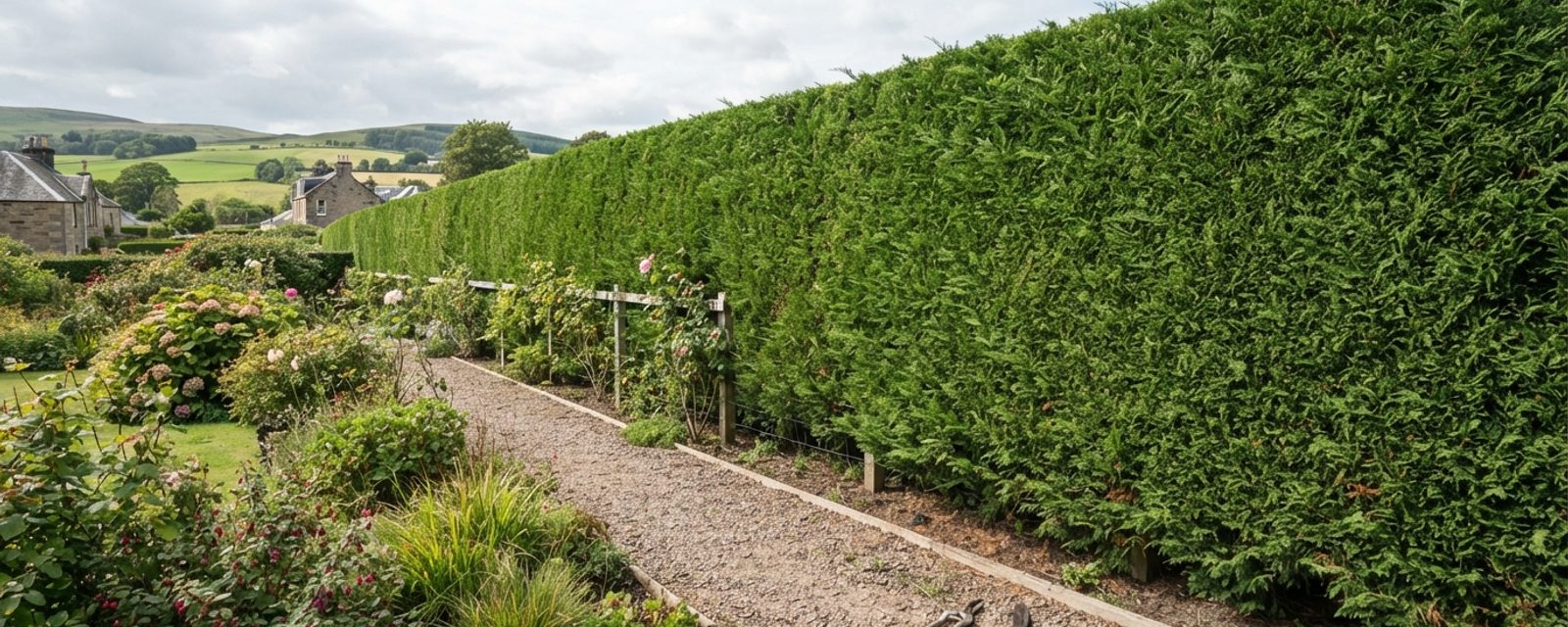
You go out to trim the leylandii, or you notice it in passing after a dry spell: a patch of rusty brown, or a whole section gone the colour of dead bracken, standing out against the green either side. The first question is always the same, is this coming back, or is it permanent?
The honest answer depends entirely on one thing: what's underneath the brown. Unlike a beech or hawthorn hedge, which will happily throw out new shoots even after a hard cut into old woodWhether a plant fruits on stems grown the previous year (young wood) or on older, established branches (old wood), which decides how it's pruned. Full definition →, most conifers, including leylandii, Lawson cypress and western red cedar, have little or no capacity to regrow from bare, leafless wood once it's gone brown. If a section has been cut back into that old wood, whether by an over-enthusiastic trim, drought, disease or anything else, it is very likely to stay bare for good.
The fact that changes everything: conifers don't regrow from old wood
Cut into older leafless growth and "new growth will not appear from bare wood." That same limit applies across the group, conifers "have little or no capacity to regrow from old wood," with yew as the one common exception among garden conifers.
That distinction changes what "browning" means depending on where it's happening:
- Brown foliage on green wood (bend a shoot and there's still live growth underneath, or the branch itself is still supple and green under the bark) can often recover, given time and the right conditions.
- Bare, brown, leafless wood with no green growing points left on it will not resprout. That section is gone, and the only fix is to let a neighbouring branch grow across the gap, train in a replacement, or accept a permanent thin patch.
This is also why height reduction on a leylandii hedge should be capped at around a third of the plant's height in one go, worked from April, since taking too much off risks "a bare, flat-topped hedge" that never fills back in.
The scratch test: how to check
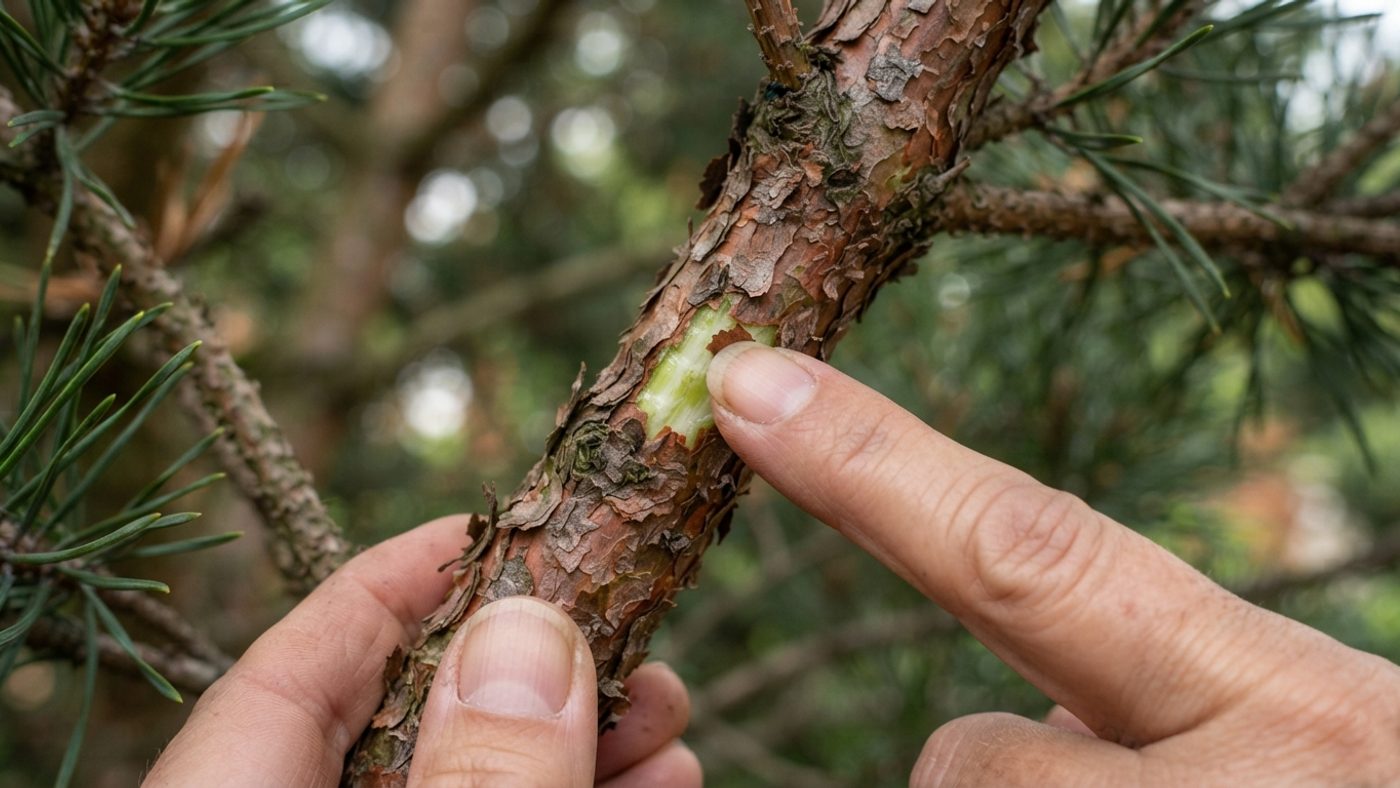
Take a small stem or a patch of bark from the affected area and scratch it gently with a fingernail or the blade of secateurs.
- Green and moist underneath - the tissue is alive. The branch has a chance of producing new growth from a live bud further down, or at minimum isn't actively dying back further.
- Brown, dry and papery underneath - the tissue is dead and won't return.
Test at a few points along the browned section, not just at the tip, dieback often starts at the shoot ends and works backwards, so a branch can be green lower down even where the outer foliage looks hopeless. If a result looks in-between, a dull olive rather than a clean green or brown, treat it as a caution sign rather than a pass: test a few more spots further down the same branch, and lean towards the more pessimistic reading until one comes back clearly green.
Rule out pests and leaf diseases first
Before working through the causes below, check the foliage itself for pests: cypress aphid is a common culprit on leylandii and Lawson cypress, along with scale insects and fungal leaf/twig diseases such as Coryneum canker and Pestalotiopsis, all can cause patchy browning on their own. Damp, humid conditions favour fungal disease generally, so Scotland's wetter climate is a reason to check the foliage closely rather than skip straight to the causes below. A close look at the affected shoots, small insects, sticky residue, or visible cankers on the bark, usually rules these in or out quickly; if the foliage looks clean, the causes below are the more likely explanation.
The real causes, one at a time
Drought stress
Classic drought browning starts at the base of the hedge or in patches on the sunniest, most exposed side, and tends to follow a hot, dry spell, it's worse on newly planted hedges that haven't rooted deeply yet, and on free-drainingSoil that lets water pass through quickly rather than pooling, so roots aren't sitting in wet ground after rain. Full definition → soils. Caught early, while the wood underneath is still green, drought-stressed conifers generally recover once watering resumes; adverse conditions including drought are a recognised cause of brown patches, and regeneration can be inhibited when dry weather coincides with recent trimming.
Drought-driven browning is, on the whole, less likely to be the explanation in Scotland than for the same symptom in the drier parts of England. The west and north of the UK sit in the path of prevailing Atlantic weather systems, and mountainous terrain forces that moist air to rise and drop more rain, producing a marked northwest-southeast rainfall divide across the UK, the wettest recording stations, concentrated in western Scotland, receive several times the rainfall of the driest parts of southern and eastern England. That doesn't rule drought out, a hot spell on a free-draining slope, or a hedge in its first year or two after planting, can still dry out anywhere, but if a Scottish hedge is browning without an obvious dry spell behind it, waterlogging, cold damage or root disease are worth checking before drought.
Pruning cut into old wood
If a hedge has had its height or width reduced aggressively, or been cut back hard to fix years of neglect, and the brown patch lines up with where the cut went into old, leafless wood, that's very likely permanent. Die-back is "slightly more common after autumn trimming (mainly October)" than after cuts made in April, June or early August. A late autumn cut gives a hedge less time to heal before winter in any case; on the wetter ground the rainfall figures above point to, that's worth bearing in mind specifically for a Scottish hedge trimmed late in the season.
Root problems: waterlogging and compaction
Roots sitting in saturated or compacted soil can't take up water or oxygen properly, and the above-ground symptoms, foliage fading, browning, dieback, look very similar to drought, which is part of what makes this diagnosis tricky. Root symptoms caused by prolonged waterlogging can be almost indistinguishable from Phytophthora root rot without testing, and the two conditions often occur together, since Phytophthora spores spread through water films in the soil and thrive in exactly the wet, poorly-drained ground that waterlogging produces.
Scotland's generally higher rainfall means waterlogging deserves a closer look than it might in a drier region, particularly on a hedge planted in a low spot, on heavy or slow-draining soil, on compacted ground near a path or driveway, or downhill of recent construction or landscaping work that disturbed drainage or damaged roots.
Phytophthora root rot
A hedge that's genuinely declining, rather than just browning in a recognisable pattern, is worth checking against this cause specifically. Phytophthora (a water mould, not a true fungus, roughly pronounced "fy-toff-thora") root rot is one of the most common causes of root and stem-base decay in a wide range of trees and shrubs, second only to honey fungus, another soil-borne organism that rots roots and the stem base but spreads through root-to-root contact and black, bootlace-like strands in the soil rather than through water, and Phytophthora is a genuine risk for leylandii and Lawson cypress specifically. It's a disease of heavy or waterlogged soils, spread by microscopic spores that swim through water films between soil particles and travel further in run-off or drainage water, which is exactly why it deserves particular attention in Scottish gardens: the same higher rainfall that raises waterlogging risk also gives this disease more of the wet, poorly-drained conditions it needs to spread. Because it spreads through soil and surface water rather than through the air, a hedge along a shared boundary or a garden downhill of an infected planting is at higher risk than an isolated, well-drained one, moving soil, compost or run-off from an affected area is the main way it travels.
The above-ground symptoms in conifers are described as a gradual fading from vibrant to dull green, through greyish, to brown, a slower, more washed-out colour change than the crisp rust-brown of drought or frost scorch. Red flags that point toward Phytophthora rather than simple drought include browning that starts at the top of the plant and works down, symptoms that spread faster than a drought pattern would explain, or foliage that keeps deteriorating despite watering. In severe cases the pathogen invades the stem base itself, causing a brown or black discolouration under the bark right at soil level. There's no chemical treatment available to home gardeners, and confirming it with certainty usually means getting a professional (a tree surgeon or garden consultancy) to inspect the stem base and roots directly rather than diagnosing from foliage colour alone. Management means improving drainage, removing badly affected plants, and avoiding moving infected soil elsewhere in the garden.
Winter and cold damage
A hard winter, particularly one with cold, drying winds or a late, sharp frost after new growth has started, can leave a conifer hedge looking scorched and alarming by spring, bronzed or browned foliage across whole sections, sometimes on the windward side only. Frost and cold, drying winds are recognised causes of brown patches in conifers. Exposed, upland and coastal Scottish gardens see more of this kind of wind and cold exposure than a typical sheltered lowland English garden, and a hedge on the west coast or an island faces the added risk of salt-laden wind scorch on its exposed side. A heavy, wet snowfall settling on a hedge can also splay or snap branches under the weight, a different, mechanical kind of winter damage worth checking for alongside scorch.
The encouraging part is that this kind of winter browning is often more cosmetic than it looks: run the scratch test, and if the wood beneath is still green, the hedge has a genuine chance of pushing out fresh growth once the weather warms and hiding the damage over a season or two. This is one cause where patience is often the right call rather than reaching for secateurs, cutting off winter-browned foliage too early, before you're sure which parts are actually dead, risks turning cosmetic damage into a permanent bare patch if you cut into wood that would otherwise have recovered.
Comparing the causes
| Cause | Where browning starts | Speed of onset | Scratch test result | Recoverable? |
|---|---|---|---|---|
| Drought stress | Base of hedge, sunniest/most exposed side | Follows a hot, dry spell; days to weeks | Green if caught early; brown if prolonged | Yes, if wood is still green when watering resumes |
| Pruning into old wood | Lines up exactly with the cut | Immediate to a few weeks after cutting | Brown, dry | No — that section will not resprout |
| Waterlogging / root damage | Whole plant or side nearest the wet/compacted ground | Weeks to months | Depends on severity; can go either way | Sometimes, if drainage is improved before roots die completely |
| Phytophthora root rot | Often starts at the top, or spreads unusually fast | Progressive, often not slowed by watering | Brown at the affected sections; roots blackened | Rarely — no chemical control; affected plants usually need removing |
| Winter/cold damage | Windward side, or generally across the hedge after a hard winter or late frost | Appears over winter, visible by spring | Often green underneath | Often, once the wood proves green |
Waterlogging and Phytophthora frequently occur together and can look identical above ground, so a soil and drainage check is more useful than guessing from foliage colour alone. More than one cause can be at work at once, too, a hedge weakened by waterlogged roots is also more vulnerable to drought stress and dieback than a healthy one, so ruling in one cause doesn't automatically rule out another.
How fast will a patch fill back in?
If the scratch test comes back green and the cause turns out to be recoverable, drought, winter damage, or waterlogging caught before roots died, the next question is how long a gap will take to close. Bare areas "may gradually fill in, but in serious cases this can take several years," and tying healthy neighbouring shoots across a gap can speed the process along where the damage isn't too extensive.
Leylandii is usually described as a fast-growing hedge, with figures for vigorous growth in favourable English conditions often quoted at around a metre a year. Conifer growth generally slows with a shorter, cooler growing season, and Scotland's growing conditions are, on the whole, cooler than the English conditions that figure is based on, so a Scottish hedge is unlikely to match it consistently. There's no verified Scotland-specific growth-rate figure to put in its place: plan on a gap closing more slowly than a metre a year suggests, rather than assuming a bare patch will vanish within a season or two.
What to actually do
- Scratch test first, before cutting anything. Test at several points along the browned section, not just the shoot tips.
- If it's green underneath: water thoroughly and consistently during dry spells (this won't help if the real cause is waterlogging, check the soil isn't sodden first), and be patient with winter damage rather than reaching for secateurs immediately.
- If it's brown and dry underneath, and it lines up with a hard prune: accept that section won't resprout. Train a neighbouring branch across the gap, or replace that section of the hedge, if the same spot keeps struggling (persistent wet ground, heavy wind exposure), it's worth asking a local nursery whether a different species would coexist better with a leylandii hedge than another leylandii plant in that exact spot.
- If the whole plant is declining, or browning started at the top and is spreading fast despite watering: check the base of the stem for dark discolouration under the bark and consider that this may be Phytophthora root rot rather than a growing-conditions problem. There's no chemical fix, management is about drainage and removing badly affected plants.
- Check drainage wherever a hedge sits in a low spot, on heavy clay, or near recent groundworks, since waterlogging and root disease both thrive in the same conditions and often travel together.
Common questions
A brown patch appeared after I trimmed the hedge last month. Will it grow back?
Scratch a small area of bark in the brown section. If it’s green and moist underneath, there’s a chance of recovery. If it’s brown and dry, and the patch lines up with where you cut, that wood has gone into old growth and won’t resprout, conifers generally can’t regenerate from bare wood the way a beech or privet hedge can.
How do I tell drought stress apart from Phytophthora root rot?
Drought browning tends to start at the base or on the sunniest side, follows an obvious dry spell, and usually responds to watering within a couple of weeks. Phytophthora is more likely if browning starts at the top of the plant, keeps spreading despite watering, or the plant is on heavy or poorly drained soil, check for dark discolouration under the bark at the stem base as a further clue.
Is drought less likely to be the cause of browning in Scotland than in England?
It’s a reasonable diagnostic starting point. Scotland’s climate is generally wetter than England’s, particularly in the west, due to prevailing Atlantic weather systems and mountainous terrain enhancing rainfall. That doesn’t rule drought out entirely, especially on free-draining soil or with a newly planted hedge, but if there’s been no obvious dry spell, waterlogging, winter damage or root disease are worth checking before drought.
My hedge looks scorched and brown after a hard winter, is that permanent?
Not necessarily. Winter and frost damage often looks worse than it is. Run the scratch test, if the wood underneath is green, the hedge has a real chance of pushing out new growth as the weather warms, and it’s usually worth waiting rather than cutting the damage off straight away, since cutting into wood that would have recovered can turn cosmetic damage into a permanent gap.
How long will it take a brown patch to fill back in?
If the cause was recoverable, gaps can take anywhere from a season to several years to close, depending on severity. Leylandii is often described as capable of roughly a metre of growth a year in favourable English conditions, but Scotland’s cooler, shorter growing season means that pace is unlikely to be matched consistently in most Scottish gardens, so it’s worth planning for a slower fill-in than that headline figure implies.
Sources
5 sources, recorded with what each was used for
- RHS: Conifers with Brown Patches - Solutions: The "little or no capacity to regrow from old wood" fact, adverse-condition causes of brown patches (drought, frost, cold drying winds), pruning-timing risk (autumn trimming), and recovery/fill-in timescale
- RHS: Leyland Cypress - Pruning: Pruning timing and technique, the "new growth will not appear from bare wood" fact, and height-reduction limits
- RHS: Phytophthora Root Rot - Prevention Guide: Phytophthora symptoms, its association with heavy/waterlogged soil, spread mechanism, difficulty distinguishing it from waterlogging, and lack of chemical control
- RHS: Honey Fungus: How honey fungus spreads (root-to-root contact and black rhizomorph "bootlaces" through the soil), as a point of contrast with Phytophthora's water-borne spread
- Met Office: How much does it rain in the UK?: The northwest-southeast UK rainfall divide, the role of prevailing Atlantic westerlies and mountainous terrain in Scotland's higher rainfall, and comparative regional rainfall figures