
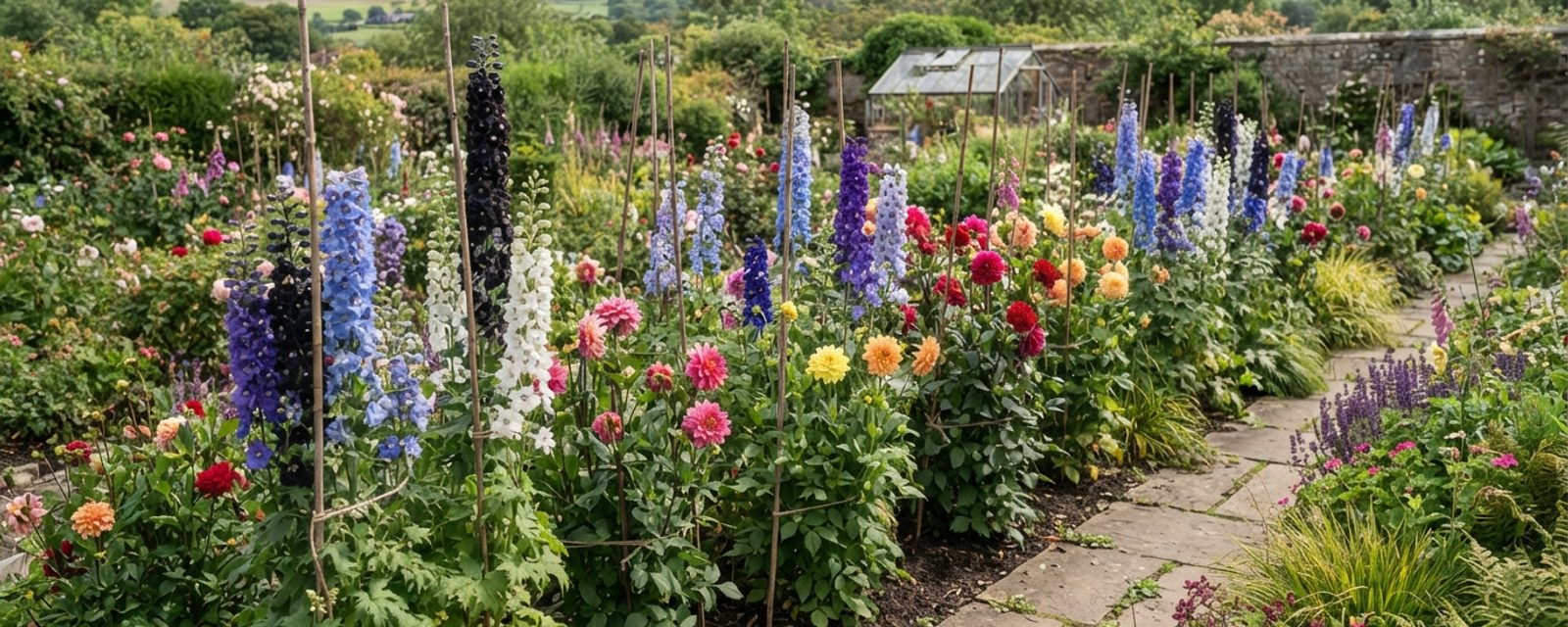
You go out the morning after an overnight blow to find your delphinium spike lying flat across the path, its stem snapped a third of the way up, or the dahlias slumped sideways with their flower heads pressed into the mud. It happens fast, and it happens most often after rain: the plant looked fine the evening before. The damage isn't really about one bad night of wind. It's about a top-heavy plant that was never given anything to lean on before it needed it.
Tall perennials, delphiniums, dahlias, tall sedums and asters, peonies once their blooms open, carry a lot of weight a long way above the ground, on stems that are mostly water and pith. Add a soaked flower head after rain, or a gust hitting a broad clump side-on, and the stem simply can't take the leverage. Staking is how you take that leverage away before it becomes a problem, and the method and the timing both matter.
Why top-heavy perennials go down
Two things compound each other: the weight the plant is carrying and the force trying to push it over.
Flower heads and foliage hold rainwater. A dahlia bloom or a peony head that's dry might sway in a gust and come to no harm; the same head heavy with rain acts like a weight on the end of a lever, and the stem below it is the fulcrum. This is why plants often go down not during a storm but in the hours after one, once the rain has stopped but the flowers are still saturated and a gust catches them.
Wind supplies the other half. As a broad UK-wide pattern, "places in the east and south of the UK tend to be drier, warmer, sunnier and less windy than those further west and north." Scotland sits at the windier, wetter end of that gradient, though how windy varies sharply from a sheltered inland garden to an exposed upland or island one, a "gale" being a day when the wind reaches a mean speed of 34 knots or more over ten consecutive minutes.
| Region | Typical inland/sheltered gale days per year | Exposed upland or island gale days per year |
|---|---|---|
| Eastern Scotland | around 5 | over 20 (exposed upland, e.g. the Grampians) |
| Western Scotland | around 5 (sheltered inland) | over 25 (the Hebrides) |
Rainfall follows the same west-and-north pattern, and it compounds the wind risk rather than sitting alongside it separately, wetter regions mean flower heads are more often carrying that extra rainwater weight in exactly the gardens that also see the most gale days.
| Area | Average annual rainfall |
|---|---|
| Driest parts of eastern England | around 500mm |
| Eastern Scotland, sheltered coast (East Lothian, Fife, Moray Firth) | under 700mm |
| Eastern Scotland, southern Grampians (wettest part of the region) | over 1500mm |
| Western Scotland, upper Clyde valley/Ayrshire/Dumfries and Galloway coast | under 1000mm |
| Western Scotland, west Highlands | over 3500mm |
Even Scotland's driest area, the sheltered eastern coastal strip, sees appreciably more rain than the driest part of England, and most of the country sits well above that. Combined with a climate that runs windier the further west and north you go, most Scottish gardens have good reason to treat staking as more than an optional tidiness job for anything tall and top-heavy, a sheltered walled garden in the driest part of the Lothians is genuinely lower-risk than an exposed plot in Argyll or the Hebrides, but neither is exempt.
Staking isn't the only defence. Where you can, keep tall perennials out of a wind funnel in the first place, a gap between two buildings, a gateway, or a fence line can channel gusts rather than block them, and any of those spots makes a staked plant work harder than it needs to. A hedge, wall, or even a looser planting of shrubs upwind of a delphinium or dahlia bed cuts the force reaching the plant before a single stake goes in.
When to stake: early, not after
Supports go in while the plant is still short, in spring, as soon as new growth is up and visible, before the stems have lengthened. The plant then grows up and through the support, which holds the stems from the base as they develop and disappears from view under the foliage.
Staking a plant that has already flopped is a repair, not a fix. Once a stem has bent or kinked, tying it back upright rarely restores it fully, the kink stays as a weak point, and the flower head often ends up facing the wrong way for good. If a plant does go down in a storm before you've staked it, remove any stems that are visibly broken or badly bent, apply a temporary support to what's left, and treat the whole clump as a priority for proper staking the following spring, in good time.
Choosing the right method
Different growth habits need different supports, a single dahlia stem and a clump of delphiniums are not held up the same way.
| Method | Best suited to | How it works |
|---|---|---|
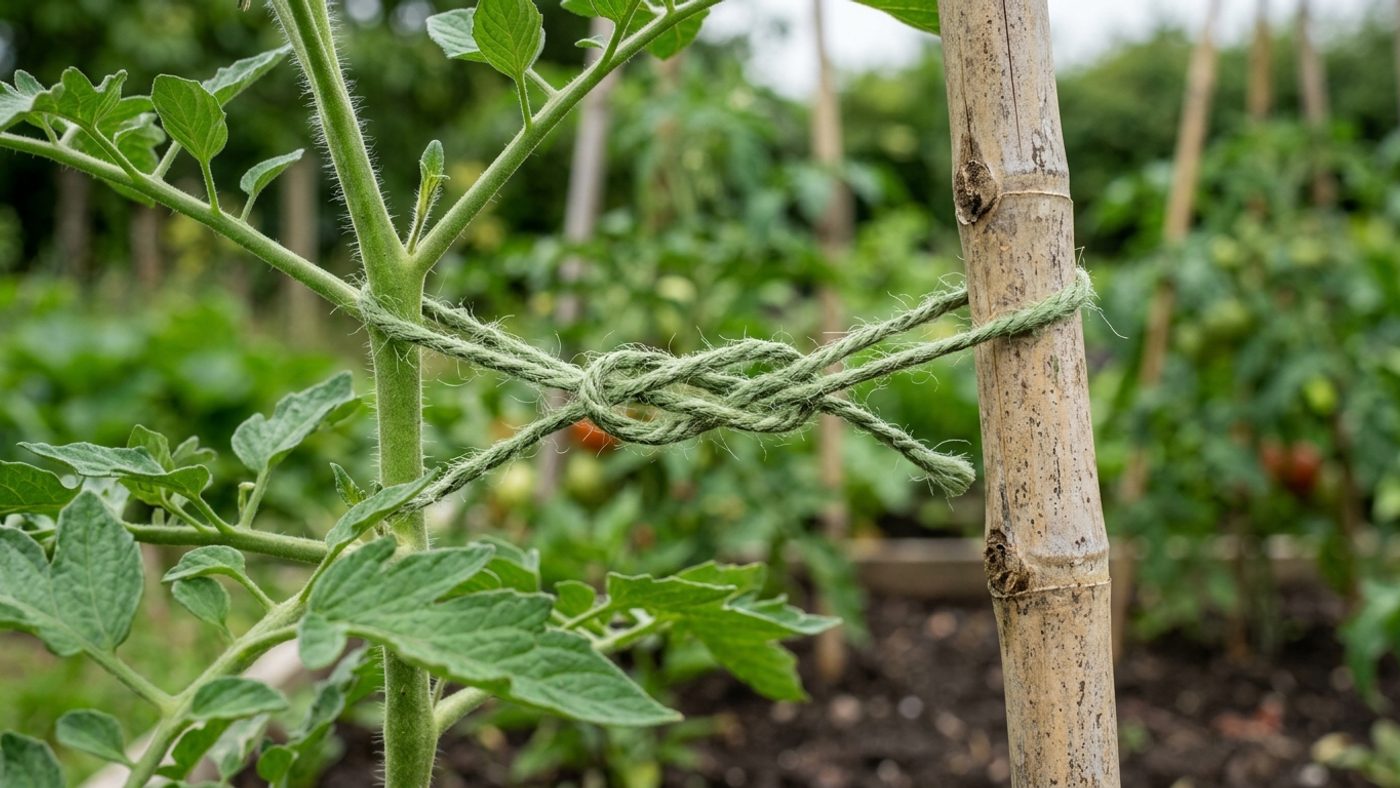
| Individual canes with ties | Single-stemmed plants: dahlias, individual delphinium spikes | A cane driven in close to the main stem; the stem is tied to it as it grows, using a figure-of-eight loop, twine crossed once between stem and cane before tying off, so the two sit slightly apart rather than pressed together |
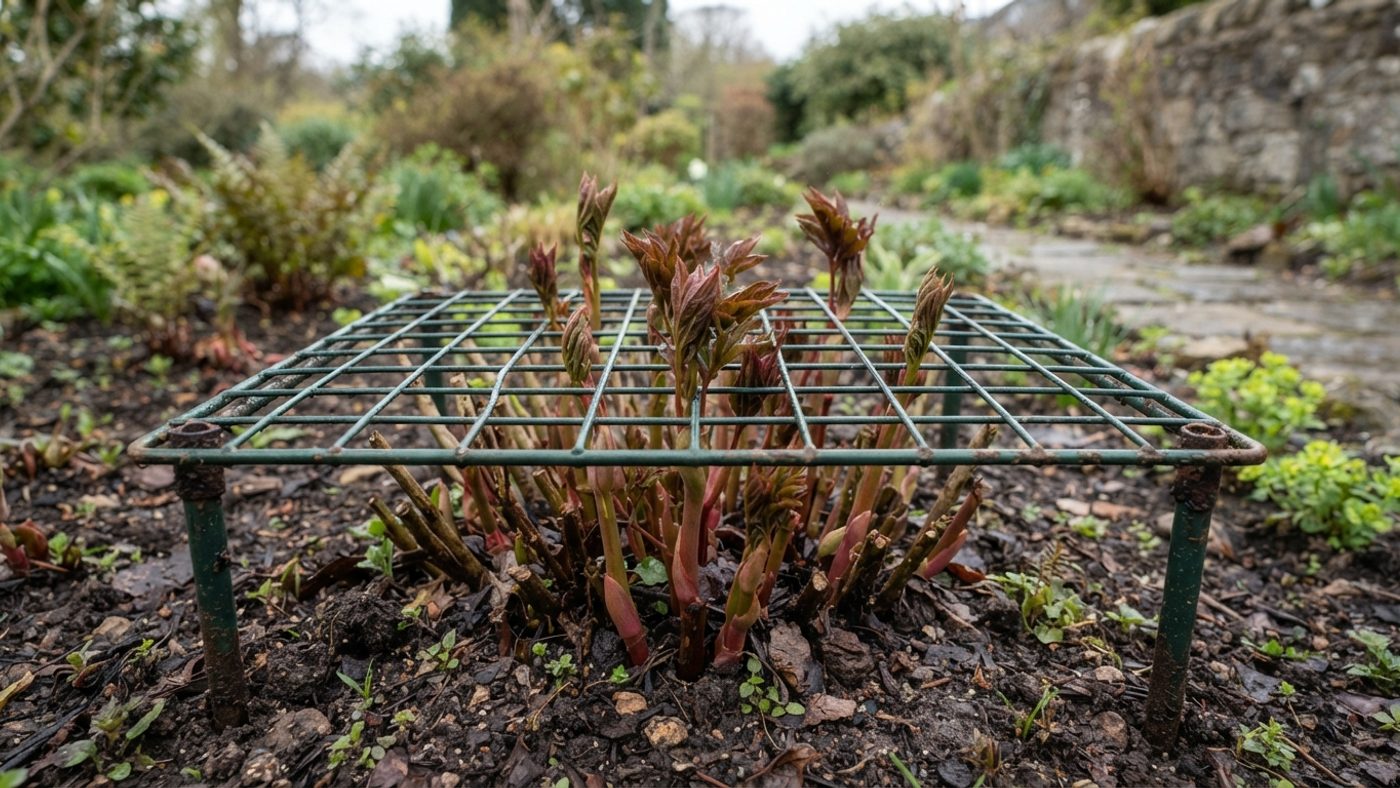
| Grow-through grids and link stakes | Multi-stemmed clumps: delphiniums grown as a clump, peonies, phlox, asters | A grid or ring frame placed over the crown in spring; stems push up through the mesh as they grow, so the whole clump is held without individual tying |
| Single-stem ring supports | Large single blooms on relatively short stems: oriental poppies, compact delphinium cultivarsA plant variety that arose or was bred under cultivation and is kept true by deliberate propagation, rather than a naturally occurring wild species. Full definition → | A ring encircles the stem or small cluster of stems, giving support without a cane running the full height of the plant |
| Y-stakes and spiral stakes | Top-heavy plants once they’re partway grown: peonies, dahlias | Stakes pushed in around the clump to prop stems from the side, often added as a second tier of support once grow-through frames alone aren’t enough |
Use soft twine rather than wire or anything that can cut into the stem, 3-ply for smaller plants, 5-ply for larger ones, and don't tie in too tightly.
Plain bamboo canes and cheap twine are enough for most single stems and cost little; grow-through grids and metal Y-stakes cost more but are reusable for years and worth it for a clump you're not replanting every season, such as a permanent peony or delphinium bed. Wooden stakes and canes sit in consistently damp soil for most of a Scottish growing season, which rots untreated wood and rusts plain metal faster than in a drier climate. Treated or coated stakes, or ones lifted and stored dry over winter, last through more seasons than bargain canes left in the ground year-round.
Twiggy hazel or birch prunings, pushed in around a clump the same way as a grow-through grid, work as a free, biodegradable alternative for a border perennial that just needs light support to lean into, rather than a heavy tie-in job. See hazel pea-sticks and twiggy supports for how to size and set them up.
Staking vs the Chelsea chop: which perennials need which
Not every top-heavy perennial has to be staked. Some can be cut back hard in late spring, the Chelsea chop, timed later in most of Scotland than the English late-May date, to produce shorter, bushier growth that needs little or no support in the first place. Whether that's an option comes down to how the plant flowers, not how tall it gets.
| Perennial | Staking or chop | Why |
|---|---|---|
| Delphiniums | Stake | Each stem carries a single flower spike; cutting the tip removes that stem’s only bloom outright, with no side branches to take over |
| Dahlias | Stake | TuberA swollen underground stem or root a plant uses to store energy, which can also grow into a new plant, the classic example being a potato. Full definition →-grown, heavy-headed stems that don’t branch usefully from a hard cut in the way the chop-suited perennials do |
| Peonies | Stake (grow-through support) | Woody-based growth that doesn’t respond to the chop’s cutting-back technique |
| Echinacea, Helenium, Phlox paniculata, upright Sedum, Solidago | Chop instead of staking (or reduced staking) | Branch readily from lower buds once tipped, producing shorter, self-supporting growth |
The practical split is: single-spike flowerers like delphiniums need staking because there's no alternative that doesn't cost you the flower. Clump- and branch-forming late-summer perennials can often skip staking altogether by taking the chop instead, timed to your own garden's growth stage rather than the calendar. Dahlias and peonies sit staked rather than chopped for a different reason, it's their growth habitA plant's characteristic shape and manner of growth, such as upright, spreading, creeping or bushy. Full definition →, not their height, that rules the chop out. See the Chelsea chop article for exact regional timing and the fuller run of which perennials take to it well.
Keeping support in place through the season
A support fitted in spring doesn't take care of itself for the rest of the year. As the plant grows, check ties regularly and add another tier of twine or netting before the stems outgrow what's already there, a plant that has grown a foot above its only tie is effectively unsupported at the top, which is exactly where the weight is. Loosen or replace any tie that's started to bite into a thickening stem.
Peonies and dahlias in particular often need a second round of support once the flower buds swell and the top of the plant gets noticeably heavier than it was in May. Dahlias, asters and sedums are still in full, heavy bloom well into autumn, which is exactly when Scotland sees some of its worst storms as the remnants of Atlantic hurricanes track through in September and October. Check supports on these plants going into autumn, not just in spring, and reinforce anything that's started to lean before a forecast storm rather than after one. Once a plant is cut back for winter, clear its stakes and grids away rather than leaving them standing bare in the ground, an empty support catches wind and rocks loose over winter, which loosens the ground around it and leaves a weaker anchor point for next spring.
Common questions
Can I do anything besides staking to stop tall perennials blowing over?
Yes, where you’re planning a new bed, keep tall, top-heavy perennials out of gaps between buildings, gateways, or fence lines that funnel wind rather than block it. A hedge or shrub planting upwind of a delphinium or dahlia bed reduces how hard the wind hits the plant in the first place, so the staking you do add has less force to resist.
My delphinium already flopped in a storm, is it worth staking it now?
Only to stop the damage getting worse this year; a bent stem won’t straighten out cleanly or flower normally again once it’s kinked. Treat it as this season’s loss and put proper support in early, before growth starts, next spring.
Do I need to stake peonies every year, or only in bad weather?
Stake every year, before the buds open. Peony flower heads are heavy even without rain, and a support fitted early is far more effective than one added after the stems have already started leaning.
Can I use the Chelsea chop instead of staking my delphiniums?
No, delphiniums flower as a single spike per stem, so cutting the tip in the chop removes that stem’s only bloom for the year with no side shoots to replace it. Staking is the only real option for them; the chop works for branching, later-flowering perennials instead.
Do I need to worry about staking in autumn, or is spring enough?
Spring is when supports go in, but autumn is when late-flowering plants like dahlias, asters and sedums carry their heaviest, wettest growth right as Scotland’s autumn storms arrive. Check and reinforce ties going into autumn rather than assuming a spring setup will hold all season.
Sources
4 sources, recorded with what each was used for
- RHS: Perennials - Staking for Support: Staking timing, methods by plant type (canes, grow-through grids, ring supports, Y-stakes/spiral stakes), tying technique and twine grades
- Met Office: UK regional climates: General east/south vs west/north UK climate pattern (drier, warmer, sunnier, less windy in the east and south)
- Met Office: Eastern Scotland - climate: Gale-day averages and rainfall totals for Eastern Scotland
- Met Office: Western Scotland - climate: Gale-day averages and rainfall totals for Western Scotland, including the Hebrides