
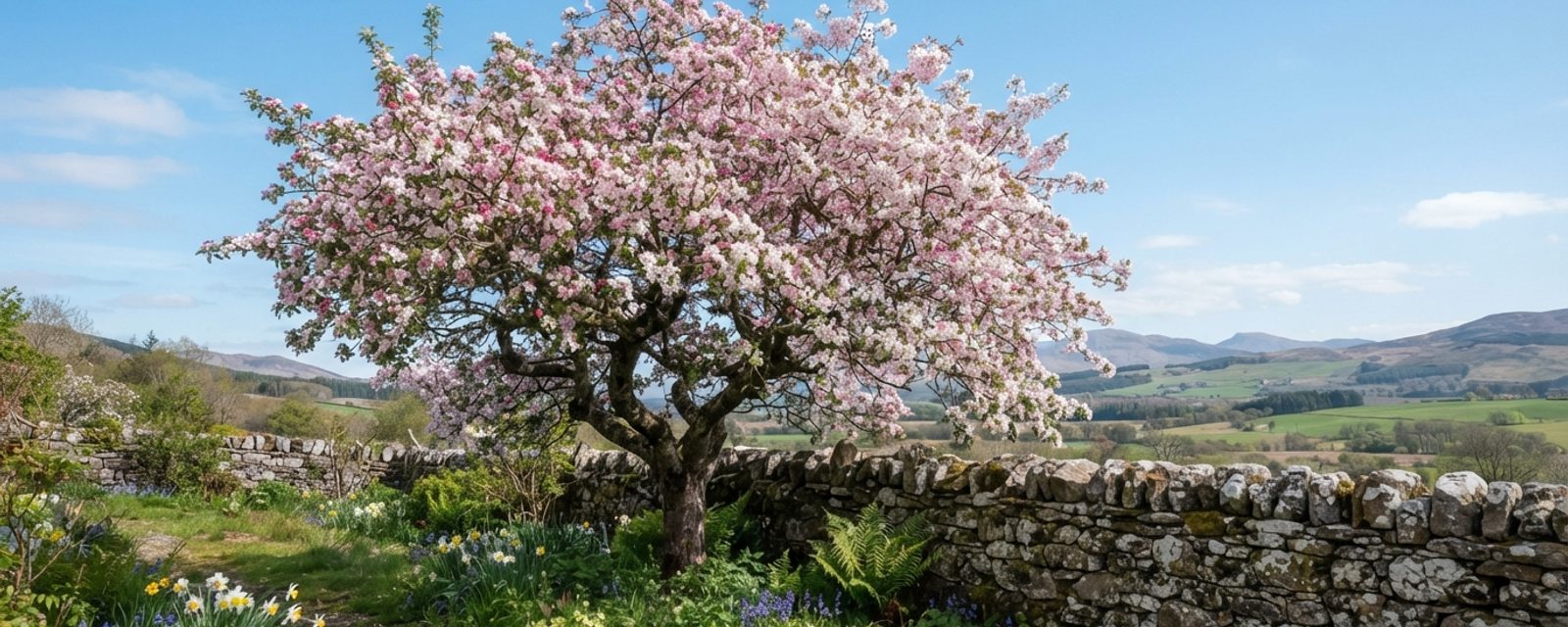
In spring 2025, the Woodland Trust's volunteer recorders logged blackthorn in flower by 12 March, nine days ahead of the 2000–2019 average of 21 March, and earlier, in a lot of gardens, than the daffodils. Nobody moved the calendar. What moved was the weather behind it: a warmer, sunnier March that pulled blossom forward across the whole country before pollinators, or gardeners with fleeceA lightweight, breathable fabric laid or draped over plants to trap a little warmth and keep off frost, wind and some flying pests. Full definition → ready, had quite caught up.
That gap between "the tree is ready" and "the season is ready for it" is the whole problem with fruit blossom. A few warm days in February or March can put flowers open on a plum or pear weeks before the calendar date anyone was planning around, and open blossom is the most frost-tender thing that tree produces all year. Understanding why the timing moves is the first step to not losing a year's crop to a clear, cold night in April.
Why blossom timing isn't fixed to a date
A fruit tree doesn't read a calendar to know when to flower; it responds to two things happening in sequence, and the exact date shifts depending on how those two things land in any given year.
The first is a chilling requirement. Over winter, a dormant tree needs a cumulative number of cold hours, cool but not necessarily freezing, before it can respond to spring warmth at all. This is the same dormancy-release mechanism that governs when a tree's leaf buds break: cold exposure over winter is what allows a plant to recognise that winter has actually happened, rather than treating an odd mild spell in December as spring.
The second is forcingCovering plants to exclude light and speed early, tender growth in the dark, most associated with rhubarb and sea kale in late winter. Full definition →, the term for the accumulated warmth in late winter and spring that actually triggers the buds to move, once that chilling requirement has been met. Day length plays a supporting role too, but temperature is doing most of the work in most years. A winter that's cold enough early, followed by an unusually warm spring, produces the earliest blossom; a winter that stays mild right through, or a spring that stays cool and grey, holds it back.
Flower buds and leaf buds aren't the same clock, either. Flower buds on many trees burst distinctly earlier than the leaf buds on the same plant, blackthorn is the obvious garden example, flowering on bare wood well before its leaves show. The reasoning: unfolding leaves would get in the way of pollinating insects reaching the flowers, so flower buds have evolved to jump the queue. That matters here specifically, because it means blossom timing can't simply be read off leaf bud-burst records, it runs on a related but distinct schedule, driven by the same chilling-then-forcing mechanism but not the same calendar.
Put together: blossom date is a product of that winter's chilling and that spring's warmth, not a fixed point on the calendar, which is exactly why it can arrive nine days early in one year and land close to average the next.
Why earlier blossom means more frost risk, not less
This is the part that catches gardeners out: earlier blossom does not mean the frost risk has gone away for the year, if anything, it can put the flowers into more danger, not less.
Open blossom is frost-tender in a way dormant wood and even swelling buds are not. Frost damage to fruit trees sets in once air temperature drops below 0°C, and it's the flowers and very young fruitlets that take the damage first, a hard winter frost on bare wood is nothing compared with the same temperature landing on an open flower in spring. Damage to the flower, or to a flower that's just been fertilised, can mean few or no fruit forming that year even though the tree itself comes through completely undamaged. That's the real sting: a healthy, vigorous tree can still deliver a blank year if a single frosty night lands at the wrong moment in its flowering.
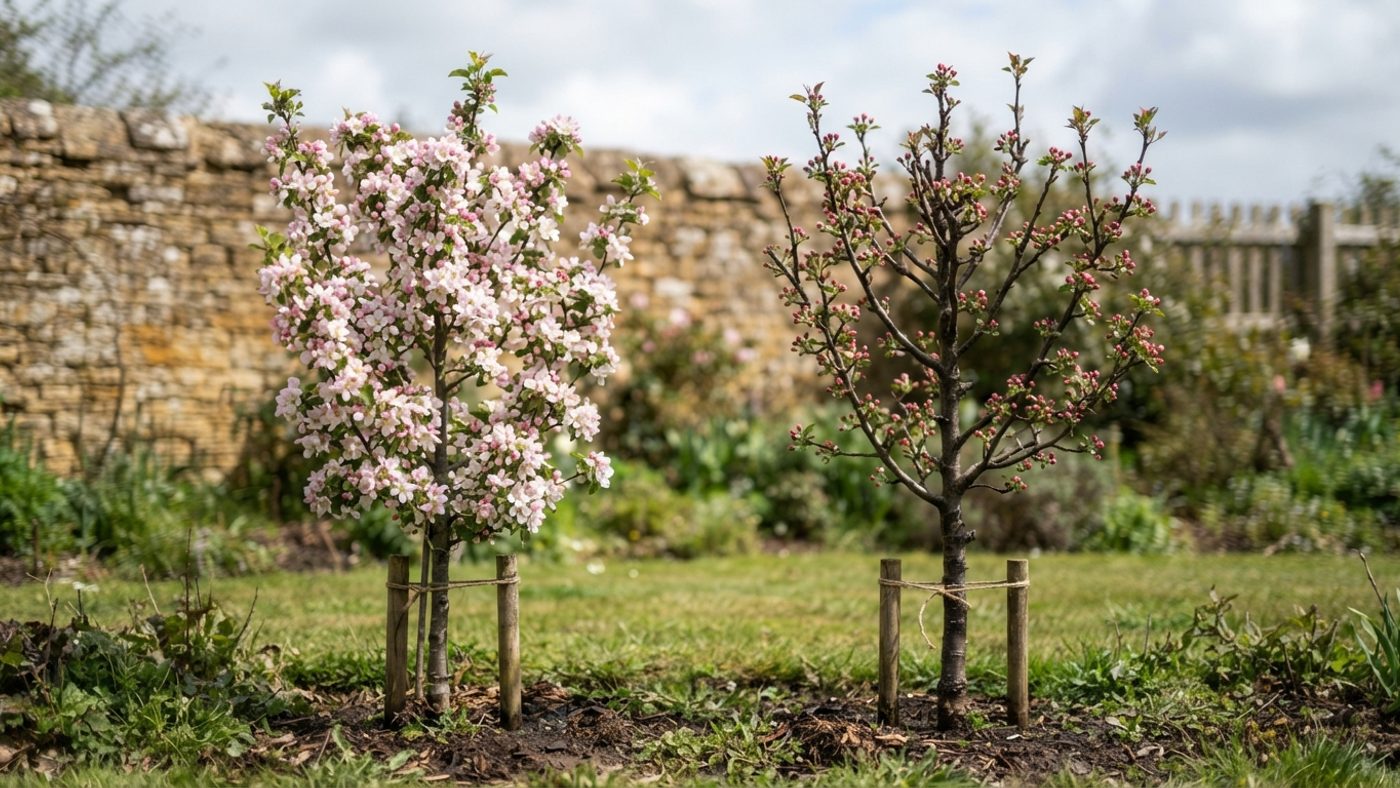
The risk this creates is straightforward. If a warm spell pulls blossom open several weeks earlier than usual, it's now exposed for longer to whatever spring frosts are still coming, because a warm March doesn't reliably mean a frost-free April. Early-flowering fruit, plums, nectarines and peaches in particular, carry the most exposure for exactly this reason: they're already the first to bloom in a normal year, so an early spring pushes them furthest into a period when a late frost is still a live possibility. Spring frost is the single biggest cause of a poor fruit crop, ahead of pruning mistakes, pests or nutrient problems.
Fruit set is the part that actually fails, not the flowering
It's worth separating two things that get run together: the tree flowering, and the tree setting fruit. A frost that damages open blossom doesn't stop the tree from having flowered, it stops those flowers from turning into fruit. The tree can look completely normal in May and still carry a fraction of its usual crop, because the failure happened invisibly, at blossom, weeks earlier.
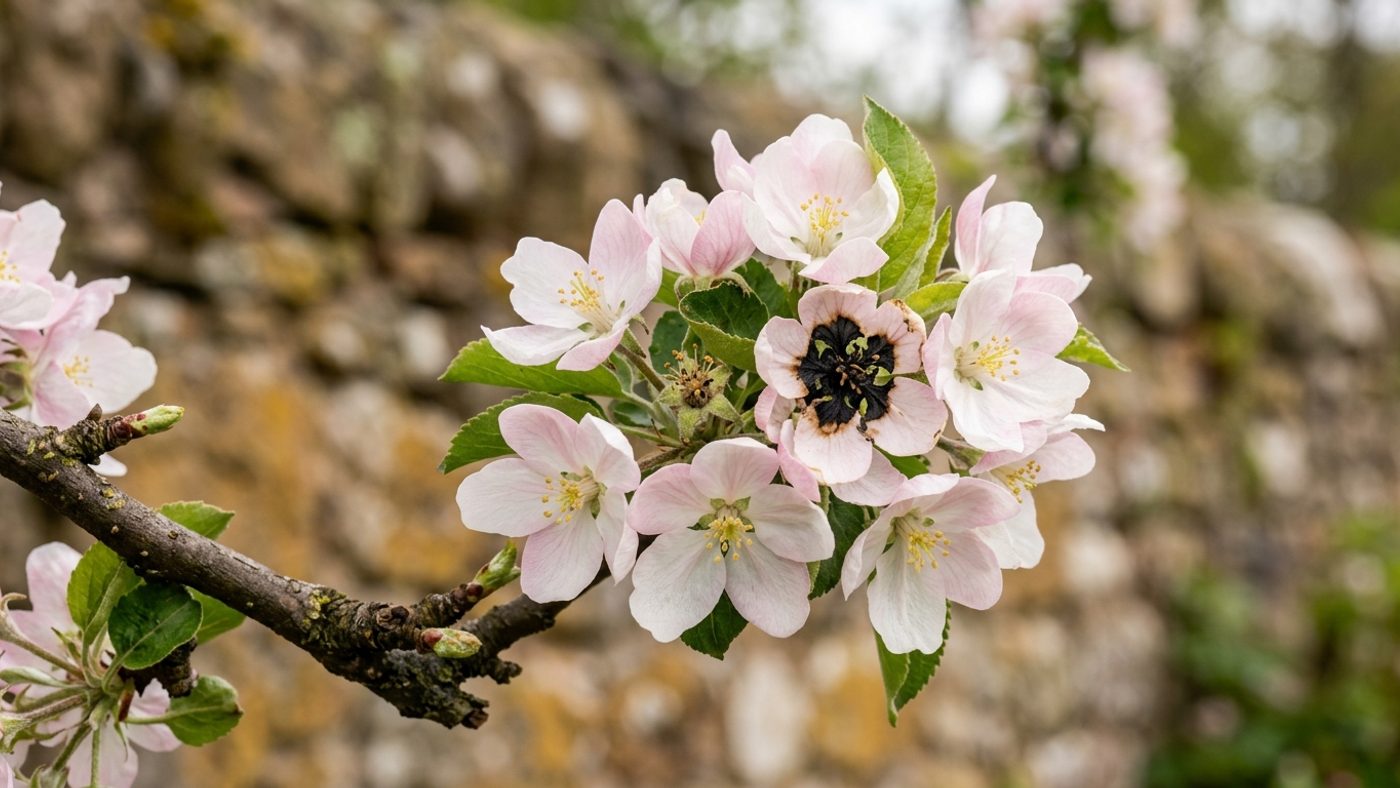
Pollination is the other way an early or unsettled spring can cut into fruit set, separately from frost. Most fruit trees need their flowers visited by insects, honeybees, bumblebees, and a range of other flying insects, to set fruit at all, and many varieties need pollen from a genuinely different, compatible variety flowering at the same time, not just their own flowers. Bees are markedly less active early in the year, and especially so in cold, wet or windy weather; blossom that opens into an unsettled early spell can go under-visited even without a single frost occurring, simply because the pollinators that would normally be working it aren't flying yet in any numbers. That's not a hypothetical risk for a Scottish garden specifically: Scotland was the only UK nation to finish spring 2026 wetter than average, and wet, windy conditions are exactly the ones that keep pollinators grounded regardless of what the thermometer says. A frost-free spring with poor pollinator weather during the exact days of bloom can cost as much of the crop as frost would.
The Scottish angle: what the record actually shows
Scotland's blossom does run later than England's on average, that much holds up. What the record actually supports is more specific than a flat assumption, and worth setting out with the real figures rather than a rounder claim.
There isn't a long-run, Scotland-only blossom dataset published separately from the rest of the UK. The Woodland Trust's Nature's Calendar network, the UK's main volunteer phenology recording scheme, phenology meaning the recorded timing of natural events like flowering, analyses its blackthorn and hawthorn flowering records at UK level, not broken out nation by nation. What its 2025 report does show is a real pattern within that UK-wide data: that year's blossom and frogspawn records began in the warmer south and appeared later further north, the same spring event moving north later than it moved south.
The temperature side of the same pattern is on the record too. Spring 2026 ran warmest on record for England and Wales, but well down the table for Scotland:
| Nation | Spring 2026 mean temperature | Ranking (records began 1884) |
|---|---|---|
| England | 10.41°C | Warmest on record |
| Wales | 9.73°C | Warmest on record |
| UK overall | 9.33°C | Third warmest on record |
| Scotland | 7.46°C | Eighth warmest on record |
Nine of England's ten warmest springs on record have all occurred since 2007, a steeper recent warming trend than Scotland's spring conditions have shown over the same run of years, which is consistent with blossom advancing faster further south. March 2025 specifically ran 1.3°C above the UK average, with Scotland and Northern Ireland actually showing larger jumps than the UK figure as a whole (+1.7°C and +1.5°C respectively), a reminder that "Scotland is cooler" is a long-run tendency, not a rule for any single month.
Where blossom-specific figures for Scotland genuinely aren't published, the closest sourced proxy is bud-burst phenology, a related but distinct process driven by the same chilling-then-forcing mechanism. Regional bud-burst records put the lag at roughly one to two weeks for northern England behind southern England, and a further one to two weeks for northern Scotland behind that.
| Position | Bud-burst lag (relative to the position above) |
|---|---|
| Southern England | Baseline |
| Northern England | 1–2 weeks behind southern England |
| Northern Scotland | A further 1–2 weeks behind northern England |
These are bud-burst figures standing in for blossom, not a blossom-specific Scottish record, and the exact gap depends heavily on species and on that year's weather. The same altitude-and-coast pattern that produces Scotland's lowland-versus-upland frost split applies here too, a sheltered, low-lying, west-coast garden typically moves earlier than an exposed inland or east-coast one at a similar latitude. Central Scotland's own last-spring-frost timing runs roughly mid-to-late April at low altitude and into May on higher or more exposed ground; the full regional picture, coastal and upland, is at Scotland's frost dates.
What this means for a Scottish fruit grower
None of this is a reason to plant differently, it's a reason to watch the tree rather than the calendar in an unusually mild spring. A few practical points follow directly from the mechanism above:
- A warm February or March is a warning, not just good news. If blossom looks like it's coming early, treat the following few weeks as higher-risk for frost at bloom, not lower-risk just because winter felt mild.
- Site selection does real work. A sheltered, sunny spot such as a south-facing wall reduces exposure, and avoiding a known frost-prone hollow matters more for fruit than for almost anything else grown in a garden, because it's protecting the one part of the plant with no frost tolerance at all.
- Some varieties buy real margin, with a caveat. Late-flowering apples such as 'Edward VII' and 'Crawley Beauty', pears including 'Williams' Bon Chrétien' and 'Onward', and plums such as 'Pershore', 'Czar' and 'Blue Tit' flower later in the season, which shortens the window in which an early spring can expose them to a late frost. These are RHS-listed UK varieties, not results from a Scottish trial, so treat them as a reasonable starting point rather than a guarantee for any particular Scottish garden.
- Fleece earns its keep for a few weeks, not just one night. Because damage can still reach a fertilised flower, not just an open one, protection is worth keeping in place for a period after flowering finishes, not only during the blossom itself, in a year when frost risk is running high.
- A frost-free bloom with few visiting bees can still cost the crop. Poor pollination weather at exactly the wrong few days does the same damage as frost, from the other direction, cold, wet or windy conditions during bloom keep pollinators grounded regardless of temperature alone.
Common questions
Does an early blossom always mean a smaller crop?
No. What actually decides the outcome is whether a sub-zero night lands on open or newly fertilised flowers in the weeks that follow, a matter of that particular spring's later weather, not the early start by itself. Plenty of early springs pass without a damaging frost ever coinciding with bloom.
Which fruit trees are most at risk from an early spring?
Early-flowering stone fruit, plums, nectarines and peaches, carry the most exposure, because they're already first to bloom in a normal year and an early spring pushes that further into frost-risk territory. Apples and pears generally flower later and get a little more natural margin.
Is Scotland's blossom always weeks behind England's?
On average, yes, and it's a measured pattern rather than an assumption, Scotland's spring runs measurably cooler and, in most recent years, has warmed less steeply than England's. The exact gap for any one species or garden varies with local shelter, altitude and that year's weather, so treat it as a real average tendency, not a fixed number of days.
Can I do anything once frost is forecast during blossom?
Cover small trees or wall-trained fruit with horticultural fleece, hessian or shade netting overnight and remove it during the day, keep grass mown short around trees in flower so the soil can radiate what warmth it holds, and avoid siting fruit in a known frost pocketA low-lying spot where cold air drains and pools on still nights, making it noticeably more frost-prone than the surrounding area. Full definition → in the first place.
Does cold weather during flowering matter even without an actual frost?
Yes. Pollinating insects are markedly less active in cold, wet or windy conditions regardless of whether the temperature actually reaches freezing, and reduced pollinator activity during the narrow window of bloom can reduce fruit set on its own, separate from any frost damage.
Sources
7 sources, recorded with what each was used for
- RHS: Fruit, protecting from frost: Frost damage temperature threshold (0°C), why blossom stays exposed for weeks rather than one night, protection methods, named frost-tolerant varieties
- RHS: Frost damage (advice profile): Blossom/fruit frost damage mechanism, effect on fruit set, siting and protection advice
- RHS: Fruit, unproductive trees: Frost damage to buds of early-flowering stone fruit as the leading named cause of poor fruiting, poor bee activity in unfavourable weather
- RHS: Fruit basics, fruit pollination: Pollination mechanism, insect pollinators, cross-pollinationPollen moving from one plant to a different, compatible variety, needed for fruit to set on any variety that isn't self-fertile. Full definition → and flowering-group requirements
- Woodland Trust, Nature's Calendar: Spring's Vital Signs, 2025 report: 2025 blackthorn first-flowering date against the 2000-2019 average, the south-to-north timing pattern within that year's records, March 2025 temperature anomalies
- Met Office: Warmest spring on record for England and Wales, third warmest for UK: Spring 2026 mean temperatures and rankings for England, Wales, Scotland and the UK overall
- BSBI: Bud Burst Phenology and Identification: Chilling/forcing/photoperiod mechanism, flower-bud-before-leaf-bud timing, regional bud-burst lag figures used here as a proxy for blossom timing