
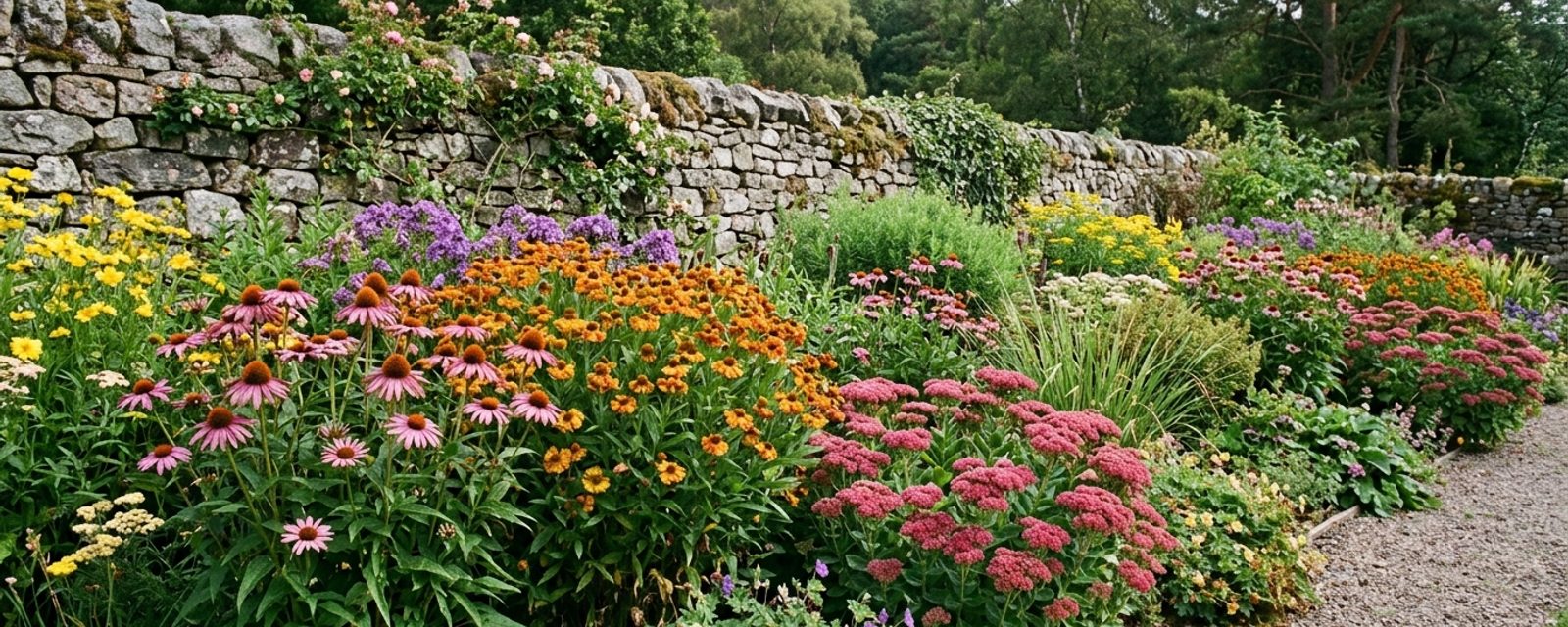
Late May is chop week across most gardening media, timed to the RHS Chelsea Flower Show. Most of Scotland's perennials aren't ready for it yet. The technique itself is simple and genuinely useful, cutting back part of a clump to delay and improve flowering, but the calendar date it's named after assumes a growing season that's already several weeks ahead of where most of Scotland sits in late May. Chop on the English date and you can knock the plant back before it's built enough growth to recover well. The fix isn't a different technique, it's different timing: judge the plant's actual growth stage, and in most of Scotland, plan on doing it 2-3 weeks later than the gardening calendars say.
What the Chelsea Chop actually does
The Chelsea Chop is a pruning method for herbaceous perennials, named for its traditional timing around the Chelsea Flower Show in late May. Cutting back the growing tips removes apical dominance, the mechanism by which the topmost bud on a stem suppresses the buds below it. With the tip gone, those lower buds break and the plant branches instead of growing on as one tall stem.
The practical effects: flowering is delayed, and the closer to the plant's natural flowering time the cut is made, the longer the delay, so timing changes the outcome, not just the tidiness of the job. Growth comes back bushier and shorter, which usually means less staking. Flowers come smaller but more numerous, spread across more branched stems instead of concentrated on one.
Done on a whole bed rather than a single clump, staggering which plants (or which stems) get cut also spreads a flowering display over a longer window instead of everything peaking and finishing together.
Method variants
There isn't one single way to do it, the RHS describes three, and which one to use depends on what you want from the plant.
| Method | What you do | Effect |
|---|---|---|
| Whole clump | Cut the entire clump down by up to half its height | Delays and compresses flowering across the whole plant; shortest, bushiest result |
| Selective clumps | Cut some clumps of a repeated planting, leave others untouched | Extends the overall flowering season across the group |
| Front stems only | Cut roughly half the stems at the front of a clump, leave the back uncut | Staggers flowering within a single clump, front flowers later, back flowers on schedule |
A rough way to judge "up to half its height" on a stem you're not sure about: hold the top portion you're about to remove alongside the length that would remain, and check it isn't more than what's staying. Whichever method, use sharp, clean secateurs or shears, and make a sloping cut just above a leaf joint or bud so water runs off rather than sitting on the cut. Clear the cut material off the border rather than leaving it lying on the crownThe base of a perennial plant where roots and shoots meet, often sold and planted as a ready-made dormant plant rather than grown from seed. Full definition →.
Which perennials respond well
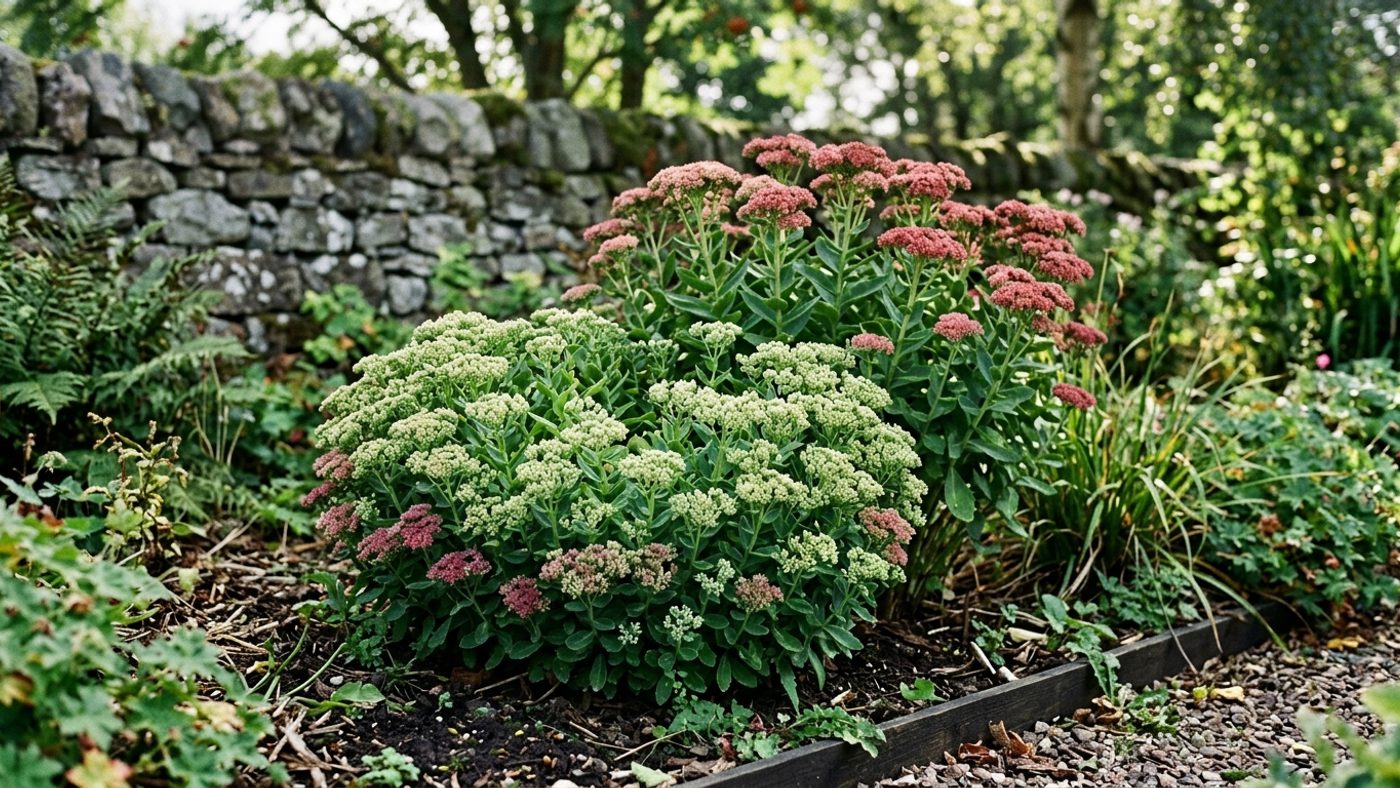
The plants with a genuine track record for this technique branch readily from lower buds once the growing tip is removed, and flower late enough in the season that losing a few weeks to branching still leaves time to bloom and finish. The RHS names Anthemis (Cota tinctoria), Echinacea purpurea, Helenium, Phlox paniculata, Sedum (Hylotelephium, upright types, e.g. 'Herbstfreude') and Solidago. These share late-summer to autumn flowering and a branching habit, which is exactly what the technique needs to work with.
Which perennials to leave alone
Some plants don't respond well to this technique, and cutting them back at the wrong stage can cost a whole year's flowers. Two growth habits explain most of the failures.
Single-spike flowerers
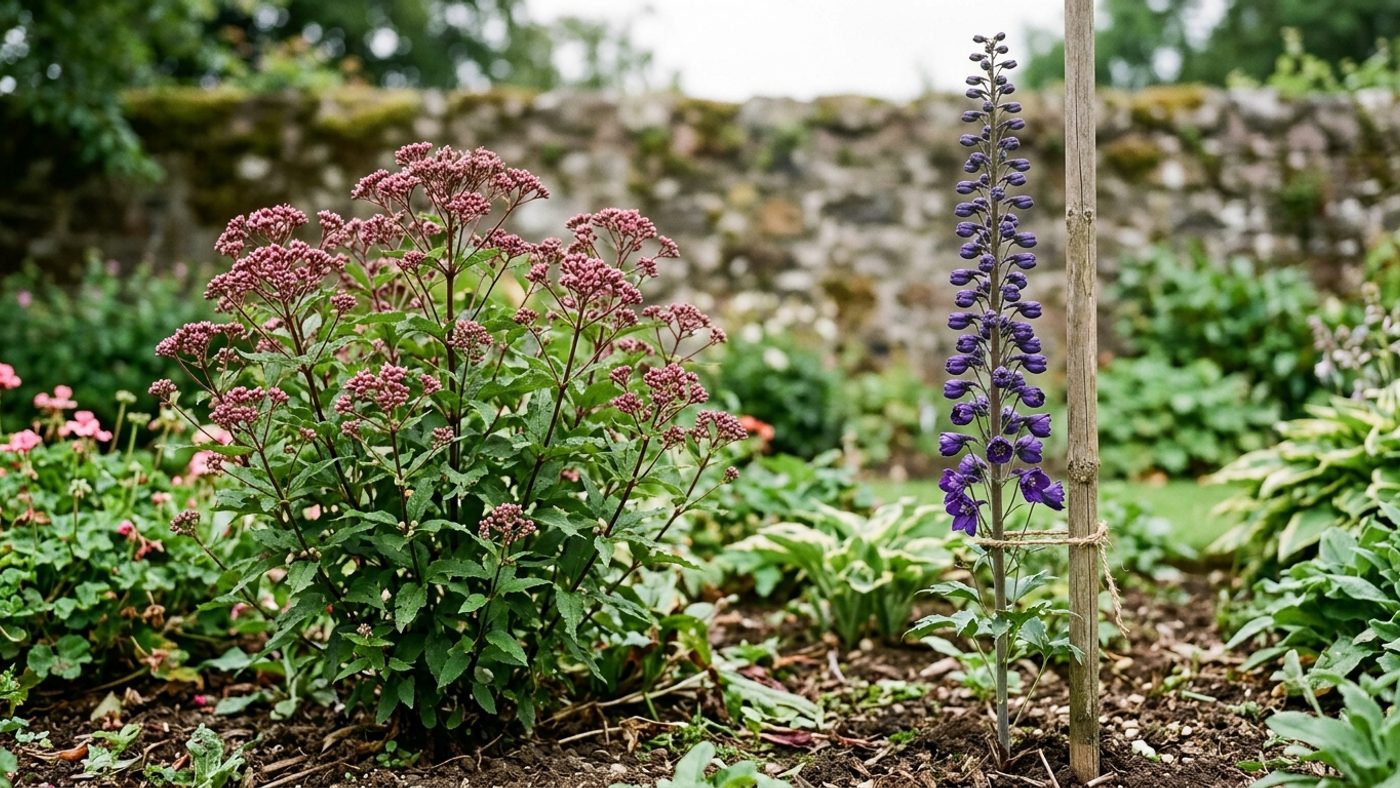
Delphiniums are the clearest example of a plant that flowers on one dominant spike per stem rather than branching laterally, their growing guide describes flower spikes up to 2m tall from a clump-forming base, with each stem carrying one terminal spike rather than side branches. Cut the tip off a stem like that before flowering and you don't get a bushier, later-flowering stem, you lose that stem's flower outright, because there's no lateral flowering structure behind the tip to take over. Delphiniums already need staking once they pass around 1.2m, specifically to stop the tall stems bending or breaking in wind, and that matters more in Scotland than it would further south: UK-wide, the east and south run drier, sunnier and less windy than the west and north, so a tall single-spike plant is more exposed here, and staking it properly is worth treating as essential rather than optional. See staking tall perennials for the real Scottish wind and rainfall figures behind that, and the right support method for each plant.
Very early flowerers
Any perennial that flowers well before a late-May cut would even make sense is a poor candidate. If a plant is already budding or flowering by the time you'd normally chop, cutting removes flowers that have already formed rather than redirecting growth that hasn't happened yet, the opposite of the intended effect.
If you're not sure whether a perennial in your border fits either pattern, the safe read is: check whether it naturally branches into multiple flowering side-shoots when its tip is damaged (test on one stem first) and check what month it actually starts flowering before committing the whole clump. And if you've missed the window and the plant is already budding, don't chop it this year, let it flower on schedule and plan the timing better for next season.
The Scottish timing problem
"Late May" as a trigger for this technique is really shorthand for a growth stage, plants should have put on a reasonable amount of stem growth, generally in the region of a third to half their eventual height, before the cut makes sense. In the south of England, late May reliably gets you there. In most of Scotland, it doesn't.
Regional frost and planting-out data, based on Met Office long-term averages, shows how much later the season runs here. Safe planting-out dates, a reasonable proxy for how far the growing season has advanced by late spring, lag well behind the English Chelsea-week assumption in every Scottish region except the mildest coastal pockets:
| Region | Last spring frost | Safe planting out |
|---|---|---|
| Central Belt lowland (Edinburgh) | mid-to-late April | mid-May |
| Highlands lowland/coastal (Inverness) | late April | mid-May |
| Northeast upland (Braemar) | late May–early June | mid-June |
| Islands (Stornoway/Lerwick/Tiree) | late April | mid-May |
The pattern in the table is driven mainly by altitude and coastal exposure, not simple geography: low-lying and coastal spots like Inverness, Edinburgh and Dumfries reach safe planting-out by mid-May, while upland areas at similar or even more southerly latitudes, Eskdalemuir, the Cairngorms, Braemar, lag two to three weeks behind them. The practical rule: in a lowland or coastal garden, treat late May as a reasonable check-in date; upland or northeastern inland, expect early-to-mid-June before the plant has the growth a chop needs. A sheltered hollow or a walled corner that traps cold air can run a further two to four weeks later still than open ground nearby, so a known frost pocketA low-lying spot where cold air drains and pools on still nights, making it noticeably more frost-prone than the surrounding area. Full definition → in your own garden is worth treating as its own case regardless of region. The full regional breakdown is at Scotland's frost dates. Either way, go by the plant's actual growth, not the date on the calendar.
Does a later chop leave enough season left?
Pushing the chop into early or mid-June raises a fair question: does that leave enough time for the plant to flower and finish before autumn frost arrives? Regional first-autumn-frost data answers it:
| Region | First autumn frost |
|---|---|
| Central Belt, Northeast, Highlands, Southwest, Borders (lowland) | late October |
| Islands | early November |
| Central Belt, Southwest, Borders (upland) | late September |
| Northeast, Highlands upland (Braemar, Cairngorms) | mid-to-late September |
Even the earliest-frost areas, upland Braemar and the Cairngorms, still leave roughly three months or more between an early-to-mid-June chop and first frost. Everywhere else runs later still. That's comfortably enough time for the late-summer and autumn-flowering plants this technique suits, Echinacea, Helenium, Phlox, Sedum, Solidago, Anthemis, to flower and finish, even on the later Scottish timing.
Aftercare
Keep the bed watered and fed after cutting so the plant has what it needs to push the new branching growth, regular feeding and watering through the following weeks matters more than any one-off treatment immediately after the cut. Don't let a newly chopped clump sit dry; a spell of dry weather is still enough to stress soft new regrowth even in a generally cooler, damper Scottish climate, so don't assume rain alone will do the job.
Common mistakes
Cutting too late. Wait too long and you're removing flower buds that have already formed rather than redirecting growth before they form, you lose the display instead of delaying it.
Chopping the wrong plant. Single-spike flowerers and very early bloomers don't have the branching habit or the season length to recover; treat them and you can lose a year's flowers on that clump.
Doing the whole border in one pass. Cutting every clump of the same plant on the same day removes the staggering effect that makes the technique useful for extending a display; use the selective or front-only method if a longer season matters more than a compressed one.
Common questions
Is the Chelsea Chop the same for every perennial?
No. Only plants that branch readily from lower buds once the tip is removed respond well, Anthemis, Echinacea, Helenium, Phlox paniculata, upright sedums and Solidago among them. Single-spike flowerers like delphiniums and anything already budding or flowering before your local chop window shouldn’t get this treatment.
When should I actually do this in Scotland?
By growth stage, not the calendar: once the plant has put on roughly a third to half of its eventual height. In a lowland or coastal garden that's often achieved by late May to early June; upland and northeastern inland gardens are usually looking at early-to-mid-June. A known frost pocket in your own garden can run later again.
Will a later chop leave enough time for the plant to flower?
Yes, in almost all Scottish gardens. Even the areas with the earliest autumn frost, upland Braemar and the Cairngorms, still see three months or more between an early-to-mid-June chop and first frost, and the plants this technique suits are late-summer and autumn flowerers to begin with.
What if I've already missed the window and the plant is budding?
Leave it alone for this year. Cutting a plant that’s already forming flowers removes blooms that exist rather than redirecting growth that hasn’t happened yet, the opposite of what the technique is for.
Do I need to feed a chopped clump?
Regular watering and feeding through the weeks after the cut matters more than any one-off treatment. Don't let the clump dry out while it's pushing new branching growth back.
Sources
4 sources, recorded with what each was used for
- RHS: Chelsea Chop: Definition, mechanism (apical dominance), timing, effects on flowering and habit, three method variants, suitable plant list, tools, aftercare
- RHS: Perennial Delphiniums (Growing Guide): Flower spike height, clump-forming habit, staking requirements and the wind/support reasoning behind them
- Met Office: UK Regional Climates: General UK pattern of east/south running drier and less windy than west/north
- Met Office: Location-Specific Long-Term Averages: Last spring frost, safe planting-out and first autumn frost dates by Scottish region; frost-pocket/cold-air-drainage guidance