
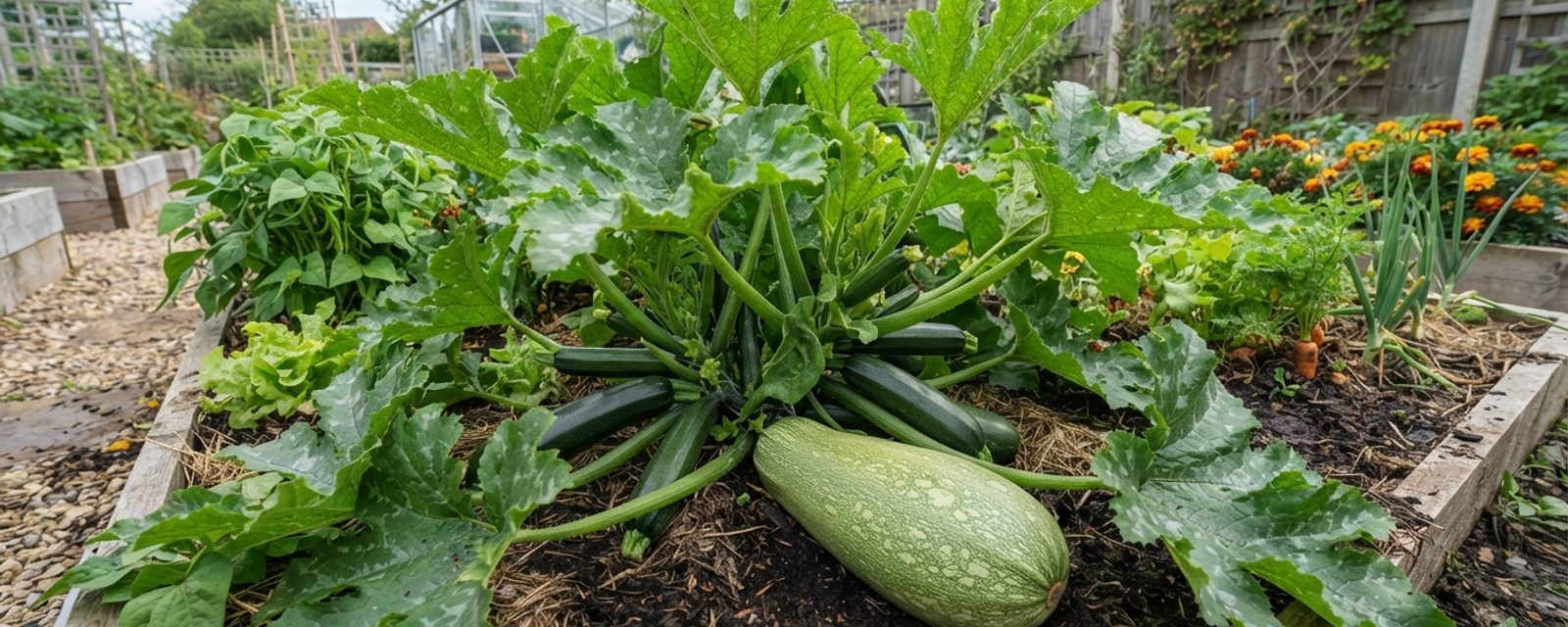
You're standing over the plant with a trug in one hand, and there are at least six courgettes you somehow missed three days ago, two of them already thickening past the point of being polite about it, skin toughening, seeds starting to show through when you press a thumbnail in. Yesterday there were two ready. Today there are six. In another two days, if you don't get out here, there will be a marrow. This is the glut: not a slow trickle you can eat your way through, but a plant that goes from fine and manageable to overwhelming inside a single week, and in a Scottish garden, that week arrives inside a shorter, damper growing season than most general courgette advice assumes.
How long a courgette actually holds before it's gone too far
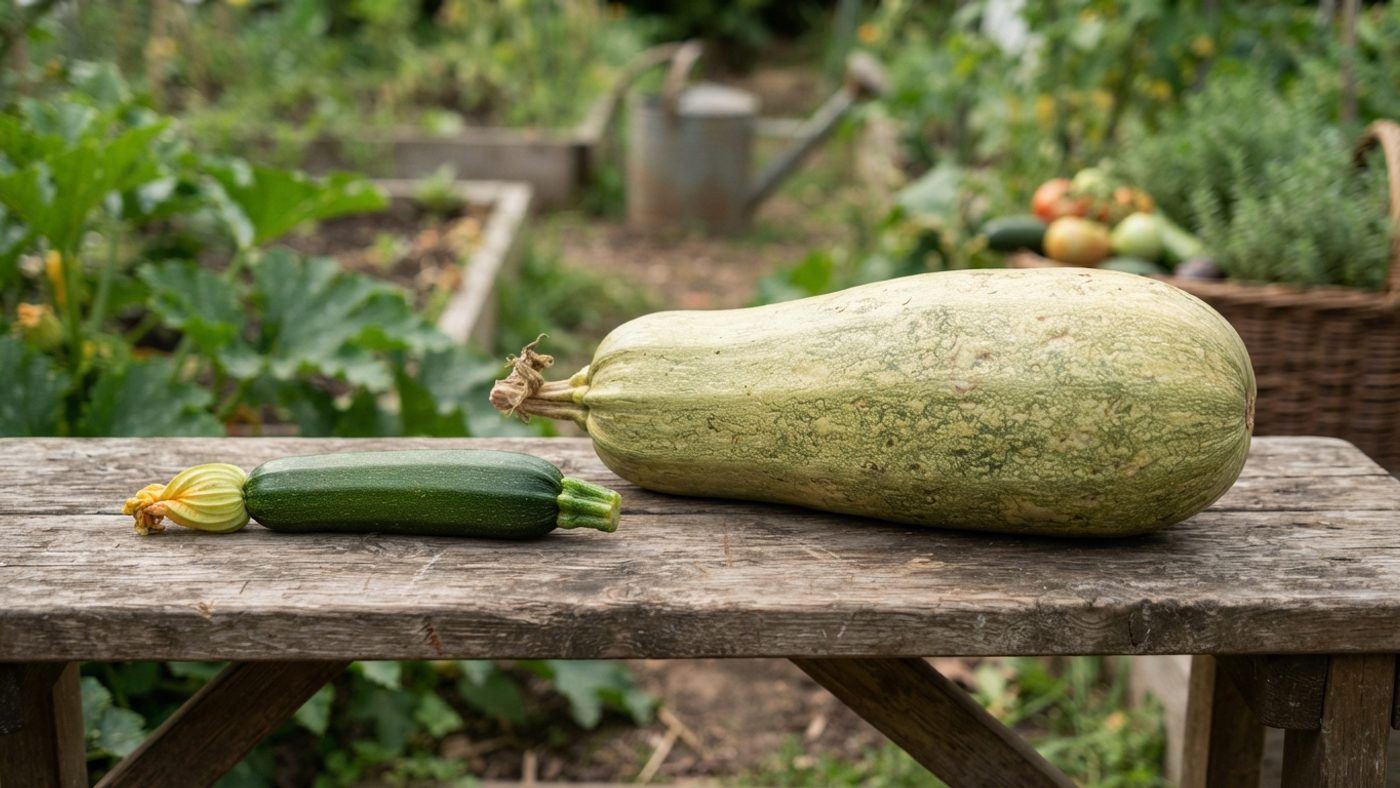
The harvest window on a courgette is narrower than it looks from a distance. RHS growing advice sets the target size at 10–12.5cm long, picked with the flower still often attached or just gone, beyond that, the fruit is racing toward marrow territory, and it goes there fast. A courgette that looks perfect on Tuesday can be visibly swollen by Friday, especially in a warm spell after rain. Once it crosses into marrow size, the flesh coarsens, the skin toughens enough to need a knife instead of a fingernail, and the seeds inside start developing a fibrous coat. It's still edible, technically, but it's a different vegetable to cook with than the courgette you were aiming for.
The plant doesn't wait for you to catch up, either. RHS advice on courgette, marrow and squash problems is direct about what an overlooked fruit costs you: leaving a mature fruit unpicked is, in the RHS's words, "the plant's way of regulating the number of developing fruits that it is able to support." In other words, a marrow sitting on the plant isn't neutral, it's actively telling the plant to slow down.
Does picking more actually make the plant produce more?
The mechanism is real, and it's specific to how courgette plants regulate cropping: once a fruit is left to mature and swell, the plant treats that as evidence it's carrying as much as it can support, and it responds by producing fewer new fruits. Keep removing fruit while it's still immature, and you remove that signal, the plant keeps setting new flowers and swelling new fruit because nothing on the plant has told it to stop.
RHS growing advice for courgettes puts the practical consequence in plain terms: "regular picking while the fruits are small will ensure a long cropping period." So a glut isn't really a sign you're overproducing, it's usually a sign you're one or two days behind on picking, and the plant is compensating by trying to slow itself down. Picking hard and picking small, even when you're drowning in courgettes already, is what keeps the plant cropping for longer overall rather than shutting down early. At its peak a single plant can put out three or four pickable fruits a week, which is exactly why missing even one round of picking creates a backlog rather than a gap.
For spacing, watering and getting the plant to this point in the first place, see the courgette growing guide.
Why the glut lands all at once in a Scottish garden
General UK courgette advice is written for a growing season that often starts in late April and runs into October. In most of Scotland that timeline compresses at both ends, planting out waits until the soil has genuinely warmed and the risk of a late frost has passed, and the season then closes earlier too, with the first real autumn cold usually arriving in September rather than October.
| Region | Plant out | Cropping season typically ends |
|---|---|---|
| Mildest coasts | Late May | Through September |
| Inland / further north | June | Through September |
Take the same plant, the same three-or-four-fruits-a-week peak output, and squeeze it into that shorter middle stretch of the year, and the heavy-cropping weeks stack on top of each other instead of spreading out. There's less slack at either end to absorb a missed picking round, which is the real reason a Scottish glut can feel like it arrived overnight where a longer season would have let it build more gradually.
Spreading the glut out instead of taking it all at once
The same plant-regulation mechanism is the main lever for softening a glut before it happens, rather than just managing it once it's arrived:
- Stagger sowing dates. Rather than starting all your courgette seed on one date in April, sow a second batch two to three weeks behind the first. In a compressed Scottish season this won't extend things dramatically, but even a fortnight's offset between two plants means their peak output doesn't land in the same week.
- Stick to one or two plants, not three or four. Because a single plant at peak can produce three to four fruits a week, doubling or trebling plant numbers multiplies the glut rather than spreading it, this is as much a planning decision as a growing one.
- A compact variety helps if space or output is the concern rather than timing. A smaller bush habit doesn't change how often you need to pick, but it makes one plant easier to keep on top of; see the best courgette varieties for Scotland comparison for the options.
- Pick small and pick often, without exception, through the peak weeks. Since leaving mature fruit is what signals the plant to slow production, the single most effective way to flatten a glut's peak is strict, frequent picking rather than letting a few fruit build up to deal with later. Every marrow left on the plant is actively working against a longer, steadier crop.
- Remove any fruit that's already gone too far immediately, even if you don't plan to use it, so it stops suppressing new fruit set.
- Give away what you can't use as you go, rather than storing up a backlog. A neighbour, an allotment swap table, or a workplace kitchen will usually take fresh courgettes off your hands within a day or two of picking, far more reliably than trying to bank a week's worth in the fridge.
- Cover young plants with fleeceA lightweight, breathable fabric laid or draped over plants to trap a little warmth and keep off frost, wind and some flying pests. Full definition → or clochesA small, portable clear cover placed over an individual plant or short row to trap warmth and keep off wind, rain and pests. Full definition → in a cold spell either side of the main season. It won't turn Scotland into a ten-month courgette climate, but a few extra sheltered days at each end nudges the cropping window wider and takes some of the pressure off the compressed peak.
Keeping the surplus for a few extra days
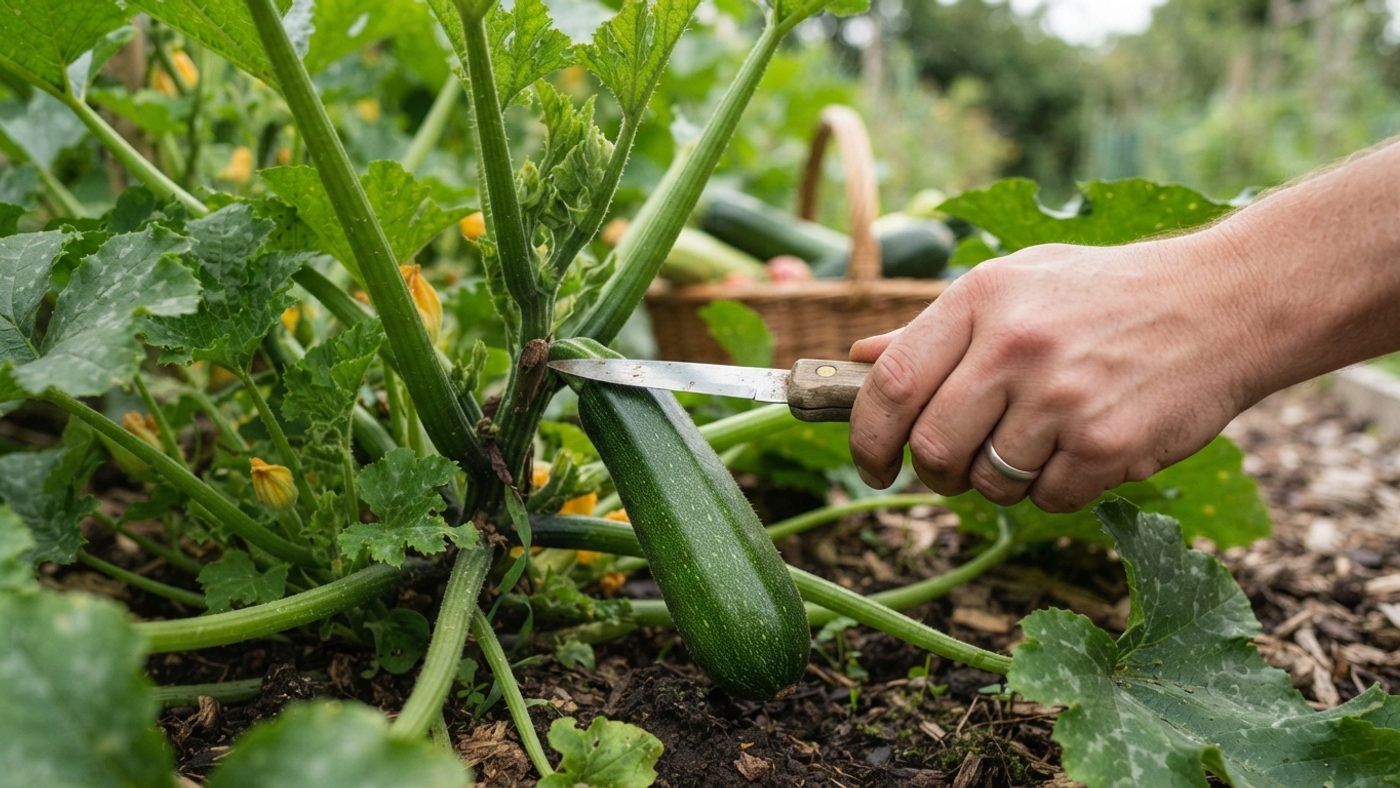
Courgettes don't store for long once picked. RHS doesn't publish a shelf-life figure, but kept in a cool place or in the fridge crisper drawer, whole, unwashed and away from damp, general kitchen practice puts reasonable eating quality at around a week before the skin starts to soften and the cut end goes slimy. That's a short window, not a solution to a genuine glut, it buys you a few days to redistribute fruit to neighbours or use it up, not a way to bank a backlog.
Damp weather is a second reason not to let picking slip during a glut, separate from the fruiting-mechanism itself. Grey mould (Botrytis cinerea) spreads rapidly in humid, damp conditions and is encouraged by overcrowded, poorly ventilated growth, exactly the conditions inside a courgette plant that's carrying more foliage and fruit than usual because picking has fallen behind. RHS prevention advice is to remove dead or dying leaves, buds and flowers promptly and improve airflow around the plant. A Scottish summer runs damp and overcast more often than not, which is precisely the weather that turns one extra day before picking into fruit sitting wet against leaves or soil long enough for rot to set in. Slugs are the other opportunist in the same conditions, a heavy, sprawling plant carrying a backlog of fruit gives them more cover and more contact points with damp soil, so keeping the plant picked over and tidy does double duty against rot and slug damage at once.
Common questions
How often should I pick courgettes during a glut?
Every one to two days at peak cropping. Skipping even a couple of days is usually what tips things from manageable into a backlog.
Will cutting back watering or feeding slow the plant down if I can’t keep up?
It’s not the recommended route, reduced watering and feeding tends to stress the plant and affect fruit quality and disease resistance rather than cleanly reducing yield. Strict, frequent harvesting is the mechanism the plant actually responds to.
Is it worth planting a second courgette plant later in the season to spread things out?
In Scotland’s shorter growing window, a late sowing has limited time to establish and crop before the season closes down in September, so it’s more reliable to stagger sowing dates within the normal spring window than to add a very late plant.
Can I still eat a courgette that’s turned into a marrow?
Yes, it’s not unsafe, just a different vegetable to cook with. The real reason to catch it before then is what it does to the plant, not the fruit itself: a marrow left in place is what tells the plant to slow down.
Does damp weather make courgette gluts worse?
Not the volume of fruit directly, but it raises the risk of losing fruit to rot if picking falls behind during the glut, since damp, humid conditions around crowded foliage favour grey mould. It’s an argument for staying disciplined about frequent picking during a glut, not a separate cause of it.
Sources
4 sources, recorded with what each was used for
- RHS: How to grow courgettes: Harvest size threshold (10–12.5cm), effect of leaving fruit unharvested on cropping window and yield, planting-out timing
- RHS: Courgette, marrow, pumpkin and squash problems: The fruiting-regulation mechanism, failure to pick mature fruit regularly signals the plant to limit developing fruit numbers
- RHS: Fascinating facts and figures — courgettes: Typical peak output of three to four fruits per plant per week
- RHS: Grey mould (Botrytis cinerea): Conditions favouring spread (humidity, overcrowding, poor ventilation) and prevention advice