
A vegetable bed that was bare soil in April can be a solid mat of green by July. A border you weeded thoroughly in spring looks, by midsummer, as though nothing was ever done to it, new shoots pushing up between the cabbages, twining through the peas, or muscling in at the base of the roses. Pull what's visible and, within a fortnight, it's back, often worse than before. That cycle, visible growth removed, then a fresh flush from underground within weeks, is the signature of Scotland's most persistent garden weeds. They aren't beaten by pulling the top growth; they're beaten (or not) by what happens to what's left in the soil.
The five below cause most of that frustration in Scottish vegetable beds and borders, and each needs a slightly different approach to actually get on top of it. Scotland's growing season starts later and finishes earlier than the rest of the UK, so these weeds break dormancy and start actively growing later in spring here too, worth bearing in mind for every "before flowering" or "actively growing foliage" timing point below, since a date that suits a gardening guide written for further south may come too early here.
Bindweed
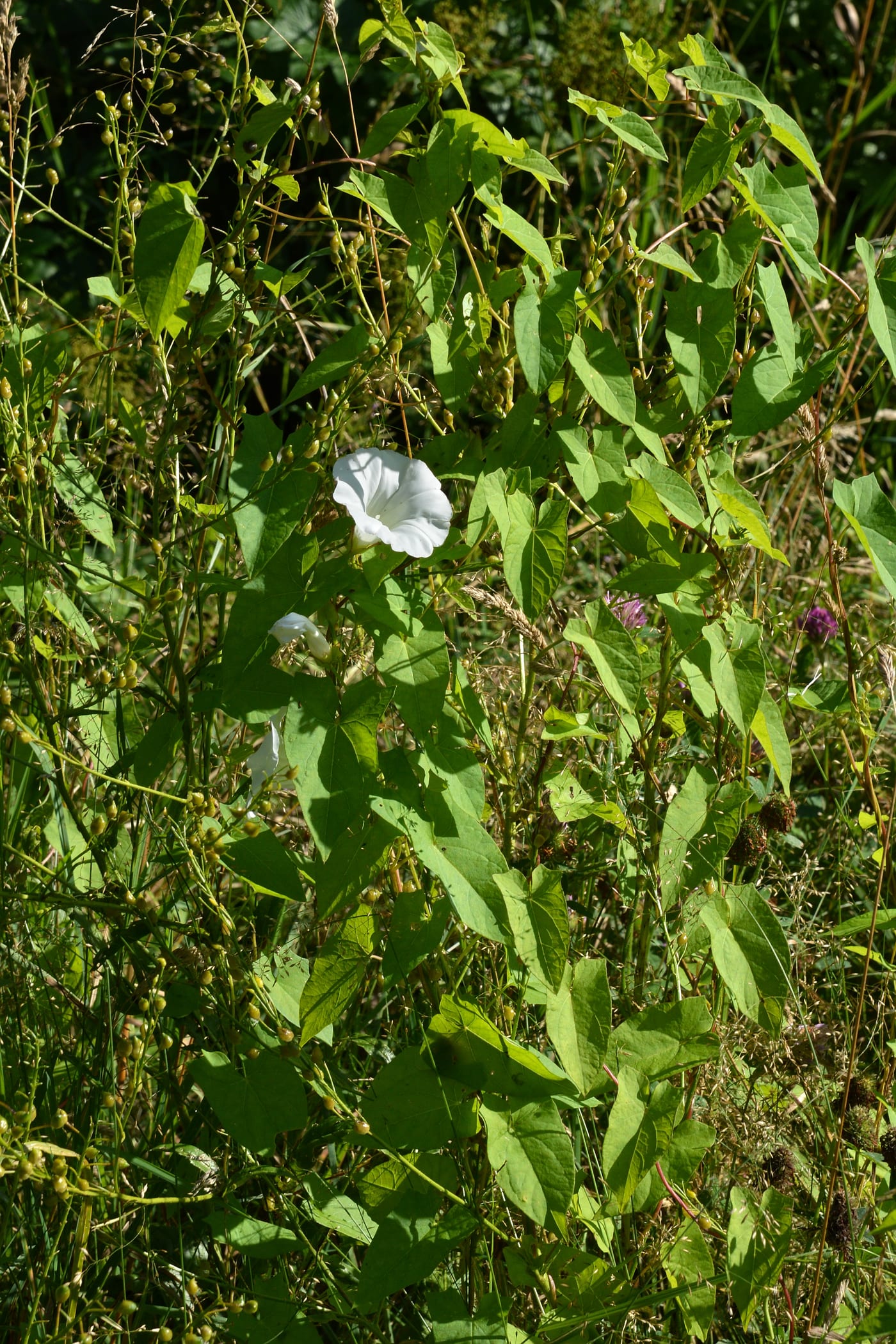
Photo: Ryan Hodnett, CC BY-SA 4.0
Hedge bindweed vs field bindweed
Two different plants get called "bindweed," and it's worth telling them apart because they behave differently underground.
| Feature | Hedge bindweed (Calystegia sepium) | Field bindweed (Convolvulus arvensis) |
|---|---|---|
| Stem length | Up to 3m | Usually under 1m |
| Leaves | Heart-shaped, up to 12cm | Oval to arrow-shaped, grey-green, up to 6cm |
| Flowers | Funnel-shaped, white or pale pink, about 5cm wide | Funnel-shaped, often pale pink, about 2cm wide |
| Roots | Deep root system, potentially to 4m | Similar structure, generally less vigorous |
Both flower June to September and twine anticlockwise around anything upright, canes, netting, other plants, which is usually how gardeners first notice them.
Why it keeps coming back
The problem with both species is underground, not overhead. Both spread by rhizomes, creeping underground stems, distinct from ordinary roots, that store energy and send up new shoots along their length. Bindweed's rhizomes are brittle, and even a small fragment left in the soil is enough to grow into a new plant. Digging or rotavating a bindweed patch without care doesn't remove it, it chops the root network into dozens of viable pieces and effectively propagates it. This is the single most common reason gardeners feel like bindweed is unbeatable: they've been multiplying it, not clearing it.
What actually works
- Persistent removal over a full season or more. Hand-fork out as much root as you can, then keep pulling or cutting every new shoot the moment it appears, without fail, for as long as it takes. Each time top growth is removed, the plant draws on root reserves to regrow; repeated removal eventually exhausts those reserves. This can take a full growing season for a light infestation and several years for an established one.
- Light exclusion. Cover the ground with cardboard topped with about 20cm of organic mulchA layer of material spread over the soil around plants to suppress weeds, retain moisture, and improve soil structure as it breaks down. Full definition →, or use a proper weed-suppressant membrane, and leave it in place for an extended period, bindweed shoots can travel sideways under a membrane looking for a gap, so overlap sheeting generously and check the edges.
- A chemical option exists, but isn't the RHS's recommended route. Non-chemical control is effective, if slow, and the RHS does not recommend weedkiller use for bindweed. For a genuinely established infestation that isn't responding to physical control, a glyphosate-based weedkiller applied to actively growing foliage remains a legally available option in Great Britain, but expect to need more than one application, potentially across more than one season, given the extent of the root system.
Avoid digging the area over "to get it out" unless you're prepared to remove every fragment, partial digging is usually what turns a manageable patch into a spreading one.
Ground Elder
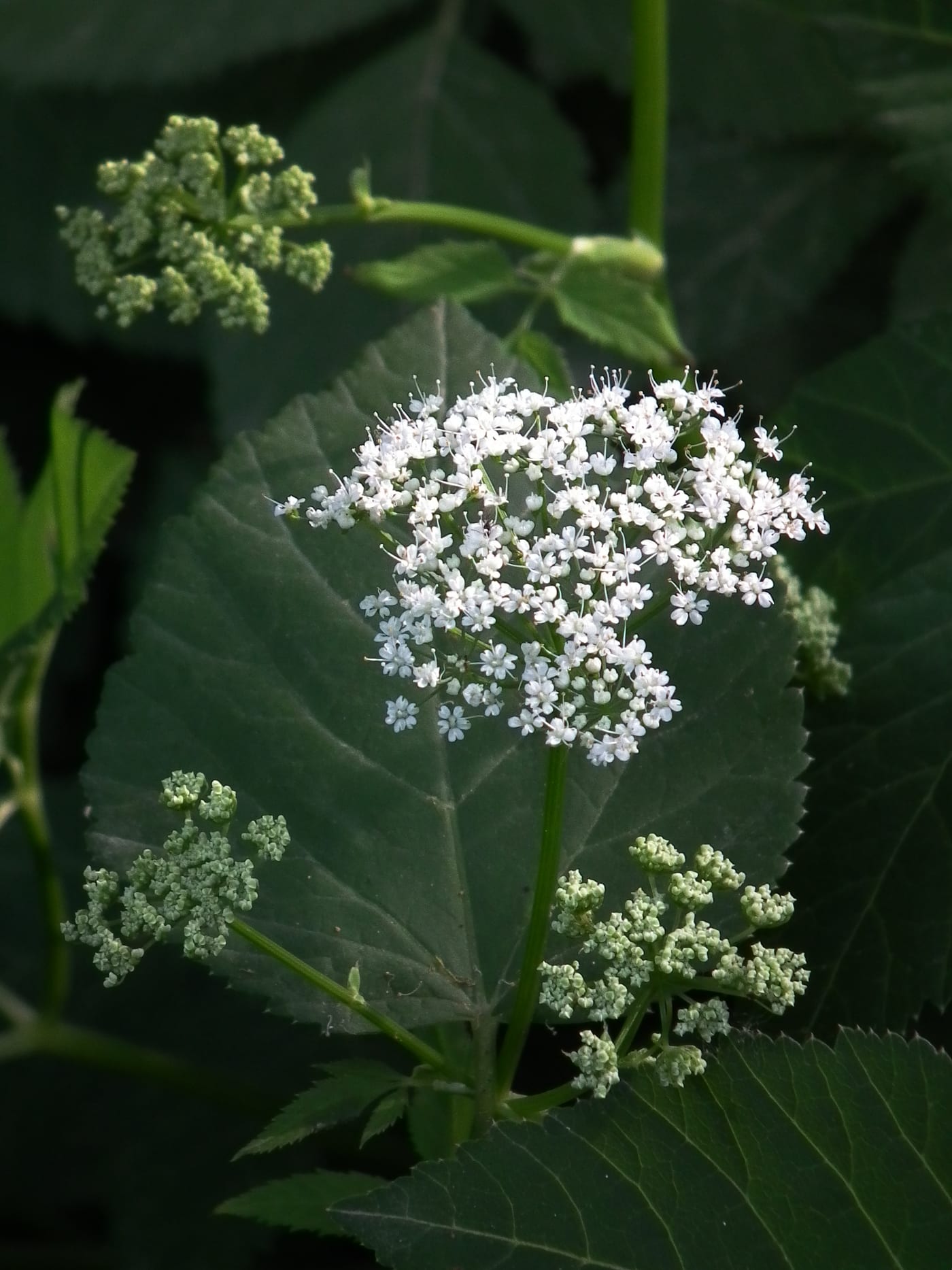
Photo: 4028mdk09, CC BY-SA 3.0
Ground elder (Aegopodium podagraria) forms dense, umbrella-like clumps of fresh green, toothed leaflets from early spring, with tiny white flowers held in flat, umbrella-shaped clusters above the foliage in early-to-mid summer, it looks a little like a miniature cow parsley. It's an old resident of British gardens: it's believed the Romans deliberately brought it to Britain, valuing it as a medicinal and edible plant, and the young leaves are still eaten today, raw or cooked, with a tangy flavour with a hint of parsley.
Why it's such a nuisance
Underground, ground elder spreads by a shallow, dense mat of pale, brittle rhizomes that knit themselves through the root systems of whatever else is growing nearby. That's what makes it genuinely hard to remove from a mixed border or a bed of perennials, you can't fork the whole area out without also lifting and disturbing the plants you want to keep, and any rhizome left behind regrows.
What actually works
- Lift and clear. Where it's tangled among border plants, lift those plants, tease out every visible fragment of ground elder root, and inspect the rootballThe mass of roots and the soil or compost clinging to them, as it comes out of a pot or out of the ground when a plant is lifted. Full definition → thoroughly before replanting into cleared soil.
- Persistent digging. In open ground, fork out as much rhizome as possible, then keep pulling or cutting any new growth as soon as it appears, repeated removal over time will eventually exhaust the plant, though it can take more than one season on an established patch.
- Light exclusion. Smother with cardboard and roughly 20cm of organic mulch, or use a weed membrane, left in place for an extended period; laying turf over an infested area and mowing it regularly can also eradicate it within a few years.
- Chemical option for severe cases only. The RHS does not support weedkiller use for ground elder, and a systemic weedkiller (the kind taken up through the leaves and carried down into the roots, which is what glyphosate is) isn't a quick or easy fix here either, since the extensive root system usually means repeated applications are needed regardless. There's a narrower exception: where ground elder threatens biodiversity and other methods have failed, targeted use of a regulated weedkiller may be worth considering as a last resort.
Facing ground elder alongside several other perennial weeds on a whole neglected plot rather than one patch in a tended border, see the guide to clearing an overgrown allotment plot.
Couch Grass
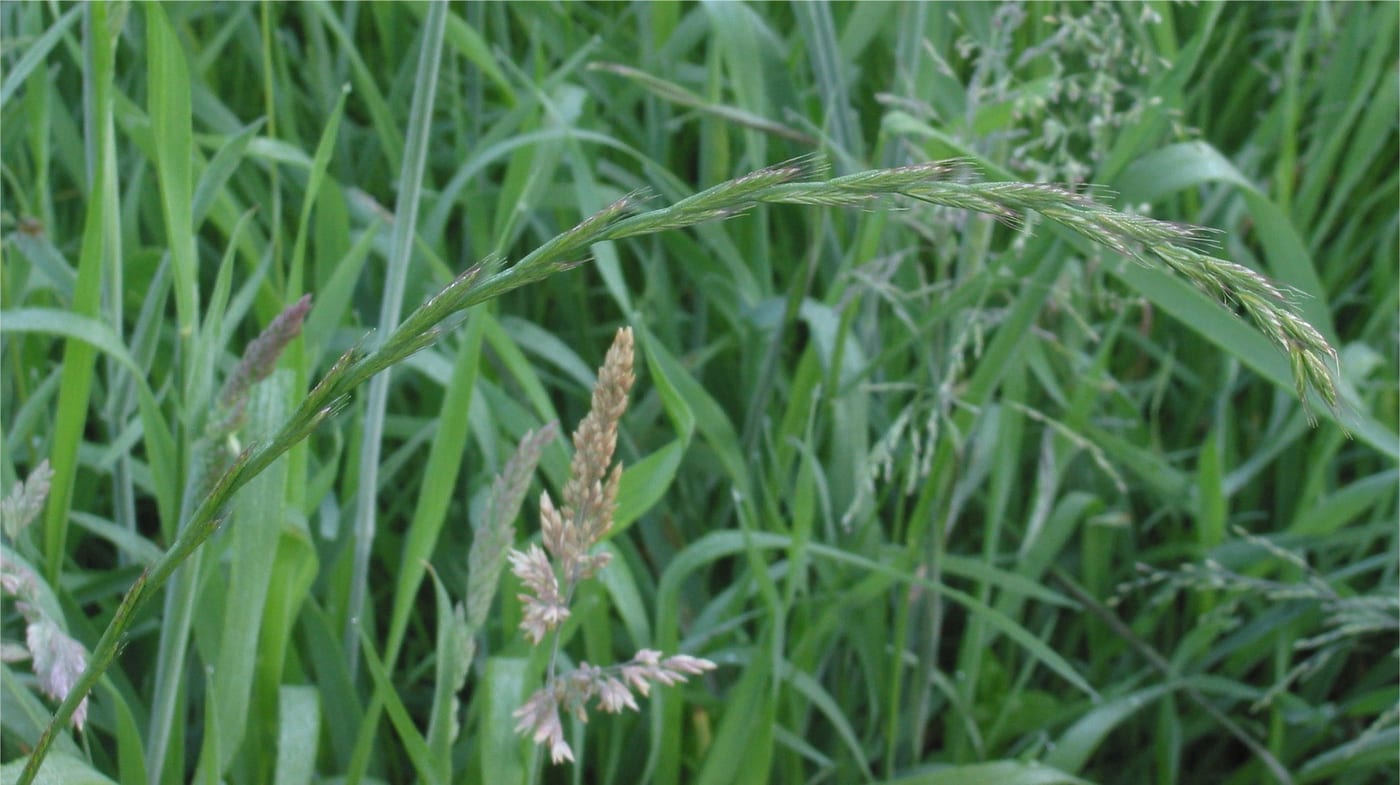
Photo: Rasbak, CC BY-SA 3.0
Couch grass (Elymus repens), also known as twitch or scutch, is a coarse perennial grass that stands out from lawn grass once you look closely: flat leaf blades up to 40cm long with pale, hairy leaf sheaths near the base, growing in loose clumps rather than a dense turf, and upright, unbranched flower spikes that feel smooth rather than bristly to the touch. In a vegetable bed it shows up as tough, wiry clumps that seem to shrug off hand-weeding.
Why it's more than a mowing problem
Couch grass's real bulk is underground: a dense network of pale, tough rhizomes that spread outward from the parent plant in more or less straight lines, close enough to the surface to be found with a hand fork but resilient enough to survive being chopped through. In an actual lawn, regular mowing does genuinely help, it stops the plant flowering and setting seed, and couch grass can coexist in a mown lawn without taking over. But mowing does nothing to the rhizome network itself, which is why it's no answer at all in a vegetable bed or border, where there's no lawn to mow and the rhizomes need to be dealt with directly.
What actually works
- Hand forking, done properly. Fork out rhizomes by hand, ideally in early spring before other plants are growing strongly, following each pale rhizome to its end rather than snapping it off, any section left in the soil can resprout.
- Lift and clear for infested borders, in the same way as bindweed and ground elder: lift the border plants, remove every rhizome fragment from the soil and from the rootballs, then replant.
- Smothering. Cardboard plus roughly 20cm of organic mulch, or a weed membrane, over an extended period will starve the rhizomes of light.
- No selective chemical option, and the RHS doesn't recommend one anyway. Because couch grass is a grass, there's no selective lawn weedkiller that will kill it without also killing garden or lawn grass around it. Couch grass can be controlled without a weedkiller at all, if slowly; a non-selective glyphosate treatment is only realistic on an isolated patch away from grass you want to keep, never within a lawn itself.
Dock
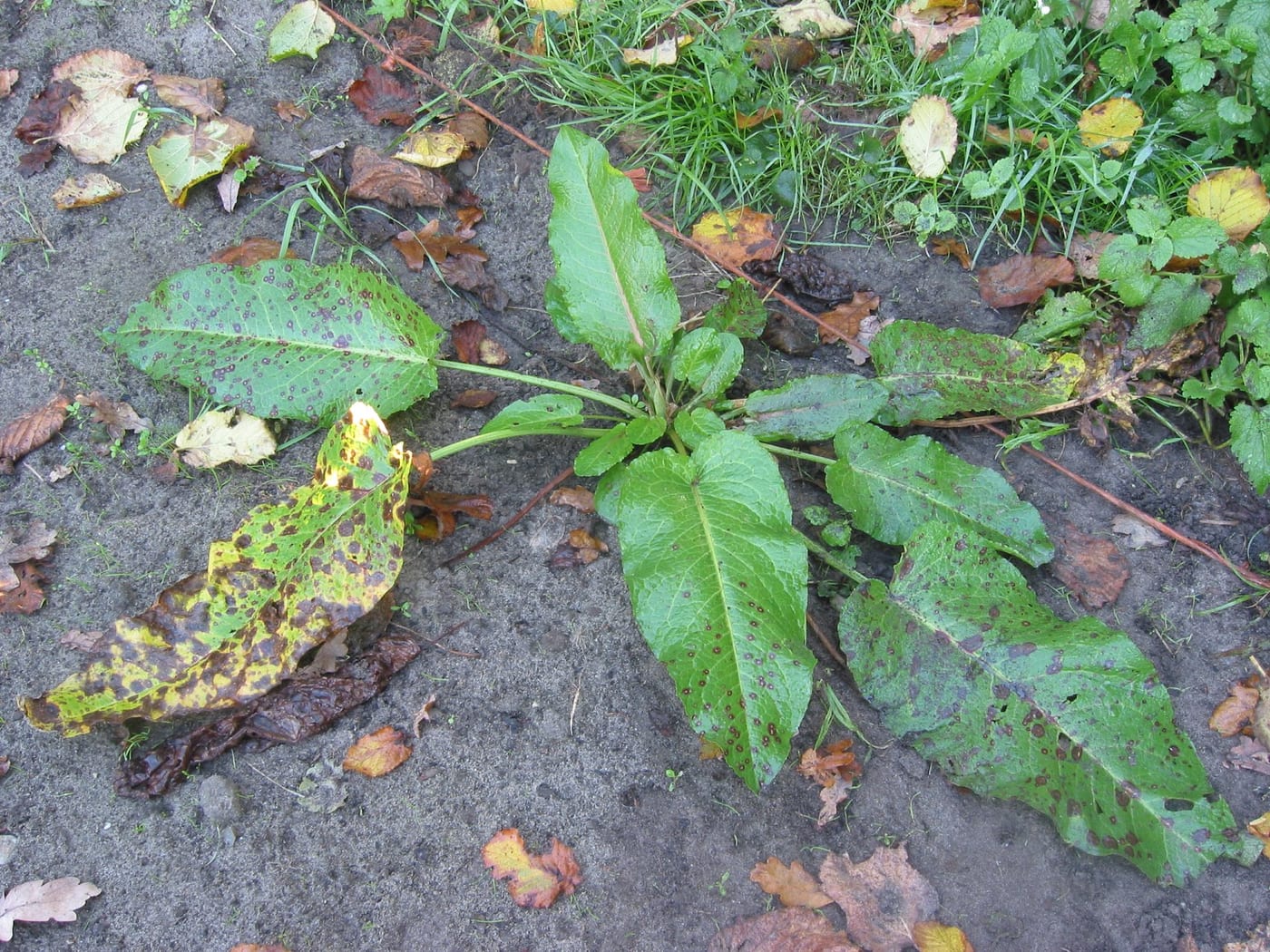
Photo: Rasbak, CC BY-SA 3.0
Two docks turn up regularly in Scottish gardens, and both are deep-rooted perennials with a thick taprootA single, thick, dominant root growing straight down from a plant, storing energy and anchoring it, as opposed to a spreading mass of fine roots. Full definition →:
| Feature | Broad-leaved dock (Rumex obtusifolius) | Curled dock (Rumex crispus) |
|---|---|---|
| Leaf shape | Large, oval, slightly wavy edges | Narrower, edges distinctly wavier and more curled |
| Leaf width | Up to about 15cm | Rarely more than 8cm |
| Leaf length | Up to about 30cm | Narrower overall, similar length |
| Flower stem height | Up to 1.2m | Similar, slightly more slender |
Both are listed as injurious weeds under the Weeds Act 1959, alongside spear thistle, creeping thistle and ragwort, meaning an official can, in principle, serve notice requiring a landowner to control them, though this is aimed at agricultural land rather than domestic gardens, and only applies if that notice is actually served.
Why it regrows after digging
The taproot is the whole story with dock. Pull the leaves or chop through the top of the root and, if enough root is left in the ground, it regrows. The practical guidance is to remove the top 12–15cm of the root system, sections deeper than that are much less likely to regrow, using a proper dock-lifting fork or narrow spade to get down beside the taproot rather than hacking at it from above.
What actually works
- Dig before flowering. Remove the taproot to that 12–15cm depth, and do it before the plant sets seed. A dock plant left to flower and seed will multiply the problem across the bed and beyond, so timing matters as much as technique.
- Don't compost it. Dock roots and seed can survive a home compost heap that doesn't reach a high enough temperature; put them in council green waste collection or take them to a recycling centre instead.
- Repeat on regrowth. Any dock that does resprout from a missed root fragment should be dug out again while it's small, before it re-establishes a full taproot. Dock seed can also remain viable in the soil for many years, so a bed with a history of dock may keep producing seedlings from the seed bank long after the parent plants are gone, pull these young seedlings as they appear rather than assuming the job is finished.
On the well-known folk remedy of rubbing a dock leaf on a nettle sting: it's a genuinely old and widespread practice, but there's little scientific evidence that dock sap does anything specific to ease a sting, any relief is more likely down to the cooling effect of a crushed, damp leaf, or simple placebo. It's harmless to try, but it isn't a documented treatment.
Thistle
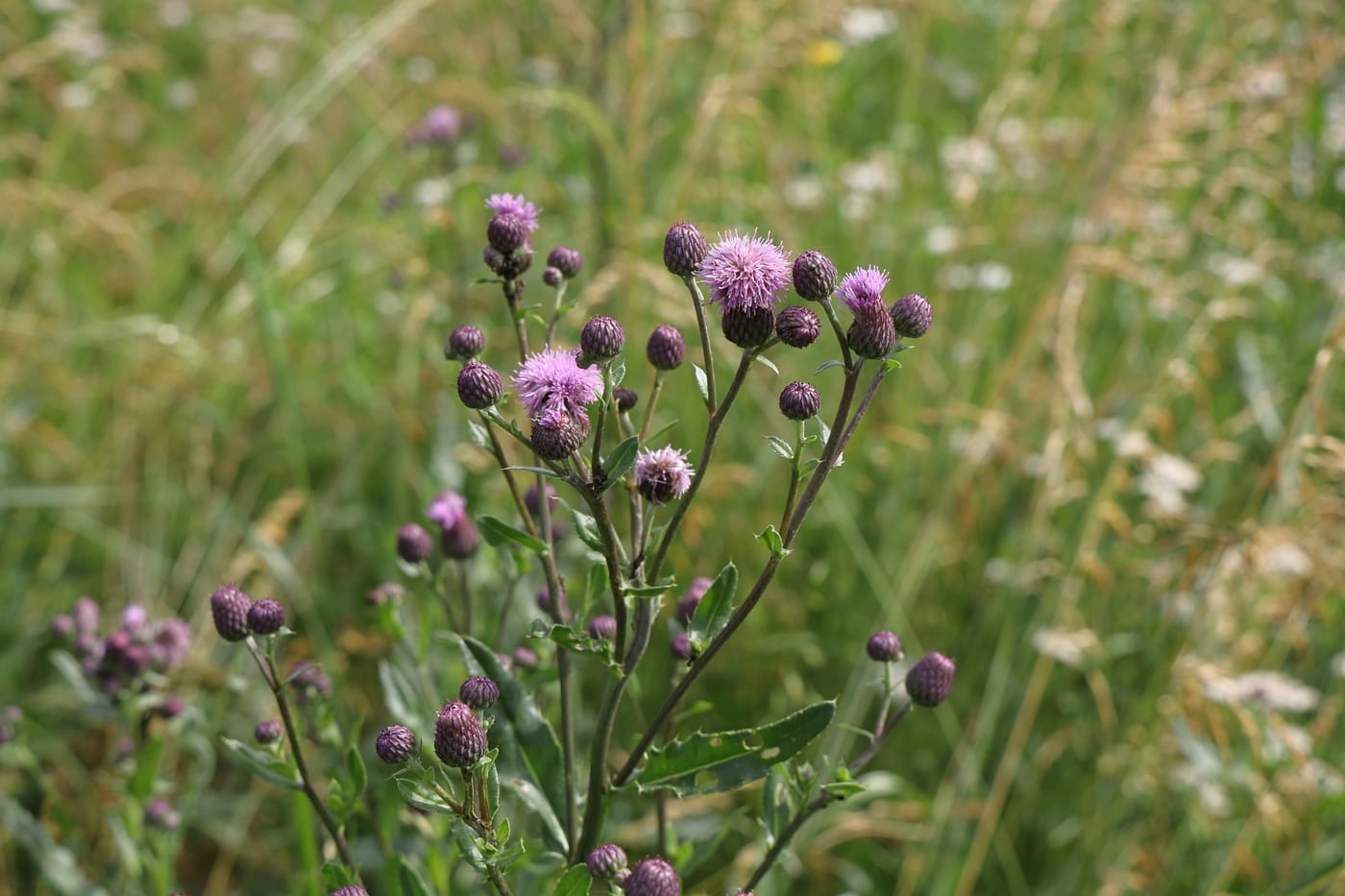
Photo: T. Kebert, CC BY-SA 4.0
Two thistles cause most of the trouble in Scottish gardens, and they're a genuinely different kind of problem from each other. Creeping thistle (Cirsium arvense) is a rhizomatous perennial: it spreads sideways underground as well as by wind-blown seed, and a single plant can produce thousands of seeds across hundreds of flowerheads. Spear thistle (Cirsium vulgare) is biennialA plant that completes its life cycle over two years: growth in year one, then flowering, seeding and dying in year two. Full definition → and taprooted, it grows as a rosette in its first year, flowers and sets seed in its second, then dies, spreading only by seed rather than underground.
Identification
Creeping thistle grows 30cm to 1.2m tall with erect, branching stems, spiny dividedPropagating a clump-forming perennial by digging it up and splitting it into several smaller pieces, each with roots and shoots attached. Full definition → leaves, and lilac-pink flowerheads sitting on a cylinder of purplish bracts, blooming June to September. Spear thistle grows 1–1.5m tall with pinnately lobed, sharply pointed leaves and spiny stems, giving it a bristlier, more armoured look than creeping thistle. Its pinkish-purple flowerheads, blooming midsummer to early autumn, sit singly or in small clusters at the top of the stem rather than the more branching arrangement creeping thistle produces.
What actually works
- Cut or deadheadRemoving spent flowers before they set seed, which redirects a plant's energy into further flowering rather than seed production. Full definition → before flowering. Because so much of creeping thistle's spread is by seed as well as rhizome, removing flowerheads before they open, or cutting the whole plant down before flowering, is one of the most effective single actions, it stops that season's seed contribution outright.
- Persistent rhizome removal for creeping thistle. Dig out young plants, roots and all, while they're small; established plants respond better to repeatedly pulling or cutting top growth to gradually exhaust the rhizome, since routine digging tends to fragment the brittle roots and spread them further, the same problem as with bindweed.
- Spear thistle is simpler. As a taprooted biennial, digging out the whole taproot in its first year, before it flowers, removes the plant for good, no rhizome to chase.
- Chemical option, if needed. As with the other rhizomatous weeds here, the RHS doesn't support weedkiller use for creeping thistle and rates non-chemical control as effective enough that a weedkiller shouldn't be necessary. Regulated weedkillers remain legally available to home gardeners who are struggling with cultural methods alone, applied to actively growing foliage before flowering.
- Don't compost seed heads or roots. As with dock, put thistle material in green waste collection rather than a home compost bin that may not get hot enough to kill the seed.
Both thistles are also a genuine nectar source for bees, butterflies and other pollinators while in flower, and creeping thistle's seedheads feed goldfinches later in the year, worth weighing against a bed's need to control it, and a reason to cut a problem patch back before flowering rather than remove every last plant on sight if there's room to leave a controlled patch elsewhere in the garden.
Legal status
Both creeping thistle and spear thistle are listed as injurious weeds under the Weeds Act 1959, along with curled dock, broad-leaved dock and ragwort. In practice this gives officials power to require control on agricultural land where thistles are spreading to neighbouring farmland; it isn't something the average garden owner needs to act on, but it explains why thistles left to seed near farmland can attract more than a neighbour's complaint.
Common questions
Is it illegal to have bindweed, ground elder or couch grass in my garden?
No. None of these three are listed under the Weeds Act 1959. Only creeping thistle, spear thistle, curled dock, broad-leaved dock and ragwort carry that status, and even then the Act mainly gives officials power to act where a weed threatens agricultural land, not ordinary gardens.
Will digging up bindweed or couch grass make it worse?
It can, and the same applies to ground elder and creeping thistle. Any of the four spread from underground rhizomes, so anything that chops the roots into pieces without removing them, a quick dig-and-rake, or a rotavator, tends to multiply the plant across a wider area rather than control it. Slow, careful forking that follows each rhizome out is the safer approach for all four.
Can I put dock or thistle roots and seed heads in my compost bin?
It isn't recommended. A typical home compost heap may not reach the temperature needed to kill dock or thistle seed and roots reliably. Put them in council green waste collection or take them to a recycling site instead.
Do dock leaves actually help a nettle sting?
There's no real scientific evidence that they do anything specific, any relief is more likely the cooling effect of a crushed leaf's sap, or placebo. It's a genuinely old folk remedy, and harmless to try, but not a proven treatment.
Is glyphosate still legal to use on weeds like these in a Scottish garden?
Yes, at present, though it isn't the RHS's recommended route for any of the weeds above, its position throughout is that non-chemical control works, even if slowly. Glyphosate is currently approved for use in Great Britain, with that approval extended to 15 December 2026 pending a renewal review. If using it near a watercourse, SEPA requires a buffer of at least 10m from the water's edge. For a fuller comparison of chemical and non-chemical methods, see the organic and legal weedkillers guide.
Why do these weeds keep coming back even though I'm removing them regularly?
For the rhizomatous ones (bindweed, ground elder, couch grass, creeping thistle), any fragment of root left in the soil can regrow, so removal has to be thorough and, realistically, repeated over more than one growing season to fully exhaust the plant. For the taprooted ones (dock, spear thistle), regrowth usually means the root wasn't removed deep enough on the first attempt.
Sources
10 sources, recorded with what each was used for
- RHS: Bindweed: Identification of hedge and field bindweed, non-chemical control methods, RHS's position on weedkiller use
- RHS: Ground Elder: Identification, Roman introduction and historical pot-herb use, control methods, RHS's position on weedkiller use
- RHS: Couch Grass: Identification, rhizome structure, effect of mowing, control methods, RHS's position on weedkiller use
- RHS: Docks: Identification of broad-leaved and curled dock, taproot removal depth, seed longevity, Weeds Act 1959 status
- RHS: Creeping Thistle: Identification, distinction from spear thistle, control methods, RHS's position on weedkiller use, pollinator/goldfinch value, Weeds Act 1959 status
- RHS: Cirsium vulgare (spear thistle): Spear thistle height, leaf and spine description, flower size and colour, biennial life cycle
- RHS: Nettles as weeds: Dock-leaf-on-nettle-sting folk remedy and the lack of scientific evidence for it
- Weeds Act 1959, Section 1: Full list of the five injurious weeds: spear thistle, creeping/field thistle, curled dock, broad-leaved dock, ragwort
- Garden Organic: Direct weed controls: Mulching materials and depth for weed suppression
- HSE: Active substance renewal — glyphosate: Current UK approval status of glyphosate, extended to 15 December 2026