
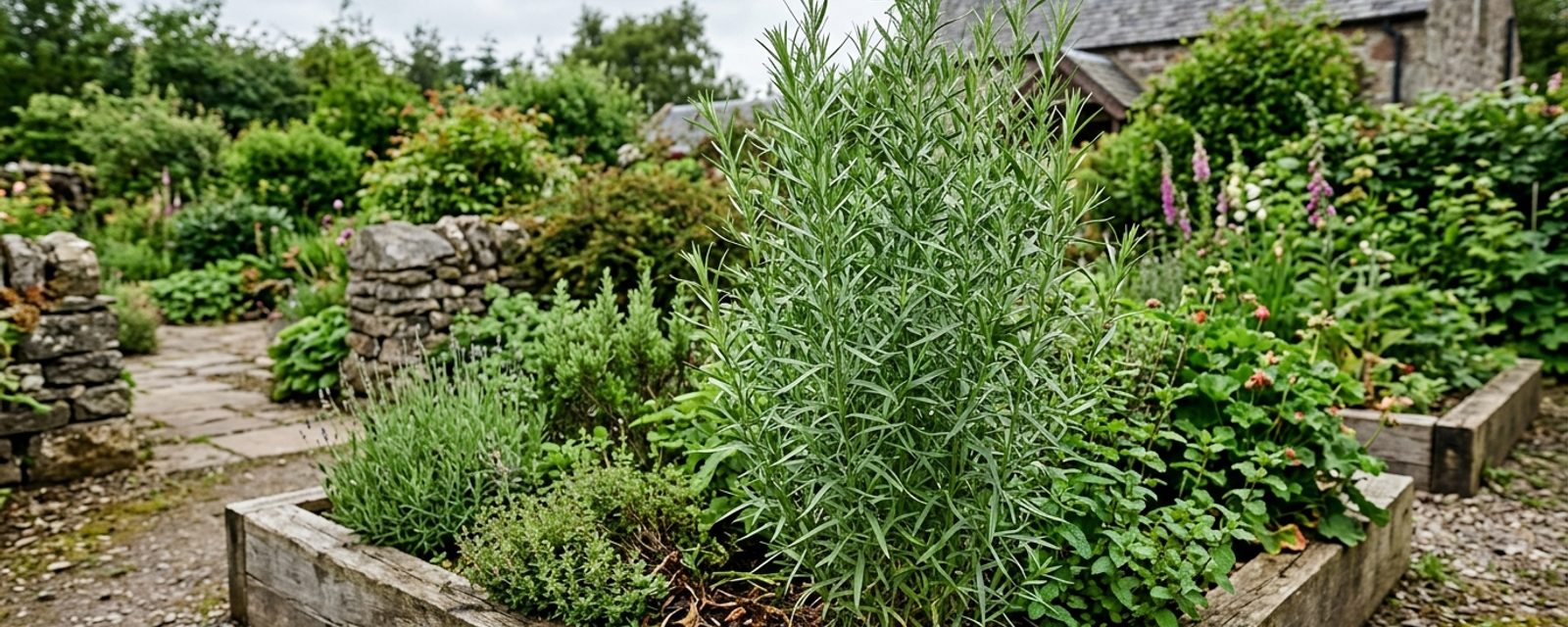
Tarragon's variety problem starts with its seed. French tarragon (Artemisia dracunculus var. sativa) is a sterile clone: it does not set viable seed at all, and every French tarragon plant grown today traces back to divisions or cuttings taken from existing stock. Russian tarragon, the wild species Artemisia dracunculus, sets seed freely and is grown from it. That single biological split is what fixes the entire "varieties" category: there's no seed-strain selection pressure that produces named cultivarsA plant variety that arose or was bred under cultivation and is kept true by deliberate propagation, rather than a naturally occurring wild species. Full definition → the way there is with, say, tomatoes or lettuce, since nobody can cross French tarragon with anything when you can't sow it to select from in the first place. Two types exist, with no cultivar-level varieties and no Award of Garden Merit for either. It's a straightforward two-way decision, not a longer list to weigh.
Quick answer
For most Scottish gardens, Russian tarragon is the reliable outdoor pick: both types are rated H4The RHS's H1a–H7 scale for how much cold a plant can survive outdoors, H1a being tender indoor-only and H7 hardy anywhere in the UK. Full definition → (hardy through most of the UK) for cold alone, but Russian copes far better than French with the wet-and-cold combination winter actually brings, and it grows readily from seed. Choose French tarragon instead if culinary flavour is the priority and you're willing to buy a plant (not seed), give it a sheltered, well-drained spot or a container, and move it undercover over winter. This article covers what to buy, how to store the harvest, and when the flavour difference actually matters in the kitchen. For siting, spacing and winter protection technique, see the full growing guide.
That seed-versus-clone split doesn't just explain why there are only two types, it also creates the most common way gardeners end up growing the wrong one entirely.
The buying guide: avoiding the wrong plant
Because French tarragon can't be grown from seed, any seed packet on general sale claiming to be tarragon, or even labelled "French tarragon", can only genuinely contain Russian tarragon seed. There is no other possibility. This is a well-documented mislabelling problem in the wider seed trade, not something specific to Scottish suppliers, but it's a real trap: a buyer wanting the classic culinary herb can end up with the blunter species by mistake, simply because seed was the only format on offer. Because French tarragon doesn't produce seed reliably, buying small plants to grow on is the recommended fix rather than starting from seed at all.
That makes the rule simple to apply at the seed rack: if it's seed, it's Russian tarragon, whatever the packet says. Treat any packet claiming "French tarragon" seed with real suspicion.
Buying a plant removes the seed problem but introduces a labelling problem of its own. Garden centre pots are often just labelled "tarragon" or "French tarragon" without confirming the botanical name, and generic labelling doesn't guarantee you're getting the true culinary type. Check the label specifically states Artemisia dracunculus var. sativa (sometimes shown as Artemisia dracunculus 'Sativa'), that's the only name that confirms true French tarragon.
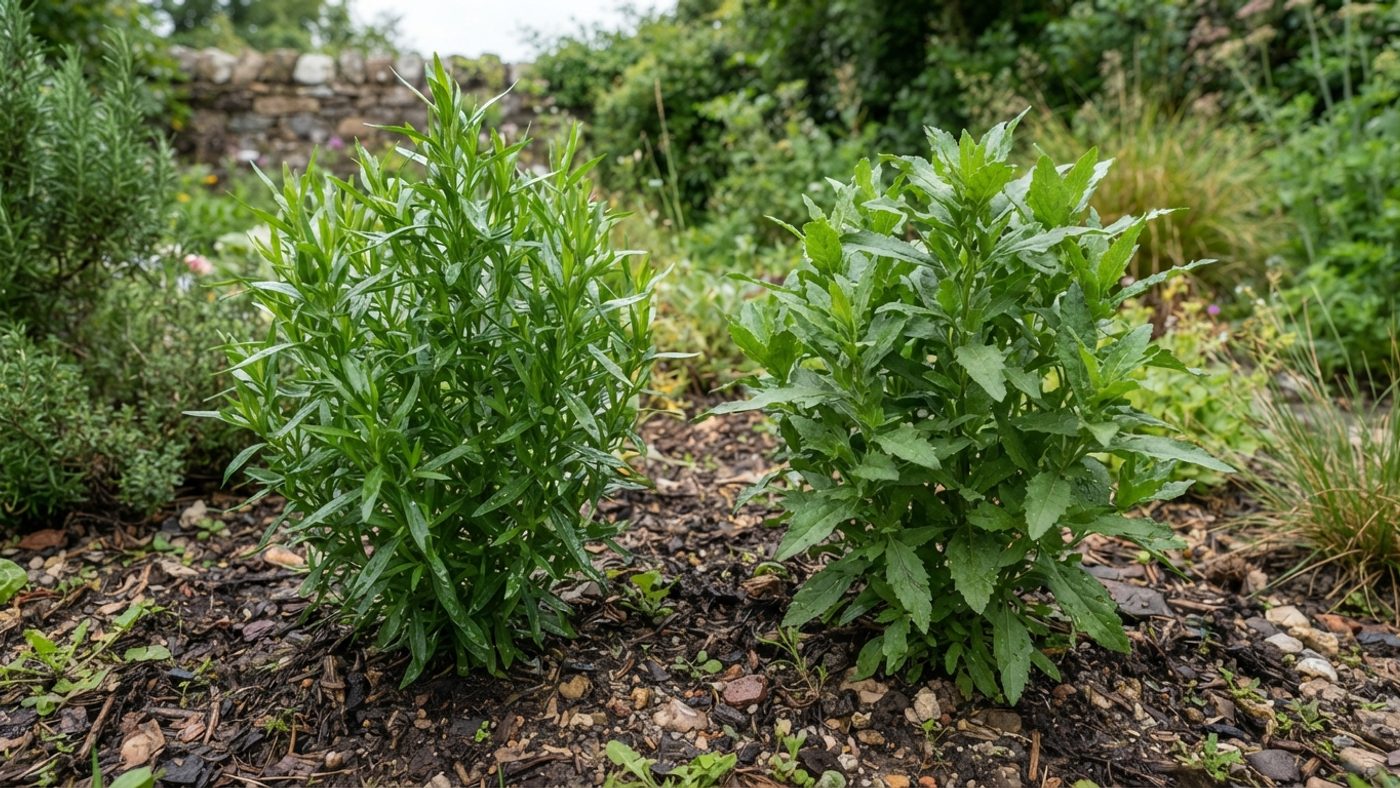
A crushed-leaf check is a reasonable practical backstop once you have a plant in hand: French tarragon has a distinct, sweet aniseed-liquorice smell and taste; Russian tarragon smells comparatively flat and grassy by comparison. It's a useful gut check, not a foolproof identification method, leaf condition, season and individual plants vary, so treat it as a second opinion on the label rather than a replacement for it.
For the best chance of getting the true plant, buy from a specialist herb nursery rather than a general seed rack, and check RHS Plant Finder for a supplier list against the Artemisia dracunculus var. sativa name specifically before ordering. Once you have a genuine plant, lift and split an established clump in spring every few years, replanting the healthiest sections, that keeps the plant productive and gives you a second, third and fourth plant to pot up separately, all without going anywhere near seed.
One further caution while shopping: "Mexican tarragon" is sometimes sold under the tarragon name but is a different plant entirely (Tagetes lucida, a marigold relative), not a genuine third tarragon type. If a label says Mexican tarragon, it isn't the herb covered here.
Which variety for which situation
| Priority | Better choice | Why |
|---|---|---|
| Reliable outdoor herb bed, low maintenance | Russian tarragon | Grows from seed, copes far better with a wet, cold winter |
| Best culinary flavour | French tarragon | Distinctive aniseed-liquorice flavour; the classic kitchen herb |
| Narrowest mature spread for a tight bed | Russian tarragon | See size note below, RHS's own figures put it narrower, not French |
| Willing to pot up and bring in for winter | French tarragon | Manageable in a container, worth the extra effort for flavour |
| Want to sow from a seed packet | Russian tarragon | The only one that's actually possible |
The two sources give different figures for mature size:
| Source | French tarragon | Russian tarragon |
|---|---|---|
| RHS (height / spread) | 0.5–1m / 0.5–1m | 0.5–1m / 0.1–0.5m |
| Gardener's World (height) | up to 90cm | up to 1.5m |
By RHS's own figures, Russian is the narrower plant despite reaching a similar height.
Storing and using the harvest
Tarragon's flavour comes from volatile aniseed compounds that fade quickly once the leaf is cut, which shapes how it's best kept beyond the growing season. Pick leaves before the plant flowers for the strongest flavour, once flowering starts, leaf quality drops off.
Freezing is the preferred method for holding onto that flavour. Whole or chopped leaves can be frozen directly, and packing chopped tarragon into ice cube trays with a little water or oil before freezing is a practical way to portion it out and protect the leaves from freezer air, a reasonable technique for a herb whose flavour is easily lost to drying out.
Drying works too and is the more traditional route, but it costs more of that aniseed character than freezing does, the same volatility that makes fresh tarragon so distinctive works against it once air-dried.
Tarragon vinegar is a genuinely different preservation route worth knowing about, not just a fallback: steeping fresh sprigs in white wine or cider vinegar infuses the aniseed flavour into a shelf-stable liquid, useful well beyond the growing season for dressings and sauces.
When the flavour difference actually matters
French tarragon is the culinary standard for a reason, it carries a distinctly peppery, aniseed-liquorice flavour, while Russian tarragon is noticeably grassier and more bitter. But that gap doesn't matter equally in every dish.
It matters a great deal in anything where tarragon is the dominant or defining flavour: a classic béarnaise sauce, a tarragon cream sauce, or a dish built specifically around the herb. Substituting Russian tarragon there is a real, noticeable downgrade.
It matters much less in slow-cooked dishes, marinades, or anything with other strong, competing flavours, stews, robust braises, dishes with garlic, mustard or other assertive herbs. Russian tarragon's blunter profile is a reasonable, practical substitute there.
Siting, soil, and a pest worth knowing about
Both types like a genuinely sunny, sheltered site with free-drainingSoil that lets water pass through quickly rather than pooling, so roots aren't sitting in wet ground after rain. Full definition → soil and resent sitting wet at the roots, worth taking seriously on Scotland's heavier or more acidic soils, since the same damp conditions that stress the roots also favour the two fungal problems tarragon does get: powdery mildew and rust. Beyond those, both French and Russian tarragon's own plant pages note they may be susceptible to honey fungus. It's framed as an occasional risk rather than a common one, and isn't something to actively guard against in normal conditions, but it's worth knowing the name if an established plant starts declining for no obvious reason, since honey fungus is a soil-borne problem that powdery mildew and rust treatments won't touch.
Common questions
Can I buy French tarragon seeds?
No. Genuine French tarragon doesn't set viable seed, so any seed packet sold as "tarragon" or "French tarragon" can only actually be Russian tarragon. If you want true French tarragon, buy a plant grown from a divisionPropagating a clump-forming perennial by digging it up and splitting it into several smaller pieces, each with roots and shoots attached. Full definition → or cutting, and check the label states Artemisia dracunculus var. sativa.
How do I know if a tarragon plant I've bought is really French tarragon?
Check the label for Artemisia dracunculus var. sativa (or 'Sativa') rather than just "tarragon" or "French tarragon". As a secondary check, crush a leaf, true French tarragon has a distinct sweet aniseed-liquorice smell, while Russian tarragon smells comparatively flat and grassy. It's a useful backup check, not a guarantee on its own.
What's the best way to store tarragon once it's harvested?
Freezing preserves its flavour best, either as whole or chopped leaves or portioned in ice cubes with water or oil. Drying works but likely loses more of the aniseed flavour. Steeping leaves in vinegar to make tarragon vinegar is a good option for longer-term, non-frozen storage.
Can I substitute Russian tarragon for French tarragon in cooking?
Yes, in the right dish. Russian tarragon's blunter, grassier flavour is a reasonable substitute in slow-cooked dishes, marinades, or anything with other strong flavours. In delicate, tarragon-forward dishes like béarnaise sauce, the difference is much more noticeable and French tarragon is worth seeking out specifically.
Are there pests specific to tarragon I should watch for?
Tarragon is generally a trouble-free plant. The main issues to watch for are powdery mildew and rust. Less commonly, it can be susceptible to honey fungus, a soil-borne problem worth knowing the name of if an established plant declines without an obvious cause.
Sources
4 sources, recorded with what each was used for
- Artemisia dracunculus var. sativa (French tarragon): French tarragon's height/spread, hardiness rating, propagation method (no viable seed), and honey fungus susceptibility
- Artemisia dracunculus (tarragon species / Russian tarragon): Russian tarragon's height/spread, seed propagation, and honey fungus susceptibility
- Tarragon: grow your own: The statement that Russian tarragon copes far better than French with the combination of wet and cold over winter
- How to Grow Tarragon: The buy-plants-not-seed guidance, flavour comparison, alternative height figures, and storage/freezing/drying/vinegar advice