
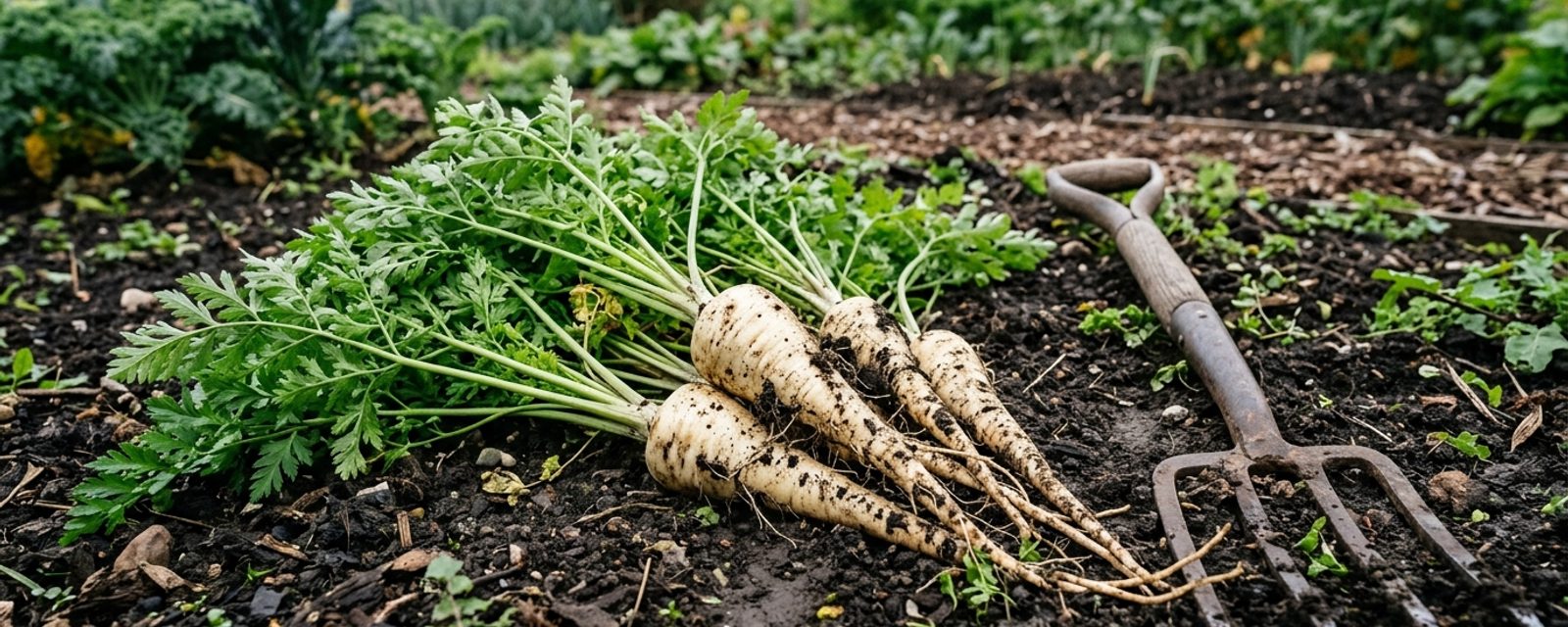
Pastinaca sativa
A parsnip sown in spring doesn't come out of the ground until it's been sweetened by a proper winter frost, which a Scottish garden delivers more reliably than most.
Parsnips are slow and they are patient, and in a Scottish garden that is the whole point. They sit in the ground from April to February. They take their time germinatingA seed sprouting: breaking dormancy and putting out its first root and shoot, given the right warmth and moisture. Full definition →, 14 to 30 days, sometimes longer, and then they take five to six months to reach a harvestable root. They want nothing added to the soil right before sowing, they resent transplanting, and the seed you saved from last year may not come up at all. A parsnip lifted in January from ground you cannot see under the snow, sweetened by frost and roasted with honey, is worth every month it spent in the bed.
Why parsnips suit Scottish patience
Frost converts the starches to sugars. A Scottish winter delivers that cold reliably. In milder parts of Britain the frost-sweetening effect is less dependable. Here it is guaranteed.
The trade-off is the sowing. Parsnip seed is slow to germinate and loses viability fast. Old seed is the single most common cause of failure. Buy fresh seed every year, wait until the soil reaches about 12°C, and sow more than you think you need. A March sowing into cold wet ground is the most reliable way to get nothing. A mid-April sowing into soil warmed under clochesA small, portable clear cover placed over an individual plant or short row to trap warmth and keep off wind, rain and pests. Full definition → for a fortnight is the most reliable way to get a full row. The calendar matters less than the temperature.
Seed Germination Temperature in Scotland → explains why cold soil risks rot rather than just slower growth, and how to actually measure soil temperature instead of guessing from the calendar.
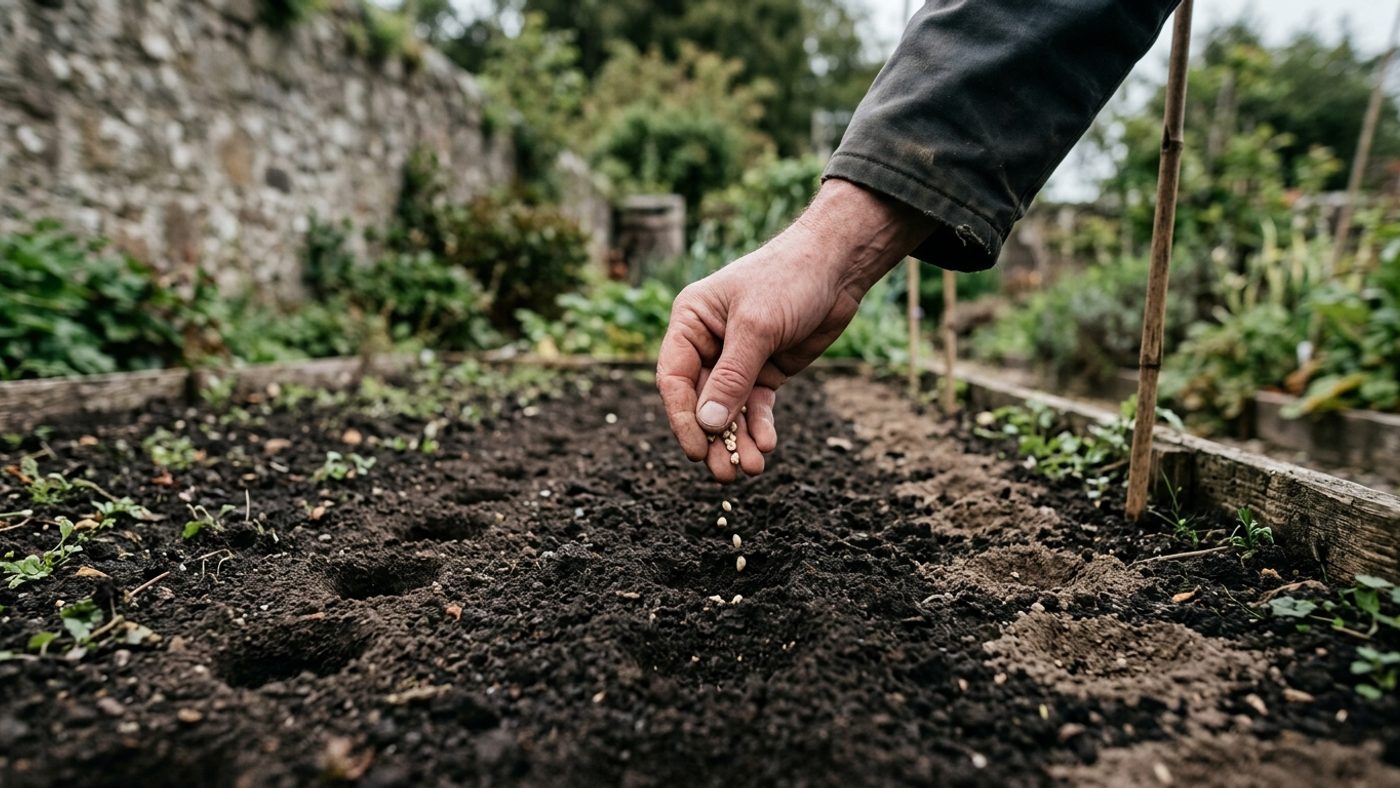
Station sowing is how you get a full row out of unreliable seed. Drop three seeds every 10 to 15cm instead of dribbling a continuous line, then thin each station to the strongest seedling once they are through. Patchy germination stops mattering, because every station only has to produce one plant. Rows at 15cm give you roots you can handle in a normal kitchen; push them out towards 30cm if you are after size. Thinning costs you nothing here. The spares were never going to be lifted.
Varieties
Canker resistance is the trait that matters here: there's no chemical treatment for it, so a resistant variety is doing work nothing else in the garden can do. These carry the RHS Award of Garden Merit, a UK-wide award rather than a Scottish one.
★ Our pick for Scotland
GladiatorAGM
Long
Well-flavoured, long, slender roots with smooth skins. Resistant to canker.
Why this one: Parsnips take five to six months from sowing to harvest and sit in the ground through autumn into winter, with no chemical treatment for canker if it takes hold. In a short-season climate the sowing date is what earns the crop: wait for 12°C soil, not the calendar. Gladiator is an AGMThe RHS's Award of Garden Merit: a UK-wide trials award for reliable performance, not a Scotland-specific recommendation. Full definition → with canker resistance confirmed directly on its own RHS page, which matters because canker enters through damaged roots. A variety that resists it without a spray to fall back on is doing exactly what a parsnip needs to do.
Also worth considering
AlbionAGM
Long
Evenly tapered root about 30cm long, smooth white skin. Slow to discolour. Resistant to canker.
PicadorAGM
Long
Canker-resistant. Keeps well in the ground over winter.
Show other recommended varieties (1)
PearlAGM
Long
Very uniform, long, slender roots. Smooth white skin. Keeps well over winter in the ground.
Best Parsnip Varieties for Scotland → compares all named parsnip varieties head-to-head, with the practical detail that doesn't fit in a summary card.
Soil and site
Parsnips want an open, sunny site with deep, light, free-drainingSoil that lets water pass through quickly rather than pooling, so roots aren't sitting in wet ground after rain. Full definition → soil. Remove as many stones as possible and loosen compacted ground. Parsnips form a long tap rootA single, thick, dominant root growing straight down from a plant, storing energy and anchoring it, as opposed to a spreading mass of fine roots. Full definition → and anything in the way makes them fork. Do not dig in organic matter immediately before sowing. Fresh manure or compost causes the roots to branch and fork. Ground that was improved with well-rotted manure or compost the previous year is ideal.
Keep parsnips away from carrots, both in the ground and in the rotationMoving each crop family to different ground each year, on a multi-year cycle, so pests and diseases that build up in soil don't get a repeat host. Full definition →. Carrot fly is the pest they share, and putting them together doubles the risk.
Sowing
Sow outdoors from mid-spring, once the soil reaches about 12°C. March and April sowings do best; early May is still worth doing. Sow about 1cm deep in rows about 30cm apart. Scatter thinly or sow three seeds at 15cm intervals, because germination is unreliable and you want more seedlings than you need. Thin to one strong plant every 15cm once they are up.
Warming the soil with cloches for a couple of weeks before sowing helps germination. Parsnip seed is slow. Seedlings can take 14 to 30 days to appear, so be patient and keep the row weeded and watered while you wait. Covering seedlings with fleeceA lightweight, breathable fabric laid or draped over plants to trap a little warmth and keep off frost, wind and some flying pests. Full definition → or cloches after they appear gives them a head start.
Sow directly where the plants are to grow, because parsnips form a tap root that does not transplant. A fast crop like radishes sown between the parsnip rows makes use of the space while the parsnips are slow to establish. The radishes will be harvested long before the parsnips need the room.
Watering and care
Water young parsnips during dry spells until they are well established. Mature plants are fairly drought tolerant, but keep the soil evenly moist. Erratic watering causes the roots to split, and split roots are vulnerable to canker.
Weeding matters more for parsnips than for most crops. Hand-weed rather than using a hoe. A hoe blade that nicks the top of the root gives canker an entry point. Do not touch the leaves when weeding, because the smell of crushed parsnip foliage attracts carrot fly. Once the crop is growing strongly, the dense foliage usually shades out weeds on its own.
Cover the crop with insect-proof mesh from the start. Carrot fly is the main pest, and the mesh is the most effective defence. A thick mulchA layer of material spread over the soil around plants to suppress weeds, retain moisture, and improve soil structure as it breaks down. Full definition → of garden compost around the plants holds moisture and suppresses weeds.
Harvesting
Parsnips are ready to lift from late summer or autumn onwards, once the leaves start to die down. Wait until after the first heavy frost before harvesting. The cold intensifies their sweetness and flavour. Use a garden fork to carefully ease the long roots out of the ground intact.
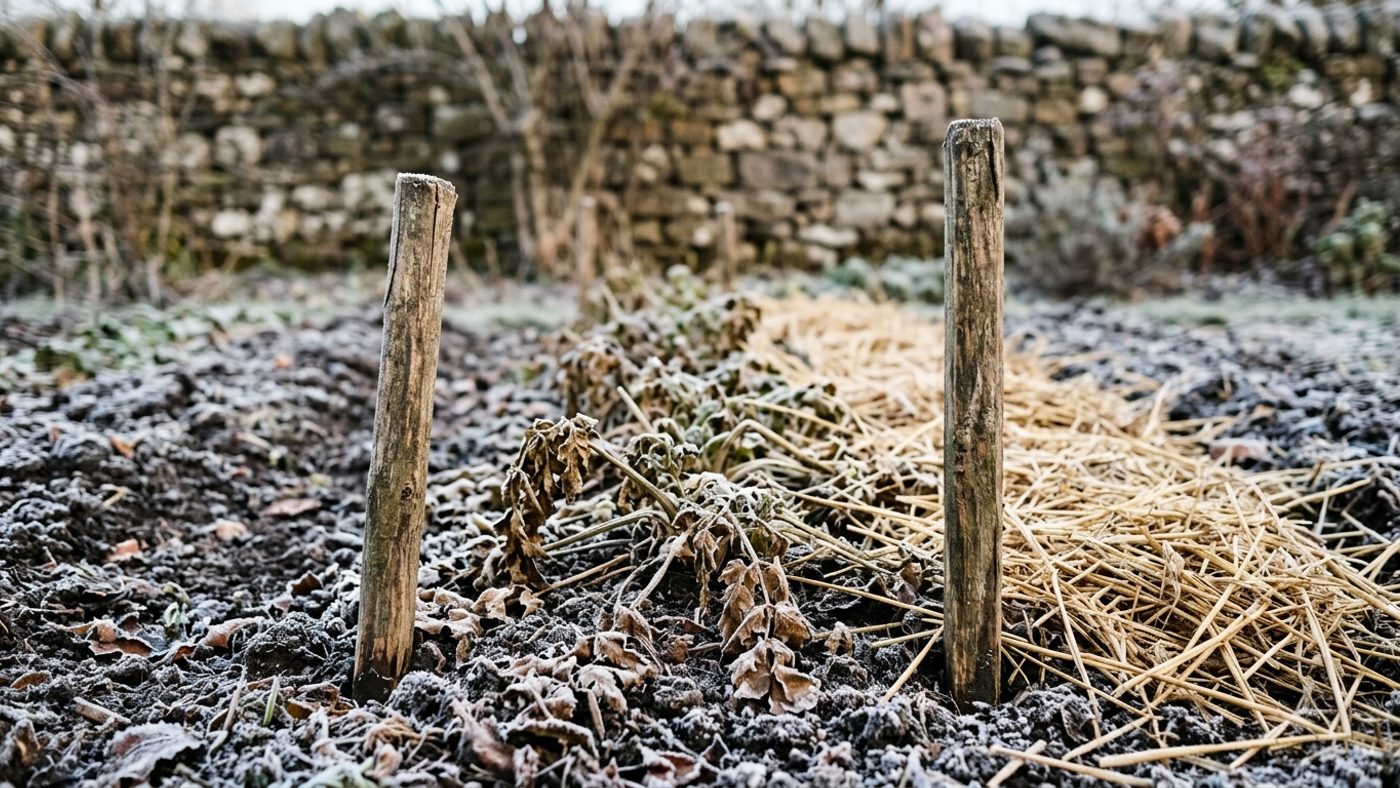
Parsnips are very hardy and can be left in the ground through winter, harvested as you need them. Mark the crop clearly with canes or labels before the leaves disappear, so the roots are easy to find in the snow. In frozen ground they are difficult to dig, so lift a few extra in November to ensure you have parsnips however cold it gets. Alternatively, cover the ground with straw as insulation. A parsnip lifted in January and roasted with honey is worth every month it spent in the bed.
Common problems
- Poor germination. The soil was too cold or the seed was old. Wait for 12°C, warm the soil with cloches, and buy fresh seed every year. Seedlings can take 14 to 30 days.
- Forked or distorted roots. Stony or compacted soil, or fresh manure dug in before sowing. Remove stones, loosen the ground, and never add organic matter immediately before sowing.
- Carrot fly larvae burrow into the roots. Cover the crop with insect-proof mesh from the start.
See more problems
- Split roots. Erratic watering. Keep the soil evenly moist.
- Parsnip canker. An orange-brown rot at the top of the root, usually entering through damage. Hand-weed, choose canker-resistant varieties, and keep the soil evenly moist.
Common questions
Why are my parsnip seeds not coming up?
Parsnips are slow and unreliable to germinate. Seedlings can take 14 to 30 days to appear, and in cold soil they may not appear at all. Wait until the soil reaches about 12°C. In most of Scotland that means mid-April rather than March, no matter what the seed packet says. Sow more than you think you need, use fresh seed every year, and warm the soil with cloches for a couple of weeks before sowing. A February sowing into cold wet ground is the most reliable way to get nothing.
Why are my parsnips short and forked?
Stony or compacted soil forces the tap root to fork, and manure dug in right before sowing does the same: the fix is matching variety to soil (a shorter, stump-rooted type on heavy ground) or manuring the bed a year ahead rather than at sowing time. Full sourced breakdown: <a href="/tools/garden-myths/parsnips/">Parsnip Myths →</a>
When are parsnips ready to harvest, and do I need to lift them all?
They are ready from late summer or autumn, once the leaves start to die down, but wait until after the first heavy frost. The cold converts starches to sugars and the roots taste sweeter. You do not need to lift them all at once. Parsnips are very hardy and can be left in the ground through winter, harvested as you need them. Mark the crop clearly with canes before the leaves disappear, so you can find them in the snow. In frozen ground they are difficult to dig, so lift a few extra in November or cover the ground with straw.
How do I stop carrot fly damaging my parsnips?
Cover the crop with insect-proof mesh from the start. Hand-weed rather than using a hoe, because a hoe blade that nicks the root gives canker an entry point. Try not to touch the leaves when weeding: the smell of crushed parsnip foliage attracts carrot fly. Keep parsnips away from carrots in the rotation too.
What causes the brown rot on my parsnip roots?
Parsnip canker is an orange-brown rot that usually enters through damaged roots. Avoid damaging the roots when weeding, choose canker-resistant varieties like Albion, Gladiator or Picador, and keep the soil evenly moist. Splitting from erratic watering also opens the roots to canker.
Sources
2 sources, and what each was used for
- RHS: sowing Mar-early May, 12C soil minimum, 1cm depth, 15cm spacing, 30cm rows, 14-30 day germination, 5-6 months to harvest, Sep-Feb window, frost sweetening, canker-resistant varieties, AGM varieties
- Garden Organic: station sowing three seeds every 10-15cm and thinning to the strongest, 10-28 day germination, 15-30cm rows with wider rows for larger roots, lifting from autumn through to March, and independent corroboration that frost improves flavour