
Parsnip Canker is a common disease that affects parsnips in Scotland. Here is what it looks like, the conditions it needs, and the controls that actually work.
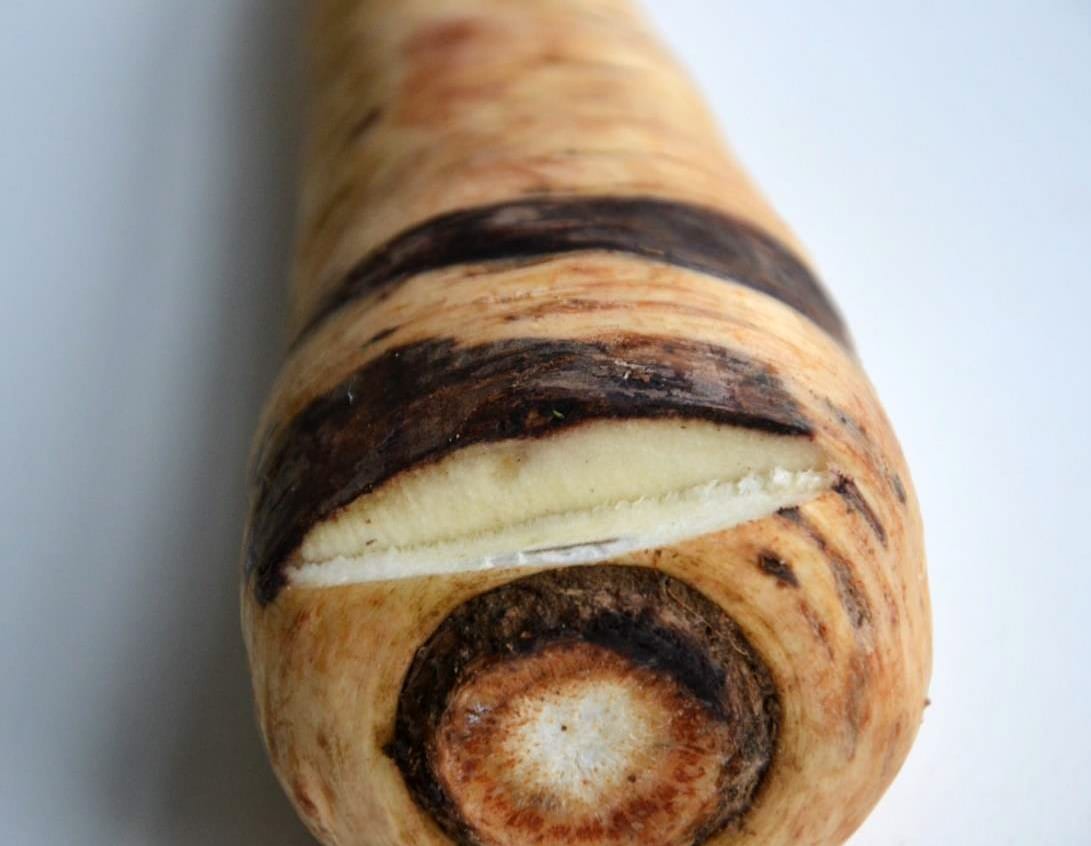
What does it look like?
An orange/brown rot affecting the roots, especially where they are already damaged.
Controls: what actually works
All the methods below are backed by real evidence, not just repeated folklore.
Grow canker-resistant varieties
RHS names 'Albion', 'Picador' and 'Gladiator' as canker-resistant varieties.
Avoid damaging the roots; water in dry spells to prevent splitting
Roots canker more readily where they are already damaged, and they split if growth is erratic, so water in dry spells to keep growth steady.
Splitting and canker compound each other: erratic watering splits the root, and the split is where canker takes hold. Consistent watering is a canker control, not just a quality measure.
Hill soil over the root shoulders through the season; keep to a long rotationMoving each crop family to different ground each year, on a multi-year cycle, so pests and diseases that build up in soil don't get a repeat host. Full definition →; avoid compacted or waterlogged ground
Hilling up soil over parsnips' shoulders through the season reduces the disease. Long rotations reduce the fungus's population in the soil. Choose well-drained ground and avoid excessive compaction.
This corroborates the advice above to protect and support the root shoulder, the same underlying weak point either way.
Frequently asked questions
What should I do first if I find parsnip canker in my garden?
Start with grow canker-resistant varieties. After that, avoid damaging the roots; water in dry spells to prevent splitting. Work through the rest in order of how well-evidenced they are if the first two aren’t enough on their own.
Is there a spray that works?
No. There are no amateur chemical treatments available for parsnip canker. The controls that work are cultural: the measures listed above.
How much of this advice is actually proven?
Every control listed above is evidence-based, not just repeated folklore. None of it is a guess.
Sources
2 sources, recorded with what each was used for
- RHS1: canker described as an orange/brown rot affecting roots especially where already damaged; 'Albion', 'Picador' and 'Gladiator' resistant; root splitting from erratic growth
- Pacific Northwest Extension18: cultural control: hilling soil over root shoulders, long rotation reducing soil inoculum, well-drained ground, avoiding compaction. Not used for its named resistant variety, which is a US trial result, not a Scottish one.