
Sclerotinia is a minor disease that affects jerusalem artichoke in Scotland. Here is what it looks like, the conditions it needs, and the controls that actually work.
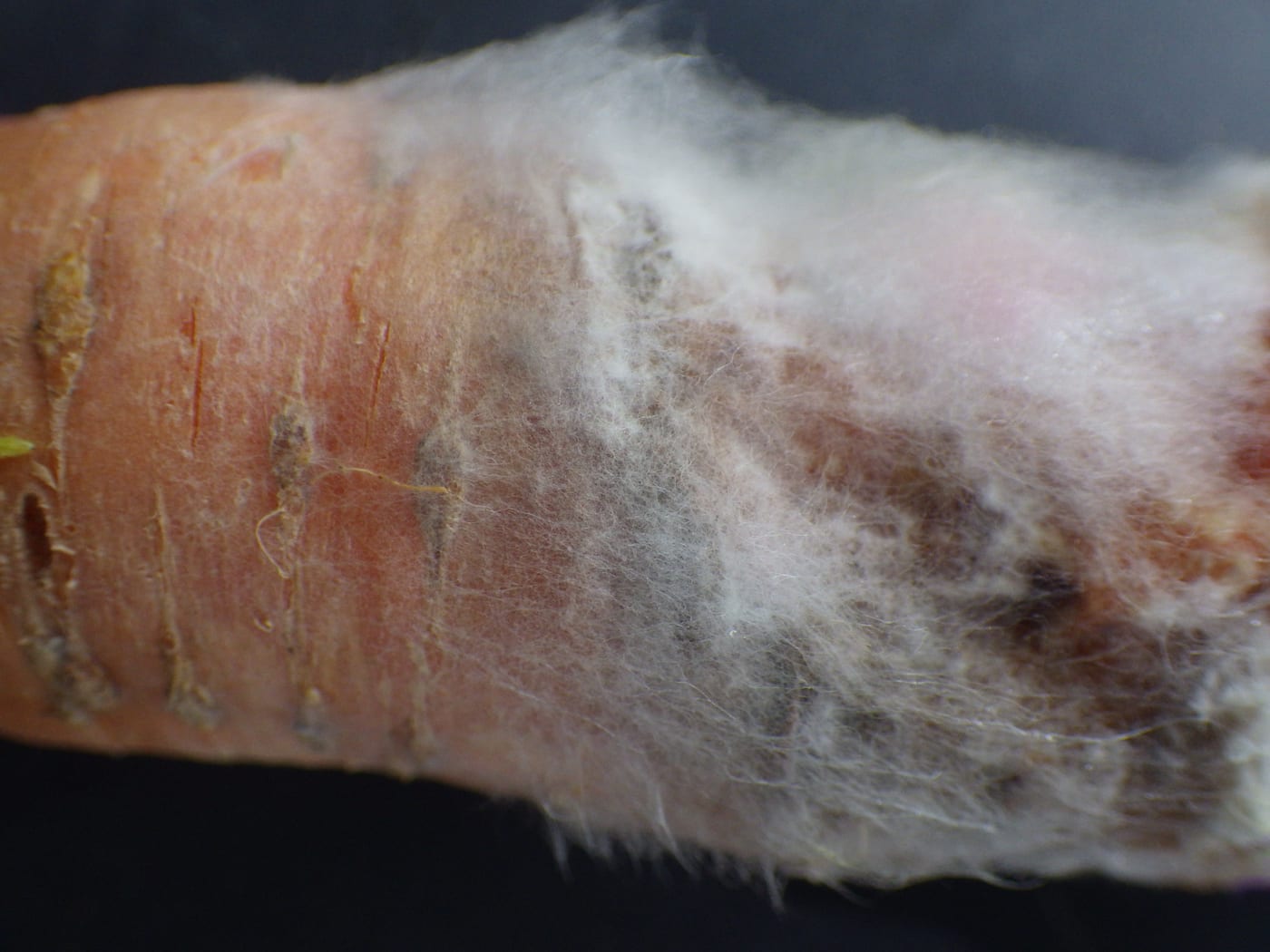
What does it look like?
Fluffy white fungal growth appears at the base of the plant or on affected tissue, with black, seed-like sclerotia, roughly 0.5 to 1cm across, forming within that white growth and inside hollow stem cavities where present.
What causes it
Wet weather is what lets the airborne spore stage infect a plant in the first place. Spores spread from around May onwards in wet conditions, a timing that lines up with Scotland's typically damp early summers.
Is this disease active now?
The infectious window opens in May and runs through the wetter months, with wilting and collapse most likely to actually show through summer and into early autumn.
Symptoms
Affected plants can go from healthy to sudden yellowing, wilting and collapse. At the base, the stem develops a soft, wet rot, often starting right at soil level.
Life cycle
The black sclerotia that form in infected tissue drop into the soil and survive there for up to eight years before germinatingA seed sprouting: breaking dormancy and putting out its first root and shoot, given the right warmth and moisture. Full definition →, usually after a winter chilling period, into small cup-shaped structures that release thousands of airborne spores. Less commonly, a sclerotium germinates directly in the soil and infects a plant through direct contact instead.
Why this matters in Scotland
An eight-year soil survival and spore spread from around May in wet conditions describe conditions a damp Scottish early summer meets easily. That figure comes from monitoring the fungus in commercial oilseed rape fields rather than vegetable gardens, though, which limits how directly it applies to a Jerusalem artichoke bed.
Sclerotinia is named as a host across a much wider range of vegetables generally, lettuce, peas, beans, celery, carrots, potatoes, tomatoes and cucumbers among them, which reads as if it should be a routine problem across half the vegetable patch. In practice it doesn't turn up as a real problem on any of those crops for Scottish growers. Jerusalem artichoke is the one exception, and even there RHS names only two problems on an otherwise trouble-free crop: this, and slugs and snails.
Controls: what actually works
All the methods below are backed by real evidence, not just repeated folklore.
Remove and destroy infected plants as soon as they're spotted, rather than composting them
An ordinary garden compost heap doesn't reach the temperature needed to kill the black sclerotia inside infected tissue, so composting an infected plant just spreads viable sclerotia back across the garden in next year's compost.
Avoid overcrowding susceptible plants, and space them to allow air to move freely around the base
The fungus needs wet conditions to spread, and crowded plants both hold humidity longer at their base and give the fungus a shorter distance to reach a neighbouring plant.
Avoid replanting susceptible crops in soil where sclerotinia has appeared before, for as long a gap as practical
Sclerotia surviving in soil for up to eight years is the reason a single infected plant can leave that patch of ground carrying risk long after the plant itself is gone. Farmers rotate away from an infected field for exactly this reason, and the same logic holds at bed scale in a garden.
Frequently asked questions
What should I do first if I find sclerotinia in my garden?
Start with remove and destroy infected plants as soon as they're spotted, rather than composting them. After that, avoid overcrowding susceptible plants, and space them to allow air to move freely around the base. Work through the rest in order of how well-evidenced they are if the first two aren’t enough on their own.
Is there a spray that works?
No. There are no amateur chemical treatments available for sclerotinia. The controls that work are cultural: the measures listed above.
When are sclerotinia most active in Scotland?
Check the seasonal activity section above. Scottish timings can run a few weeks behind the UK-generic figures.
Sources
3 sources, recorded with what each was used for
- RHS1: identification, symptoms, the wet-weather infection trigger, life cycle including both infection pathways, sclerotia soil survival, removing and destroying infected plants, crowding and airflow, absence of a chemical control
- RHS1: confirming sclerotinia directly on Jerusalem artichoke's own growing page, and the crop's overall robustness framing
- FAS Scotland14: the eight-year soil-survival figure, May spore-spread timing, and rotationMoving each crop family to different ground each year, on a multi-year cycle, so pests and diseases that build up in soil don't get a repeat host. Full definition → advice, all from field-crop monitoring in Scotland