
Raspberry Beetle is a common pest that affects raspberries, blackberries and tayberries in Scotland. Here is what it looks like, how to spot the damage, and which controls have been tested.
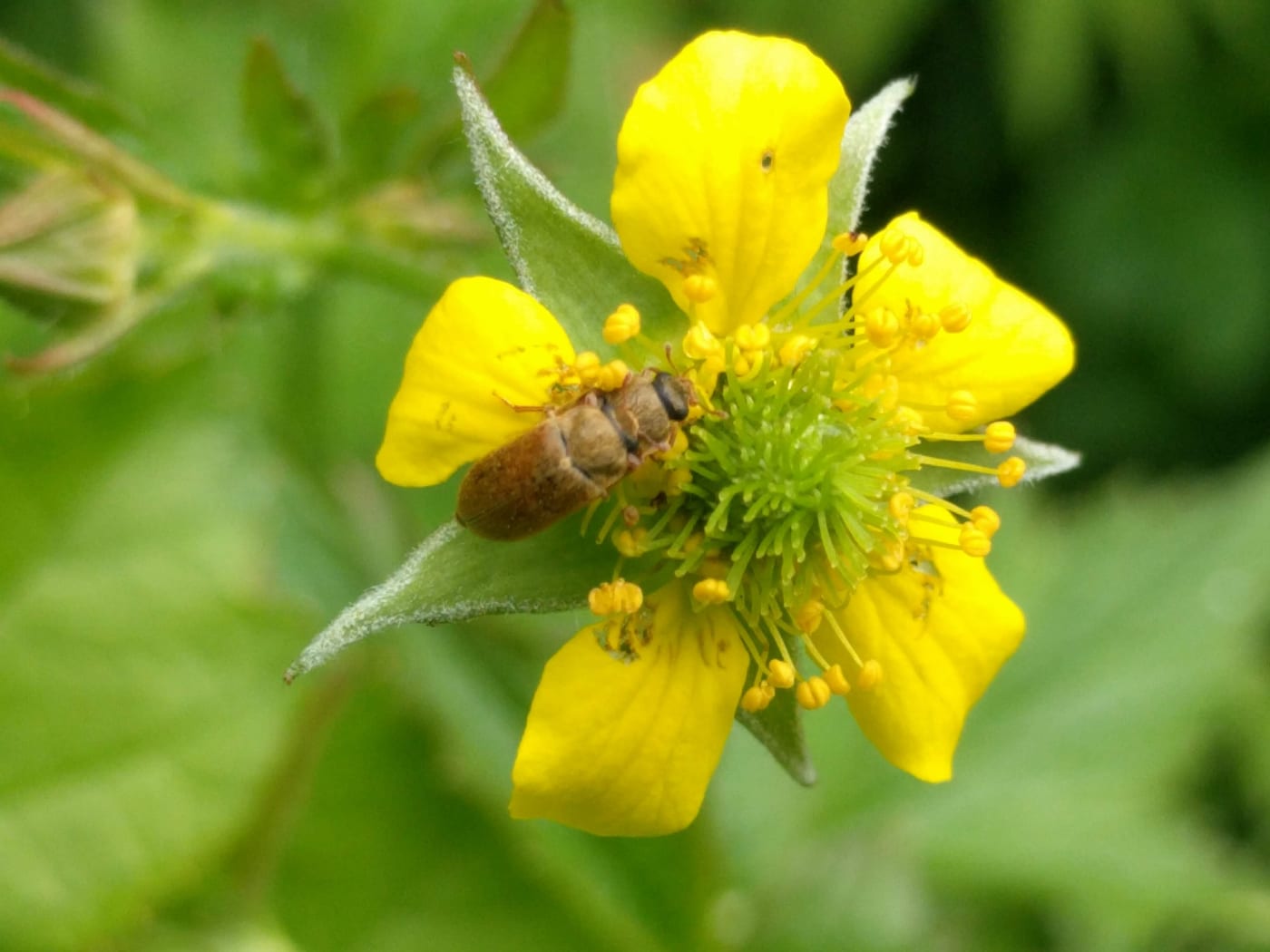
What does it look like?
Adults are small, pale brown beetles about 4mm long. Larvae are brownish-white grubs up to 8mm long, found feeding at the stalk end of the fruit before tunnelling in to eat the central plug.
A grub inside a picked raspberry is the confirming sign, but the greyish-brown dried patch at the stalk end of an otherwise ripe berry is usually what catches your eye first, before you've even picked it.
What causes it
Adults spend winter in the soil and stay there until daytime temperatures climb past around 15°C. Once active, they feed first on flowers of other plants nearby, apple, plum, cherry, hawthorn, before moving onto raspberry once its own flowers are open, which is when eggs actually get laid.
It's the flowers, not the calendar, that raspberry beetle actually responds to. Once it's warm enough to move, whichever flowers happen to be open is what gets fed on.
Is this pest active now?
June through August is the peak activity window on summer-fruiting varieties, following on from egg-laying on flowers from May through mid-July. Autumn-fruiting types are at real risk only for their earliest fruit; anything ripening after late August is largely past the danger.
🌱 Plants at risk
Raspberry Beetle also affects these crops:
Symptoms
Damaged ripe berries show greyish-brown, dried-up patches at the stalk end, often with a grub visible inside when the fruit is opened. Damaged fruit is also more vulnerable to grey mould, which shortens how long it keeps once picked.
Life cycle
One generation a year. Eggs are laid on raspberry flowers, larvae develop inside the fruit through summer, then fully-fed grubs drop into the soil where they overwinterKeeping a plant alive and intact through the cold months, whether left outdoors, moved under cover, or stored dormant. Full definition → as pupae before emerging as adults the following spring.
Why this matters in Scotland
A Scottish spring is often slower to reach the 15°C the beetle waits for, which pushes the whole sequence back by roughly the same stretch.
That delay doesn't change what to do, only when to start doing it: a trap put out on a fixed UK-generic date risks going up before the beetles are actually moving here.
Controls: what actually works
All the methods below are backed by real evidence, not just repeated folklore.
Scent water trap: a host-plant-odour trap that catches both sexes
A commercially available water trap using a synthetic host-plant scent catches both male and female beetles, which can help reduce numbers. The specific volatile compounds that draw beetles in have also been identified, and trap designs combining colour with scent have cut fruit damage during multi-year trials.
Encourage natural predators: birds, hedgehogs and ground beetles
All three are named as predators that help keep numbers down without any intervention needed.
Grow autumn-fruiting varieties alongside or instead of summer ones
A bed with both types gives you an early, riskier crop and a later, largely trouble-free one from the same amount of ground.
Tolerate light damage on summer-fruiting varieties
Picking regularly rather than letting fruit sit on the cane is what makes tolerating this practical: it sorts out the odd damaged berry at the point of harvest instead of needing to inspect or treat the plant itself.
Frequently asked questions
What should I do first if I find raspberry beetle in my garden?
Start with scent water trap. After that, encourage natural predators. Work through the rest in order of how well-evidenced they are if the first two aren’t enough on their own.
Will raspberry beetle kill my plants?
They rarely kill established plants. The damage is usually cosmetic on outer leaves, and natural predators often bring numbers under control without you doing anything.
When are raspberry beetle most active in Scotland?
Check the seasonal activity section above. Scottish timings can run a few weeks behind the UK-generic figures.
Should I just leave raspberry beetle alone?
In most gardens, yes. raspberry beetle are food for birds, wasps and predatory insects, and a healthy garden carries some without trouble. Tolerance is also RHS's official position now, for that same reason.
Sources
2 sources, recorded with what each was used for
- RHS1: adult and larva identification, symptoms and damage, host plants (raspberry, blackberry, tayberry, loganberry), life cycle and overwintering as pupae in soil, egg-laying window and June-August peak activity, autumn-variety timing escape, tolerance framing, scent water trap, natural predators, absence of an amateur pesticide recommendation
- James Hutton Institute2: the 15°C flight/feeding threshold, pre-raspberry feeding on other flowering plants (apple, plum, cherry, hawthorn), damaged fruit's increased vulnerability to grey mould, volatile-compound and trap research, commercial insecticide timing (not used as amateur guidance)