
Small dark, sunken pits scattered across an apple's skin, and dry brown flesh directly beneath each one, often don't show up at all until the fruit has been sitting in storage for weeks. By then the picking decisions that mattered are already behind you. The mechanism is the same one behind Blossom End Rot in tomatoes: a calcium-delivery problem, not a calcium shortage.
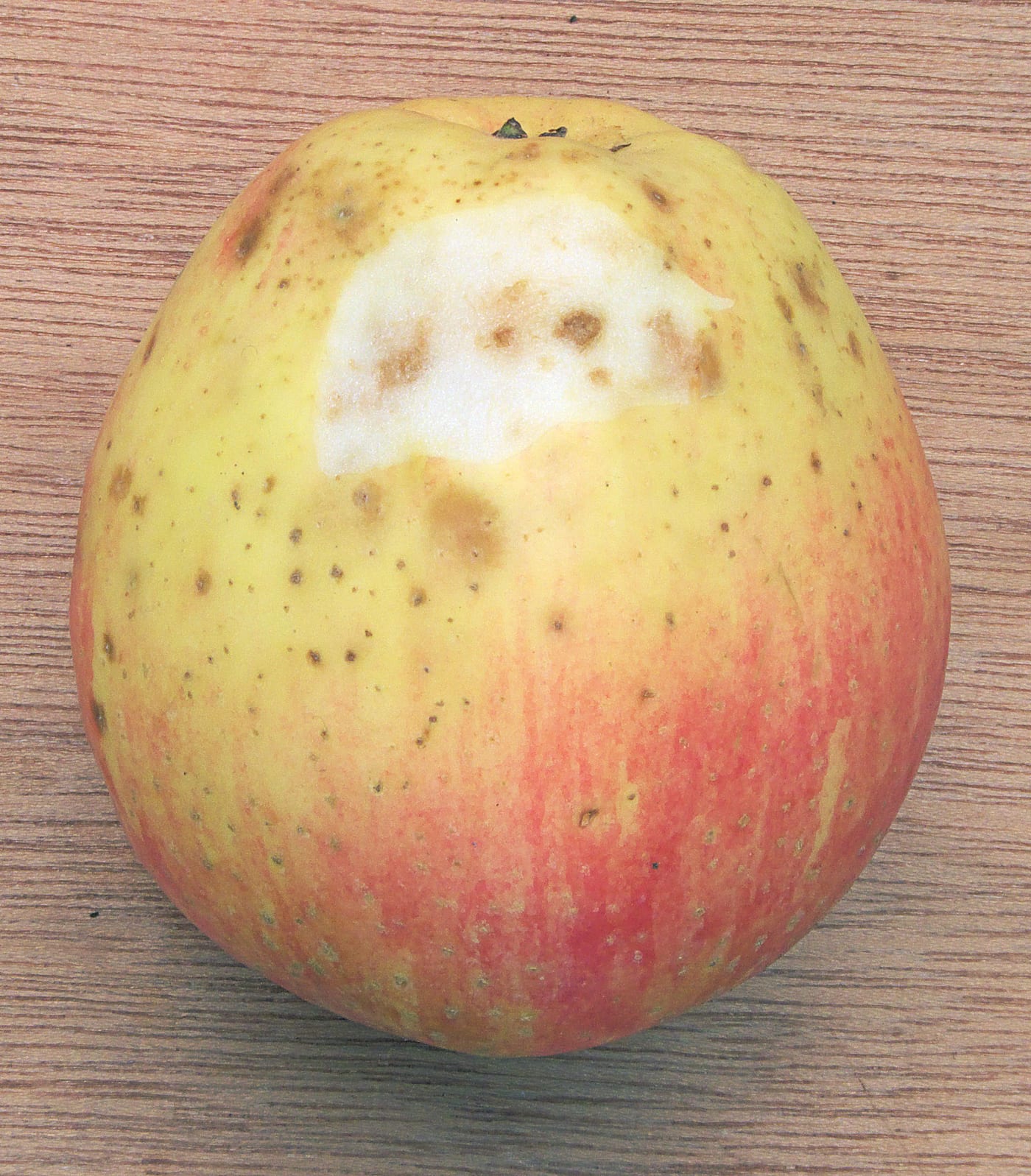
What it looks like
The pits cluster most often around the eye (calyx) end of the apple, dry and shallow, with the discoloured flesh beneath usually no more than a few millimetres deep. Fruit can start showing them from around half-grown right through to harvest, though the size and number of pits tend to increase the longer affected fruit sits in storage afterwards.
The cause: the same water-flow problem as Blossom End Rot, in an apple
An irregular water supply drives it: a dry spell followed by heavy rain or a soak unsettles the steady uptake the fruit needs, and hot, dry summers make it worse. Excess potassium aggravates it alongside excess nitrogen. Young, vigorously growing trees, especially ones fed too much nitrogen, are among the most affected, alongside older trees carrying large, culinary-type fruit. Heavy pruning and irregular cropping from one year to the next, the same pattern behind Biennial Bearing, make it worse too: an uneven crop load produces fewer, larger fruit in the heavy years, and larger fruit is more bitter-pit-prone. CordonsA fruit tree or bush trained as a single main stem with short fruiting side-spurs, usually grown at an angle against a wall, fence or wire. Full definition →, espaliers, and any young or container-grown tree, all common in small Scottish gardens and allotments, dry out and swing between wet and dry faster than an open-grown tree in a border, which puts exactly this kind of setup at the sharper end of the risk.
Why this matters in Scotland
Scotland's own unsettled rainfall, spells of dry weather broken by sudden heavy rain rather than steady drizzle, sits close to the dry-spell-then-soak pattern behind the problem. LayeredPropagating a new plant by pinning a low, flexible stem into the soil while still attached to the parent, so it roots before being cut free. Full definition → on top of that, the most bitter-pit-prone cultivarsA plant variety that arose or was bred under cultivation and is kept true by deliberate propagation, rather than a naturally occurring wild species. Full definition →, 'Bramley's Seedling', 'Cox's Orange Pippin', 'Egremont Russet' and 'Newton Wonder' among them, are traditional culinary and dessert varieties that remain common choices in Scottish gardens for their hardiness and reliable cropping. Between the two, expect this more often here than "moderate" alone suggests: it's less about the weather being worse and more about which trees are already in the ground and how they're grown.
What actually works
The common thread running through the methods below is steadying growth and watering rather than adding calcium after the fact.
Water trees consistently through dry spells, especially on young or newly planted trees
The same principle as Blossom End Rot: an irregular water supply, not a soil calcium shortage, is the named driver. Keeping watering even through dry periods, rather than letting the tree dry out and then soaking it, reduces the swings that interrupt calcium reaching the fruit.
MulchA layer of material spread over the soil around plants to suppress weeds, retain moisture, and improve soil structure as it breaks down. Full definition → around the base of the tree to help even out soil moisture
A mulch buffers the soil against the dry-then-soaked swings that interrupt calcium delivery, the same reasoning used for Blossom End Rot's mulching advice.
Avoid heavy nitrogen feeding, and keep potassium in balance rather than excessive
Young, vigorously growing, nitrogen-fed trees are named as among the most affected. A balanced feeding regime, rather than pushing growth with heavy nitrogen, reduces the vigour that's linked to worse bitter pit.
Favour light summer pruning over heavy dormant-season pruning, and avoid letting cropping swing wildly between years
Heavy pruning and irregular cropping are both named as aggravating factors, likely through the extra vigour and uneven fruit load they create. Restrained, regular pruning avoids pushing the tree into the same vigorous growth pattern that heavy nitrogen feeding does.
Where bitter pit is a recurring problem, favour less-susceptible cultivars
'Jonagold' and 'Gala' are named as comparatively resistant, against a long list of susceptible culinary and dessert types including 'Bramley's Seedling', 'Cox's Orange Pippin', 'Egremont Russet', 'Merton Worcester', 'Newton Wonder' and 'Warner's King'. For a new planting in a garden with a known history of the problem, this is worth weighing alongside the usual cropping and flavour considerations.
Use affected fruit promptly rather than storing it, and check stored fruit regularly
Bitter pit often only appears in storage, weeks after picking, so fruit that looked sound at harvest can develop pits later. Where a tree has a known bitter pit problem, leave fruit to fully ripen before picking, use surface-only affected fruit promptly (peeling away the pitted skin) rather than storing it, and freeze rather than store fruit from trees with a recurring problem.
Manage crop load so the tree carries an even crop each year, rather than swinging between a light year and a heavy one
A lighter crop load produces fewer, larger fruit, and larger fruit is more bitter-pit-prone. It is the same crop-load swing behind Biennial BearingA fruit tree's tendency to crop heavily one year and barely at all the next, then repeat that cycle rather than cropping evenly every year. Full definition →: thinning to even out cropping year to year reduces bitter pit risk as a side effect, not just the biennialA plant that completes its life cycle over two years: growth in year one, then flowering, seeding and dying in year two. Full definition → pattern itself.
Frequently asked questions
Is bitter pit a disease that will spread?
No. It's a physiological response to an irregular water supply, not a pathogen, so there's nothing to spread between trees or between fruit. It affects the individual apples that were developing fastest when a dry-then-wet swing hit, not the tree as a whole.
Why does it only show up once the apples are in storage?
Bitter pit can appear on the tree from around when the fruit is half-grown through to harvest, but it very often doesn't show at all until the fruit has spent some weeks in storage. That's what makes it easy to miss: apples that looked perfectly sound when picked can develop pits later, which is why checking stored fruit regularly matters more than a one-off inspection at harvest.
Will feeding the tree more calcium fix it?
Not reliably, and not on its own. The pits form because calcium isn't reaching the fruit fast enough, which is usually a water-delivery problem rather than a shortage of calcium in the soil. Steadier watering, restrained nitrogen feeding and light rather than heavy pruning all address the actual mechanism; adding calcium to the soil, on its own, doesn't fix a delivery problem. A foliar calcium spray direct onto the developing fruit is the one calcium-based option that can help on a tree with a known problem, though it only partly offsets the issue and doesn't replace the watering and feeding fixes above.
Are some apple varieties more prone to it than others?
Yes, genuinely. 'Bramley's Seedling', 'Cox's Orange Pippin', 'Egremont Russet', 'Merton Worcester', 'Newton Wonder' and 'Warner's King' are among the more susceptible, against 'Jonagold' and 'Gala' as comparatively resistant. Several of the susceptible varieties are traditional culinary types that remain common choices in Scottish gardens for their hardiness.
Sources
2 sources, recorded with what each was used for
- RHS: definition, appearance and storage-onset timing, the calcium/water-supply mechanism, aggravating factors (nitrogen, heavy pruning, irregular cropping), susceptible and resistant cultivars, harvesting and storage advice
- University of Minnesota Extension: independent corroboration of the calcium-deficiency mechanism, potassium named alongside nitrogen as an aggravating excess, fluctuating soil moisture named as a factor, and the crop-load link to biennial bearing (larger fruit from a lighter crop load is more bitter-pit-prone)