
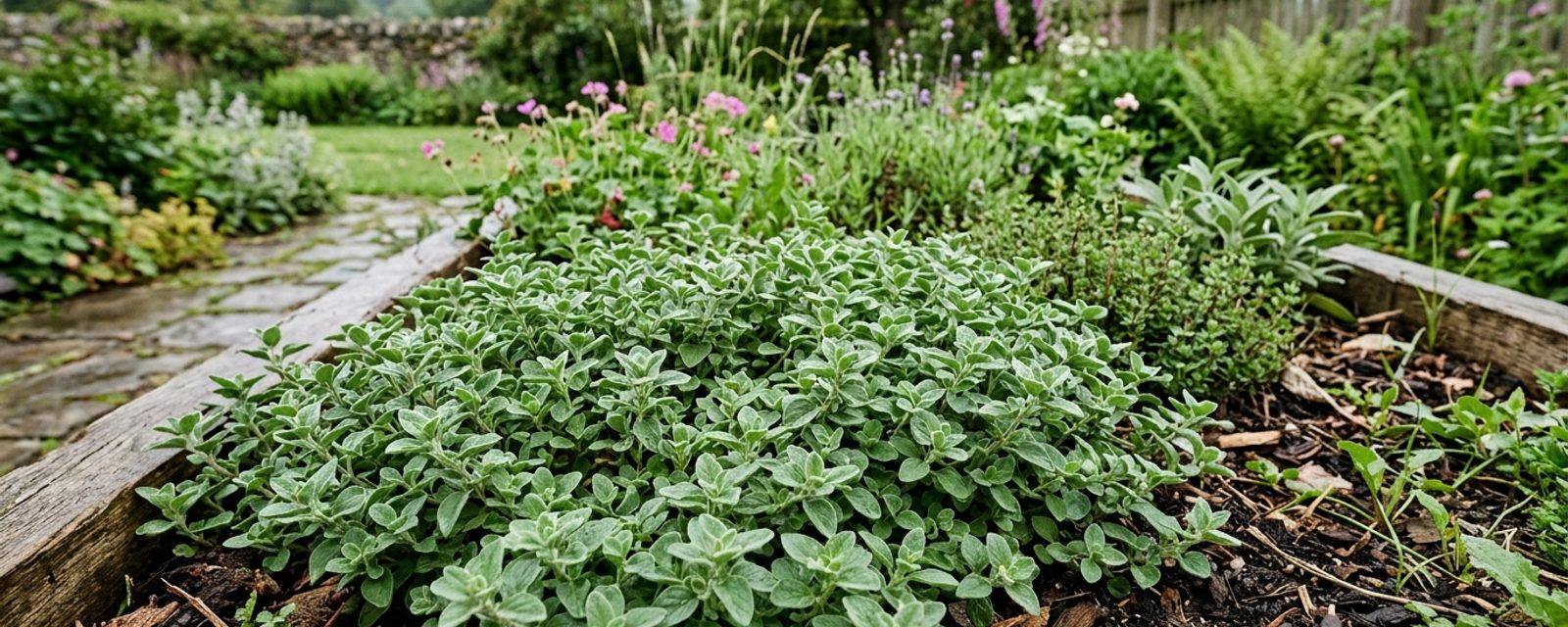
Origanum vulgare
Oregano comes with a real trial finding on flavour and flowering, isn't simply another name for marjoram despite what some sources say, and needs good drainage far more than winter protection from the cold.
It's a low, spreading Mediterranean perennial grown as much for its pungent, usually-dried flavour as for the bees and other pollinators its flowers attract if you let a few stems run to bloom.
Site and soil
Choose a spot in full sun with free-drainingSoil that lets water pass through quickly rather than pooling, so roots aren't sitting in wet ground after rain. Full definition → soil, ideally on the alkaline side, though no specific pH figure is published for it. Space plants 20-30cm apart. For containers, use a minimum 15cm wide and deep pot with drainage holes, mixed with 25% horticultural grit, or a porous terracotta pot for extra drainage. On heavy garden soil, work grit into the planting hole before putting the plant in.
Sowing and planting
Sow indoors in spring: scatter seed thinly on the surface of moist, peat-freeCompost made without peat, which is harvested from a slow-forming, carbon-storing wetland habitat that peat extraction damages. Full definition → compost without covering it, and keep at around 20C. Seedlings appear in one to three weeks; thin them into individual small pots as they grow. Harden offGradually getting young plants raised indoors used to outdoor conditions over 7–14 days before planting out, so cold, wind and direct sun don't shock or damage them. Full definition → and plant outdoors in late spring to early summer, once the last frost has passed. Bought or overwinteredKeeping a plant alive and intact through the cold months, whether left outdoors, moved under cover, or stored dormant. Full definition → young plants can go in on the same schedule.
Care through the year
Water newly planted oregano through dry spells; once established in the ground, it needs little further watering. Container plants need watering through dry spells too, but avoid waterlogging. Skip feeding on open ground entirely; container plants over a year old can take a general-purpose granular feed in late spring or early summer. In late spring, trim established plants to keep them compact and remove any dead or straggly stems. Regular harvesting of young shoots also encourages bushy growth, and cutting back faded flower stems keeps plants productive.
Winter
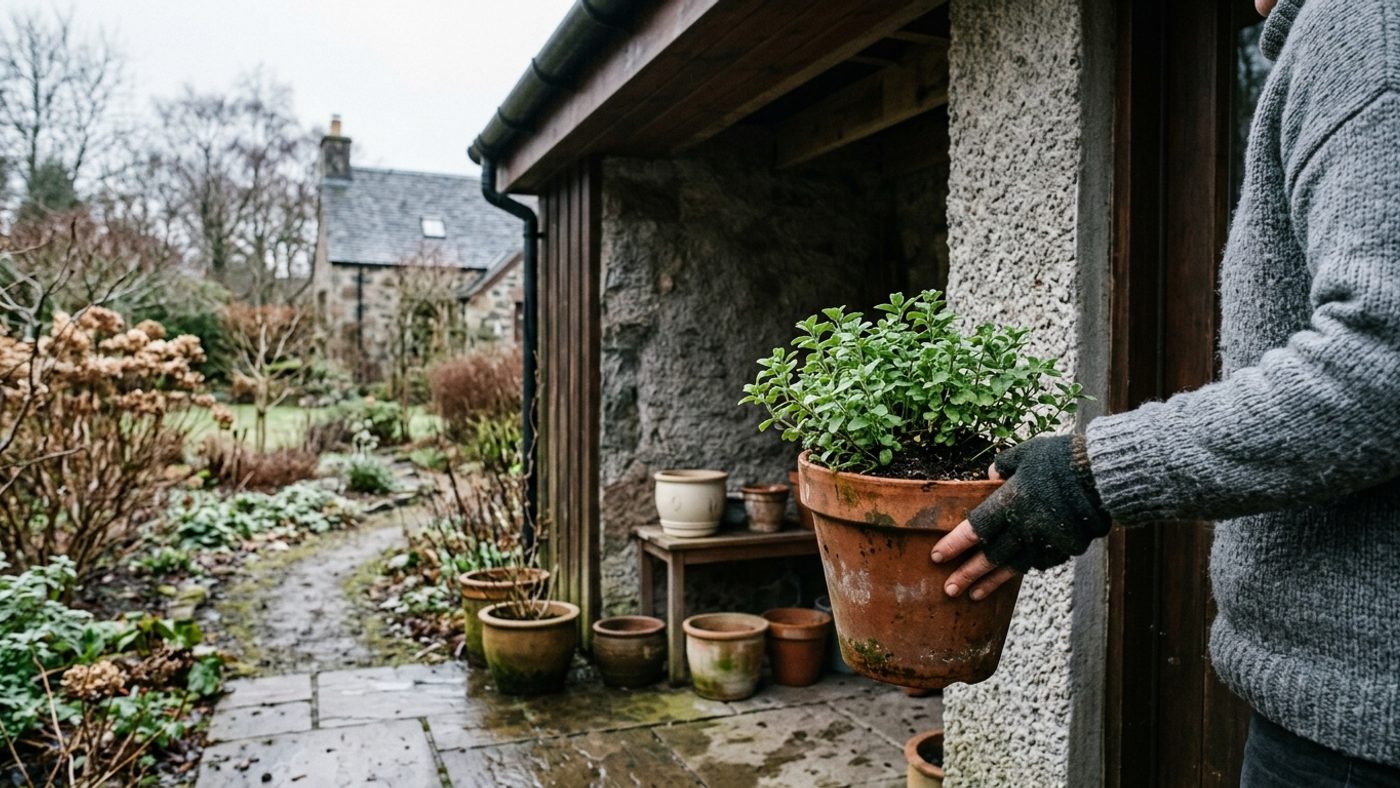
Move container plants somewhere sheltered from rain. In a genuinely cold, wet region, protect ground plants with a well-ventilated clocheA small, portable clear cover placed over an individual plant or short row to trap warmth and keep off wind, rain and pests. Full definition →. Less common ornamental Origanum species are a real exception and may need proper winter protection; check the plant label before assuming a specific variety is as hardy as common oregano.
Harvesting
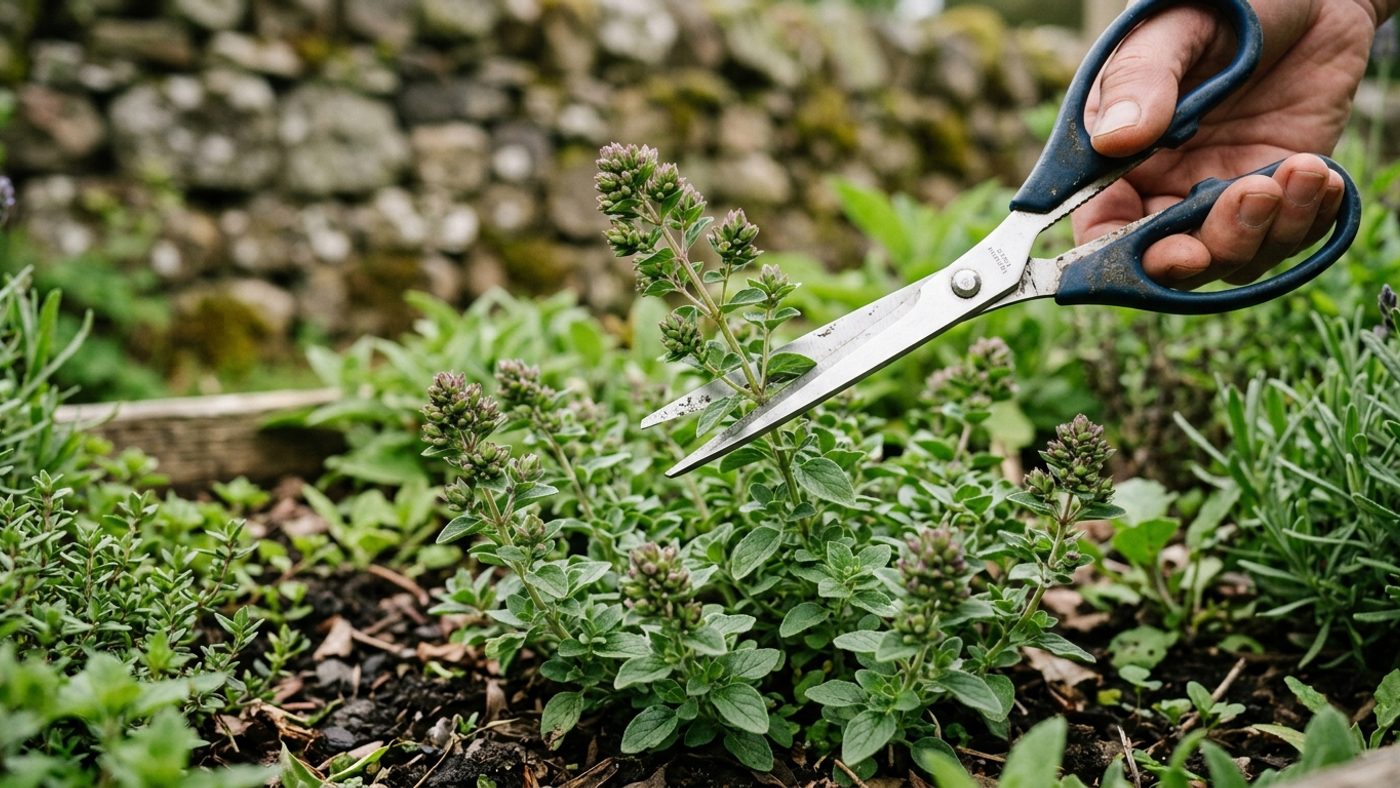
Harvest late spring through autumn. Snip off a few shoots and strip the leaves, fresh or dried. For the best flavour, pick before flowers open: a Wisley trial found the leaves become measurably more bitter once flowering starts.
Varieties
Four AGMThe RHS's Award of Garden Merit: a UK-wide trials award for reliable performance, not a Scotland-specific recommendation. Full definition → culinary cultivarsA plant variety that arose or was bred under cultivation and is kept true by deliberate propagation, rather than a naturally occurring wild species. Full definition → exist in total (Gold Nugget, Hot and Spicy, Aureum, Compactum); Hot and Spicy carries a flavour trait distinct from the other named cultivars. Kent Beauty and Rosenkuppel are also named, but flagged directly as ornamental rather than culinary varieties, and excluded here as a result.
★ Our pick for Scotland
Hot and SpicyAGM
Soft grey-green leaves · robust, peppery heat
An AGM cultivar with a genuinely distinct flavour profile from common oregano: a real heat alongside the usual pungency.
Why this one: The peppery heat is a real culinary use Compactum's small, mild leaves can't match, worth the slightly less compact habit if flavour is the priority.
Also worth considering
CompactumAGM
Low-growing · small, strongly aromatic leaves
A second AGM pick, practical for a container that needs moving under cover in a wet winter: small and easy to shelter without losing flavour intensity.
Best Oregano Varieties for Scotland → compares all named oregano varieties head-to-head, with the practical detail that doesn't fit in a summary card.
Common problems
- Root rot follows waterlogged soil far more often than any pest or disease does; good drainage is the real defence.
- Mint rust causes dusty orange, yellow and black spotting on leaves.
- Sage and Ligurian leafhoppers cause coarse pale mottling on oregano and related plants in spring and summer.
See more problems
- Mint moth caterpillars feed on foliage across the mint family, including oregano; the adult moths are usually tolerated.
Common questions
Will oregano flowering ruin the flavour?
Yes: a Wisley trial found the leaves become measurably more bitter once the plant flowers, so harvest earlier in the season and chop back a flowered plant for fresher, less bitter growth. Full sourced breakdown: <a href="/tools/garden-myths/oregano/">Oregano Myths →</a>
Are oregano and marjoram the same thing?
Related, but not the same plant: oregano is hardier and more pungent, usually dried, while marjoram is sweeter, more tender, and normally used fresh. Full sourced breakdown: <a href="/tools/garden-myths/oregano/">Oregano Myths →</a>
Does oregano need feeding?
Not in the ground: oregano grown in a border or bed needs no additional feeding; only container plants over a year old benefit from an occasional feed. Full sourced breakdown: <a href="/tools/garden-myths/oregano/">Oregano Myths →</a>
Will oregano survive a Scottish winter outdoors?
Yes: common oregano is reliably hardy, and what actually threatens it over winter is waterlogged soil, not cold. Full sourced breakdown: <a href="/tools/garden-myths/oregano/">Oregano Myths →</a>
Sources
2 sources, and what each was used for
- RHS: perennial habit, sun/drainage requirement, sowing method, spacing, propagation, pruning, harvest window, winter care, AGM varieties, common problems
- gardenersworld.com: wet-soil intolerance confirmation, grit for heavy soil, terracotta pots for drainage, cutting back to refresh growth