
Mint Moth is a minor pest that affects mint and oregano in Scotland. Here is what it looks like, how to spot the damage, and which controls have been tested.
What does it look like?
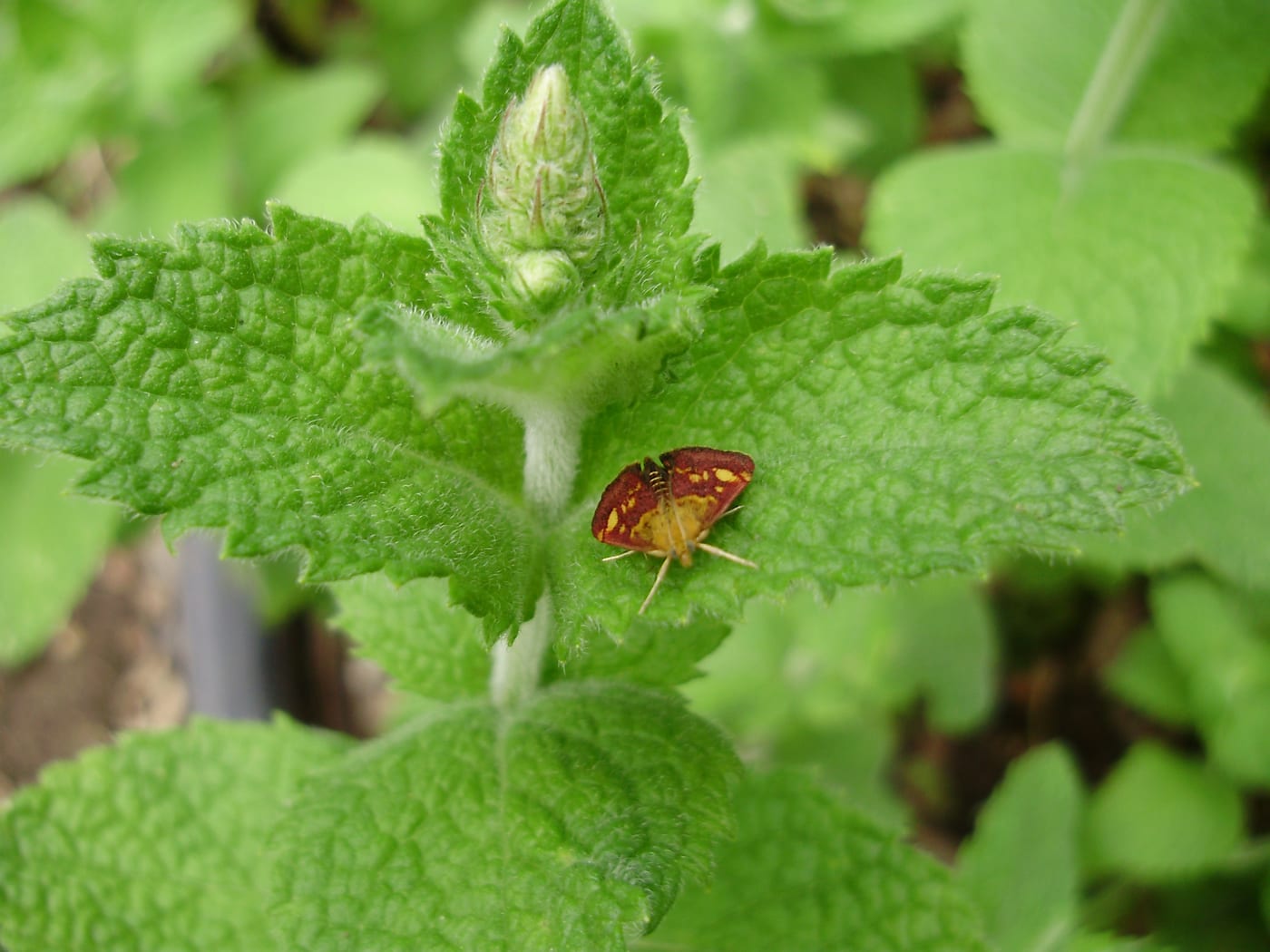
The adult is a small, attractive day-flying moth, up to 2cm across, with reddish-brown to bright purple wings marked in gold, often seen resting on the plant itself on a sunny summer day. The caterpillar, around 13mm long, ranges from pale green to reddish-brown but always carries two paler stripes running down its back and evenly spaced small black spots.
What causes it
This caterpillar targets young, tender shoot tips rather than older growth, which is why damage concentrates at the growing points rather than spreading evenly across the plant. Adults are most conspicuous on sunny summer days, when they rest openly on the foliage instead of staying hidden.
Is this pest active now?
Watch from late April through summer, the window across both generations.
Symptoms
Feeding happens at the shoot tips, where leaves curl and fine webbing appears alongside tiny black pellets of caterpillar droppings. On a healthy plant, this stays minor.
Life cycle
Two generations run through spring and summer each year. Young caterpillars start out feeding on the underside of leaves, and mature larvae pupate in a cocoon at the same spot they were feeding.
Why this matters in Scotland
Mint and oregano are both common in Scottish herb beds, and there's nothing to suggest this pest behaves any worse here than elsewhere in the UK.
The one adjustment worth making is timing, not severity: RHS's 'late April' monitoring start is a UK-generic date, and mint's own new growth tends to get going later in a Scottish spring, so the useful moment to start checking is whenever your own plants have put out fresh shoot tips, not a fixed calendar date.
Controls: what actually works
All the methods below are backed by real evidence, not just repeated folklore.
Check susceptible plants regularly from late April, and remove larvae by hand where practical
Catching a population early, while it's still small, is what keeps hand removal a realistic option rather than something overtaken by two generations' worth of caterpillars.
Cut back heavily affected shoots
Removing the damaged growth also stimulates the plant to put out fresh growth, so the same action deals with the visible damage and encourages recovery at once.
Encourage natural predators: birds, hedgehogs and ground beetles
All three are natural enemies that help keep populations down without any product or hand-picking needed.
Frequently asked questions
What should I do first if I find mint moth in my garden?
Start with check susceptible plants regularly from late april, and remove larvae by hand where practical. After that, cut back heavily affected shoots. Work through the rest in order of how well-evidenced they are if the first two aren’t enough on their own.
Will mint moth kill my plants?
They rarely kill established plants. The damage is usually cosmetic on outer leaves, and natural predators often bring numbers under control without you doing anything.
When are mint moth most active in Scotland?
Check the seasonal activity section above. Scottish timings can run a few weeks behind the UK-generic figures.
Should I just leave mint moth alone?
In most gardens, yes. mint moth are food for birds, wasps and predatory insects, and a healthy garden carries some without trouble. Tolerance is also RHS's official position now, for that same reason.
Sources
4 sources, recorded with what each was used for
- RHS1: identification, symptoms, the young-shoot-tip trigger, life cycle and generations, monitoring, hand removal, cutting back, encouraging predators, tolerance framing, absence of a chemical control
- RHS1: confirming mint moth directly on mint's own growing page
- RHS1: confirming mint moth directly on oregano's own growing page, and confirming marjoram is treated as a closely related plant on the same page rather than needing a separate entry
- RHS1: confirming lemon balm's own growing page does not name this pest, supporting its exclusion from affected_crops