
Mint Rust is a common disease that affects mint and oregano in Scotland. Here is what it looks like, the conditions it needs, and the controls that actually work.
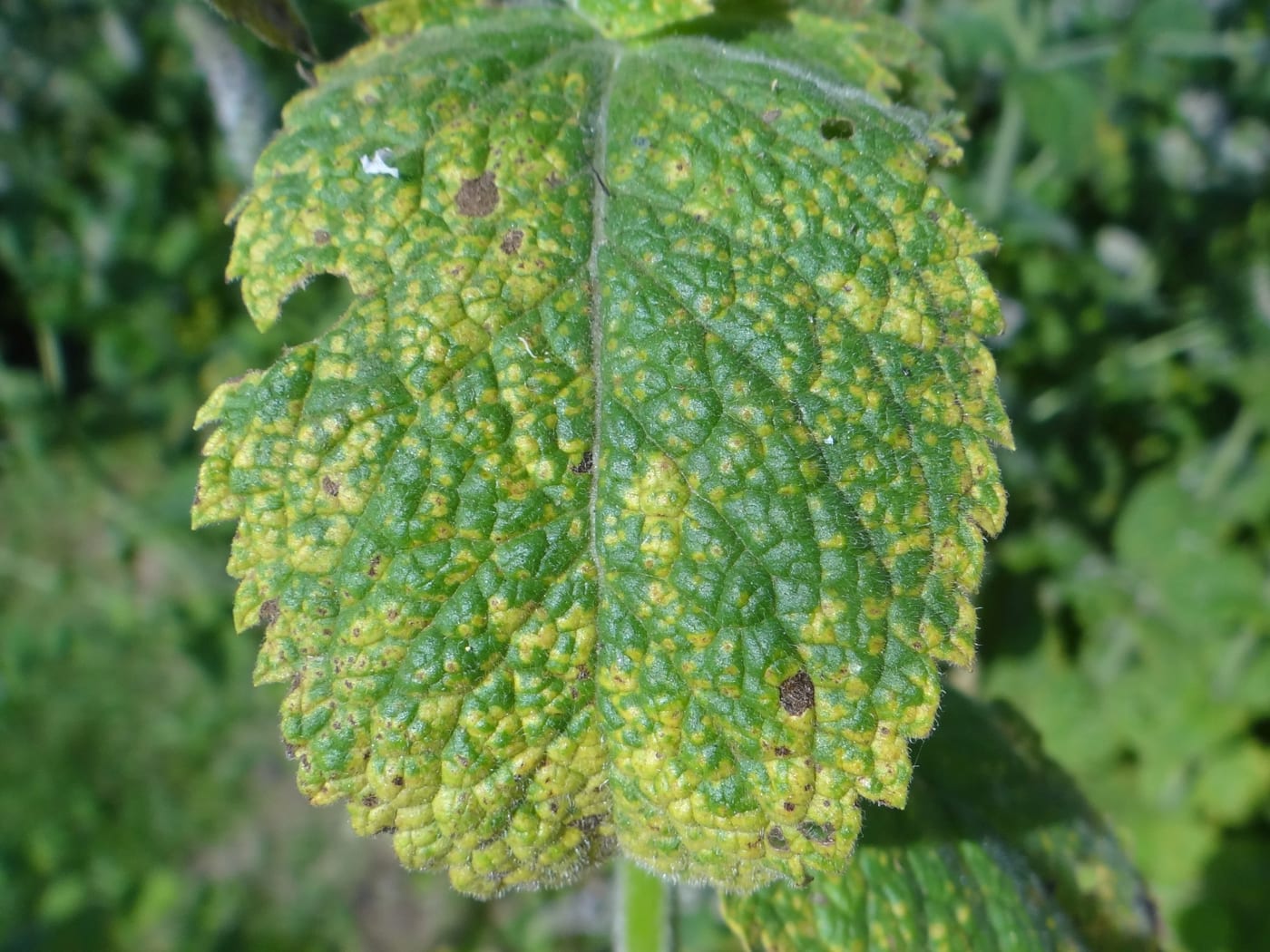
What does it look like?
Dusty orange pustules on the stems and leaves, which may be followed by dusty yellow or black pustules. Large areas of leaf tissue die and plants may lose leaves. Symptoms run from spring until autumn.
Is this disease active now?
Symptoms can be expected from spring until autumn.
These are UK-generic timings. Scottish onset may differ. Use the Frost Date Calculator to adjust for your region.
Life cycle
Black resting spores form and contaminate the soil, which is why affected plants need to come out before they develop.
Controls: what actually works
All the methods below are backed by real evidence, not just repeated folklore.
Remove affected plants promptly, before the black resting spores form
Remove affected plants promptly, before the black resting spores form and contaminate the soil, and dispose of the material carefully rather than composting it: a home compost heap doesn't get hot enough to kill persistent disease spores, so burial, burning, or a local authority green waste collection are the safer routes.
The timing is the whole instruction. Once black spores reach the soil the bed is compromised — this is a window, not a general tidiness suggestion.
Rhizome heat treatment: wash rhizomes in early autumn, immerse in hot water at 44C for 10 minutes, cool in cold water, then plant
The full protocol runs like this. In an infected bed, locate any uninfected stems and carefully dig these out and move them elsewhere. Heat treatment means washing rhizomes thoroughly in early autumn and immersing them in hot water at 44C (111F) for 10 minutes, then cooling them in cold water and planting.
This is a genuinely precise protocol, with an exact temperature and duration rather than a rough guideline, so it's worth following as given rather than approximating.
Good cultivation, cultivarA plant variety that arose or was bred under cultivation and is kept true by deliberate propagation, rather than a naturally occurring wild species. Full definition → selection, garden hygiene, and encouraging natural enemies
Good cultivation comes first: avoiding pests, diseases and weeds through cultivation method, cultivar choice, garden hygiene, and encouraging or introducing natural enemies.
This is general good practice rather than mint-specific advice: healthy, well-spaced plants growing in good conditions simply have fewer disease problems to begin with.
Frequently asked questions
What should I do first if I find mint rust in my garden?
Start with remove affected plants promptly, before the black resting spores form. After that, rhizome heat treatment. Work through the rest in order of how well-evidenced they are if the first two aren’t enough on their own.
Is there a spray that works?
No. There are no amateur chemical treatments available for mint rust. The controls that work are cultural: the measures listed above.
When are mint rust most active in Scotland?
Check the seasonal activity section above. Scottish timings can run a few weeks behind the UK-generic figures.
Sources
3 sources, recorded with what each was used for
- RHS1: Puccinia menthae, hosts including marjoram and savory, orange then yellow/black pustules, spring-to-autumn symptoms, leaf death and defoliation, black resting spores contaminating soil, removal timing, disposal instruction, rhizome heat treatment protocol, RHS's first-line-of-control philosophy
- RHS1: verifying leek rust is a genuinely different organism (Puccinia porri, alliums only) — the reason this entry exists separately rather than being folded into leek rust
- RHS1: home compost heaps not reaching disease-killing temperatures; burial, burning or green waste collection as alternatives