
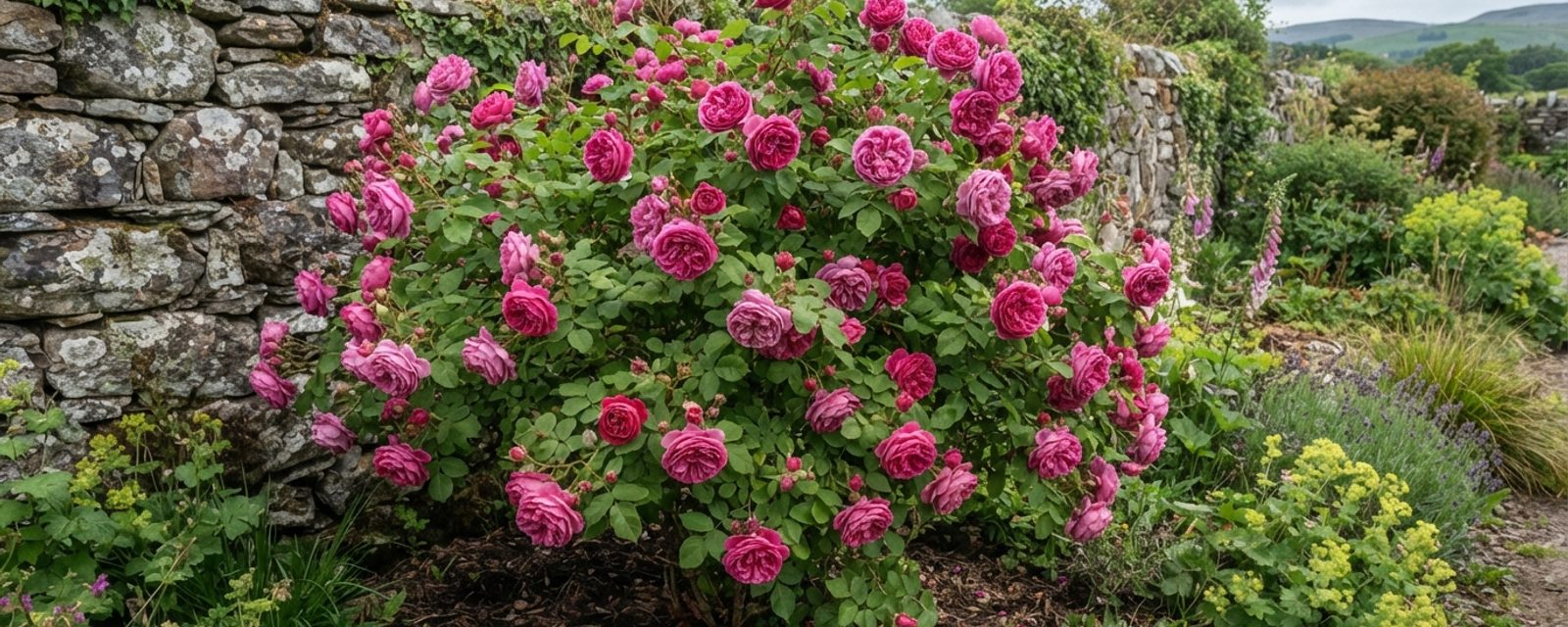
Most rose-pruning advice was written somewhere that isn't here. Mainstream UK timing puts pruning at "mid-February in the south," with northern gardeners told to merely "wait until March," an assumption of a few weeks' delay between London and, roughly, Newcastle. Apply that same few-weeks adjustment to Scotland and you're still pruning into weather that can put paid to the whole exercise.
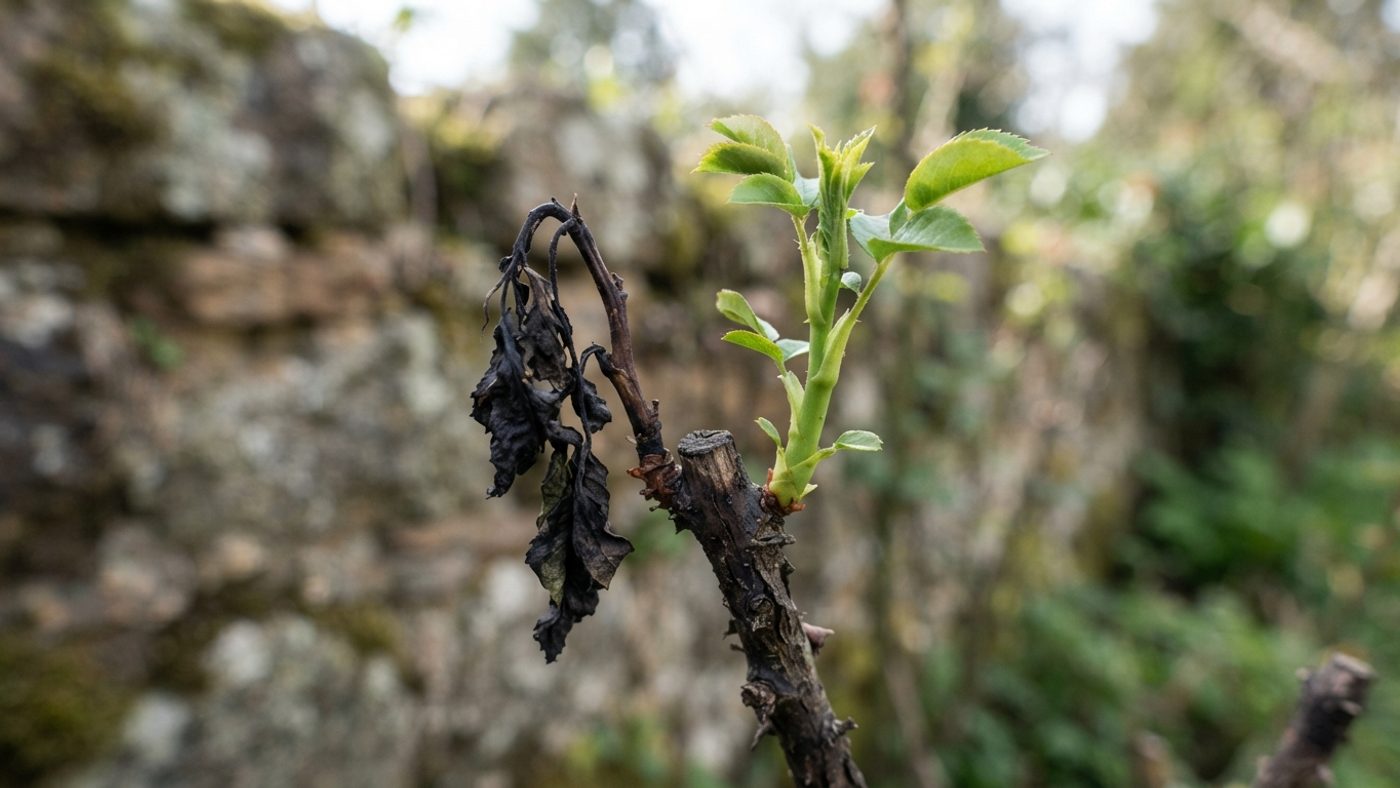
The problem isn't cold in itself, roses shrug off winter dormancy without complaint. The problem is what pruning does: it removes the outer, hardier wood and triggers the plant into pushing soft new growth from the buds just below each cut. That new growth is far more frost-tender than the dormant stem it replaced, and a fresh pruning wound in freezing, wet conditions is also an open door for canker and dieback. Prune too early in a Scottish garden and you're not saving time, you're setting up a spring of blackened shoot tips and infected cuts.
The frost data RHS advice doesn't have
Met Office air-frost records (1991–2020 averages) show that "wait until March" undersells the real spread across Scotland by anywhere from a few weeks to over a month, and the gap isn't explained by how far north you are, it's explained by altitude and distance from the sea.
| Area | Typical last spring frost risk |
|---|---|
| Central Belt lowland (Edinburgh) | mid-to-late April |
| Central Belt upland (Eskdalemuir analogue) | mid-to-late May |
| Northeast lowland (Aberdeen/Dyce) | early May |
| Northeast upland (Braemar, 339m) | late May–early June |
| Highlands lowland/coastal (Inverness) | late April |
| Highlands upland (Cairngorms) | late May–early June |
| Southwest lowland (Dumfries) | late April |
| Southwest upland (Eskdalemuir, 242m) | mid-to-late May |
| Borders lowland (Charterhall) | early May |
| Borders upland (Lammermuirs) | mid-to-late May |
| Islands (Stornoway, Lerwick, Tiree) | late April |
Scotland has very few upland weather stations, so the same place, Eskdalemuir, appears twice in the table above: it's the nearest available upland record, so it's used as the closest real-world stand-in for upland conditions in both the Central Belt and the Southwest.
Inverness, on the Moray Firth, genuinely is the mildest mainland station examined here, but on annual frost frequency, not last-spring-frost date: it averages 38.35 air-frost days a year against Edinburgh's 42.68. Its last-spring-frost band runs around the same as, or slightly later than, Edinburgh's. So "Highlands" doesn't automatically mean fewer frosts across the board, but it doesn't mean the latest last frost either, the two measures pull apart here. Dumfries and Eskdalemuir sit only around 40km apart yet run three to four weeks apart in frost risk, purely because of the climb in elevation. Braemar, at 339m, has recorded air frost in every month except July, making it the harshest spot examined and a useful worst-case for anyone gardening at similar altitude.
On the islands, frost itself is rarely the limiting factor, the maritime influence keeps things comparatively mild, but conditions still vary locally: Met Office records show zero May air-frost days at Tiree against 0.4 at Lerwick, so conditions aren't identical across Stornoway, Lerwick and Tiree even though they share a "late April" figure above. Wind exposure is a genuine extra practical concern on the islands, on top of frost, and that matters specifically for climbers and ramblers, discussed below. The Met Office also flags that low-lying, cold-air-draining ground ("frost pocketsA low-lying spot where cold air drains and pools on still nights, making it noticeably more frost-prone than the surrounding area. Full definition →") can run two to four weeks colder than open ground just metres away, and that all of these figures are regional averages rather than predictions for any individual garden. If your rose bed sits in a hollow, or your garden backs onto high ground that drains cold air downhill overnight, treat these dates as a floor, not a target.
The practical rule: rather than pruning by the calendar, prune once new growth is just starting to break in your own garden and the worst of the frost risk for your specific setting has passed. Against this data, that means most of lowland Scotland is into, and often through, April before it's safe, and upland gardens should expect to wait into May, sometimes early June.
Getting the cut right, wherever you garden
Scottish timing changes when you prune, not how. The underlying technique is the same everywhere, and two of the basics below are also your main defence against the canker and dieback risk described above, since a rough or upward-pooling cut gives cold, wet weather more time to get into the wound.
Start every session with the three Ds: cut out anything dead, damaged or diseased, taking dieback back to healthy white pith. Remove stems that are spindly, crossing, or rubbing against each other, crossed stems wound each other in the wind and the wound becomes an infection point. Aim to keep the centre of the plant open, since good airflow through the middle of a rose bush is one of the simplest defences against fungal disease, and it matters more here than in a drier climate, given how wet Scotland's west coast in particular tends to be.
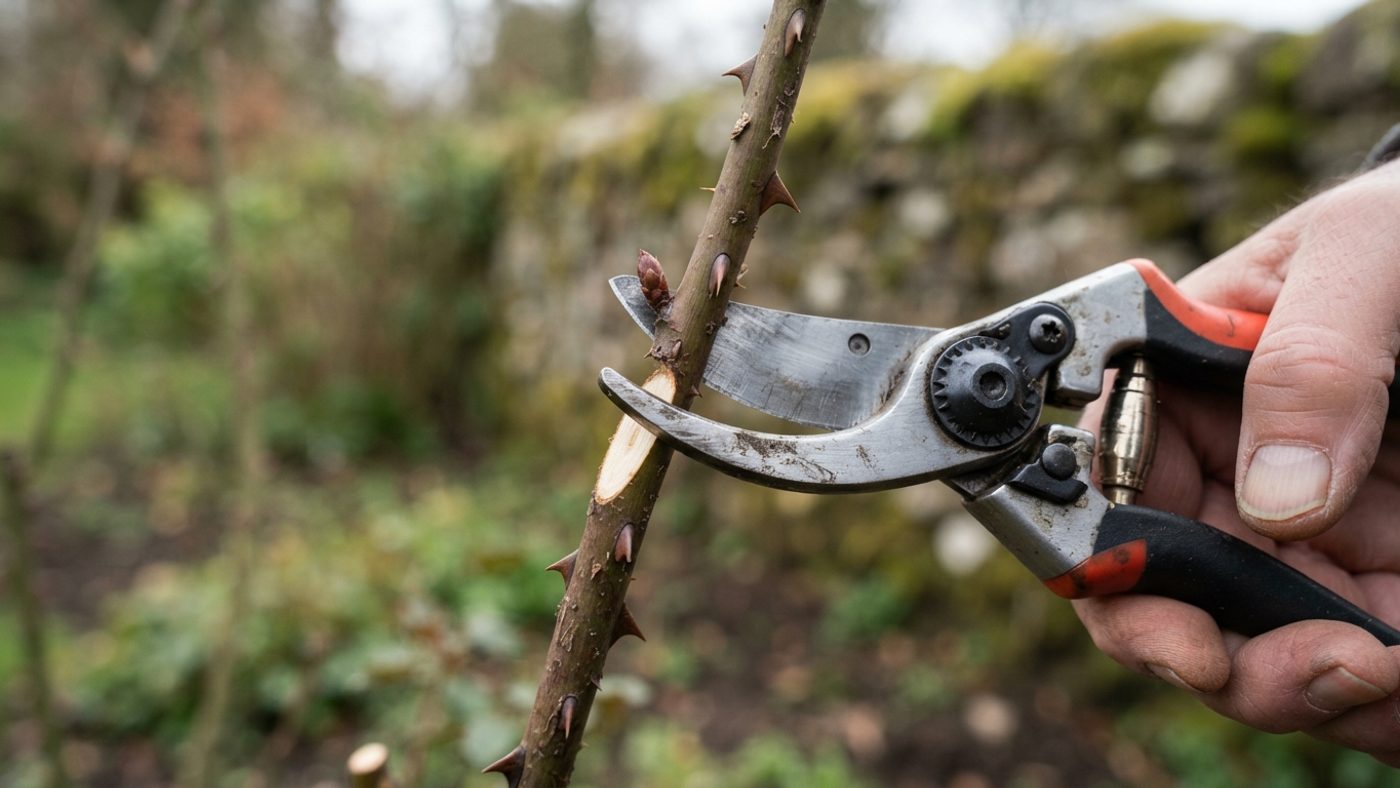
For the cut itself: position it no more than 5mm above a bud, sloping downward and away from the bud so that water runs off the wound rather than pooling on it and freezing there, and cut to an outward-facing bud so the new shoot grows away from the centre of the plant rather than into it. Keep secateurs sharp, a clean cut heals faster and gives canker far less of a foothold than a crushed or ragged one, and move up to loppers or a pruning saw for anything too thick for secateurs to manage cleanly. Never compost material removed for disease; bin or burn it so problems don't cycle back into the bed.
Technique by rose type
Different roses flower on different wood, at different times of year, which means both the calendar and the cut are type-specific.
| Type | When to prune | How much |
|---|---|---|
| Hybrid tea | Late winter, once frost risk has passed | Strong shoots to 4–6 buds (10–15cm from base); weaker shoots to 2–4 buds (5–10cm from base) |
| Floribunda | Late winter, once frost risk has passed | Strong shoots to within 25–30cm of soil level; older/weak stems cut back harder, to a few inches from the base |
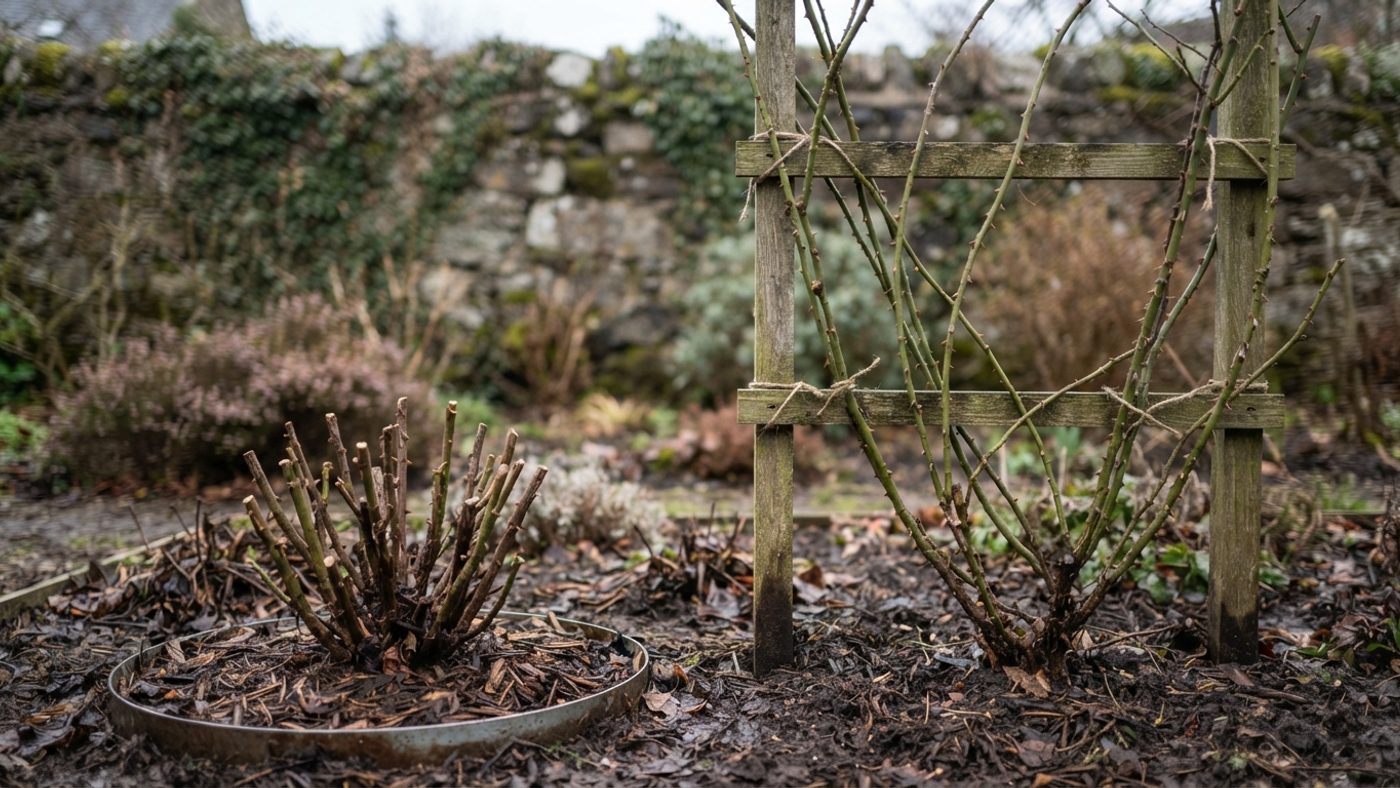
| Climbers | December–February (repeat-flowering, so winter dormancy) | Flowered sideshoots cut back by two-thirds of their length; framework of main stems largely left in place and tied in |
| Ramblers | Late summer, immediately after flowering | Remove roughly one in three of the oldest stems entirely; shorten remaining sideshoots by about two-thirds |
| Shrub roses, once-flowering | Late summer, after flowering finishes | Light touch: remove dead/diseased/crossing wood and the odd overcrowded old stem; take one or two stems near ground level if the plant has gone leggyDescribes a plant that's grown tall, thin and sparse rather than bushy, usually from too little light or not being pinched out. Full definition → |
| Shrub roses, repeat-flowering | Late winter, once frost risk has passed | Reduce strong new growth by around a third (vigorous varieties can often take up to half); shorten strong sideshoots to 2–3 buds |
Hybrid teas and floribundas
The classic "late winter" job, and the frost-timing argument above applies to them most directly.
Climbers
Pruned in winter but on a different logic, you're not hard-cutting the whole plant back, you're trimming the sideshoots that carried this year's flowers while keeping the main framework of older wood tied in against its support. In exposed and coastal Scottish gardens, wind is a genuine extra practical concern for climbers, on top of frost: securing long whippy growth in autumn stops winter gales thrashing it loose before you get to prune properly.
Ramblers
Run on an entirely separate calendar. Because they flower once, on the previous year's growth, pruning them in late winter would mean cutting off the wood that was about to flower. They're pruned in late summer, straight after their one flowering display, by removing some of the oldest stems at the base and shortening the sideshoots that flowered, this doesn't run into the frost problem at all, since the plant has the whole autumn and winter to settle before growth resumes.
Shrub roses, split by type
Once-flowering shrub roses behave like ramblers, prune after their summer flowering, lightly, mostly for shape and health rather than hard renewal. Repeat-flowering shrub roses behave more like hybrid teas, late winter, harder cutting back, so the same frost-timing rule above applies to them too.
For anyone gardening somewhere exposed enough that even careful timing keeps running into trouble, rugosa shrub roses are worth considering as an alternative: RHS growing notes describe them as tough and disease-resistant, tolerant of poor soil, shade and coastal conditions, and some varieties (such as 'Belle Poitevine') carry the top H7 hardiness ratingThe RHS's H1a–H7 scale for how much cold a plant can survive outdoors, H1a being tender indoor-only and H7 hardy anywhere in the UK. Full definition → and are explicitly recommended for exposed and coastal gardens.
Aftercare, and if a late frost catches you out
Pruning isn't the end of the job. Feed all pruned roses with a general-purpose or rose fertiliser in spring, and mulchA layer of material spread over the soil around plants to suppress weeds, retain moisture, and improve soil structure as it breaks down. Full definition → with a layer of garden compost or well-rotted manure at least 5cm deep, mulch of this kind also helps protect the root area from cold as well as feeding the plant and suppressing weeds.
If you've pruned and a late frost is then forecast on soft new growth, horticultural fleeceA lightweight, breathable fabric laid or draped over plants to trap a little warmth and keep off frost, wind and some flying pests. Full definition → is the RHS-recommended fallback: a heavier grade gives roughly 2°C of protection, and doubling it up gives more. Drape it over the vulnerable new shoots overnight when frost is forecast and remove it once conditions ease, it isn't a substitute for good timing, but it can save a flush of new growth caught out by an unexpected cold snap.
Rose hips, and leaving some growth alone
Not every stem needs cutting back hard, and there's a genuine wildlife argument for restraint on top of the frost one. Rose hips left on the plant into autumn and winter are a food source for garden birds, and choosing to leave some once-flowering or species-type roses unclipped after their display, rather than deadheadingRemoving spent flowers before they set seed, which redirects a plant's energy into further flowering rather than seed production. Full definition → everything, lets hips form and persist rather than being removed along with the spent flowers.
For the fuller regional picture behind the table above, see our Scotland frost dates page.
Common questions
Can I prune roses in winter in Scotland?
Not for most types. Hard pruning too early triggers soft new growth that a hard frost then kills, and Scotland's last frost regularly runs into April or May, well past winter. The exception is autumn's separate, lighter job: cutting tall stems back by about a third to stop winter gales rocking the roots loose, which isn't the main shaping prune.
What happens if I prune roses too early and frost catches the new growth?
The new growth blackens and dies back, but an established rose won't die from it. It costs you weeks of regrowth and, if it happens repeatedly, weakens the plant, so it's worth avoiding rather than shrugging off, but a single early prune caught by frost isn't a disaster.
How hard should I cut back roses?
It depends on the type. Hybrid teas take the hardest cut, down to 4–6 buds from the base. Floribundas are left longer, to within 25–30cm of the soil. Ramblers and once-flowering shrub roses want a light touch only, since hard spring pruning removes the wood that was about to flower.
Do I need to prune roses every year?
Yes, for the repeat-flowering types (hybrid teas, floribundas, most modern shrub roses) — skipping a year leaves old, unproductive wood and fewer flowers. Once-flowering shrub roses and ramblers need it too, just less of it, and on their own late-summer schedule rather than the main spring one.
Sources
5 sources, recorded with what each was used for
- Met Office: Regional last-spring-frost data behind the table and the "when to prune" timing throughout
- RHS: General Pruning Tips: Cut technique, aftercare, and the fleece frost-protection fallback
- RHS: Shrub Roses: Pruning amounts for shrub roses, and the rugosa hardiness recommendation
- RHS: Hybrid Tea/Floribunda: Pruning amounts for hybrid teas and floribundas
- RHS: Climbing Roses: Pruning amounts for climbers