
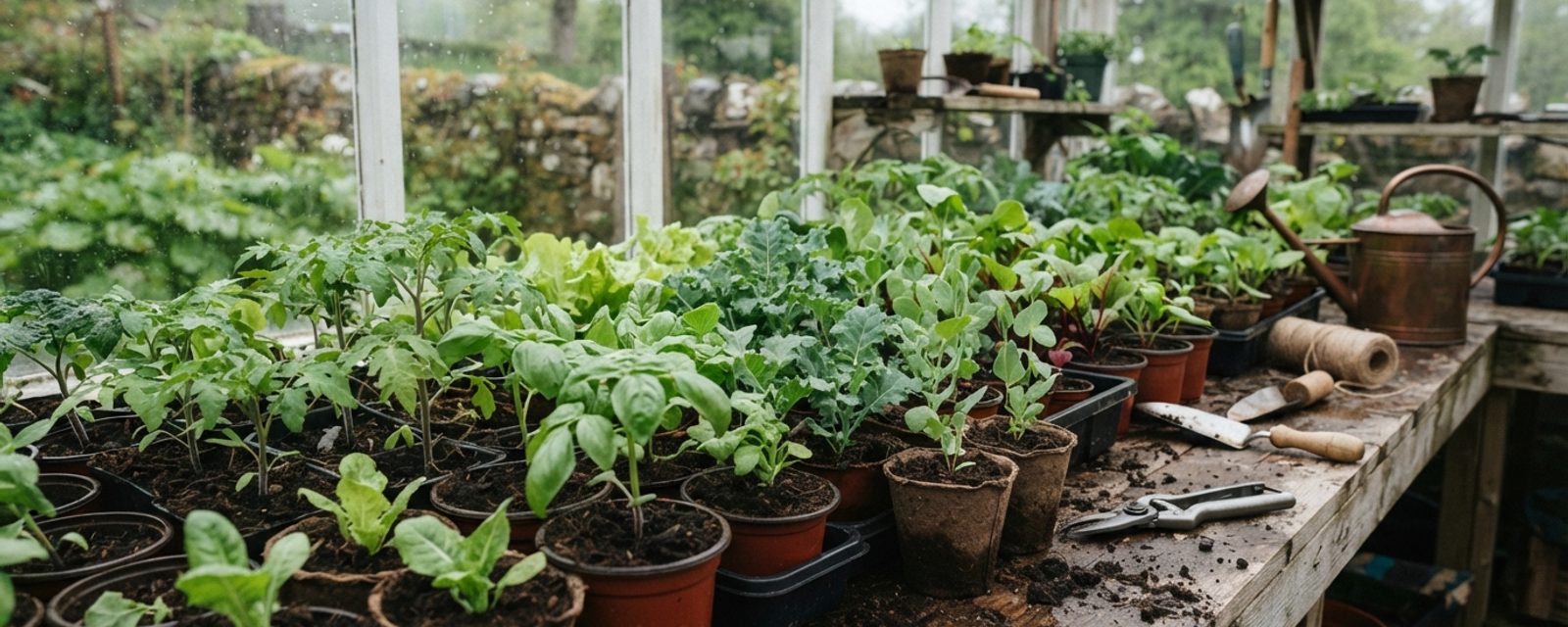
Peat works as a growing medium because of a fairly simple combination of physical properties. Sphagnum moss that has partly decayed under waterlogged, low-oxygen conditions forms a fibrous material that holds a large volume of water while still keeping enough air-filled space between the fibres for roots to breathe, most mineral soils and composts can offer one of those two things well, not both at once. On top of that, peat starts out almost inert: naturally very low in nutrients and free of weed seed and soil-borne disease, so growers could add exactly the fertiliser they wanted rather than fight what was already there. It's also structurally stable and consistent from bag to bag, which matters more than it sounds, a seed compost that behaves differently every time you buy it is a real problem for anyone raising seedlings on a schedule. Cheap to extract at scale, on top of all that, and it's easy to see why peat became the default base for seed, cutting and potting composts for most of the twentieth century.
None of that is in dispute. What's changed is the reckoning with where it comes from: peat only forms where plant matter breaks down slower than it accumulates, roughly 1mm a year, so a bag of peat compost represents centuries of build-up removed in a single extraction. Trials have since found plants grown in peat-freeCompost made without peat, which is harvested from a slow-forming, carbon-storing wetland habitat that peat extraction damages. Full definition → mixes performing comparably to peat-grown ones, and in some cases, carnivorous plants after a year's growth, better, which has taken most of the "does it actually work" question off the table. What's left is a genuinely practical one: peat-free alternatives don't share peat's single-material simplicity, so growing with them means understanding a blend of different materials, each with its own behaviour.
What's replacing peat, and how each behaves
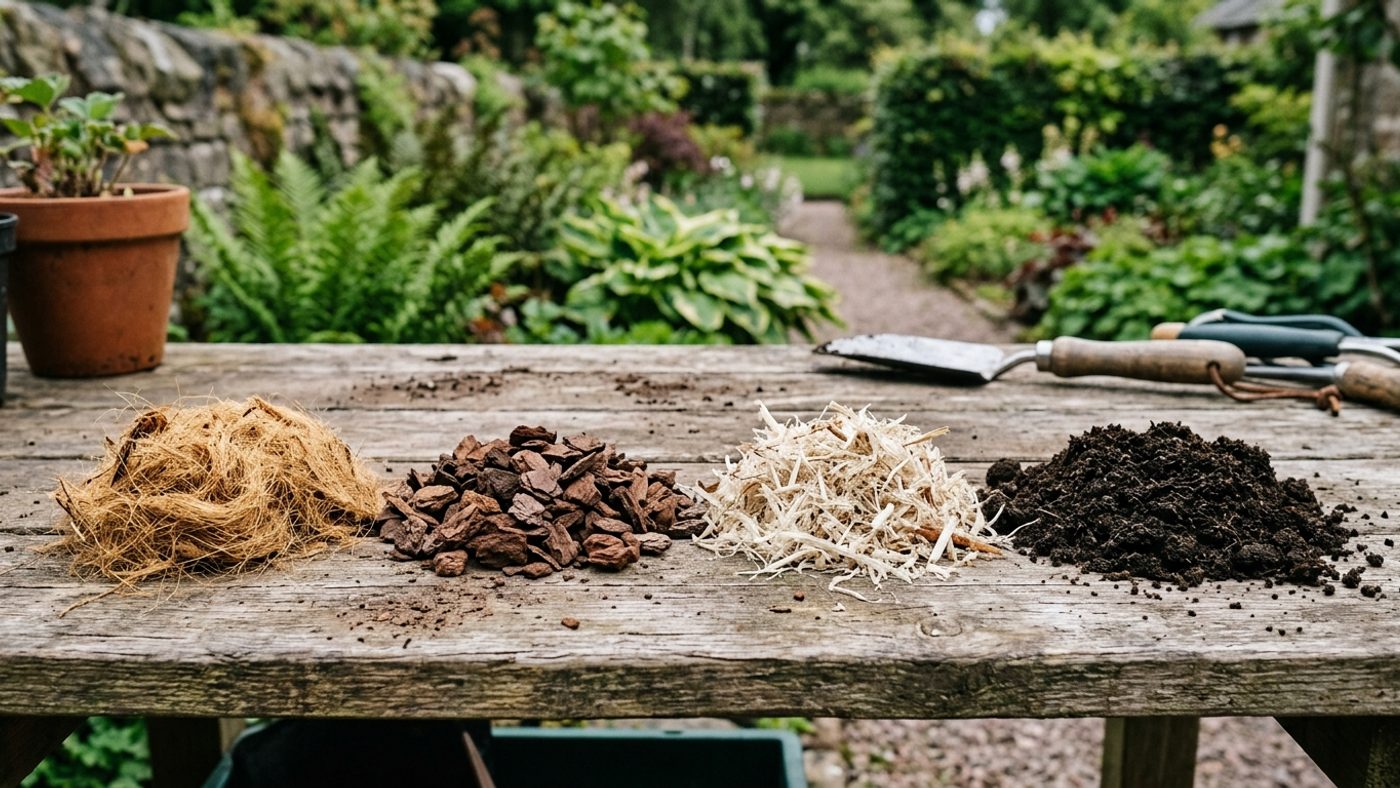
Modern peat-free composts are blends rather than a single ingredient, typically built from some combination of the following, sometimes with grit, sharp sand or perlite added for drainage.
Coir
Coir is coconut husk fibre, mostly imported from Sri Lanka as a by-product of the coconut industry. Its mix of fine and coarse fibres makes it light, porous and an excellent water-holder, arguably peat's closest match on that specific property. Its weak point is nutrients: coir holds onto very few of its own, so a coir-heavy compost depends almost entirely on whatever feed is added to it, and needs that feed topping up sooner than a peat-based mix would.
Composted bark
Usually pine bark, composted and graded. It's stable and porous, so it opens up a compost mix and improves drainage and airflow around roots, useful in a blend, but on its own too coarse and nutrient-poor to carry young seedlings.
Wood fibre
Wood chips processed by steaming or crushing. Steam-treated wood fibre is light and loose; crushed wood fibre is denser and drains faster. Different treatments suit different jobs, which is part of why wood fibre turns up across the full range of peat-free products, from seed compost to soil improver.
Green compost
Composted garden and food waste collected through council green-bin schemes. It tends to run high in nutrients compared with the other three, which sounds like an advantage until you factor in the trade-off: because it's made from whatever went into council green bins that month, its composition, and therefore its nutrient level and texture, can vary noticeably between batches without careful quality control at the composting site.
| Material | Watering behaviour | Nutrient content | What it needs help from |
|---|---|---|---|
| Coir | Holds water very well, close to peat | Very low, few nutrients of its own | Regular feed from early on |
| Composted bark | Free-drainingSoil that lets water pass through quickly rather than pooling, so roots aren't sitting in wet ground after rain. Full definition →, dries faster | Low | Finer material to hold moisture/nutrients |
| Wood fibre | Depends on grade, loose (steamed) or dense (crushed) | Low | A nutrient-holding partner material |
| Green compost | Holds moisture reasonably well | High, but variable | Quality control at source, batches can differ |
None of these four is a drop-in peat substitute on its own; every bag of peat-free multipurpose compost on a garden centre shelf is a blend chosen to balance one material's weakness against another's strength.
What to actually expect and adjust
The most consistent complaint about peat-free compost isn't that plants fail to grow in it, the trial results above don't support that, it's that gardeners water and feed it the way they always watered and fed peat, and get caught out by the difference.
Peat-free mixes with a high coir or wood content dry out at the surface faster than peat did, while often staying damp underneath, so a compost that looks bone-dry on top can still be wet an inch down. Checking with a finger before watering again, rather than judging by the surface, avoids both underwatering and, just as often, overwatering a mix that hadn't actually dried out. If a pot does dry out completely, peat-free mixes can be slower to rewet than peat; standing the whole pot in a bucket of water works better than watering from above.
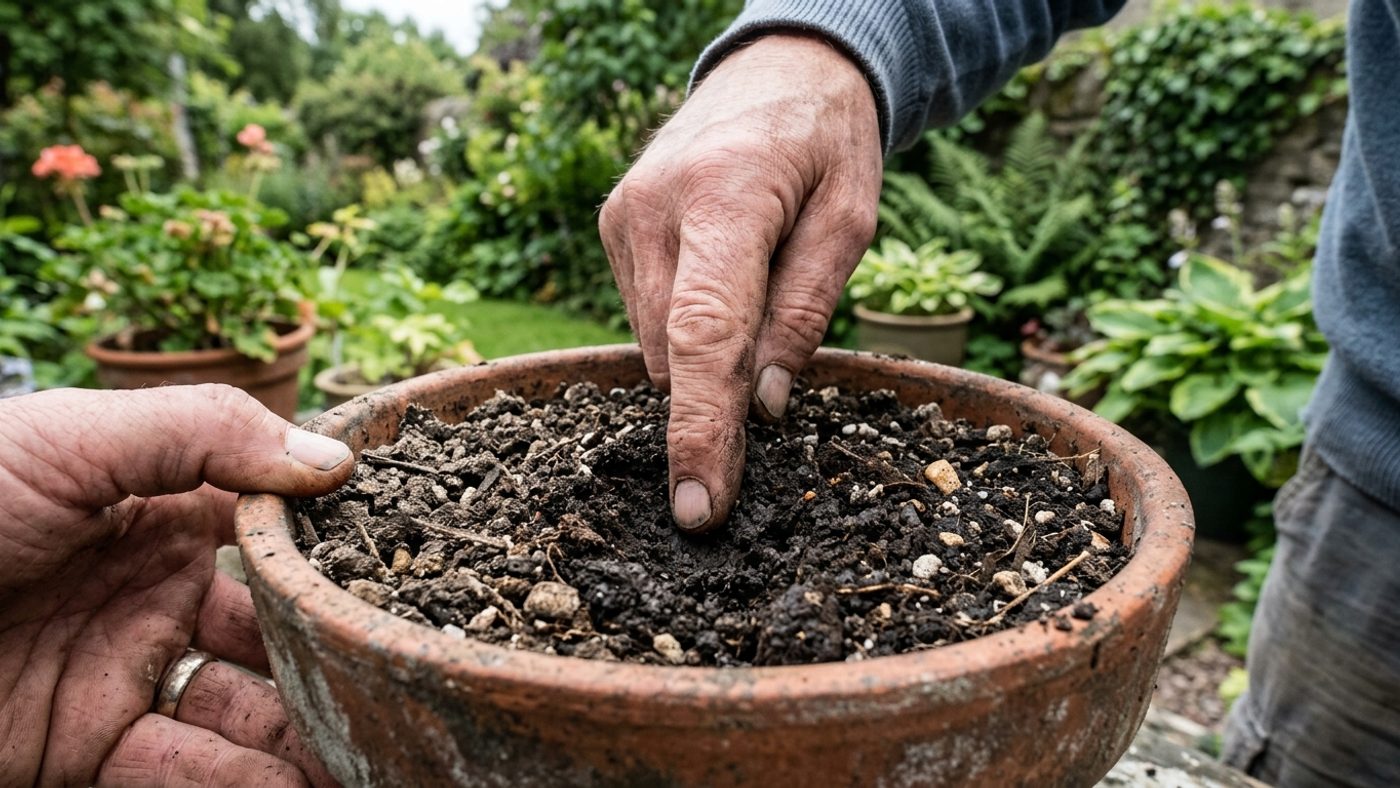
Feed runs out sooner, too. Most bagged peat-free composts carry enough built-in fertiliser for around four weeks, against roughly six for a peat-based equivalent, so supplementary feeding from four to six weeks in is closer to a rule than an optional extra for anything staying in the same pot longer than that. Composts built mostly from wood-based ingredients can also draw down nitrogen as the microbes that break down the wood compete with the plant for it, a genuine early disadvantage, not a myth, and one more reason to feed earlier rather than wait for visible yellowing to prove it's needed.
Quality is also genuinely more variable across the peat-free market than it was across the old peat-based one, and cheap peat-free is the version most likely to disappoint, coarse, inconsistent, prone to drying unevenly. Spending more within the peat-free range, and sticking with brands that make peat-free composts as their core product rather than as an add-on line, makes a real difference to how predictably a bag behaves. It's also worth buying only what you'll use in a season rather than stockpiling: bagged peat-free compost is biologically active as soon as it's made, so an old bag that's sat in a shed over winter has already started to break down and lose structure by the time it's opened.
The UK ban that keeps slipping
Retail peat sales in the UK are not currently banned anywhere, despite a government announcement that made it sound settled. In 2022, the UK Government said it would ban the retail sale of peat to amateur gardeners in England by the end of 2024, with a ban for professional growers to follow on a timeline it never fixed. That 2024 date passed with no legislation in place, and none has followed since. Writing to Defra in January 2026, Scotland's own Environment Minister noted that the UK Government's position remains a commitment to legislate a ban on the sale of peat and peat-containing products when Parliamentary time allows, a promise to act eventually, not a date to hold anyone to. As of now, buying a bag of peat-based compost anywhere in the UK is still entirely legal.
None of that has stopped the market moving on its own terms: peat-free compost already outsells peat-based compost in UK garden centres, and the horticultural trade has been ahead of any legal requirement for years in places, one major grower and retailer stopped selling peat-based compost in 2019, and from 1 January 2026 its gardens, shows and retail outlets went "no new peat" almost entirely, with only narrow exceptions. The regulatory gap is real, but it's increasingly a gap between what shoppers and large retailers are already doing and what the law formally requires, rather than between two live alternatives.
Scotland's own peatland problem, and its own stalled ban
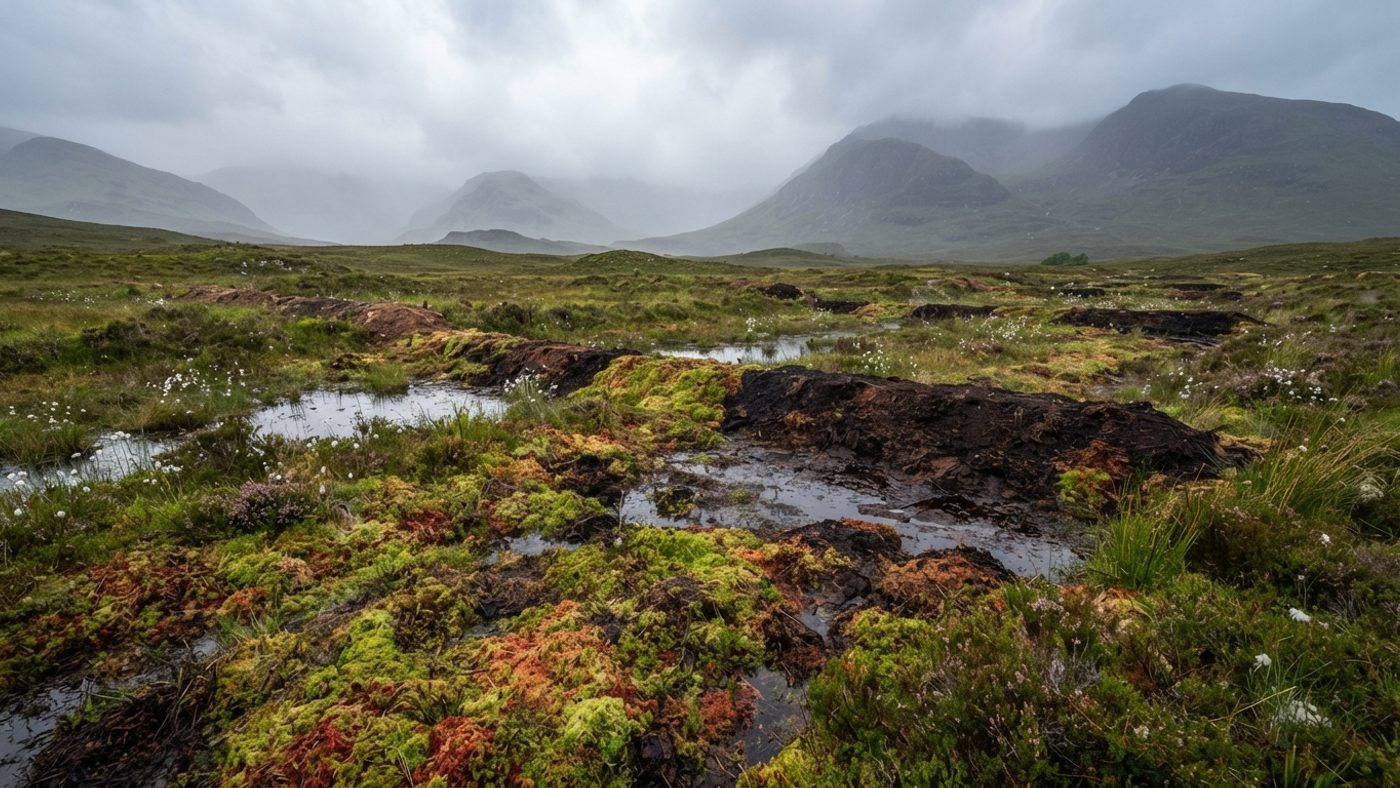
Peat covers over 20% of Scotland's land area, and the majority of the UK's peatland, most of it damaged and in need of restoration, is in Scotland. Around 80% of Scotland's peatlands are in degraded condition, which matters beyond habitat loss: a healthy bog locks carbon away, but a drained or eroding one does the opposite, releasing it as a source of greenhouse gas rather than a store. Scotland's peatlands are estimated to hold carbon equivalent to well over a century of the country's annual greenhouse gas emissions, which is what makes their condition a live climate question here specifically, not an abstract environmental one.
That's the backdrop to Peatland ACTION, the Scottish Government-funded restoration programme led by NatureScot, in partnership with Cairngorms and Loch Lomond & Trossachs National Park authorities, Forestry and Land Scotland and Scottish Water. Since it started in late 2012, it has put more than 66,000 hectares of degraded peatland on the road to recovery, largely by re-wetting drained ground, blocking drainage ditches to raise the water table and let peat-forming sphagnum moss re-establish. The programme sits inside a £250 million Scottish Government commitment, running to 2030, to restore 250,000 hectares in total.
Set against that scale of investment in fixing existing peatland damage, Scotland has not moved any faster than England on stopping new peat leaving garden centre shelves. A 2023 Scottish Government consultation on ending peat sales found strong public support for an early ban, but rather than legislate on its own, Environment Minister Jim Fairlie wrote to Defra in January 2026 pressing for one UK-wide law instead of separate Scottish rules. His stated reason: different peat rules in different parts of the UK would run into the UK Internal Market Act, the law that requires goods legally sold in one UK nation to be sellable in the others too, creating exactly the kind of cross-border mess a country-by-country patchwork of peat rules would produce. So Scotland's position right now is a government pouring serious money into restoring the peatland it already has, while formally declining to move first on stopping the sale of new peat until the rest of the UK is ready to move with it.
Common questions
Is peat-free compost actually as good as peat-based compost?
Trial results show plants grown in peat-free mixes performing comparably to peat-grown ones, and in some cases (carnivorous plants, after a year) better. Poor results are more often down to using a cheap or poorly formulated peat-free product, or watering it the way you’d water peat, than a limitation of peat-free growing media itself.
Why does peat-free compost need more watering and feeding?
Coir- and wood-based peat-free mixes tend to dry out faster at the surface while staying damp underneath, so surface dryness can be misleading, check with a finger before watering again. Feed typically lasts around four weeks in a bagged peat-free compost against roughly six in a peat-based one, and wood-heavy mixes can draw down some nitrogen as they break down, so earlier supplementary feeding usually helps.
Is it currently illegal to sell peat compost in the UK?
No. Despite a 2022 government announcement targeting a 2024 ban on retail peat sales in England, no legislation banning peat sales has actually passed anywhere in the UK as of 2026. The UK Government’s position remains a commitment to legislate "when Parliamentary time allows," without a fixed date.
Has Scotland banned peat sales separately from England?
No. Scotland ran its own consultation on ending peat sales in 2023, but in January 2026 the Scottish Government wrote to Defra pushing for one coordinated UK-wide law rather than a separate Scottish ban, citing the UK Internal Market Act, which requires goods legally sold in one UK nation to be sellable in the others, as a reason to move together rather than alone.
Why does peatland restoration matter more in Scotland than elsewhere in the UK?
Peat covers over a fifth of Scotland's land area, and the majority of the UK's peatland sits here, most of it in degraded condition. Scotland's Peatland ACTION programme has restored over 66,000 hectares since 2012, backed by a £250 million Scottish Government commitment to reach 250,000 hectares by 2030.
Sources
13 sources, recorded with what each was used for
- RHS: Peat-free information for gardeners: RHS's peat-free retail commitment, general framing
- RHS: What are the alternatives to using peat-based compost?: Coir/bark/wood fibre/green compost properties, RHS trial findings (including carnivorous plants)
- RHS: Peat-Free Compost Choices: Watering/feeding differences, quality/packaging advice, freshness and shelf-life
- RHS: Using Peat-Free Compost for Seeds and Cuttings: Nitrogen drawdown, watering for longer, feeding timing
- RHS: Peat-free gardening: Peat's carbon storage figures, extraction impacts, and RHS's own peat-free commitment dates (peat-based compost stopped 2019; near-total "no new peat" from 1 January 2026)
- Garden Organic: Peat-free growing (For Peat's Sake): Watering/feeding tips, quality-variability warning
- GOV.UK: Sale of horticultural peat to be banned... (2022 press release): 2022 announcement, 2024 target, no professional-sector deadline given
- NatureScot: Restoring Scotland's Peatlands: Scotland's peat extent/degradation/carbon/funding figures
- NatureScot: Peatland ACTION: 66,000 hectares restored since 2012, partner organisations
- NatureScot: Peatland ACTION, what we do: £250m investment framing, restoration technique
- NatureScot: Peatland restoration in Scotland increases by 25%: the majority of the UK's peatlands sitting in Scotland
- gov.scot: Letter to Defra (20 January 2026): Scotland's current position, Defra's status, the Internal Market Act
- gov.scot: Ending the sale of peat, consultation analysis: 2023 consultation findings