
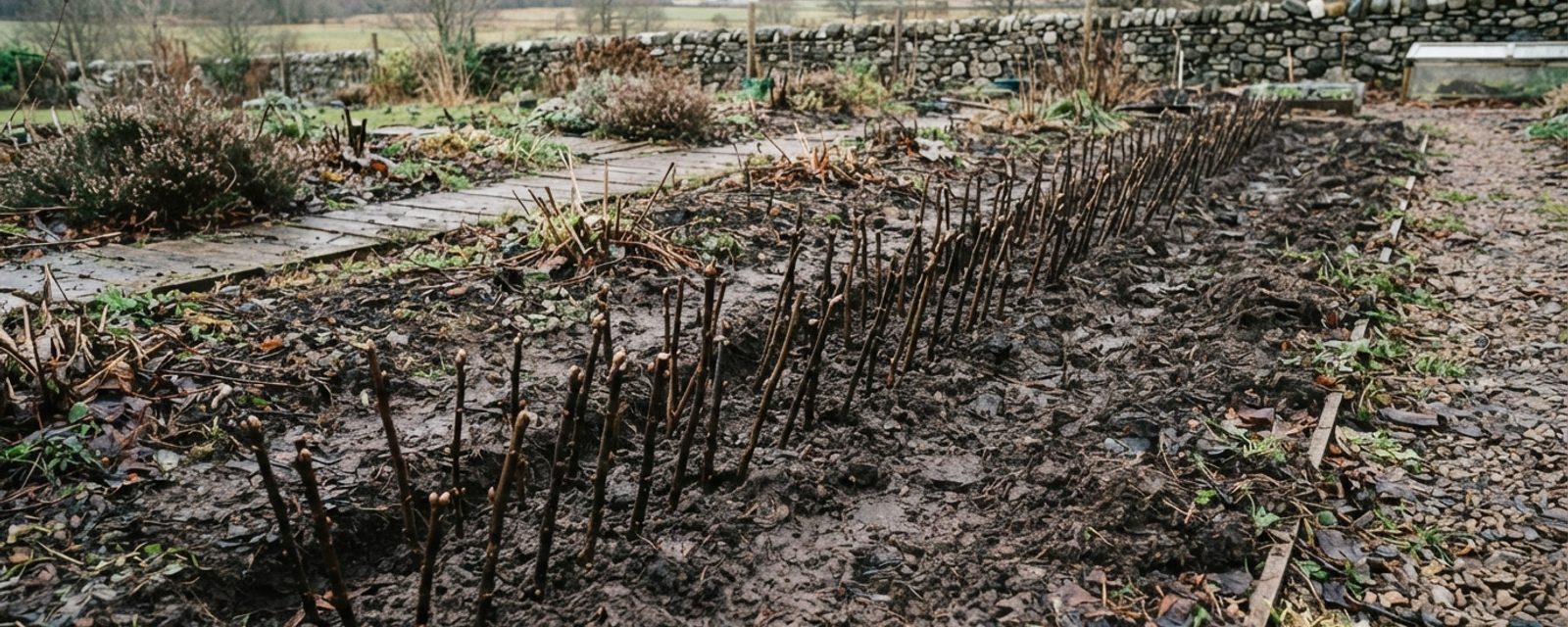
Cut a leafless, foot-long stick from a currant bush in November, push two-thirds of it into a slit in open ground, and do nothing else until next autumn: a genuinely new plant, with its own roots, is a realistic outcome from that alone. Nothing about that piece of wood is actively growing when you cut it. It has no leaves to lose water through, no soft green tissue to wilt or scorch, and everything it needs to get started again is already stored inside it, sugars laid down the previous summer, sitting dormant in the wood until conditions ask something of it. A slit trench is what asks.
What's actually happening inside a dormant cutting
A softwood or semi-ripe cutting, taken in spring or summer from soft, actively growing tissue, is racing against its own leaves: it's still transpiring, losing water through stomata it can't yet replace because it has no roots, which is why those cuttings need misting, humidity domes or a shaded propagator to survive the days it takes them to root. A hardwood cutting sidesteps that problem almost entirely. Taken from fully ripened, current-year wood after leaf fall, it carries no leaves and very little active water movement, so the water-loss race that kills a high proportion of softwood cuttings barely applies.
What it draws on instead is stored carbohydrate, energy the plant banked in that wood over the growing season just gone. Wound the base by cutting it, and the plant's response is to seal the cut surface with callus, a mass of undifferentiated cells that forms over the exposed wound. That callusing is the visible first step; the roots that matter come slightly later, usually from the cambium, the thin layer of actively dividingPropagating a clump-forming perennial by digging it up and splitting it into several smaller pieces, each with roots and shoots attached. Full definition → tissue just under the bark, and from tissue around the cut's edge, rather than from the callus itself acting as a root. None of it happens fast. A hardwood cutting typically sits looking completely inert, no visible growth above ground, for weeks to months, callusing through the winter and rooting as temperatures pick up in spring, entirely unlike a softwood cutting's days-to-a-fortnight turnaround. The trade is speed for reliability: no misting equipment, no propagator, and a technique some readily-rooting shrubs will complete for you with nothing more than open ground and patience.
Not every woody plant reads that signal the same way, and this technique only works on species that root reliably from ripened, leafless wood in the first place:
| Plant type | Examples | Typical cutting length |
|---|---|---|
| Soft fruit | Currants (black, red, white), gooseberries | 20-30cm |
| Roses and flowering shrubs | Rosa (species and shrub roses), forsythia, philadelphus, viburnum, deutzia | 15-25cm |
| Trees and willows grown as shrubs | Willow (Salix), dogwood (Cornus), poplar (Populus) | 20-30cm |
| Climbers | Vitis (ornamental vine), Virginia creeper (Parthenocissus), honeysuckle (Lonicera) | 15-25cm |
Willow and dogwood are among the most forgiving subjects going, close to foolproof even for a first attempt, which is exactly why willow hurdles, dogwood stooling beds and currant rows are the classic places to see this method used at scale rather than one cutting at a time. Roses take a little more patience and a lower success rate. Most conifers and many evergreens don't root this way at all and need a different propagation method entirely.
When: Scotland's dormant window, and why it's more forgiving here, not less
The window for this technique runs from leaf fall in autumn through to just before next spring's buds break, essentially the whole dormant season, avoiding taking material during a severe hard freeze. That's a genuinely wide window UK-wide, mid-autumn to late winter, and the natural question for a Scottish garden is whether it opens or closes at a different point here.
Leaf fall itself doesn't shift the window much: there's no published UK regional split for when leaves actually drop, the tracking data that exists gives one expected date range for the whole UK rather than an earlier or later figure for Scotland specifically, so there's no real basis for treating "wait for leaf fall" as a later instruction here than anywhere else.
The other end of the window is where Scotland genuinely differs, and in the helpful direction. Bud burst isn't set by a date on the calendar; it's triggered by a chilling period of cold winter days, then a spell of spring warmth, with day length playing a supporting role, and because that combination arrives later further north, bud burst runs later too, roughly one to two weeks behind for northern England compared with the south, then a further one to two weeks behind again for northern Scotland. The same lengthening shows up in tree-planting guidance built on the identical dormancy mechanism: the standard November-to-March planting season is recognised to stretch longer in Scotland and Northern Ireland, and Forestry and Land Scotland works to an October-to-March window for its own bare-rootA plant, usually a fruit tree or hedging, sold with its roots exposed rather than in a pot, and only available while dormant. Full definition → planting programme specifically because dormancy, here, buys real extra time, letting a plant put energy into roots rather than spending stored reserves on leaves and shoots it would otherwise be growing by then further south.
For hardwood cuttings, that later bud break means the safe cut-off for planting a trench genuinely falls later in most of Scotland than the general "late winter" guidance implies elsewhere in the UK. Frost timing runs on a related but separate mechanism, driven mainly by altitude and distance from the coast rather than bud dormancy, and this site's frost dates page has the fuller regional picture for anyone planning around it.
Taking and preparing the cutting
Choose the right wood
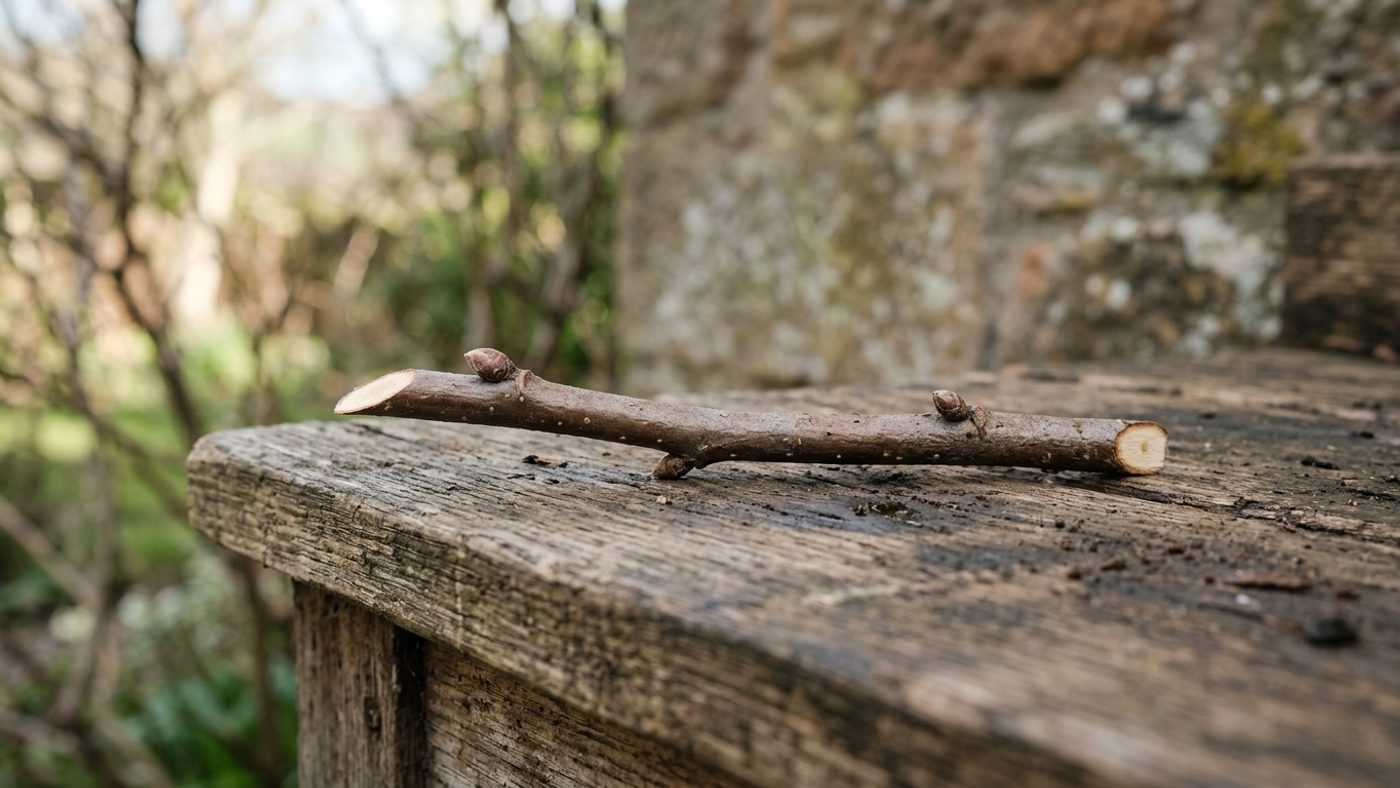
Select strong, healthy shoots from the current year's growth, fully ripened rather than soft, woody enough to feel firm and not bend easily, but still pliable, not old, grey, deeply cracked wood from previous seasons. Roughly pencil thickness is the usual target, with plump, undamaged buds along its length and no sign of pest or disease.
Cut to length, the right way up
Remove any soft, unripened growth from the tip, then cut the remaining wood into sections following the lengths in the table above. Make a sloping cut just above a bud at the top and a straight cut just below a bud at the base, so the cutting's own shape tells you which end goes down, an upside-down cutting simply won't root. For pithy-stemmed shrubs, elder among them, cut through the heel where the shoot joins its parent branch rather than through the hollow stem itself.
Wound it, and consider rooting hormone
Removing a short sliver of bark from the base exposes more of the cambium layer, the tissue roots actually form from, and can improve strike rates on less willing subjects. Dipping the cut base in a hormone rooting compound before inserting it is optional, not essential, willow in particular roots freely without any help, but it's worth doing on roses and other slower rooters.
The slit trench itself
Pick a sheltered, well-drained spot
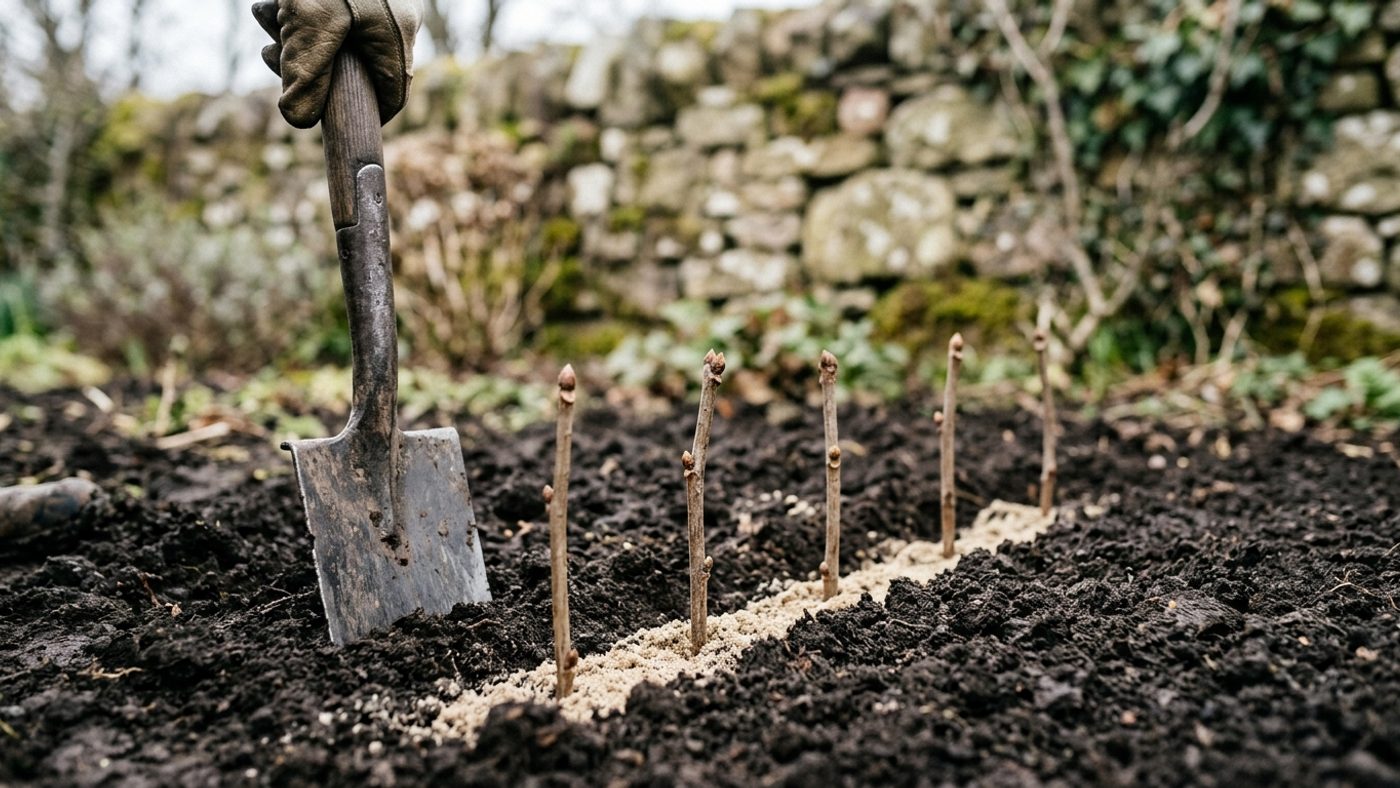
Choose ground out of the worst wind and, as far as the site allows, free-drainingSoil that lets water pass through quickly rather than pooling, so roots aren't sitting in wet ground after rain. Full definition → rather than a low spot that collects standing water. On heavier soil, work a line of coarse sand into the base of the trench before inserting any cuttings, a small, local fix aimed at the immediate root zone rather than an attempt to improve the whole bed; bulk grit added across an entire clay bed takes an impractically large volume to make any real difference and can leave the soil harder to manage, so keep the amendment scoped to the trench itself.
Cut the slit and set the cuttings
Push a spade straight into the ground to its full depth and rock it back and forth to open a narrow slit, rather than digging out a wide hole; this is a far smaller disturbance than excavating a planting hole for a rootballed shrub or tree, which is part of why it stays workable across a wider range of soil conditions than that job does. Set the cuttings into the slit with about two-thirds of their length below the surface, leaving just a bud or two above ground, a single-stemmed subject typically needs only one bud showing. Space cuttings 10-15cm apart along the trench, with about 40cm between parallel trenches if you're planting more than one row, then firm the soil back around them and water in.
An alternative for small numbers: pots in a cold frame
A handful of cuttings, or ground that's genuinely too wet or exposed to use, can go into deep pots instead, a 50:50 mix of coarse grit and multi-purpose compost, kept in a cold frame or unheated greenhouse rather than in the open ground until the following autumn. In particularly cold or exposed gardens, a cold frame, clocheA small, portable clear cover placed over an individual plant or short row to trap warmth and keep off wind, rain and pests. Full definition → or unheated shed can also give trench-planted cuttings some extra protection over the harshest stretch of winter.
The two real winter hazards on Scottish ground
Because a slit trench barely disturbs the soil, the "is the ground even workable" question that limits when a full-sized bare-root tree can go in, a real constraint on Scotland's heavier, wetter ground covered in this site's planting bare-root trees guide doesn't transfer to this technique in the same way; you can open a slit and close it again in ground that would be far too claggy to dig a proper planting hole in without wrecking its structure. What does carry over, in a different shape, is what happens to that ground once the cuttings are already in it.
Frost heave
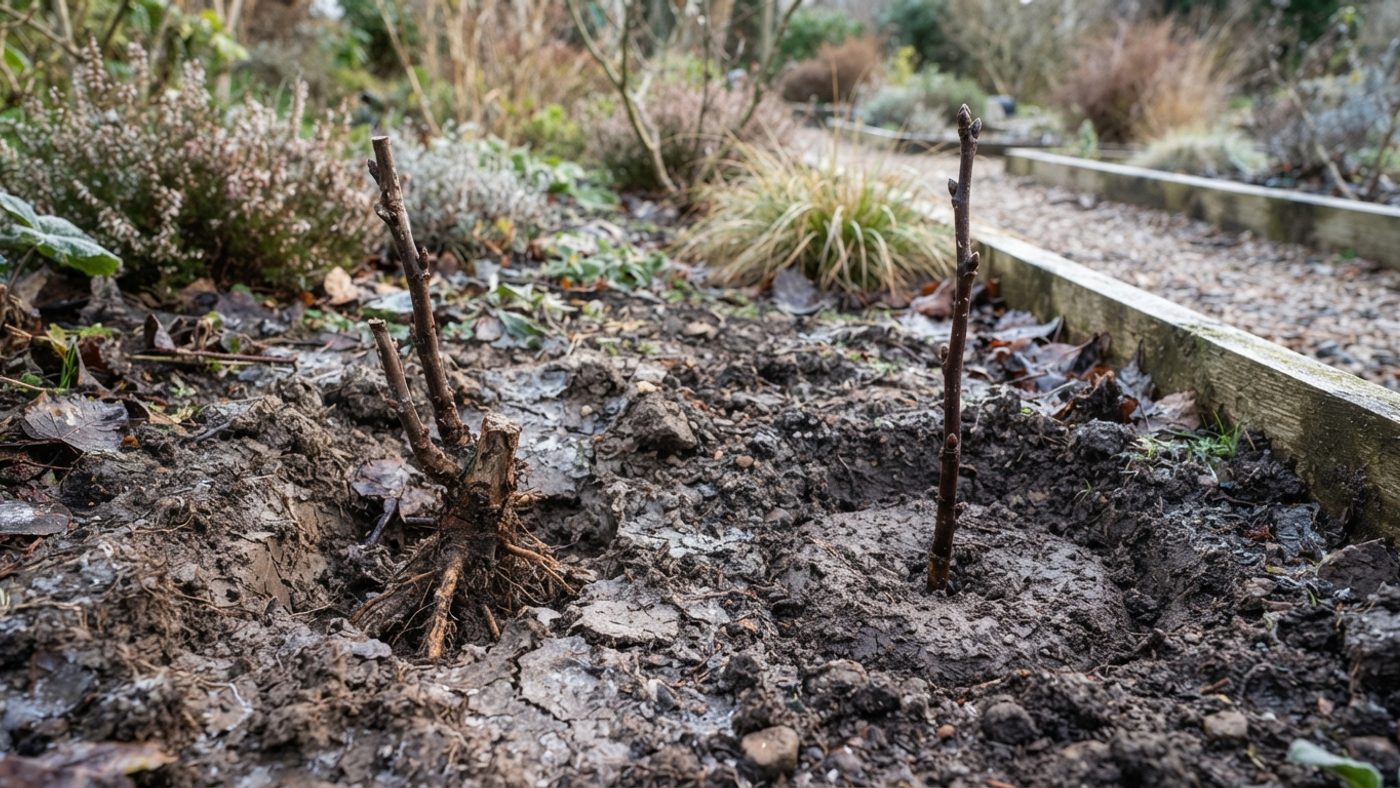
Repeated freezing and thawing in wet soil lifts recently disturbed ground, a cutting included, as ice forms and expands through the freeze-thaw cycle. It's common enough to be a standing part of hardwood-cutting aftercare: inspect the trench after any hard frost and firm the soil back around any cutting that's worked its way loose, rather than leaving it standing proud and drying out. Moisture is what heave needs to work with, so the same heavier, slower- draining ground that's more common in Scotland than further south is also the ground most likely to need that check repeated over a season, not just done once.
Waterlogging and basal rot
Saturated soil displaces the air roots need: without oxygen, root function fails and rot organisms move in, exactly the failure mode a callusing cutting base is trying to avoid at the one point it's most vulnerable. A trench sited in a spot that stays wet for extended spells over winter, more of a live risk on Scotland's heavier and slower-draining ground than on a free-draining east- coast plot, is better sited on slightly raised ground or amended with sand at the base than left as is; a raised bed or a gentle mound is the standard fix wherever winter waterlogging is a recurring problem.
What to expect, and when to check
Not every cutting takes, even from a reliable species, so it's worth putting in a few more than the number of plants you actually want. Leave the trench alone once it's planted; a cutting doesn't need feeding, and shouldn't be disturbed to check on progress. Through winter, the cut base calluses over; roots follow as the soil warms in spring, and by the time the following growing season is under way you should see new shoots developing above ground, though the real test of whether it's rooted is a gentle tug in late summer, resistance means roots have formed. The general guidance is to leave cuttings undisturbed in the trench until the following autumn, a full year after planting, before lifting and transplanting them to their final positions or potting them on, keeping the ground around them from drying out completely if the summer in between turns dry. Protect anything vulnerable to rabbits, deer or rodents over that first winter, since a leafless stick with no established root system to recover from browsing damage has little to fall back on if it's grazed or gnawed.
Once rooted stock is in the ground, the site's blackcurrants guide and pruning roses article cover what happens next for two of the most commonly propagated subjects here.
Common questions
Do I need rooting hormone for hardwood cuttings?
No, it isn't essential, willow especially roots freely without it, but dipping the cut base in a hormone rooting compound before inserting it can improve success rates on slower or less reliable species such as roses. Skip it and the cutting can still work; it just narrows the odds a little.
My cuttings look dead all winter, is that normal?
Yes. A dormant hardwood cutting shows no visible growth above ground for months, it's putting out a callus and, later, roots below the surface while drawing on wood already stored inside it, not growing new tissue you can see. Leave it undisturbed until at least the following autumn before judging whether it's taken.
Can I take hardwood cuttings from any shrub in my garden?
Only from ones that root this way readily, which rules out most conifers and many evergreens. Currants, gooseberries, roses, willow, dogwood, viburnum, forsythia and philadelphus are all reliable candidates; check a specific plant is one of them, rather than assuming any leafless stick will do, before committing a winter's wait to it.
Why did some of my cuttings heave out of the ground over winter?
Repeated freezing and thawing in wet soil lifts loosely settled ground, cuttings included, and moisture is what that needs to happen, so it's a bigger risk on Scotland's heavier, slower-draining soils than on a free-draining plot. Check the trench after any hard frost and firm the soil back around any cutting that's worked its way up, rather than leaving it exposed to dry out.
Is autumn really the best time to do this in Scotland, or should I wait?
Either works, and waiting is often the safer choice here. The window runs from leaf fall until just before next spring's buds break, and that break happens later in Scotland than further south, so there's genuinely more time to get this done than UK-wide advice implies, not less.
Sources
7 sources, recorded with what each was used for
- RHS: Hardwood Cuttings: Definition and mechanism, suitable plants, timing window, cutting preparation (length, sloping/straight cuts, wounding, rooting hormone), trench site prep (sand, spacing, depth, buds above ground), post-frost firming, aftercare timeline, container alternative, cold-region protection
- RHS: Waterlogging and Flooding Solutions: The oxygen-exclusion mechanism by which saturated soil causes root and basal rot, and raised-bed/mound drainage solutions
- RHS: Clay Soils: Clay's narrow workable window between waterlogged winter and baked-hard late spring, frost breaking down clay structure over winter, and the caution that bulk grit amendment doesn't fix a whole clay bed the way a handful of sand at the base of a trench can help a small planting spot
- Woodland Trust: How to Plant Trees: The standard November-to-March dormant/planting season and its finding that the season stretches longer in Scotland and Northern Ireland
- Forestry and Land Scotland: Frozen trees help extend planting season: Scotland's recognised October-to-March dormant/planting season, and why dormancy lets a woody plant prioritise root development and conserve stored reserves rather than spend them on leaf and shoot growth
- BSBI: Bud Burst Phenology and Identification: The chilling-then-forcingCovering plants to exclude light and speed early, tender growth in the dark, most associated with rhubarb and sea kale in late winter. Full definition →-then-photoperiod mechanism that triggers bud burst, and the regional lag figures (roughly 1-2 weeks for northern England behind the south, then a further 1-2 weeks for northern Scotland behind that)
- Woodland Trust: Nature's Calendar — Leaves Falling (Beech): Confirming there is no UK regional split published for leaf-fall timing, only a single UK-wide expected date range