
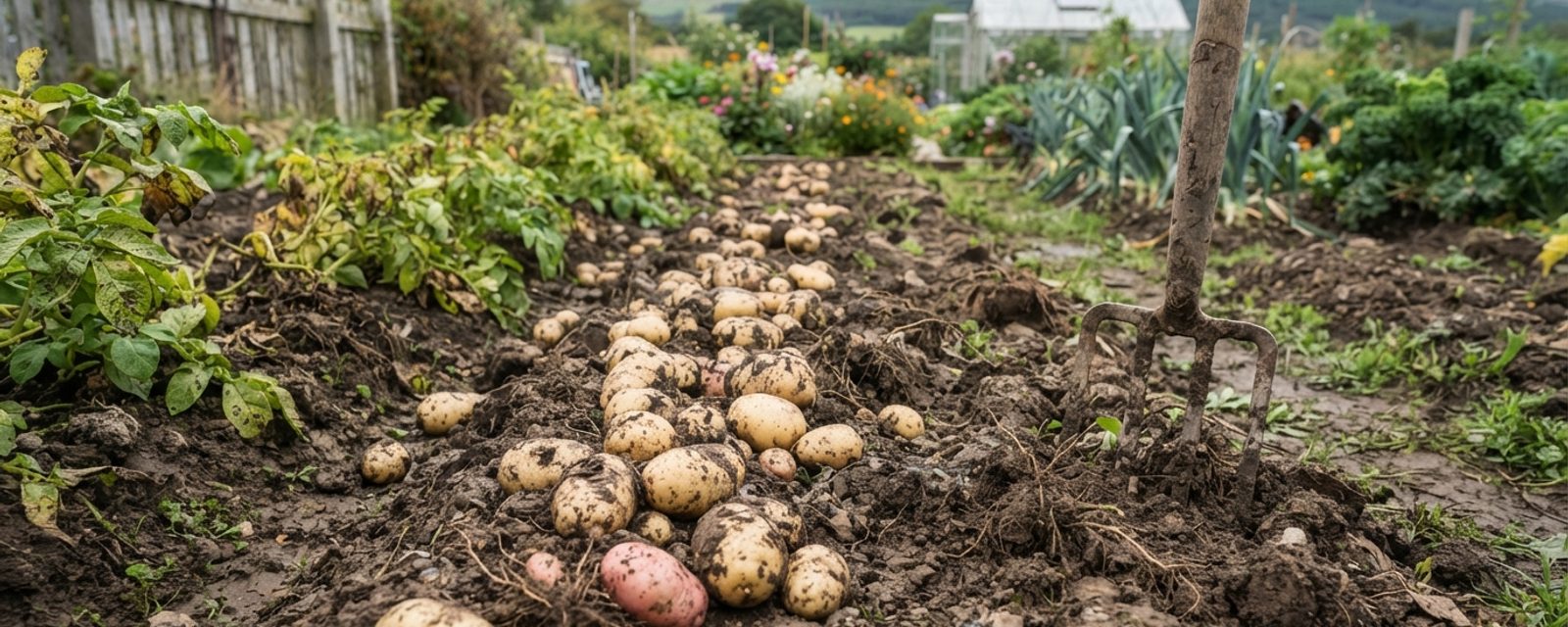
Earlies and maincropThe main, usually latest-sown and longest-growing type of a crop, grown for bulk and storage rather than an early harvest. Full definition → potatoes do not share a calendar. A first-early bed can be ready to fork over in June, weeks before a maincrop plant has even finished flowering, and a grower working to a single "potato harvest time" in their head will either dig up undersized earlies too soon or leave a maincrop in wet ground too long. In Scotland there is a second clock running alongside the calendar one: blight. Scotland's cool, humid summers make late blight a recurring foliage disease here, and once it takes hold, heavy rain can wash the fungus's spores down off the leaves and stems and into the soil, where they can infect the tubersA swollen underground stem or root a plant uses to store energy, which can also grow into a new plant, the classic example being a potato. Full definition → underneath. That risk can force a lift that has nothing to do with whether the tubers are supposed to be ready yet.
For planting depth, spacing, chittingPre-sprouting seed potatoes in a light, cool, frost-free place before planting, so they go in the ground with short sturdy shoots already growing. Full definition → and variety choice, see our potatoes growing guide.
Readiness by type
The three potato types you'll have planted, first earlies, second earlies, maincrop, don't just differ in when they go in the ground, they come out at different times and on different cues too.
| Type | Typical harvest window (Scotland) | Readiness signal | Typical size at lift |
|---|---|---|---|
| First earlies | June to July | Flowers open, or flower buds have dropped | Hen's-egg sized, "new potatoes" |
| Second earlies | July to August | Same flowering cue as first earlies, slightly later | Slightly larger than first earlies |
| Maincrop | Late August to October | Foliage yellows and dies back | Full-sized, for storage |
Flowering is the useful cue for earlies because the tubers below ground are roughly matched to top growth: once the plant flowers, or the buds drop without opening, tubers are usually a worthwhile size. It's not an exact science, so if you're not sure, ease a hand fork in at the edge of a plant and feel for size before committing to lifting the whole row. Second earlies get the least distinct treatment in most advice because they genuinely behave like a slower first early: same flowering cue, same digging method, just a few weeks later and slightly larger tubers by the time you lift them. Treat them as earlies for technique, not as a mini-maincrop.
Maincrop varieties don't flower reliably as a readiness signal, foliage die-back does the job instead. As the plant reaches the end of its growing season the leaves yellow and collapse, and that's the sign the tubers have stopped bulking and are ready to lift, or at least ready to have their skins toughen up if you're leaving them in the ground a little longer. Once foliage has fully died back, tubers can usually sit safely in the ground for a couple more weeks while skins set, but don't push it much beyond that: the longer they sit, the more they're exposed to slugs, rot in wet soil, and frost.
Container and sack-grown crops don't need forking at all: once the foliage has died back (for maincrop) or flowered (for earlies), tip the container out onto a tarp or into a wheelbarrow and pick the tubers out by hand. Because there's no soil structure to protect, timing is more forgiving with containers than with ground crops, but the same readiness cues apply.
How to lift without damaging the crop
Use a garden fork, not a spade: a spade blade is far more likely to slice straight through a tuber than fork tines are. Push the fork in at least 30cm from the base of the stem, angled slightly away from the plant, and lift from underneath rather than stabbing straight down through the row. Tubers spread out sideways from the stem as well as down, so working in from a distance and levering upward finds more of the crop than driving the fork close to the stem.
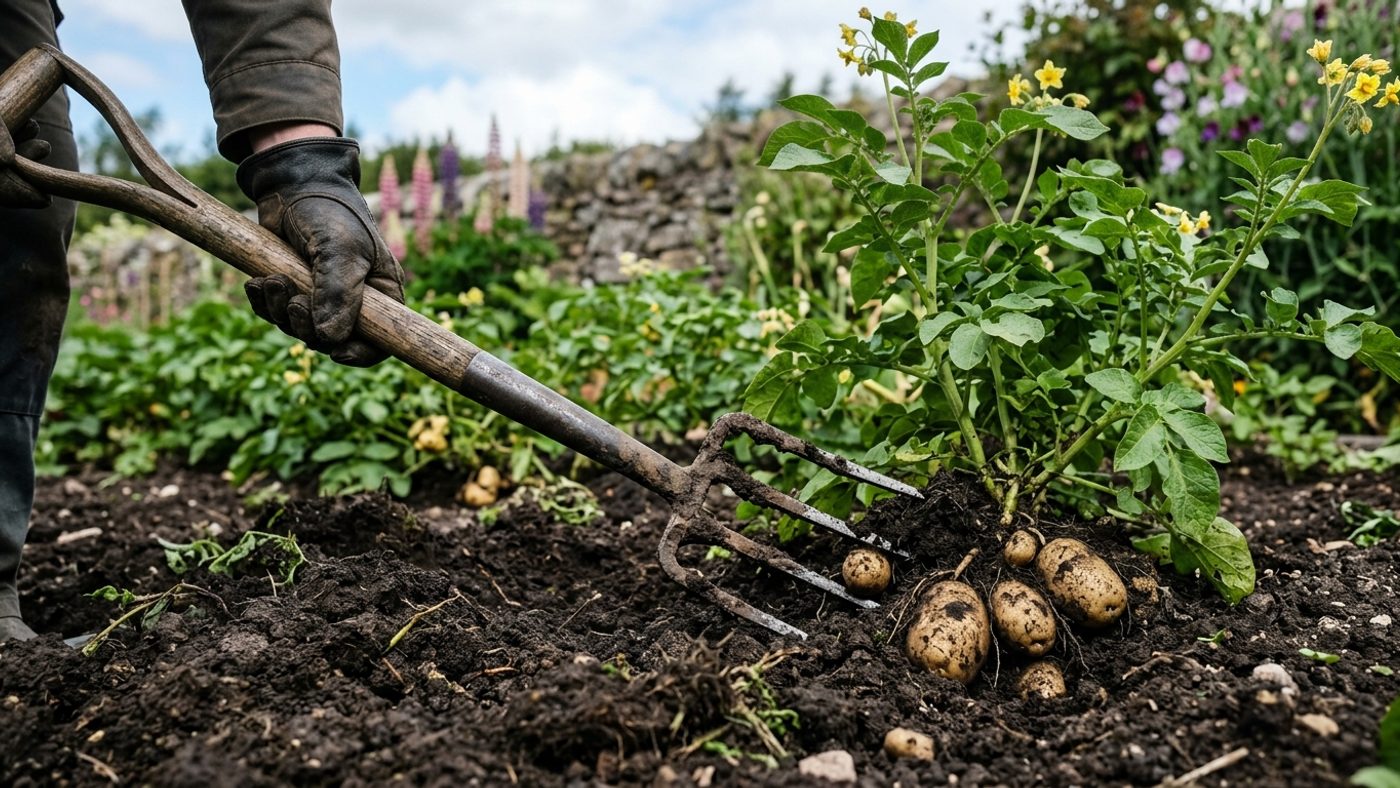
Work the row in more than one pass. Fork the main clump, then go over the loosened soil by hand to find stragglers, since potatoes that get missed on the first pass often turn up as volunteer plants the following year, and volunteers are one of the ways blight carries over from one season to the next in Scotland. On raised beds it helps to start at one edge and work inward rather than forking from the middle outward, so you're not trampling unlifted rows.
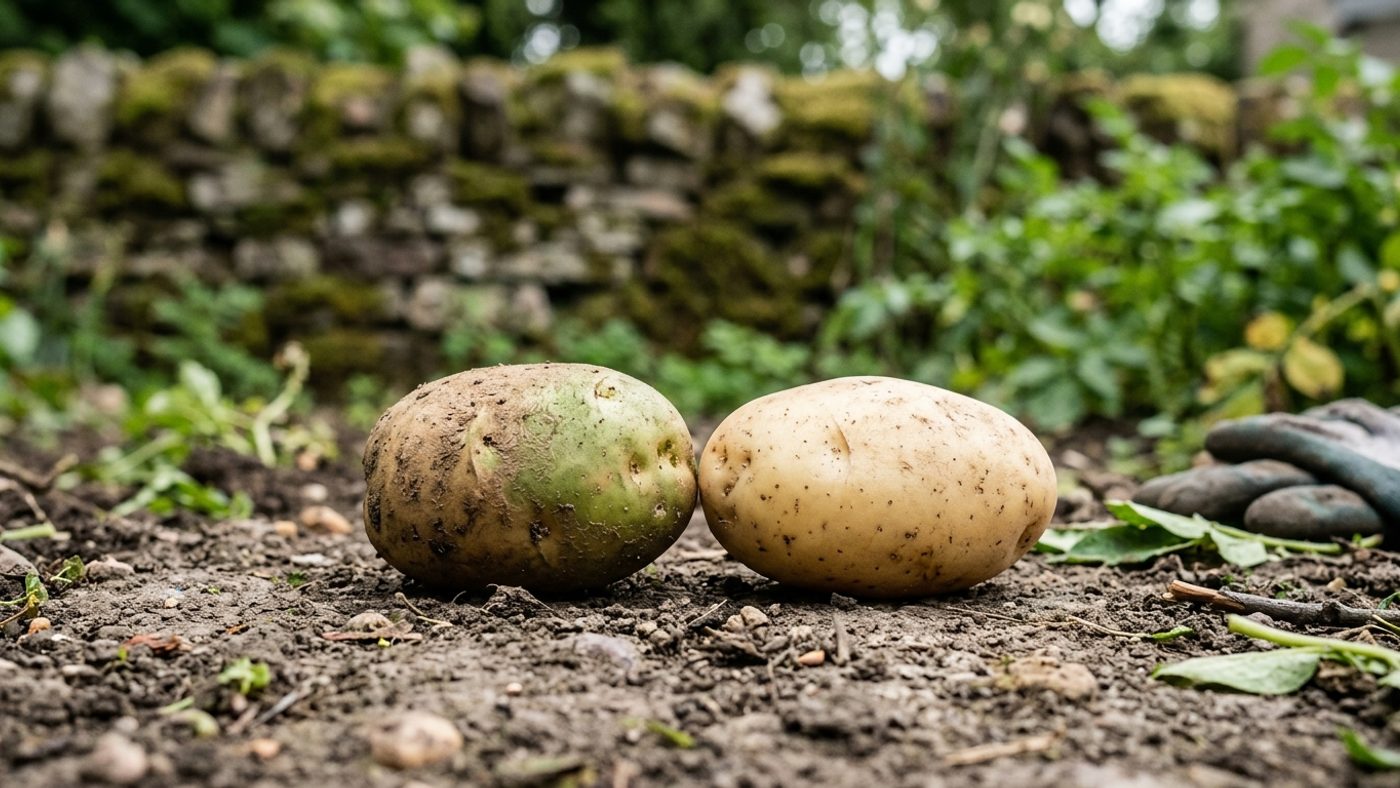
Any tuber showing green skin should be set aside and not eaten. Green patches mean the tuber has been exposed to light and developed solanine, which is toxic in enough quantity.
Bruised, forked, or pest-nicked tubers aren't dangerous the same way, but they don't keep: use damaged tubers first, within a few days, rather than putting them into store, since a cut or bruised skin is an entry point for rot organisms that will spread to sound tubers around them in a sack. Slug holes are common on wet plots: a tuber with slug tunnelling is still fine to eat once trimmed, but treat it as a use-now tuber, not a keeper. Wireworm makes a similar-looking narrow tunnel but is a different pest, usually worst in ground recently converted from grass or lawn; either way, a tunnelled tuber goes in the use-now pile, not into store.
Heavy or wet soil
On heavy clay, waterlogged ground holds tubers at greater risk of rot the longer they sit in the soil after they're ready, and clay itself makes forking harder and increases the chance of accidentally spearing tubers you can't see clearly in the wet, sticky ground. If your soil is heavy or your site is cold and wet, don't wait for a dry day that may not come: lift maincrop as soon as it's ready rather than leaving it to "bulk up" further, and be prepared to store already-lifted potatoes in dry sand or compost in a shed if the ground is too wet to dry the crop outdoors afterward.
A hard frost is the other reason not to leave maincrop sitting once it's ready. A single light frost won't ruin a whole crop, but it blackens the foliage outright, which destroys your die-back cue for good, so you lose the visual signal for exactly when to lift. A harder or repeated frost can also chill tubers sitting close to the surface, making them more likely to break down once stored. In a season that runs later or colder than usual, treat the first forecast hard frost as a deadline to have maincrop out of the ground, not a reason to wait and see.
Quick reference: when to stop waiting and lift
| Situation | What to do |
|---|---|
| Normal ground, dry autumn | Lift when flowers drop (earlies) or foliage dies back (maincrop) |
| Heavy clay or waterlogged soil | Lift as soon as ready, don't wait for a dry day |
| Hard frost forecast | Lift before it hits, even if slightly early |
| Blight confirmed in foliage | Cut and remove haulm immediately, then wait 10-14 days before lifting |
Curing before storage
Curing is the step that separates potatoes that keep for months from potatoes that rot in a sack within weeks. After lifting, leave undamaged maincrop tubers on the soil surface, or spread out in a single layer somewhere dry and airy such as a shed floor, a garage, or a bench under cover, for a few hours to dry off surface moisture. Don't leave them in a heap or a closed bucket, since damp tubers touching each other in a pile stay wet and start to sweat. Once dry to the touch, brush off, don't wash, the soil clinging to them, even the claggy clay that heavy, wet Scottish ground tends to leave stuck on. Washing potatoes before storage removes the protective effect of the soil and skin and shortens their storage life considerably, so however tempting it is to hose off a muddy crop, brushing is worth the extra effort.
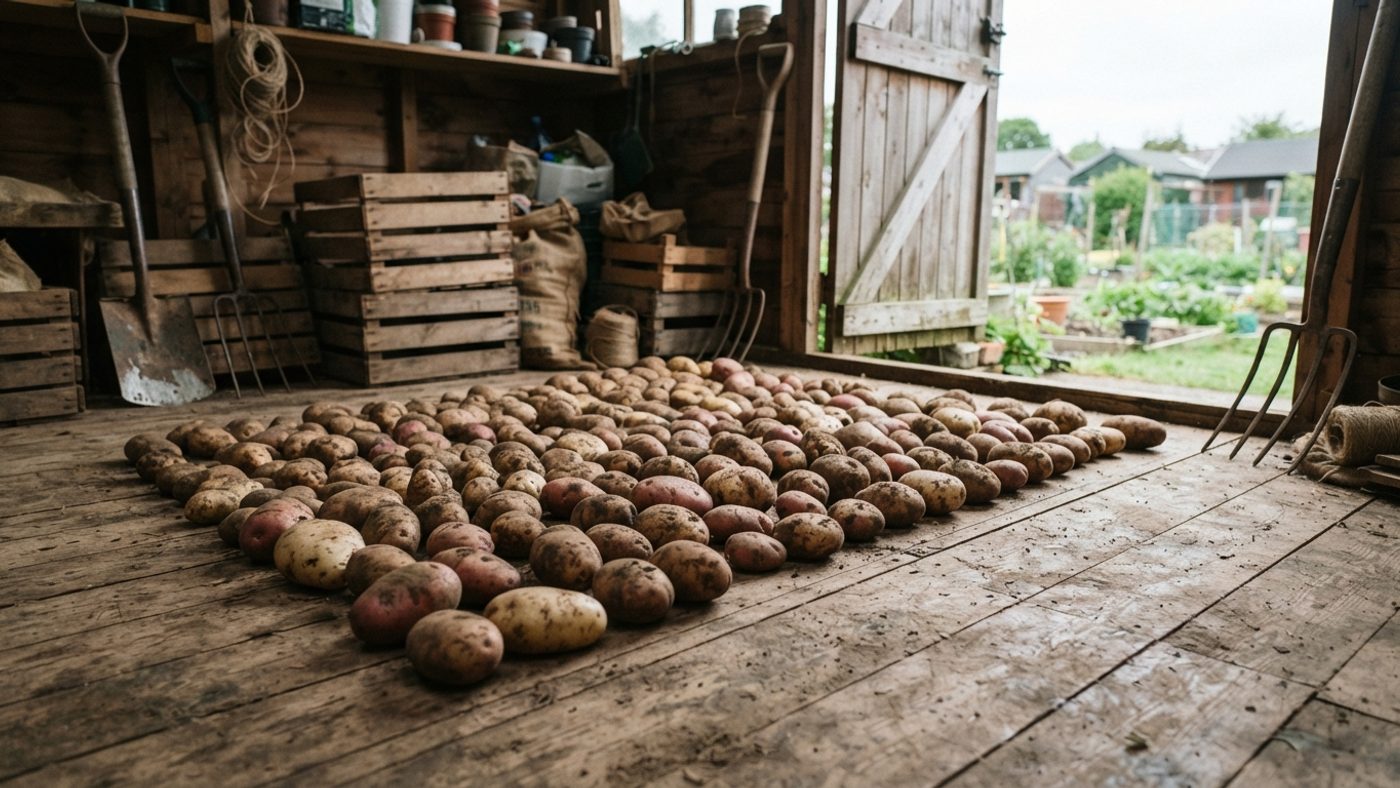
A useful check before you commit tubers to a sack for the winter is the skin-set rub test: press a thumb firmly against the skin. If it rubs off easily, the skin hasn't set and the tuber is more vulnerable to knocks, disease, and moisture loss in store. If the skin holds firm, it's ready to go into store. If a lot of your crop fails this test, give the whole batch a few more days in a dry, airy, shaded spot, not full sun, which greens tubers, before sacking them up.
If wet weather is forecast during lifting, it's worth rigging a temporary cover over the row so tubers can dry in place rather than being lifted straight into damp conditions, particularly relevant in a Scottish summer where a settled dry spell isn't guaranteed.
Storage
Store cured, undamaged potatoes somewhere cool, dark, and reliably frost-free: a garage, shed, or unheated porch all work, as long as temperatures stay above freezing. That last condition needs watching through a Scottish winter, when an unheated outbuilding can easily drop below zero on a hard frosty night, so check exposed storage spots against the forecast and add an old blanket or extra layer of sacking over the store if the space isn't reliably frost-free. Paper or hessian sacks are the standard choice because they let the tubers breathe while keeping light out; light exposure in store causes the same greening and solanine build-up as light exposure in the ground. Slatted wooden trays in a dark space work just as well if you have room for them. Avoid sealed plastic bags, which trap moisture against the skin and encourage rot.
Check stored potatoes every few weeks through the winter and remove any that have gone soft, sprouted, or started to rot, since one rotting tuber in a sack can spread to its neighbours quickly. Home-stored maincrop potatoes are generally good to use through to early spring; after that they start sprouting and shrivelling as dormancy naturally breaks, whatever you do to slow it down.
Blight: when the calendar stops mattering
Everything above assumes a normal season. Blight changes the plan.
Late blight (Phytophthora infestans) is the main foliar disease threatening potato crops in Scotland, and no variety grown here is fully resistant to it, see our potatoes growing guide for variety choice. The practical response, if blight is confirmed in your foliage before the crop is otherwise ready: kill off the top growth, the haulm, the leafy stems above ground, by cutting or pulling it as soon as you spot infection, rather than waiting for it to die back naturally, to cut off the route spores use to reach the soil and the tubers below. Then don't lift immediately. For a home plot that means: cut the haulm right back to ground level and remove it from the bed, then wait at least ten days to two weeks before lifting, longer if you can, rather than digging the same day or the next. Bin or burn blighted haulm rather than composting it, since home compost heaps rarely get hot enough to kill the spores; healthy, disease-free haulm from an unaffected crop can go on the compost heap as normal.
Two habits raise blight risk from one season into the next, and Scotland's status as a major seed and ware potato growing region means a lot of potatoes are in the ground for this to spread between. Discarded potato dumps, piles of unused or unwanted tubers from a previous season left at the edge of a garden or field, are a recognised primary source of infection: they sprout early and unsupervised, and can seed a whole area with disease before you've even planted this year's crop. Never leave dug tubers, however small or damaged, in a heap outdoors over winter. Volunteer plants, potatoes that grow unplanted from tubers missed during a previous harvest, can carry blight over from an infected crop the year before and act as an early source of infection the following season, which is another reason the second, hand-picking pass over a freshly forked row matters: fewer tubers left behind means fewer volunteers next spring.
A note on saving your own seed
It's tempting to keep back a bag of this year's tubers to plant next year rather than buying new seed potatoes. Scotland's own certified seed scheme allows farm-saved seed for one further generation only before it must be replaced, because virus levels build up the longer tubers are propagated from themselves. Treat that as the sensible limit for a home plot too: replant your own tubers once at most, then start again from fresh certified seed. See our potatoes growing guide for planting and variety choice, including where to source certified seed.
Common questions
How do I know if my potatoes are ready without digging up the whole row?
Ease a hand fork or trowel in at the edge of one plant and feel for tuber size, or for maincrop, wait until the foliage has visibly yellowed and started to collapse. For earlies, flowering or buds dropping is the more reliable cue than foliage colour.
What happens if I leave potatoes in the ground too long?
Past their season, tubers become vulnerable to slug damage, and in wet or heavy soil, to rot. Maincrop left too long can also be more exposed to any blight spores that have washed into the soil from infected foliage, since the skin has more time in contact with infected ground.
Can I eat potatoes as soon as I dig them up?
Yes, freshly dug earlies don't need curing, they're meant to be used fresh within a few days. Curing and drying matter for maincrop tubers you intend to store over winter, not for potatoes you're eating straight away.
Do I need to treat second earlies differently from first earlies at harvest?
Not really. Use the same flowering cue and the same forking technique; second earlies are simply a few weeks behind first earlies and produce slightly larger tubers by the time they're ready.
My potato foliage has blight, should I lift everything immediately?
No. Cut and remove the infected haulm straight away to stop spores washing down into the soil, but then wait, ideally an extra week or two beyond your normal gap, before lifting, so any spores already in the soil have time to die off before you handle the tubers.
Sources
6 sources, recorded with what each was used for
- RHS: Potatoes — grow your own: Baseline harvest readiness cues by type, forking distance and technique, green-tuber disposal, container harvesting, curing, general storage conditions
- Farm Advisory Service (Scotland): Potatoes — late August 2020: The recommendation to lengthen the gap between haulm desiccation and lifting by an extra week or two for tuber-blight-susceptible varieties
- Farm Advisory Service (Scotland): Potato diseases: How heavy rain washes blight spores from foliage into soil, confirmation no potato variety is fully resistant, potato dumps as a primary infection source
- Farm Advisory Service (Scotland): Potatoes — October 2020: Volunteer plants as a carryover source of blight infection between seasons
- James Hutton Institute: Working on a global scale to protect against late blight in potato crops: Framing on the scale of blight as Scotland's principal potato disease threat
- SASA: Ware potatoes: Scotland's status as a seed potato growing region and the rule limiting farm-saved seed to one further generation