
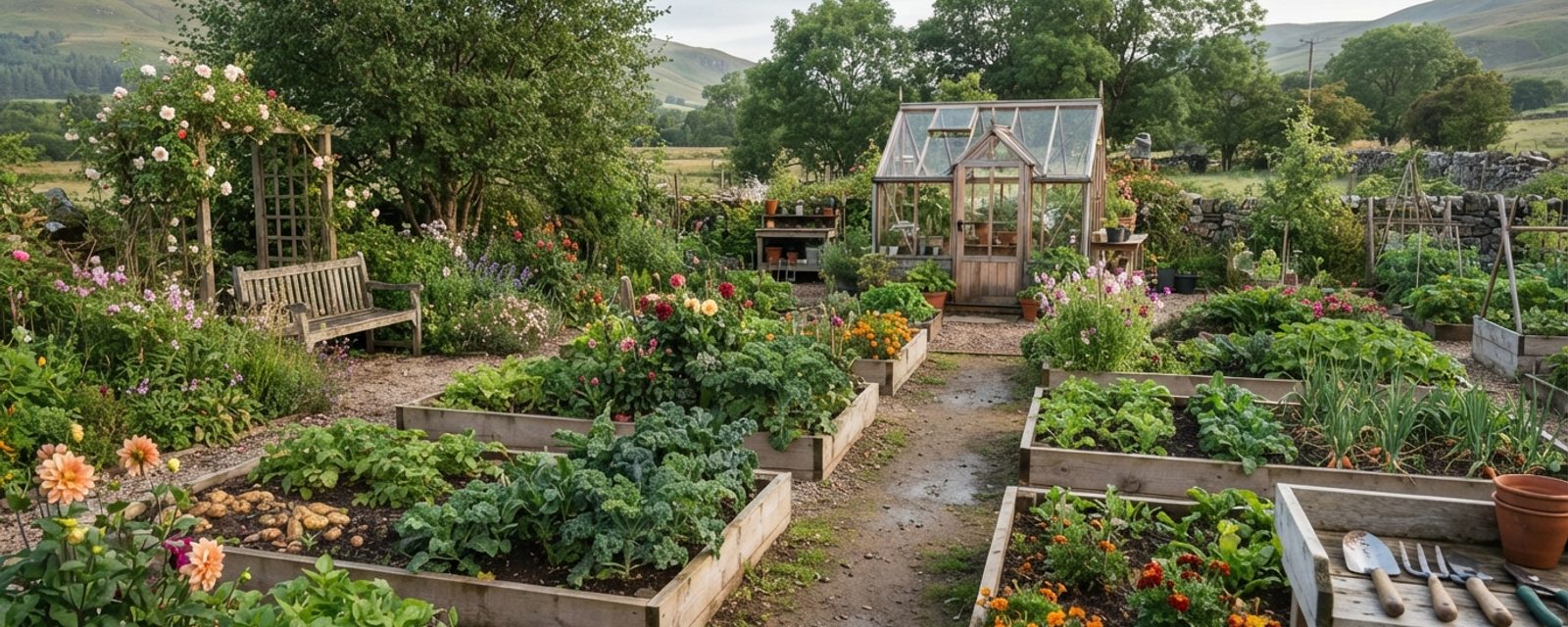
Time spent outdoors and moderate physical activity change measurable things in the body before they change how someone feels about their day. Physical activity releases hormones that lift mood and blunt the stress response, and NHS inform names this directly in its guidance on staying active for mental wellbeing: movement produces "feel-good hormones" that can reduce stress, anxiety and loneliness. That's the physiological hook that green prescribing and social prescribing programmes are built on. It isn't a claim that an afternoon potting seedlings resolves a mental health condition, but that regular, low-intensity physical activity has a measurable effect on stress and mood regulation, and that doing it outdoors and in green space appears to add to the effect on top of the activity itself.
The mechanism behind it
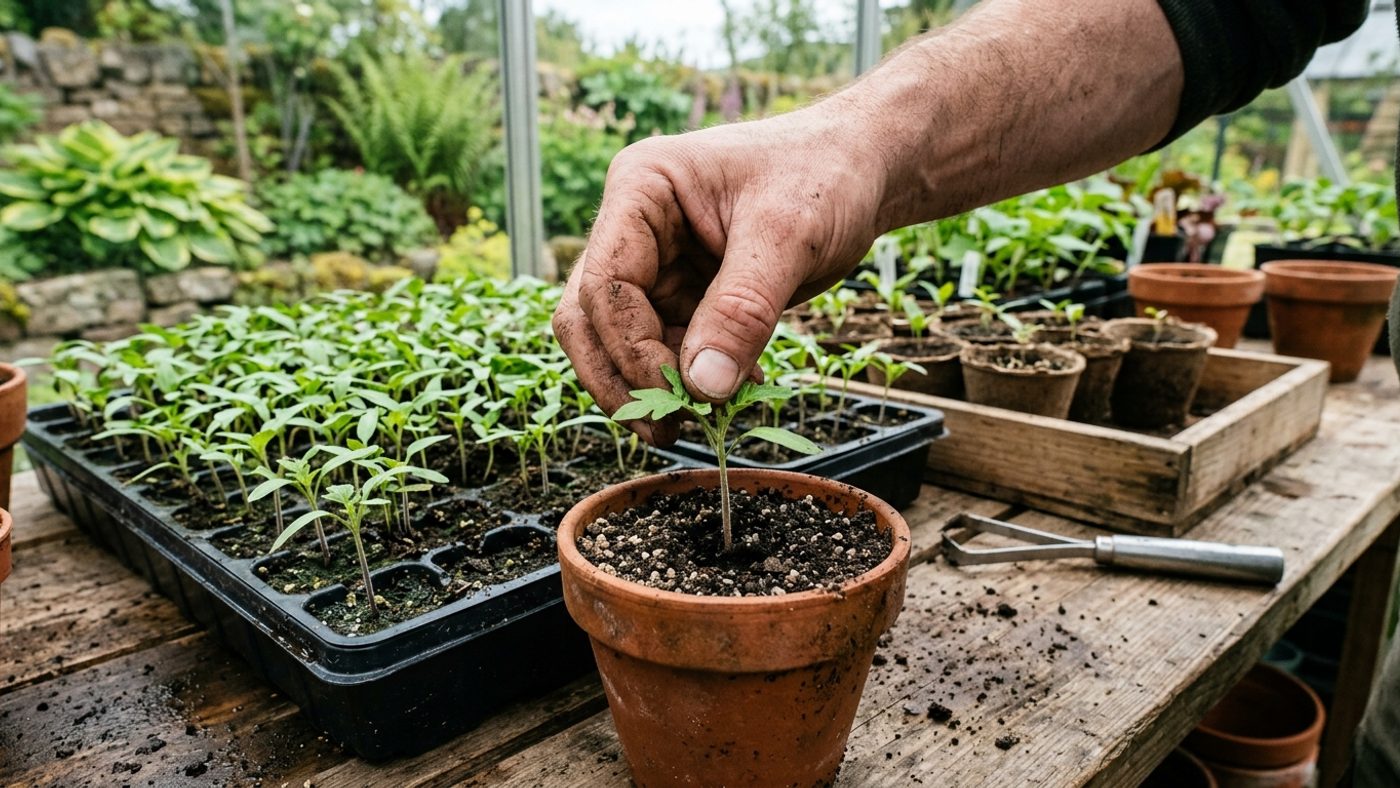
Gardening fits this pattern because it clears several bars at once without requiring someone to identify as "an exercise person." It's physical activity performed at a pace the gardener controls, it happens outdoors, and it tends to hold attention on a narrow, repetitive task, weeding a bed, pricking outMoving individual seedlings from the crowded tray they germinated in into their own space, once they have their first true leaves. Full definition → seedlings, watering a row, in a way that crowds out rumination. NHS inform lists it explicitly among its recommended activities for mental wellbeing, suggesting readers "do some gardening — check if there's a community garden in your area, work on indoor plants, or set up a balcony garden if you have limited outdoor space." NHS inform doesn't claim gardening resolves any specific condition. It's offered as a direct, practical recommendation for everyday wellbeing.
From general advice to a formal referral
Scotland also has something more structured than a leaflet suggestion: a route by which a GP, health visitor, Community Links Practitioner (a link worker attached to a GP practice who connects patients to local services and activities) or other primary care contact refers someone into a nature-based activity as a recognised part of care, alongside or instead of a purely clinical response. "Green social prescribing" is the broader umbrella term, covering any social-prescribing referral into a nature-based activity; "green health prescribing" is how NatureScot and its Scottish partners more often label their own version of it. Gardening can be one of the activities offered through these routes, alongside walking groups, green gyms and conservation volunteering, but how much gardening specifically features depends on what's actually running locally.
Scotland's version of this is coordinated nationally by NatureScot (formerly Scottish Natural Heritage) through a programme called Our Natural Health Service (ONHS), commissioned in 2015 by the Scottish Government's health and environment ministers. The programme's stated aims are to raise public and professional awareness of the outdoors as a health resource, to get nature-based approaches embedded as routine practice within health and social care, and to build shared responsibility for public health across sectors that don't traditionally work together: environment, transport, sport and health services among them.
Green Health Partnerships: where the actual delivery happens
The practical arm of Our Natural Health Service is a network of Green Health Partnerships (GHPs): local, cross-sector collaborations led jointly by health boards and local authorities, coordinating activity that NatureScot describes as "active travel, volunteering, community gardening and informal recreation," plus building referral pathways from health services and raising awareness among healthcare staff.
| Partnership area | Led by | Since | Funding status |
|---|---|---|---|
| Dundee | Dundee City Council Greenspace Team, co-managed with NHS Tayside Public Health | 2018 pilot | National core funding ended 2024; NatureScot describes it as still active locally |
| Highland | Local health board and local authority partners | 2018 pilot | Same as above |
| North Ayrshire | Local health board and local authority partners | 2018 pilot | Same as above |
| Lanarkshire | Local health board and local authority partners | 2018 pilot | Same as above |
Gardening is named explicitly as one strand of Dundee's partnership. The same general mix of activity, active travel, volunteering, community gardening, informal recreation, applies across the other three areas too, without a breakdown of what each one individually runs.
How gardening-specific this actually is
NatureScot's national-level material talks about "community growing" in general terms rather than singling gardening out as its own category. The gardening-specific detail comes from Dundee's own page, not the national programme. Outside an area with an active referral route, gardening is far more likely to reach someone as everyday wellbeing advice, the kind NHS inform gives everyone, no referral needed, than as a formal prescription.
Two Scottish organisations fill out the practical picture beyond the four pilot areas. Trellis, the Scottish Therapeutic Gardening network, is a national charity built specifically around this: it supports over 520 therapeutic gardening projects across hospitals, care homes, schools, prisons and community settings (current figures, per Trellis's own site), reaching an average of 27 people per project each week, and keeps a project directory plus a training and information service for anyone looking to join or set one up. For anyone who wants a plot rather than a programme, Scotland's allotment law is relevant too: the Community Empowerment (Scotland) Act 2015 gives local authorities specific duties around allotment waiting lists and provision: a non-health, no-referral route into growing space in its own right.
Getting involved
Whether or not a formal Green Health Partnership referral route exists locally, there are several ways in:
- Ask a GP practice or health visitor whether a Community Links Practitioner is attached to it.
- Check the local council's Green Health Partnership or greenspace team if one of the four pilot areas applies.
- Search Trellis's project directory for a therapeutic gardening group nearby.
- Simply start with NHS inform's own advice to find a community garden or grow on a balcony. None of these require a referral, a diagnosis, or living in a pilot area.
Common questions
Is gardening actually prescribed by GPs in Scotland?
Not usually by the GP directly. Where a referral route exists, it typically comes via a Community Links Practitioner or health visitor rather than a prescription pad, and Dundee is the clearest documented example of gardening being named as one of the activities on offer. It is not a national, standalone "gardening prescription" scheme covering all of Scotland.
Do I need a referral to start gardening for my mental health?
No. Anyone can act on NHS inform's general wellbeing advice or contact Trellis directly to find a therapeutic gardening project nearby. A formal referral only matters if you specifically want the support and structure that comes with going through a Green Health Partnership pathway.
What is a Green Health Partnership?
It's a local, cross-sector collaboration between a health board and local authority, coordinated nationally through NatureScot's Our Natural Health Service programme, aimed at connecting people with nature-based activity, including gardening, active travel and volunteering, as part of health and community planning.
Which parts of Scotland have a Green Health Partnership?
The original four pilot partnerships, established in 2018, cover Dundee, Highland, Lanarkshire and North Ayrshire. Core national funding for the pilot phase ended in 2024, though each partnership is still described as active locally.
What is Trellis, and how is it different from a Green Health Partnership?
Trellis is a national Scottish charity for therapeutic horticulture: it supports groups running gardening projects in hospitals, care homes, schools and prisons, rather than coordinating health-board referral pathways. A Green Health Partnership is a local referral structure; Trellis is a Scotland-wide network of the actual projects someone might be referred to, or could join directly without a referral.
Sources
6 sources, recorded with what each was used for
- NHS inform: Being active for your mental wellbeing: The mood/stress mechanism framing and the direct recommendation of gardening as a wellbeing activity
- NatureScot: Our Natural Health Service: Programme origin, leadership by NatureScot, and its core aims
- NatureScot: Green Health Partnerships: The four-partnership structure, 2018 pilot establishment, joint health board/local authority leadership, and 2024 end of pilot core funding
- Green Health (Dundee Green Health Partnership): About: Dundee-specific detail: coordination by Dundee City Council's Greenspace Team co-managed with NHS Tayside Public Health, and community gardening named among coordinated activities
- Trellis (Scottish Therapeutic Gardening network): About Us: The charity's national remit, project numbers and its training/information service
- legislation.gov.uk: Community Empowerment (Scotland) Act 2015, Part 9: Local authorities’ statutory duties on allotment waiting lists and provision, cited as the non-health route into growing space