
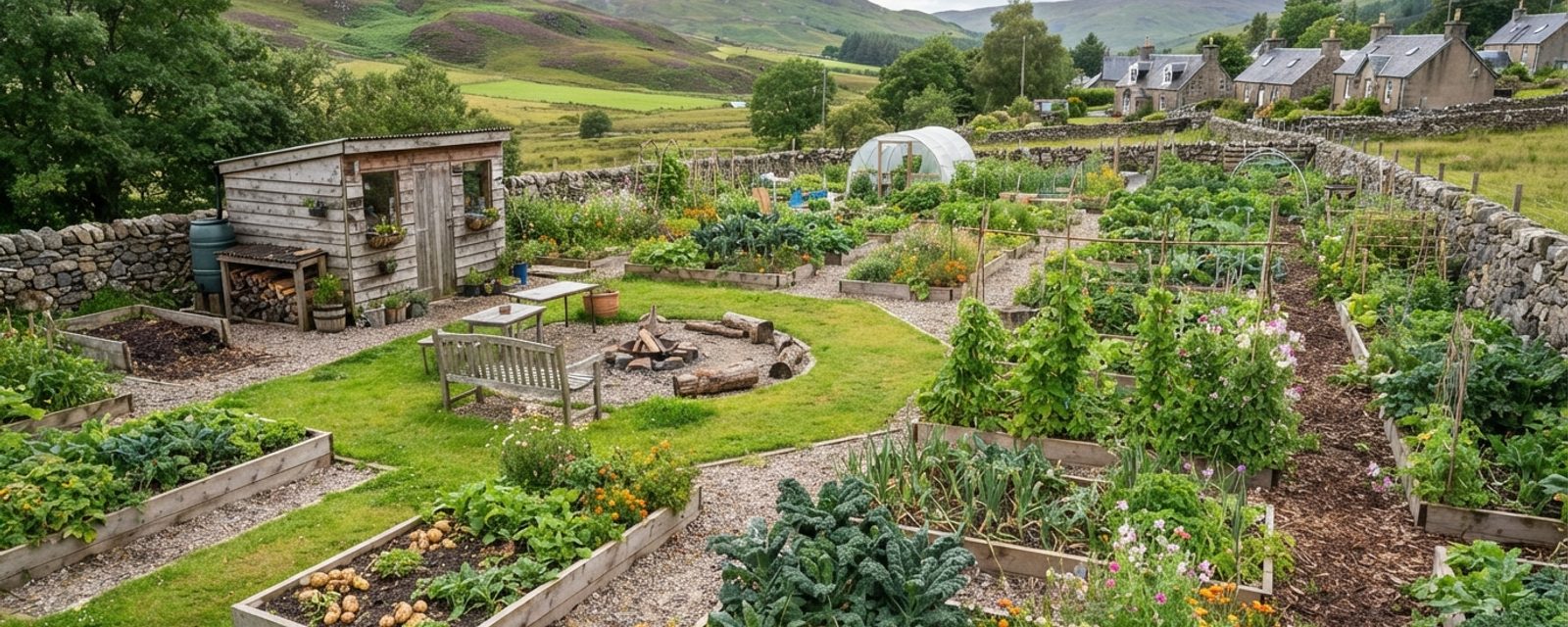
You've been offered a growing space, and the person who offered it called it a "community garden." You'd assumed you were on an allotment waiting list. Are these the same thing with different names, or did you just get offered something else entirely? And if it's not an allotment, does that mean none of the rights and rules you'd read about actually apply to you?
The short answer is that allotments and community gardens are genuinely different things under Scots law, not just different marketing terms for the same activity. But the boundary between them is blurrier in practice than a tidy dictionary definition suggests, and knowing which one you've actually been offered changes what you can expect.
The legal line: one has a statute, the other doesn't
Allotments have a specific statutory basis in Scotland. Part 9 of the Community Empowerment (Scotland) Act 2015 defines an allotment as land owned or leased by a local authority, then leased on to an individual, used wholly or mainly to grow vegetables, fruit, herbs or flowers, without a profit motive (ss 107-108). That definition matters because it triggers a whole framework of statutory duties: any resident can formally request an allotment from their local authority, and the authority must keep a waiting list of those requests and take "reasonable steps" to keep it to no more than half its current allotment stock, and to stop anyone waiting more than five years continuously (s 112). That's a reasonable-steps duty, not a guarantee: Scottish Government guidance to local authorities describes the listed actions, assessing demand, identifying land, working with partners, as enabling steps rather than a promise of a plot. Tenants also get defined rights once they hold a plot: they can sell surplus produce without it counting as commercial use, remove structures and plants they installed when they leave, and claim compensation, at minimum a year's rent, if the council terminates the tenancy for site disposal or change of use. Part 9 came fully into force on 1 April 2018, with a small number of provisions commenced earlier, in November 2015 and December 2017.
Community gardens have no equivalent chapter anywhere in Scots law: no statutory definition, no duty on any public body to provide one, and no legal waiting-list obligation. That doesn't mean they operate in a legal vacuum, but the law that touches them is general land and charity law, not a bespoke growing-spaces statute, so joining one is closer to joining a club than signing a tenancy: a group can usually end your membership on whatever terms its own rules set, with no statutory floor underneath you the way an allotment tenant has.
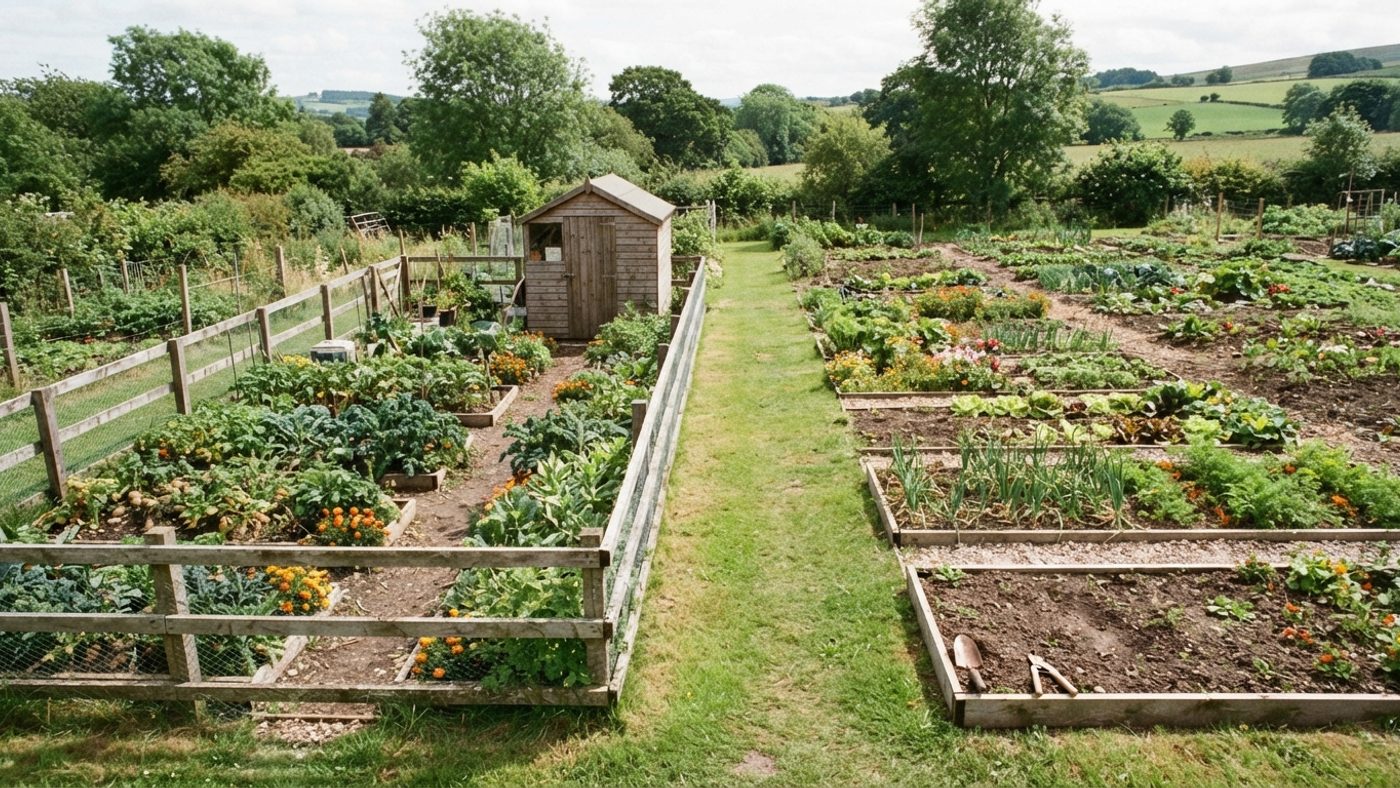
Where SAGS is an advocacy and governance body for allotment holders specifically, the closest equivalent for community growing projects is Social Farms & Gardens, a UK-wide charity whose Scotland arm runs the Community Land Advisory Service to help groups with land and planning queries, and supports the Get Growing Scotland local food-growing partnership. A SCIO (Scottish Charitable Incorporated Organisation) structure, one option a community garden's committee can choose, matters for exactly the liability question above too: it gives the organisation its own legal identity, so committee members aren't personally on the hook if something goes wrong on site, unlike a loose unincorporated group.
Where community gardens actually get their land
The likeliest legal route for a community garden onto council-owned land is Part 5 of the same Act, the asset transfer request provisions: a formal process letting a community group ask a public body to hand over land or a building it owns. These let a community body request that a local authority or other relevant public authority transfer ownership, grant a lease, or confer rights to manage, occupy or use land it owns, for a purpose the community body specifies. Part 5 says nothing specific about gardening or growing; a request could equally be for a community hall or a football pitch. It has been fully in force since 23 January 2017. In practice, a group that wants to run a shared growing space can use Part 5 to acquire or lease the ground, but the resulting arrangement is a general community asset transfer, governed by whatever lease or ownership terms are negotiated, not by allotment law. Many community gardens instead sit on land owned by a charity, housing association, church or private landowner, arranged through an ordinary lease or informal permission, with no Act of the Scottish Parliament involved at all.
The overlap is real, not tidy
Part 9 lets a local authority delegate day-to-day management of an allotment site to a tenants' association, which can end up running the site in a fairly community-garden-like way even though the underlying tenancies are still statutory allotment tenancies. Conversely, some sites created through Part 5 asset transfer combine individual family plots with shared communal beds on the same piece of ground, so a single site can be part allotment-like, part community garden, depending which bit you're standing in. If you're not sure which you've been offered, the practical test is not what the sign outside says but who you'd be contracting with: a council allotment tenancy agreement issued under Part 9 rules, or an informal membership or volunteering arrangement with a community group or charity. Since a community garden has no statutory cover behind it, it's worth simply asking the group who holds the lease, and whether the site carries public liability insurance, before you start turning up with a spade. Part 9 doesn't itself set out insurance arrangements for allotment tenants either, so this is worth checking with your own council's allotment office rather than assumed either way.
Access, cost and governance in practice
| Allotment | Community garden | |
|---|---|---|
| Legal basis | Statutory: Community Empowerment (Scotland) Act 2015, Part 9 | No dedicated statute; general land, lease and charity law |
| Typical landowner | Local authority (owned or leased land) | Council (via lease or asset transfer), charity, trust, or private landowner |
| How you get in | Written request to the council; statutory waiting list (ss 109, 111) | Usually informal: contact the group, join as a volunteer or member |
| Guarantee of a plot | No; the council has a "reasonable steps" duty only (s 112) | No; entirely at the discretion of the managing group |
| What you get | An individual leased plot, tenancy in your name | Shared access to communally worked beds, rarely an individual plot |
| Growing purpose | Individual food or flower growing for yourself, no profit motive (s 107) | Usually collective: food growing, education, biodiversity, social contact |
| Governance | Council-set regulations on rent, allocation and cultivation (Part 9) | Whatever the running group decides: committee, charity, or SCIO (Scottish Charitable Incorporated Organisation) |
| Leaving or termination rights | Defined notice periods and compensation rights, at minimum a year's rent if the council ends the tenancy for site disposal or change of use (ss 126-129, 133-136) | Whatever the group's own rules say; no statutory floor |
| While you hold the plot | Can sell surplus produce without it counting as commercial use; can remove structures and plants you installed when you leave (ss 131-132) | Governed by the group's own rules, not statute |
For the fuller detail behind the allotment side of this table, waiting lists, rent, eviction process, see Getting an Allotment in the UK and Allotment Rules: What You Can and Can't Do, both of which cover Part 9 in full rather than repeating it here.
Common questions
If I've been on an allotment waiting list for years, will a community garden get me growing sooner?
Often yes, because community gardens don't run a statutory waiting list and access is usually just a matter of the group having room for another volunteer. Bear in mind you'd typically be sharing communal beds rather than getting your own plot with your name on a tenancy.
Does the five-year waiting list limit in the 2015 Act mean I'm guaranteed a plot within five years?
No. Section 112 requires the council to take reasonable steps toward that outcome, it is not a guaranteed entitlement to a plot within any fixed period.
Can a community group take over council land specifically to run it as an allotment?
Yes, in principle. Part 5 asset transfer requests can be made for any purpose the community body specifies, including creating growing space, though the site would then be governed by the transfer agreement's terms rather than automatically becoming a Part 9 statutory allotment.
Does the Scottish Allotments and Gardens Society (SAGS) represent community gardens too?
Its stated remit is allotment sites and plot holders specifically; community gardening is mentioned only in passing on its site, so treat it as an allotment-focused body rather than a general authority on community gardens.
Do I pay rent for a community garden plot the way I would for an allotment?
Allotment rents and cultivation rules are set by the council under regulations it is required to make (Part 9), whereas a community garden's fees, if any, are set entirely by whoever runs it and can range from nothing to a modest membership contribution. There's no statutory standard either way for community gardens.
Sources
6 sources, recorded with what each was used for
- Community Empowerment (Scotland) Act 2015, Part 9 (Allotments): Statutory definition of an allotment, waiting list and reasonable-steps duties, tenant rights, termination and compensation provisions, commencement dates
- Community Empowerment (Scotland) Act 2015, section 112: Exact wording of the waiting-list ratio and five-year duty
- Community Empowerment (Scotland) Act 2015, Part 5 (Asset transfer requests): Community body requests for land ownership, lease or use rights; commencement date
- gov.scot: Allotments, guidance for local authorities (Part 9): Scottish Government's own reading of section 112 as a "reasonable steps" duty, not a guarantee
- Scottish Allotments and Gardens Society (SAGS): The organisation's own statement of its allotment-focused remit
- Social Farms & Gardens, Scotland: The support body for community growing projects in Scotland, its Community Land Advisory Service, and the Get Growing Scotland partnership